


 About Urh Social
 Terms of Service
 Privacy Policy
 Contact
SAC Code 9954: GST Invoicing and Compliance Requirements for Construction Contractors
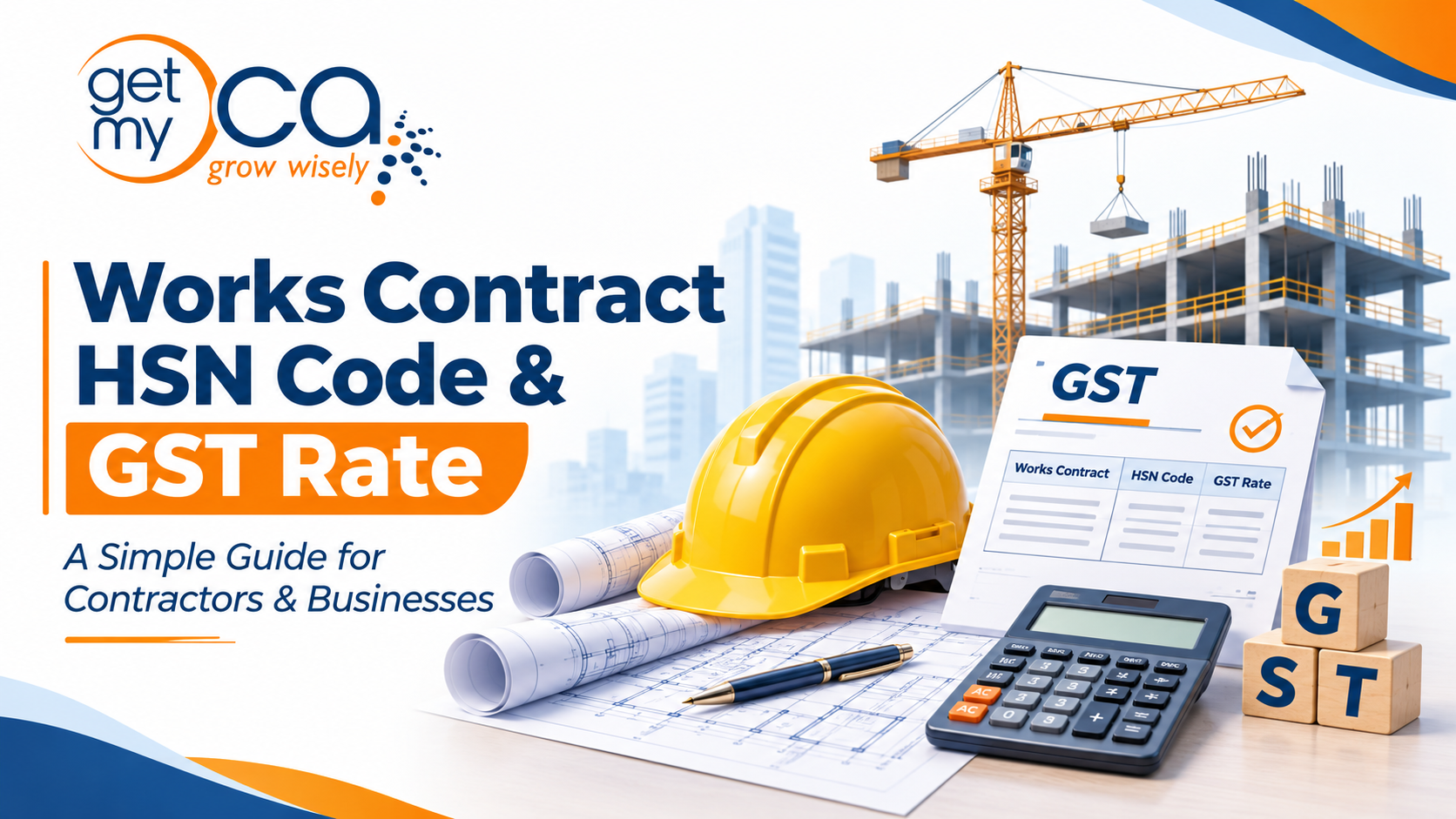
Accurate invoicing is an essential part of financial management for construction contractors in India. Construction projects involve multiple suppliers, subcontractors, material purchases, labour expenses and contractual payments.
Under the Goods and Services Tax framework, businesses must classify their transactions correctly and report taxable supplies according to applicable statutory provisions.
For contractors providing construction-related works contract services, understanding SAC codes is particularly important. Incorrect classification can affect GST reporting, invoice reconciliation and the assessment of tax liabilities.
What Is SAC Code 9954?
Service Accounting Codes are used to classify different categories of services under GST. SAC 9954 represents construction services and includes several types of building, infrastructure and specialised construction activities.
These activities may involve residential construction, commercial development, industrial buildings, civil engineering projects, renovation and installation work.
The SAC 9954 works contract GST rate is generally 18% for most standard works contract services. However, businesses must examine the specific nature of the supply and applicable notifications before determining the final rate.
Correct classification requires reviewing the actual work performed rather than relying only on the description used in a purchase order.
Different Service Codes Under SAC 9954
SAC 9954 contains several detailed classifications that help businesses identify specific construction activities.
Common examples include:
|
SAC Code |
Construction Activity |
|---|---|
|
995411 |
Residential building construction |
|
995413 |
Industrial building construction |
|
995414 |
Commercial building construction |
|
995421 |
Road and bridge construction |
|
995433 |
Excavation and earthmoving |
|
995461 |
Electrical installation |
|
995473 |
Painting services |
|
995474 |
Floor and wall tiling |
Selecting the appropriate service code helps improve consistency in tax invoices and financial reporting.
Businesses should follow applicable SAC digit-reporting requirements based on their turnover and transaction category.
How to Calculate GST on a Works Contract Invoice
GST is generally calculated on the taxable value of the works contract services.
Consider a contractor providing commercial building renovation services with a taxable contract value of ₹5 lakh.
If the applicable GST rate is 18%, the calculation would be:
|
Particulars |
Amount |
|---|---|
|
Taxable value |
₹5,00,000 |
|
CGST at 9% |
₹45,000 |
|
SGST at 9% |
₹45,000 |
|
Total invoice value |
₹5,90,000 |
This example assumes an intra-state taxable supply. Where the transaction qualifies as an inter-state supply, IGST would generally apply instead.
For construction services directly related to immovable property, the property's location is generally relevant when determining the place of supply.
Role of Accounting in GST Compliance
Contractors frequently manage transactions involving advance payments, running account bills, supplier invoices and project completion certificates.
Without organised accounting records, identifying the correct taxable value and applicable GST liability can become challenging.
Effective taxation and business compliance services include maintaining financial records, reviewing statutory obligations, reconciling invoices and monitoring tax payment deadlines.
A consistent accounting framework can help construction companies maintain financial transparency and identify reporting errors before they affect statutory filings.
Information Required on a GST Invoice
Construction contractors should ensure their tax invoices contain the prescribed particulars under GST law.
These generally include the supplier's details, recipient information, unique invoice number, invoice date, service description, applicable SAC, taxable value and tax amount.
Additional information, such as the place of supply and reverse charge applicability, should be included wherever required.
Businesses covered by the mandatory e-invoicing provisions must also comply with the applicable invoice registration requirements.
Accurate invoice information helps recipients reconcile transactions and assess input tax credit eligibility.
GST Treatment of Subcontracting Services
Subcontracting is common in construction projects. A main contractor may appoint specialised businesses to perform electrical installation, plumbing, painting or structural work.
Each subcontractor must assess its GST registration obligations, service classification and applicable tax treatment independently.
A subcontractor should not automatically apply the same rate as the main contractor without examining the nature of its own supply.
The main contractor should also evaluate whether GST paid on subcontracting services qualifies for input tax credit.
Maintaining subcontract agreements, invoices and payment records supports accurate financial reporting.
Common GST Invoicing Errors
Construction businesses may encounter invoicing errors such as incorrect service codes, inaccurate taxable values and the application of outdated GST rates.
Other common issues include incorrect place-of-supply determination, mismatches between accounting records and GST returns, and unsupported input tax credit claims.
Contractors should also assess the effect of advance receipts and milestone payments under applicable time-of-supply provisions.
Regular invoice reconciliation and periodic reviews of GST notifications can help prevent these mistakes.
Conclusion
SAC 9954 is an important GST classification for construction contractors and businesses providing construction-related services.
Correct service classification, accurate invoicing, timely return filing and careful assessment of input tax credit can help businesses maintain statutory compliance.
Contractors should establish organised accounting procedures and regularly review applicable GST provisions to ensure their financial records reflect the actual nature of their construction activities.

 English
 Arabic
 French
 Spanish
 Portuguese
 Deutsch
 Turkish
 Italiano
 Russian
 Romaian
 Portuguese (Brazil)
 Greek
