


 About Urh Social
 Terms of Service
 Privacy Policy
 Contact
What Industrial Buyers Should Check Before Ordering Mercury Grippers
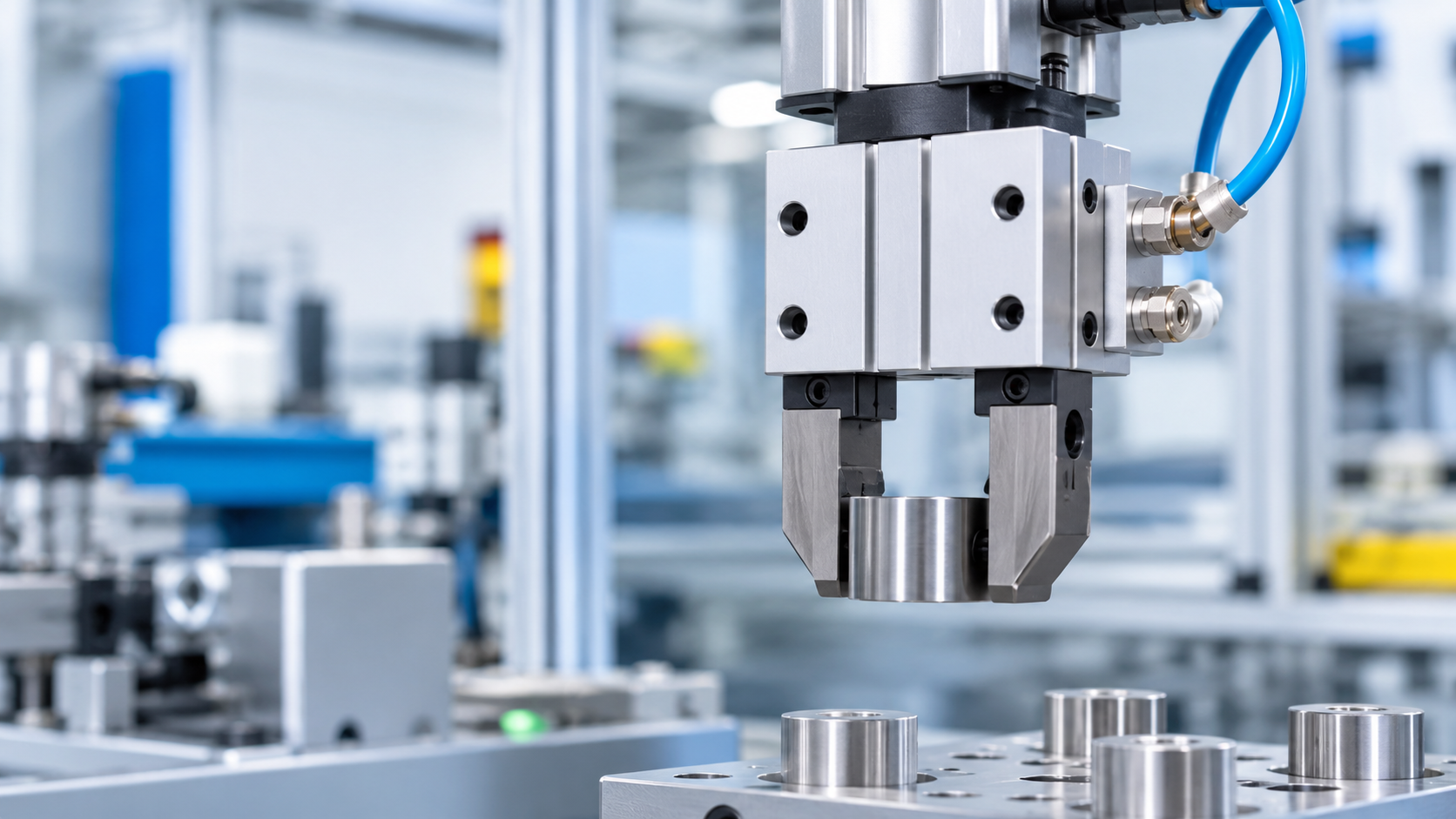
Purchasing pneumatic components for industrial automation requires more than comparing prices and checking stock availability. The selected component must satisfy the machine's mechanical, pneumatic, and operational requirements.
A Mercury Parallel Gripper can be used in automated handling systems where controlled jaw movement is required for gripping and releasing workpieces.
However, a gripper that works in one application may not be suitable for another. Differences in component weight, gripping orientation, operating pressure, and machine layout can influence the selection process.
For industrial procurement teams, collecting accurate technical information before ordering can help prevent compatibility problems, unnecessary replacements, and installation delays.
This article explains what buyers should check when sourcing parallel grippers for industrial applications.
1. Identify the Exact Application Requirement
The first step is understanding where the gripper will be used.
A machine builder may require a gripping device for robotic transfer, while a production facility may need a replacement for an existing assembly machine.
These situations involve different purchasing requirements.
For a new project, engineers should define the workpiece characteristics, movement sequence, and mounting arrangement.
For replacement applications, the existing product's model number and technical specifications are particularly important.
Buyers should also identify whether the system is intended for continuous production, occasional handling, or a specific automated process.
A clearly defined requirement helps suppliers recommend relevant equipment without relying on assumptions.
2. Verify Gripping Force and Workpiece Compatibility
Gripping force determines whether the selected gripper can hold a component under the expected operating conditions.
A Pneumatic Parallel Gripper must provide sufficient force while avoiding unnecessary pressure on delicate workpieces.
The required force depends on several factors.
These include component weight, surface friction, handling orientation, movement acceleration, and gripping-finger design.
For example, a gripper carrying a vertically suspended component must resist forces that could cause the workpiece to slip.
However, buyers should not assume that a larger gripper automatically provides a better solution.
Oversizing may increase equipment weight, installation space, and overall procurement costs.
The correct selection should be based on manufacturer specifications and application calculations.
3. Confirm Jaw Stroke and Mounting Dimensions
Jaw stroke is another important purchasing parameter.
It determines how far the gripping jaws can move during their operating cycle.
A model with insufficient stroke may not provide enough clearance to approach or release a component.
Buyers should measure the workpiece and determine the required jaw opening before selecting a product.
Mounting dimensions are equally important, especially when replacing an existing gripper.
Even two products with similar gripping capabilities may use different mounting arrangements.
Industrial buyers can review the available Pneumatic Cylinders & Grippers when comparing different configurations.
Before purchase, confirm that the selected model fits the available installation space and mounting interface.
4. Check Operating Pressure and Air Supply Requirements
An Industrial Pneumatic Gripper operates according to specific compressed-air requirements.
The available air pressure must fall within the model's approved operating range.
A mismatch between the equipment and air supply can affect gripping force and operating performance.
Buyers should confirm the rated pressure, required airflow, and pneumatic connection sizes.
The existing air supply should also provide suitable quality and stability.
When evaluating the complete automation arrangement, businesses can explore compatible FRL & Air Preparation Units.
Appropriate filtration and pressure regulation can support pneumatic equipment operation.
However, the correct air-treatment arrangement depends on the manufacturer's recommendations.
5. Compare Product Specifications Instead of Price Alone
Price is important during industrial procurement, but it should not be the only comparison factor.
A lower initial purchase price may not provide value if the component does not meet the application requirements.
Procurement teams should compare products based on technical compatibility, operating requirements, maintenance needs, documentation, and supplier support.
When comparing different brands, verify whether the alternatives provide equivalent gripping force, jaw movement, dimensions, and mounting arrangements.
A similar product appearance does not establish interchangeability.
Buyers evaluating the available Mercury range can explore Mercury Pneumatics for related industrial automation components.
Any alternative model should be checked against the original equipment requirements before purchase.
6. Evaluate Supplier Technical Support
Supplier reliability matters when sourcing pneumatic products for production equipment.
Industrial buyers should look for clear product information, model identification, and assistance with technical enquiries.
A supplier should be able to confirm relevant catalogue specifications or help obtain clarification from the manufacturer.
For replacement applications, buyers should share the existing model number, photographs, mounting details, and machine requirements.
This information can reduce confusion when several gripper configurations are available.
The supplier should also clarify product availability, dispatch expectations, and quotation terms.
These details are particularly important when components are required for scheduled maintenance or equipment installation.
7. Understand the Difference Between Dealers and Manufacturers
Industrial procurement teams often search for manufacturers, suppliers, dealers, and distributors using similar keywords.
However, these terms describe different commercial roles.
A manufacturer produces the component. A dealer or distributor supplies products manufactured by another company.
Buyers should understand the supplier's actual business role before making purchasing decisions.
V.S. Enterprises operates as an authorised Mercury dealer and super distributor and supplies pneumatic products to industrial customers from Noida.
This positioning is relevant for buyers seeking Mercury products through a distribution channel rather than approaching a manufacturing facility directly.
8. Prepare a Complete Enquiry Before Ordering
A clear purchasing enquiry helps the supplier understand the required product.
Industrial buyers should provide the application, workpiece weight, component dimensions, required jaw stroke, operating pressure, and expected quantity.
When available, they should include the required model number or technical drawing.
Additional information may be necessary for applications involving high cycle rates, unusual environmental conditions, or workpiece retention during air failure.
Customers looking for a Mercury Parallel Gripper can share these requirements with V.S. Enterprises for model-related assistance.
The supplier can then confirm relevant catalogue specifications, availability, and quotation details.
Conclusion
Ordering the correct pneumatic gripper requires coordination between engineering and procurement teams.
Workpiece compatibility, gripping force, jaw stroke, operating pressure, mounting dimensions, and supplier support should all be evaluated before placing an order.
A structured purchasing process helps businesses select components that suit their industrial automation requirements.
Rather than relying on price alone, buyers should compare verified technical specifications and obtain appropriate product information from the supplier.
Frequently Asked Questions
1. What should buyers check before ordering a Mercury Parallel Gripper?
Buyers should verify gripping force, jaw stroke, mounting dimensions, operating pressure, workpiece requirements, and model availability.
2. Can the same gripper handle different workpieces?
It may handle multiple workpieces if their dimensions, weight, and gripping requirements remain within the selected model's capabilities.
3. Why are mounting dimensions important?
Mounting dimensions determine whether the gripper can be installed correctly on the intended machine or robotic attachment.
4. Should buyers compare different gripper brands?
Yes. Buyers can compare products, but technical compatibility should be verified rather than assuming that similar-looking products are interchangeable.
5. Where can industrial buyers enquire about Mercury Parallel Grippers?
V.S. Enterprises supplies Mercury pneumatic products from Noida and accepts enquiries from industrial buyers seeking model information, availability, and quotations.

 English
 Arabic
 French
 Spanish
 Portuguese
 Deutsch
 Turkish
 Dutch
 Russian
 Romaian
 Portuguese (Brazil)
 Greek
