


 About Urh Social
 Terms of Service
 Политика конфиденциальности
 Contact
Hair Transplant in Al Ain for Crown Density and Coverage
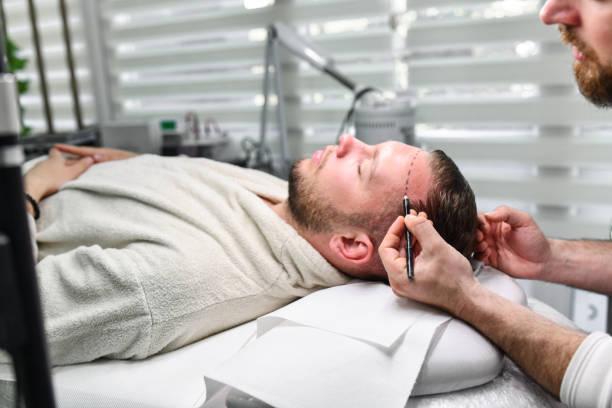
Crown hair loss has its own technical challenges because hair grows in a circular pattern rather than a simple forward direction. Hair Transplant in Al Ain can address crown thinning in suitable patients by considering the natural whorl, existing density, donor capacity, and the amount of coverage realistically achievable.
The crown is also a relatively large area. Trying to create maximum density across it can consume a substantial number of donor grafts, so careful prioritization is important.
Understanding Crown Hair Loss
Why the Crown Looks Different
The crown, or vertex, contains a natural spiral where hair changes direction around a central point. As density decreases, the scalp can become increasingly visible from above.
The pattern can vary from one person to another, which is why crown restoration should not use a fixed placement pattern.
Crown Loss Can Progress
Crown thinning may continue after transplantation if untreated native follicles remain susceptible to hair loss.
A restoration plan should therefore consider the current crown appearance and the possibility of future expansion.
How Crown Graft Placement Is Planned
Following the Natural Whorl
The grafts need to follow the direction of the surrounding hair. Incorrect angles can make the transplanted area look noticeably different from native crown hair.
The central point of the whorl also needs careful consideration because the direction changes around it.
Creating Visual Density
Crown restoration is not simply about filling every square centimeter equally. Grafts may be distributed according to the existing density and the way light exposes the scalp.
The objective is to create a natural visual transition rather than an artificial circular patch.
Why Donor Management Is Important
Crown Restoration Can Use Many Grafts
The crown can cover a wide surface area. A patient with limited donor density may therefore need to choose between crown coverage and other areas such as the frontal scalp.
Prioritizing the Most Visible Areas
A clinical plan can assess which areas have the greatest visual impact and how grafts should be allocated.
This may help preserve donor follicles for future treatment.
FUE and DHI for Crown Restoration
FUE
FUE allows individual grafts to be extracted from the donor region. Extraction should be distributed carefully to protect the appearance and future capacity of the donor area.
DHI
DHI provides controlled implantation of prepared follicles. In selected crown cases, detailed placement can help reproduce the changing angles of the natural whorl.
The appropriate technique depends on the patient's donor and recipient characteristics.
Patients researching crown hair restoration in Al Ain can discuss the expected coverage and graft requirements during consultation.
Questions About Crown Hair Transplants
“Why Does My Crown Need So Many Grafts?”
The crown is relatively broad, and useful visual coverage may require grafts across a sizeable area. The exact requirement varies with scalp size, existing hair, and desired density.
“Will the Crown Look Completely Full After Transplantation?”
Not necessarily. The result depends on donor supply, hair caliber, recipient-area size, and future native hair loss.
“Can Crown Hair Loss Continue After a Transplant?”
Yes. Transplantation adds follicles to the treated area but does not prevent untreated native follicles from thinning.
Designing the Crown Restoration
A crown-focused assessment can involve:
- Measuring the affected area.
- Identifying the natural whorl and direction changes.
- Assessing existing native density.
- Evaluating donor follicle availability.
- Determining realistic coverage.
- Planning graft placement around the whorl.
- Considering future crown enlargement.
This helps prevent excessive graft use on an area that may continue changing.
Why Lighting Can Affect Crown Appearance
The crown can look significantly thinner under strong overhead lighting. This is partly because light reflects from the scalp between separated hairs.
Patients sometimes interpret this as complete baldness when the area still contains miniaturized or fine native hairs.
A clinical assessment can distinguish actual baldness from reduced density.
Recovery and Crown Growth
Crown growth follows the same general biological cycle as other transplanted areas, but the visual change can seem slower because the recipient area is broad.
Temporary shedding may occur before new growth becomes visible. Density develops gradually as transplanted follicles enter their active growth phase.
Following aftercare instructions is important during the early healing period.
When Crown Transplantation May Need to Be Delayed
A clinician may recommend postponing treatment if the pattern is rapidly progressing or if the underlying cause of thinning has not been adequately assessed.
Other considerations can include:
- Limited donor supply
- Extensive untreated frontal loss
- Poor recipient-area condition
- Unrealistic density expectations
- Unstable native hair
In some cases, stabilizing native hair may be part of the broader treatment strategy.
Final Thoughts
Crown restoration requires more than filling a circular bald area. The natural whorl, changing hair angles, donor limitations, and future progression all influence how the grafts should be placed.
Patients considering Hair Transplant in Al Ain can speak with Tajmeels Clinic about crown density, donor capacity, graft planning, and realistic long-term coverage.

 English
 Arabic
 French
 Spanish
 Portuguese
 Deutsch
 Turkish
 Dutch
Dutch
 Italiano
 Romaian
 Portuguese (Brazil)
 Greek
Greek
