


 About Urh Social
 Terms of Service
 Politique de confidentialité
 Contact
Machinery Investment Under EPCG: Planning, Compliance and GST Considerations
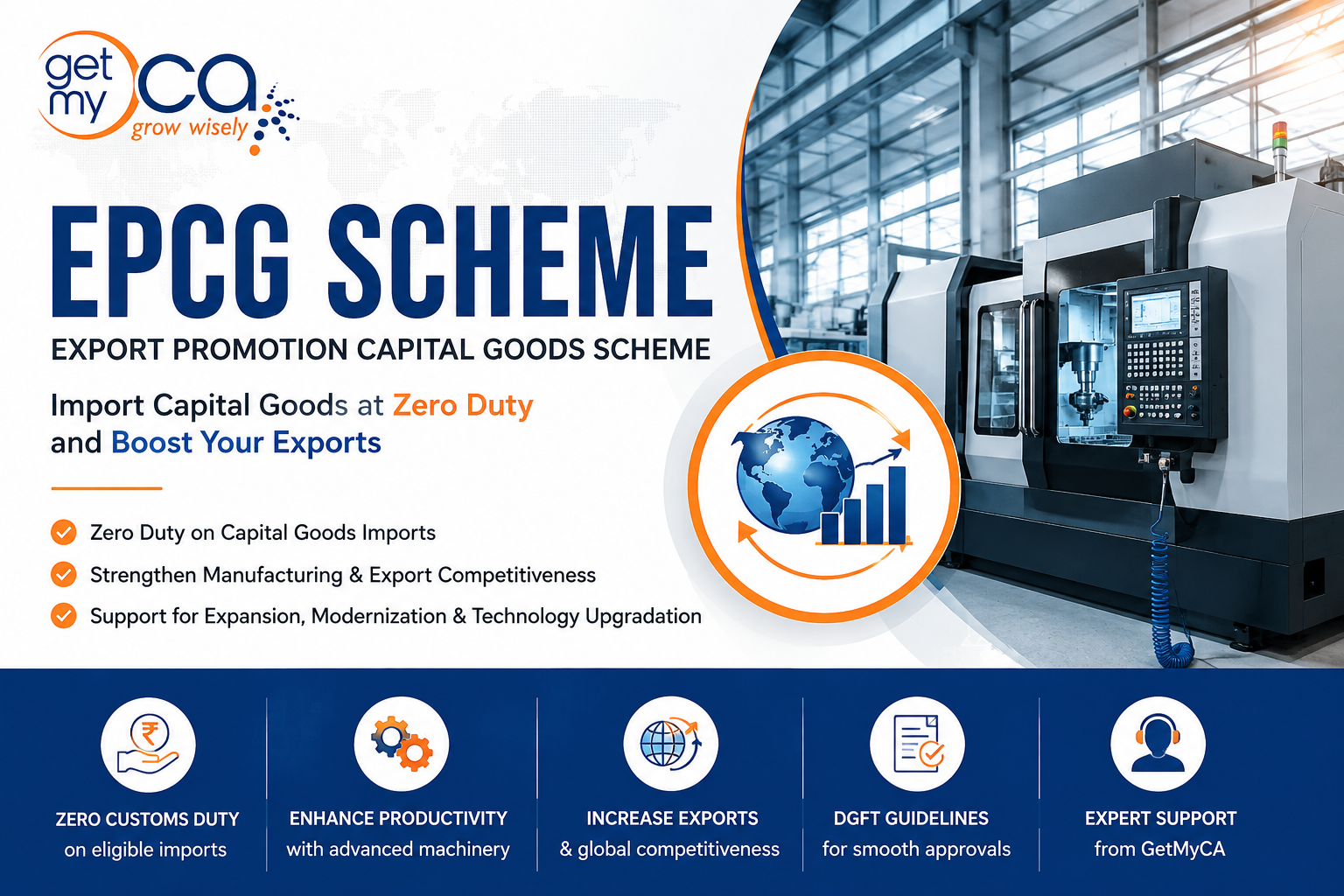
For manufacturers planning expansion, machinery investment can be one of the most important financial and operational decisions. New equipment may improve production capacity, automation, efficiency, product quality, and export competitiveness. However, high-value machinery purchases can also involve customs, DGFT, GST, financing, and documentation considerations.
Businesses evaluating an EPCG Machinery Consultant should ideally focus on pre-purchase planning rather than only post-purchase documentation. EPCG-related decisions can affect the structure of the machinery transaction, export commitments, and future compliance responsibilities.
Why Pre-Purchase EPCG Planning Matters
Machinery transactions under EPCG should generally be evaluated before the order, import, or procurement structure is finalized.
A manufacturer may need to review:
- Nature and specification of capital goods
- Proposed machinery value
- Import or eligible procurement structure
- DGFT authorization requirements
- Customs duty implications
- Historical export performance
- Projected exports
- Export obligation
- Installation requirements
- Compliance timelines
Early planning can help businesses understand whether the proposed machinery and export strategy are aligned.
EPCG Should Not Be Evaluated Only for Duty Savings
An immediate customs duty benefit may reduce the initial machinery acquisition cost, but EPCG also carries future responsibilities.
Manufacturers should evaluate whether their expected export performance is realistic enough to support the applicable export obligation.
A practical assessment may include:
- Existing export turnover
- Current overseas customers
- Expected production after machinery installation
- International demand
- Product pricing
- Capacity utilization
- Export development plans
This makes EPCG a long-term business planning decision rather than only a tax-saving exercise.
Machinery Modernization and Export Growth
Advanced machinery may allow manufacturers to improve production speed, consistency, precision, automation, and overall efficiency.
For export-oriented businesses, these improvements can help strengthen competitiveness in international markets. New machinery may also support the development of new product lines or increased production volumes.
However, the commercial benefit of the machinery should be assessed independently of any regulatory incentive.
Documentation Across the EPCG Lifecycle
Proper record keeping is important from the initial machinery planning stage through export obligation completion.
Depending on the transaction, businesses may need to maintain records relating to:
- EPCG authorization
- Machinery quotation
- Purchase order
- Supplier invoice
- Import documents
- Customs clearance
- Installation
- Export invoices
- Shipping records
- Export realization
- DGFT correspondence
- Export obligation monitoring
Organized documentation can make future compliance easier to manage.
GST Treatment of Machinery Should Be Reviewed Separately
GST implications connected with machinery purchases should not be automatically treated as part of EPCG.
Businesses researching GST Refund on Machinery Purchase should understand that GST paid on machinery does not automatically become refundable in cash. Input tax credit eligibility and refund eligibility are different concepts and depend on the applicable GST provisions and the nature of the business transaction.
This distinction is particularly important for manufacturers making high-value capital purchases.
Input Tax Credit and Machinery Purchases
Where GST is charged on an eligible machinery transaction, businesses may need to review whether the corresponding input tax credit can be claimed in accordance with GST requirements.
A GST review can include:
- Correct tax invoice
- GSTIN details
- Tax amount
- Supplier reporting
- Return reconciliation
- Nature of business use
- Credit eligibility
- Refund category, where relevant
Regular reconciliation can help identify errors before they become part of a larger compliance issue.
Why EPCG and GST Should Be Planned Together
Although EPCG and GST operate under different regulatory frameworks, both can affect the cash flow of a machinery project.
A manufacturer may therefore evaluate:
- Machinery purchase price
- Customs implications
- GST impact
- Available input tax credit
- Financing cost
- Export obligations
- Working capital requirements
- Expected production and revenue
Reviewing these areas together gives management a more complete picture of the proposed capital investment.
Common Planning Mistakes
Businesses should avoid:
- Ordering machinery before checking EPCG requirements
- Focusing only on customs duty savings
- Making unrealistic export projections
- Ignoring authorization conditions
- Assuming GST on machinery is automatically refundable
- Confusing input tax credit with cash refund
- Maintaining incomplete transaction records
- Reviewing compliance only after machinery installation
Early assessment can reduce avoidable procedural issues.
Machinery Investment as a Business Decision
Government schemes and tax benefits can improve the economics of a machinery project, but they should not be the sole reason for making the investment.
Manufacturers should also assess:
- Production demand
- Expected return on investment
- Technology improvement
- Financing capacity
- Operating costs
- Export opportunities
- Maintenance requirements
- Long-term expansion strategy
The strongest machinery projects are those that remain commercially viable even before considering potential regulatory benefits.
Conclusion
Machinery investment under EPCG requires coordination between procurement planning, DGFT compliance, export capability, documentation, and financial analysis.
Manufacturers should evaluate the EPCG structure before completing major machinery transactions and separately review GST treatment connected with the purchase. A coordinated but legally separate assessment of EPCG and GST can help businesses make more informed capital investment decisions.

 English
 Arabic
 Spanish
 Portuguese
 Deutsch
 Turkish
 Dutch
Dutch
 Italiano
 Russian
 Romaian
 Portuguese (Brazil)
 Greek
Greek
