


 About Urh Social
 Terms of Service
 Politique de confidentialité
 Contact
Do Turnkey Andrology Room Solutions Include HVAC Systems?
Introduction
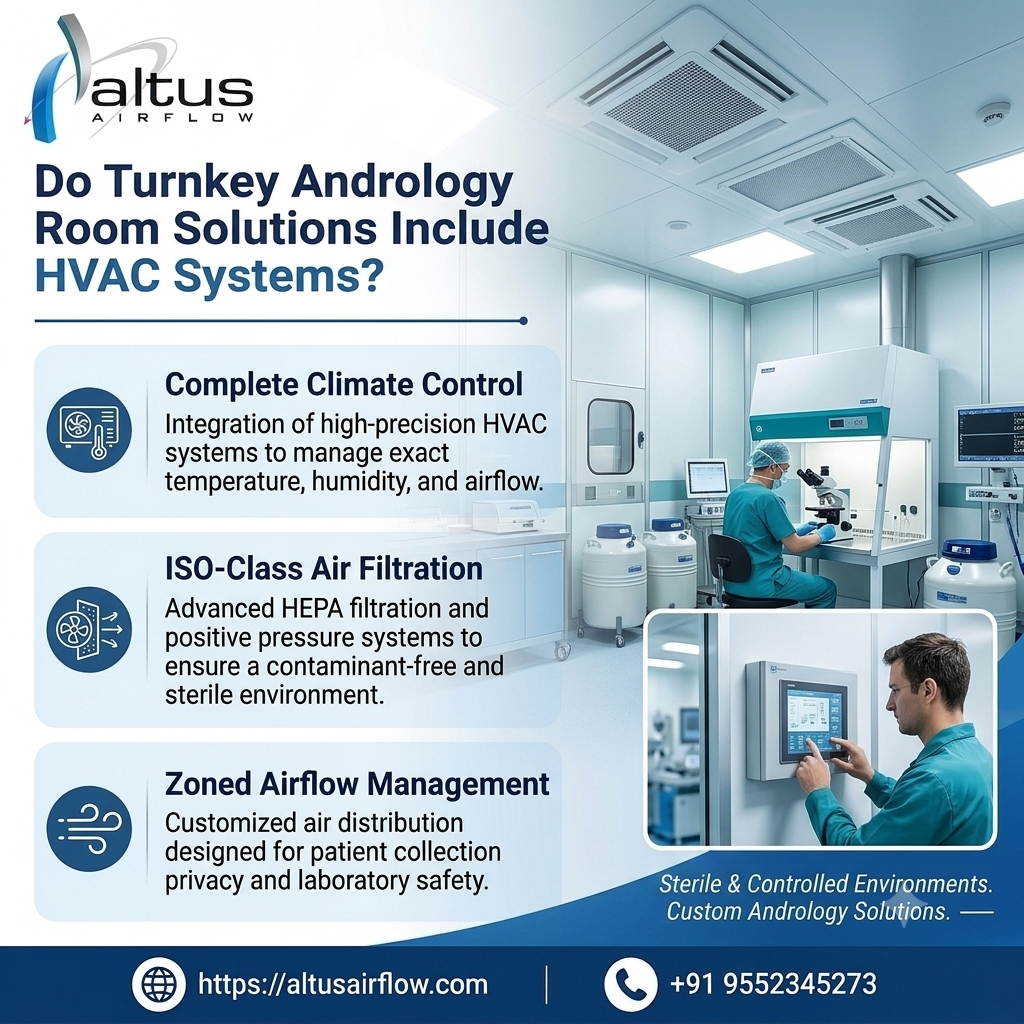
Altus Airflow understands that maintaining a controlled environment is essential for establishing a functional and reliable andrology laboratory. Turnkey Andrology Room Solutions generally include HVAC planning and integration to support temperature regulation, humidity management, air circulation, and filtration requirements. HVAC systems play an important role in maintaining suitable laboratory conditions for semen analysis, sperm processing, and other andrology procedures. Their design should consider laboratory activities, equipment requirements, environmental controls, and applicable healthcare standards to create an organised and hygienic workspace.
The exact HVAC configuration depends on the laboratory layout, clinical requirements, and project scope. Proper coordination between ventilation, filtration, electrical infrastructure, and modular construction helps establish a suitable laboratory environment.
1. Understanding the Role of HVAC Systems in Andrology Laboratories
HVAC stands for Heating, Ventilation, and Air Conditioning. It is an essential part of modern laboratory infrastructure because it helps maintain controlled indoor environmental conditions.
Andrology laboratories perform specialised activities that require suitable working conditions. These may include semen analysis, sperm preparation, sample processing, and other fertility-related laboratory procedures.
An appropriately designed HVAC system helps manage several environmental factors:
-
Temperature control: Maintains suitable room temperatures for laboratory activities and equipment.
-
Humidity management: Helps maintain appropriate relative humidity levels.
-
Air circulation: Supports consistent air distribution throughout the laboratory.
-
Air filtration: Helps reduce airborne particulate contamination.
-
Pressure management: Supports appropriate pressure relationships between laboratory spaces.
-
Environmental monitoring: Allows laboratory personnel to observe important operating conditions.
The HVAC design should be based on the laboratory's actual functions rather than using a standard configuration for every facility.
2. Do Turnkey Andrology Projects Include HVAC Installation?
Yes, HVAC systems are commonly included in comprehensive turnkey andrology laboratory projects. However, the exact scope depends on the project agreement, technical specifications, and requirements of the healthcare facility.
A turnkey project generally coordinates multiple activities under an integrated project execution approach. These activities may include site assessment, architectural planning, modular construction, electrical infrastructure, ventilation installation, and equipment integration.
HVAC-related project activities can include:
System planning: Assessing the laboratory layout, occupancy, equipment loads, and environmental requirements.
Equipment selection: Identifying appropriate air handling units, filters, ducting, and control systems.
Installation coordination: Integrating ventilation infrastructure with modular walls, ceilings, and electrical systems.
Environmental controls: Incorporating temperature, humidity, and pressure monitoring where required.
Testing and commissioning: Verifying that the installed system operates according to approved design specifications.
Hospitals and fertility centres should review the project scope carefully to confirm whether HVAC design, supply, installation, testing, and maintenance support are included.
3. Why Is Temperature Control Important in Andrology Rooms?
Temperature management is an important consideration in andrology laboratories because laboratory procedures and equipment may have specific environmental requirements.
Temperature fluctuations can affect laboratory working conditions and may influence the performance of certain instruments. Therefore, maintaining a stable indoor environment is an important part of laboratory planning.
A properly designed HVAC system helps provide:
-
Consistent room temperature.
-
Reduced temperature fluctuations.
-
Suitable conditions for laboratory personnel.
-
Better operating conditions for temperature-sensitive equipment.
-
Environmental stability during laboratory activities.
It is important to distinguish between room temperature control and the temperature requirements of individual samples or equipment. Sample handling procedures must follow validated laboratory protocols and manufacturer instructions.
For example, laboratory equipment may require dedicated temperature-controlled storage or specialised temperature regulation independent of the central HVAC system.
The HVAC design should therefore consider both general room conditions and specific equipment requirements.
4. Importance of Humidity Management in Andrology Laboratories
Relative humidity is another important environmental parameter that should be considered when designing an andrology laboratory.
Excessive humidity may contribute to condensation, moisture-related problems, and discomfort. Very low humidity can increase static electricity concerns and affect certain laboratory materials and equipment.
A suitable HVAC arrangement helps maintain controlled humidity conditions according to the laboratory's operational requirements.
Important considerations include:
Humidity monitoring: Environmental monitoring devices help laboratory personnel track relative humidity levels.
Moisture management: Appropriate HVAC design helps prevent unwanted moisture accumulation.
Equipment protection: Suitable environmental conditions support the operation of sensitive laboratory instruments.
Air conditioning integration: Cooling and dehumidification functions should be coordinated to maintain stable indoor conditions.
Preventive maintenance: Regular inspection of cooling coils, drainage systems, filters, and control devices helps maintain system performance.
Humidity requirements should be determined according to laboratory activities, equipment specifications, and applicable technical guidelines.
5. What Type of Air Filtration Is Required?
Air filtration is an important part of laboratory HVAC design. It helps remove airborne particles and supports the maintenance of suitable indoor air quality.
The filtration arrangement should be selected according to the laboratory's classification, activities, and contamination control requirements.
Common filtration components include:
A. Pre-Filters
Pre-filters capture larger airborne particles such as dust and other suspended contaminants. They help protect downstream filtration equipment and improve the overall filtration process.
B. Fine Filters
Fine filters provide an additional level of particulate removal. They help reduce the particle load entering the conditioned laboratory environment.
C. HEPA Filters
High-Efficiency Particulate Air filters are designed to remove very small airborne particles with high efficiency.
HEPA filtration may be required in designated laboratory areas depending on the risk assessment and technical specifications. However, not every andrology room automatically requires HEPA filtration.
The selection should be based on the intended laboratory activities, applicable standards, and the overall ventilation strategy.
D. Filter Monitoring
Differential pressure monitoring can help identify increasing resistance across filters as they accumulate particles.
Regular filter inspections, integrity testing where applicable, and timely replacement are important for maintaining filtration performance.
6. How Does Airflow Management Support Laboratory Hygiene?
Airflow management helps maintain suitable environmental conditions and supports contamination control within laboratory spaces.
The direction and distribution of air should be considered carefully because different laboratory activities may have different environmental requirements.
An effective ventilation arrangement should consider:
-
Supply air diffuser positioning.
-
Return air grille locations.
-
Air distribution patterns.
-
Room pressure relationships.
-
Equipment placement.
-
Personnel movement.
-
Door opening frequency.
Air should be distributed without creating unnecessary turbulence or interfering with designated controlled areas.
Some specialised laboratory processes may require localised protection or dedicated equipment rather than relying entirely on general room ventilation.
For example, biological safety cabinets and other specialised workstations have their own ventilation and performance requirements. Their selection should depend on the actual laboratory procedure and associated risk assessment.
7. Different HVAC Components Used in Andrology Room Projects
A complete HVAC arrangement consists of multiple components that work together to maintain the intended environmental conditions.
A. Air Handling Unit (AHU)
An air handling unit conditions and distributes air throughout the laboratory. It may include filtration, cooling, heating, and humidity management components depending on the system design.
B. Ducting System
Ductwork transports conditioned air from the air handling equipment to different laboratory areas.
Proper duct sizing, insulation, sealing, and installation are important for maintaining airflow performance.
C. Air Diffusers and Return Grilles
Air diffusers distribute conditioned air into the laboratory, while return grilles collect air for recirculation or exhaust according to the ventilation design.
Their placement should support balanced air distribution.
D. Exhaust Systems
Exhaust systems remove air from designated laboratory areas when required.
Their configuration depends on the nature of laboratory activities, chemical usage, equipment requirements, and applicable safety provisions.
E. Control Panels and Sensors
Control panels, temperature sensors, humidity sensors, and pressure monitoring devices help regulate and monitor environmental conditions.
An integrated control arrangement allows facility personnel to identify deviations and take corrective action.
8. How Should HVAC Systems Be Integrated With Modular Construction?
HVAC integration should be considered during the initial design stage of a modular andrology laboratory.
Modular construction involves prefabricated or specially designed wall, ceiling, and flooring systems. These components must accommodate ventilation infrastructure without compromising room functionality.
Important integration considerations include:
Ceiling coordination: Ceiling panels should accommodate air diffusers, return grilles, lighting, and other service installations.
Wall penetrations: Ductwork and utility connections should be properly sealed where they pass through modular panels.
Maintenance accessibility: HVAC components should remain accessible for inspection and servicing.
Electrical coordination: Ventilation equipment should have appropriate electrical connections and control arrangements.
Space planning: AHUs, ducting, and other equipment should be positioned without affecting laboratory movement and equipment placement.
Hygienic finishing: Modular surfaces should support cleaning and routine disinfection.
Coordinating these systems during design helps reduce installation conflicts and supports an organised laboratory layout.
9. What Environmental Monitoring Systems Should Be Included?
Environmental monitoring helps laboratory personnel understand whether the HVAC system is maintaining the intended operating conditions.
Modern laboratory infrastructure can incorporate monitoring devices and control systems to track different environmental parameters.
Common monitoring provisions include:
-
Digital temperature displays.
-
Relative humidity sensors.
-
Differential pressure indicators.
-
Filter pressure monitoring.
-
HVAC operating status indicators.
-
Alarm notifications for abnormal conditions.
-
Centralised environmental monitoring where required.
Monitoring systems should be selected according to laboratory requirements and operational procedures.
Hospitals should also establish procedures for recording environmental readings, reviewing abnormal conditions, and documenting corrective actions.
This helps maintain traceability and supports laboratory quality management.
10. HVAC Testing, Validation, and Commissioning
Installing an HVAC system does not automatically guarantee that it will deliver the required environmental performance.
Testing and commissioning are essential steps in verifying the installed system.
A comprehensive verification process may include:
-
Airflow measurement: Checks whether supply and return air quantities match the approved design.
-
Air velocity testing: Evaluates airflow velocity at designated locations.
-
Temperature verification: Confirms that the system maintains the specified temperature range.
-
Humidity assessment: Checks relative humidity performance.
-
Pressure differential testing: Verifies the intended pressure relationships between rooms.
-
Filter integrity testing: Evaluates HEPA filter installation and leakage performance where applicable.
-
Air distribution assessment: Checks the distribution of conditioned air throughout the laboratory.
-
Control system testing: Verifies sensors, alarms, and environmental monitoring functions.
The results should be documented in commissioning reports.
Where applicable, performance qualification and periodic requalification should be conducted according to laboratory quality procedures and relevant standards.
11. Maintenance Requirements for Andrology Room HVAC Systems
Regular HVAC maintenance is necessary to maintain reliable environmental performance.
Without proper maintenance, filters may become clogged, airflow may decrease, and environmental conditions may become unstable.
A preventive maintenance programme should include:
Filter replacement: Inspect and replace filters according to manufacturer recommendations and measured performance.
AHU inspection: Check fans, motors, cooling coils, drain pans, and other important components.
Duct inspection: Examine ductwork for damage, leakage, and contamination.
Sensor calibration: Verify the accuracy of temperature, humidity, and pressure monitoring devices.
Drainage maintenance: Keep condensate drainage arrangements clean and functional.
Control system inspection: Check operating settings, alarms, and automation functions.
Maintenance activities should be documented to support long-term system performance and laboratory quality management.
12. How to Choose the Right Turnkey Andrology Project Partner?
Selecting the right project partner is essential for developing a functional and well-coordinated laboratory.
Hospitals and fertility centres should evaluate providers based on their technical capabilities and experience with specialised healthcare infrastructure.
Important selection criteria include:
-
Experience in IVF and andrology laboratory projects.
-
Knowledge of HVAC and filtration systems.
-
Understanding of laboratory environmental requirements.
-
Modular construction capabilities.
-
Electrical and utility integration expertise.
-
Availability of technical drawings and documentation.
-
Testing and commissioning support.
-
Maintenance and after-installation assistance.
A dependable project partner should understand that HVAC is not an isolated installation. It must work together with the laboratory layout, modular interiors, equipment, and operational requirements.
Conclusion
HVAC systems are an important component of modern andrology laboratory infrastructure. They help regulate temperature, humidity, airflow, filtration, and environmental conditions required for specialised laboratory activities. A properly planned system should be integrated with modular construction, electrical infrastructure, and laboratory equipment from the beginning of the project.
Comprehensive Turnkey Andrology Room Solutions can include HVAC planning, installation, integration, testing, and commissioning, depending on the agreed project scope.
Altus Airflow focuses on specialised healthcare and fertility laboratory infrastructure, helping facilities coordinate modular construction, ventilation, filtration, and technical installations. With attention to engineering requirements and project execution, Altus Airflow supports the development of functional and well-planned andrology laboratory environments.
Frequently Asked Questions (FAQs)
1. Do turnkey andrology room solutions include HVAC systems?
Yes, Turnkey Andrology Room Solutions commonly include HVAC planning and integration, depending on the project scope and laboratory requirements.
2. Why are HVAC systems important in andrology laboratories?
They help maintain suitable temperature, humidity, airflow, and indoor air quality.
3. Are HEPA filters necessary in andrology rooms?
HEPA filters may be required in designated areas depending on laboratory activities, risk assessments, and technical specifications.
4. Does HVAC control laboratory humidity?
Yes. HVAC systems can incorporate humidity control and monitoring to maintain specified environmental conditions.
5. What is the role of an air handling unit in an andrology laboratory?
An AHU conditions, filters, and distributes air throughout the laboratory.
Read Our Previous Blog ---------------> What is the expected lifespan of a cardiac OT built by a Modular Cardiac OT Engineering Company?

 English
 Arabic
 Spanish
 Portuguese
 Deutsch
 Turkish
 Dutch
 Italiano
 Russian
 Romaian
 Portuguese (Brazil)
 Greek
