


 About Urh Social
 Terms of Service
 Datenschutzbestimmungen
 Contact
Global Low Alcohol Beverage Market Size, CAGR and Future Outlook
Market Overview
The Low Alcohol Beverage Market is witnessing steady growth as consumers increasingly shift toward healthier lifestyles, moderate drinking habits, and beverages with reduced alcohol content. Growing awareness of the health risks associated with excessive alcohol consumption, rising demand for premium beverages, and increasing product innovation are creating significant opportunities for manufacturers. Low-alcohol beer, wine, ready-to-drink (RTD) beverages, cider, and spirits are gaining popularity among consumers seeking alternatives to traditional alcoholic drinks without compromising taste and social drinking experiences.
Market Estimation, Growth Drivers and Opportunities
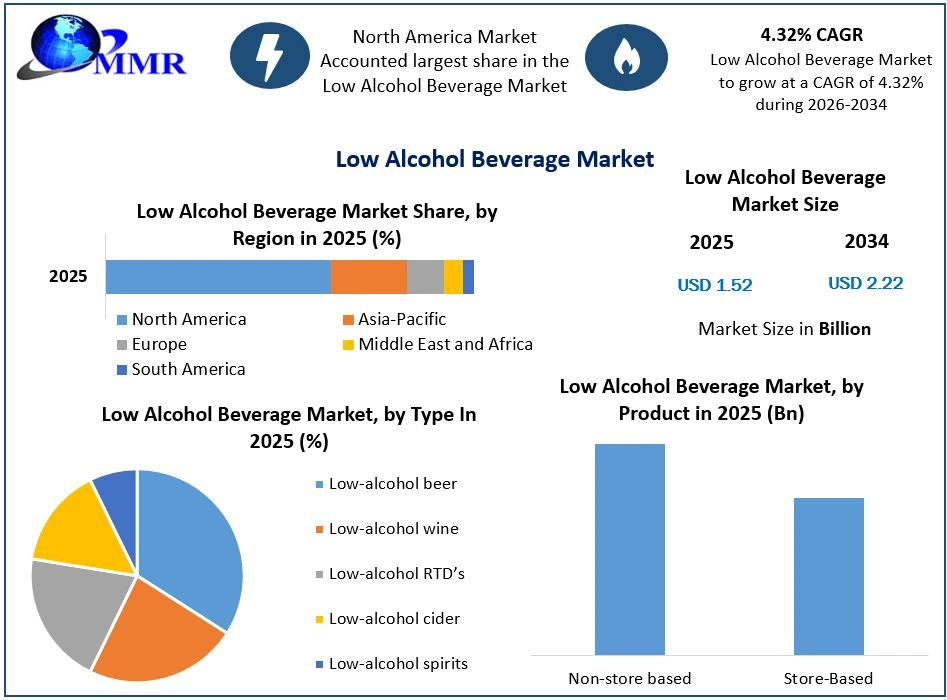
According to Maximize Market Research, the Global Low Alcohol Beverage Market was valued at USD 1.40 billion in 2023 and is projected to reach USD 1.89 billion by 2030, growing at a CAGR of 4.32% during the forecast period from 2024 to 2030. Increasing health consciousness, changing consumer preferences, and the growing popularity of mindful drinking are among the major factors supporting market expansion.
The rising prevalence of lifestyle-related health concerns has encouraged consumers to reduce their alcohol consumption. Low-alcohol beverages provide an alternative for individuals who want to enjoy social drinking occasions while limiting alcohol intake. Furthermore, increasing demand for gluten-free, low-calorie, and premium beverage products is encouraging manufacturers to introduce innovative formulations and diversified product portfolios.
Technological advancements in brewing, fermentation, filtration, and alcohol-removal processes are also supporting product development. Manufacturers are investing in advanced production techniques to preserve the original aroma, flavour, and texture of beverages while reducing alcohol content. Additionally, expanding e-commerce platforms, attractive packaging, and growing retail availability are creating new business opportunities. However, relatively high production costs and premium product pricing remain potential challenges for market participants.
Request To Free Sample of This Strategic Report ➤ https://www.maximizemarketresearch.com/request-sample/112935/
United States Market Trends and Investment Opportunities
The United States is emerging as an important market for low and no-alcohol beverages, supported by increasing consumer interest in moderation, wellness, and premium beverage experiences. According to IWSR's January 2025 analysis, the US no-alcohol beverage market is forecast to grow at an 18% volume CAGR between 2024 and 2028, potentially approaching USD 5 billion by 2028. No-alcohol beer remains a major growth contributor, while non-alcoholic ready-to-drink beverages and spirits are attracting increasing consumer attention. In March 2025, Anheuser-Busch reported that the US non-alcohol beer category had grown 23% year-to-date through February 16, 2025. The company also highlighted the early performance of Michelob ULTRA Zero, introduced nationally in January 2025. These developments demonstrate increasing investment in product innovation, flavour development, and premium alcohol-free alternatives. Growing distribution through supermarkets, restaurants, bars, and online platforms is further strengthening the market's commercial potential.
Market Segmentation Analysis
Based on product type, the Low Alcohol Beverage Market is segmented into low-alcohol beer, low-alcohol wine, low-alcohol ready-to-drink beverages, low-alcohol cider, and low-alcohol spirits. Among these, the low-alcohol RTD segment held the largest market share in 2023. Its dominance is supported by increasing consumer preference for convenient, flavourful, and ready-to-consume beverage options. Manufacturers are introducing innovative flavours, colourful packaging, and different product formulations to attract younger adult consumers and expand their customer base.
Based on distribution channel, the market is divided into store-based and non-store-based segments. The non-store-based segment accounted for the largest market share in 2023, supported by the growing popularity of e-commerce platforms, convenient online purchasing, and wider digital product availability. Online distribution also allows manufacturers to reach consumers across different geographical markets.
Competitive Analysis
The Global Low Alcohol Beverage Market is characterized by competition among established beverage manufacturers focusing on product innovation, brand development, strategic partnerships, and distribution expansion. Five prominent industry participants include:
1. Heineken N.V.: Heineken is strengthening its position through its Heineken 0.0 portfolio and continued investment in alcohol-free brewing. The company expanded Heineken 0.0 draught availability to more than 10,000 European outlets during 2025. Its focus on maintaining authentic beer flavour and expanding availability across restaurants and hospitality establishments supports wider consumer adoption.
2. Anheuser-Busch InBev SA/NV: Anheuser-Busch is investing in innovative alcohol-free beer products through brands such as Michelob ULTRA Zero. Introduced nationally in January 2025, the product combines zero alcohol with only 29 calories. Its marketing strategy emphasizes active lifestyles, premium taste, and responsible consumption, strengthening the company's position in the growing category.
3. Carlsberg Breweries A/S: Carlsberg is expanding its alcohol-free portfolio through products such as Carlsberg 0.0 and other reduced-alcohol offerings. Its product development strategy focuses on maintaining traditional beer characteristics while reducing alcohol content. Improvements in brewing technology and flavour preservation are important areas supporting its competitive positioning.
4. Asahi Group Holdings Ltd.: Asahi is expanding its low-alcohol and non-alcoholic beverage portfolio through its Smart Drinking strategy. Its offerings include Asahi Beery, containing 0.5% alcohol, Asahi Super Dry Dry Crystal, containing 3.5% alcohol, and Asahi Zero. The company is also exploring innovative ready-to-drink products and distinctive packaging to attract changing consumer preferences.
5. Diageo plc: Diageo is strengthening its presence through products such as Guinness 0.0, Seedlip, Gordon's 0.0, and Tanqueray 0.0. The company focuses on delivering premium beverage experiences through botanical ingredients, flavour innovation, and advanced production techniques. Its expanding portfolio supports consumers seeking alternatives to traditional alcoholic spirits and beer.
Regional Analysis
United States: North America represented nearly one-fourth of global low-alcohol beverage consumption, making it the largest regional market according to the report. Increasing health awareness, premium beverage demand, product innovation, and expanding retail distribution are supporting regional growth. The United States remains an important market for manufacturers introducing innovative alcohol-free and reduced-alcohol products.
United Kingdom: The UK market is benefiting from increasing interest in mindful drinking and the expansion of alcohol-free beer, wine, and spirits. The government's alcohol duty framework, implemented in February 2025, introduced tax rates based on alcoholic strength, including a lower rate for products below 3.5% ABV. This taxation structure provides an important consideration for manufacturers developing reduced-strength beverages.
Germany: Germany represents an established opportunity due to its strong beer culture and increasing availability of alcohol-free beer alternatives. Established brewing companies are investing in product development, improved flavour profiles, and wider retail distribution to attract health-conscious consumers.
France: France offers growth opportunities through increasing interest in premium wine alternatives, low-alcohol sparkling beverages, and sophisticated non-alcoholic drinks. Product innovation and changing consumer preferences are encouraging beverage producers to diversify their portfolios.
Japan: Japan is an important market for innovative low-alcohol and ready-to-drink beverages. Demand for convenient canned beverages, reduced-alcohol products, and distinctive flavours is supporting manufacturers' product development and distribution strategies.
Request To Free Sample of This Strategic Report ➤ https://www.maximizemarketresearch.com/request-sample/112935/
Key Players in the Global Low Alcohol Beverage Market
-
A. Le Coq Estonia
-
Abita Brewing Company
-
Aftershock Brewing Co.
-
Anheuser-Busch InBev SA/NV
-
Asahi Premium Beverages Pty., Ltd.
-
Bacardi Ltd.
-
Bell’s Brewery, Inc.
-
Blake’s Hard Cider Co.
-
Blue Moon Brewing Company
-
Carlsberg Breweries A/S
-
CODY’s Drinks International GmbH
-
Constellation Brands, Inc.
-
Farmageddon Brewery
-
Hartwall Ltd.
-
Heineken NV
-
HP Bulmer Limited
-
Jack’s Hard Cider
Conclusion
The Global Low Alcohol Beverage Market is expected to experience consistent growth through 2030, supported by changing consumer lifestyles, increasing health awareness, and continuous product innovation. The growing popularity of low-alcohol RTD beverages, expanding e-commerce distribution, and improvements in alcohol-reduction technologies will remain important growth factors. In our view, manufacturers that prioritize authentic flavour, affordable pricing, premium ingredients, and innovative packaging will gain a competitive advantage. Furthermore, investments in advanced brewing technologies, sustainable production, and emerging distribution channels will create attractive opportunities for established companies and new market entrants. As consumers increasingly seek balanced drinking experiences, low-alcohol beverages are positioned to become an important part of the global beverage industry's future.
About Maximize Market Research
Maximize Market Research Pvt. Ltd. (MMR) is a global market research and consulting company that provides reliable, data-focused, and practical business insights. The firm serves a wide range of industries, including healthcare, pharmaceuticals, technology, automotive, electronics, chemicals, personal care, and consumer goods. Through market forecasts, competitive analysis, strategic consulting, and industry impact assessments, MMR helps organizations understand changing market conditions, identify growth opportunities, and make informed business decisions for long-term success.
Contact Us
Maximize Market Research Pvt. Ltd.
2nd Floor, Navale IT Park Phase 3
Pune Banglore Highway, Narhe
Pune, Maharashtra 411041, India
Phone: +91 9607365656
Email: [email protected]

 English
 Arabic
 French
 Spanish
 Portuguese
 Turkish
 Dutch
 Italiano
 Russian
 Romaian
 Portuguese (Brazil)
 Greek
