


 About Urh Social
 Terms of Service
 Privacy Policy
 Contact
How Can Hospitals Choose the Best Cardiac Modular OT With Laminar Airflow?
Introduction
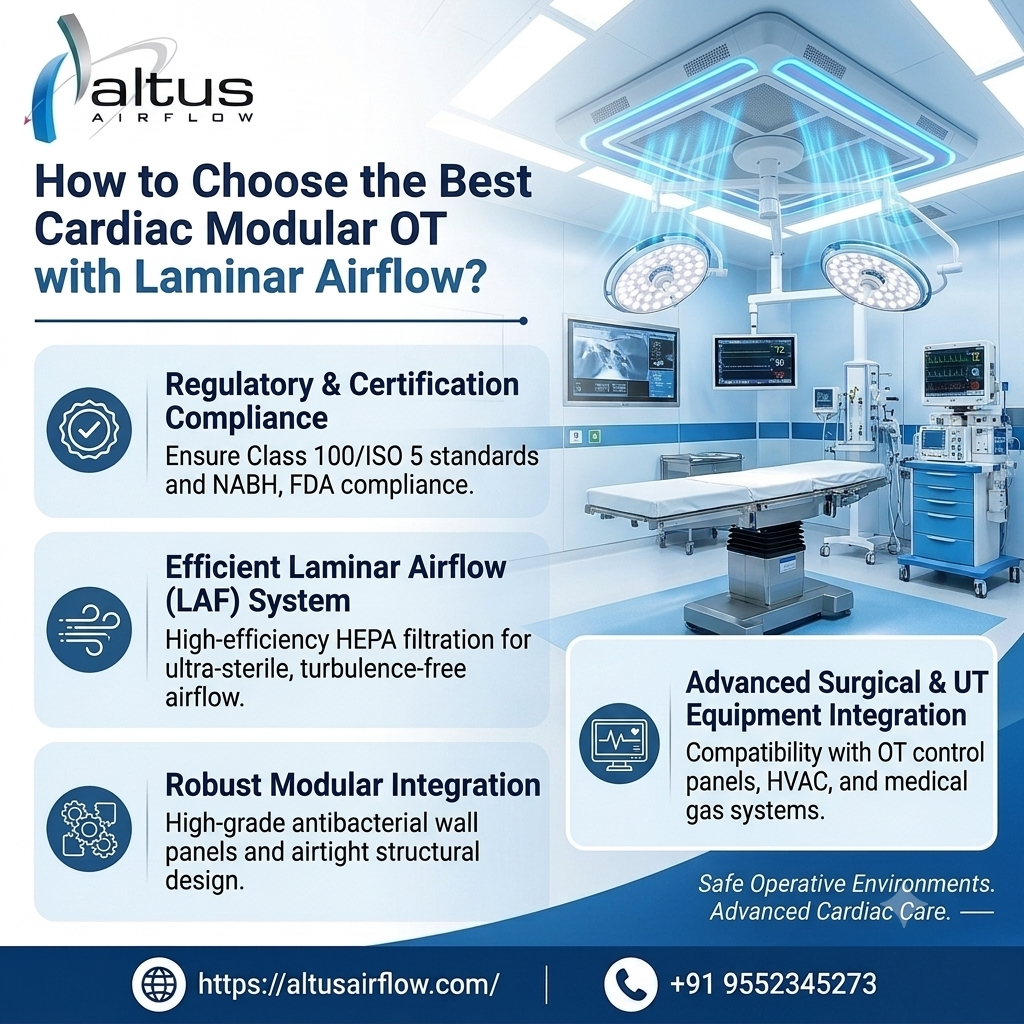
Altus Airflow understands that selecting the right operating theatre infrastructure is essential for hospitals performing complex cardiac procedures. A Cardiac Modular OT With Laminar Airflow provides a controlled surgical environment through specialised ventilation, filtration, modular construction, and integrated medical infrastructure. Hospitals must evaluate several factors, including airflow distribution, HEPA filtration, temperature control, humidity management, infection prevention, and equipment integration before selecting a suitable system. Proper planning helps create an efficient operating environment that supports surgical teams and patient safety.
Choosing the right modular OT also requires coordination between healthcare professionals, architects, engineers, and technical consultants. Every component should meet the hospital's clinical requirements and applicable healthcare standards.
1. Understand the Hospital's Surgical Requirements
The first step in selecting an appropriate modular cardiac operating theatre is understanding the hospital's surgical requirements. Different cardiac procedures may require specific infrastructure, equipment arrangements, and environmental conditions.
Hospitals should assess their current and future surgical activities before finalising the operating theatre design.
Important considerations include:
-
Types of cardiac procedures performed regularly.
-
Number of operating theatres required.
-
Expected surgical workload.
-
Medical equipment requirements.
-
Number of healthcare professionals using the facility.
-
Space required for surgical instruments and supporting equipment.
-
Future expansion and technology integration.
Understanding these requirements helps hospitals select a design that supports clinical activities without creating unnecessary workflow restrictions.
The planning process should involve surgeons, anaesthesiologists, infection control specialists, nursing teams, and hospital facility managers. Their input helps ensure that the proposed infrastructure supports actual clinical operations.
2. Evaluate the Laminar Airflow System
Airflow management is one of the most important factors when selecting a cardiac modular operating theatre. A properly designed ventilation system helps maintain controlled environmental conditions and supports contamination management.
Laminar airflow systems are designed to deliver filtered air in a controlled direction across a designated area. Their effectiveness depends on airflow velocity, distribution, filtration, room configuration, and the interaction between supply and return air.
Hospitals should evaluate the following features:
Airflow distribution: The system should provide an appropriately designed airflow pattern over the designated surgical area.
Air velocity: Air velocity should be established according to the ventilation design and applicable technical requirements.
Air supply arrangement: Ceiling-mounted supply systems should be positioned to support the intended airflow coverage.
Return air locations: Properly positioned return air grilles help maintain the designed airflow pattern.
Pressure management: Appropriate pressure relationships between the operating theatre and adjacent spaces help control unwanted air movement.
Hospitals should request airflow design calculations and commissioning documentation before approving the installation.
3. Check HEPA Filtration and Air Quality Standards
High-efficiency particulate air filtration plays an important role in operating theatre ventilation systems. HEPA filters are designed to remove airborne particles from the supplied air.
However, filter selection alone does not determine overall air quality. Proper installation, sealing, maintenance, and performance testing are equally important.
Before selecting a modular OT system, hospitals should examine:
-
HEPA filter efficiency and classification.
-
Filter housing construction.
-
Air leakage prevention.
-
Filter replacement accessibility.
-
Differential pressure monitoring.
-
Filter integrity testing.
-
Documentation of filtration performance.
The ventilation system should also incorporate suitable pre-filtration stages to protect downstream HEPA filters and maintain system performance.
Hospitals should ensure that filter specifications comply with the applicable standards and project requirements. Regular inspection and replacement schedules should be established to maintain consistent filtration performance.
4. Assess the Modular Construction and Interior Materials
The quality of modular construction directly influences the functionality, hygiene, and maintenance of an operating theatre.
Hospitals should select modular wall, ceiling, and flooring systems that are suitable for demanding healthcare environments.
Important construction features include:
Antibacterial-compatible surfaces: Interior materials should support effective cleaning and disinfection. Antibacterial claims should be supported by appropriate product documentation.
Seamless flooring: Seamless or appropriately jointed flooring helps minimise dirt accumulation and simplifies routine cleaning.
Smooth wall panels: Smooth, non-porous surfaces reduce areas where dust and contaminants can collect.
Sealed joints: Properly sealed connections help maintain room integrity and support environmental control.
Durable ceiling systems: Ceiling panels should accommodate surgical lights, medical pendants, and ventilation components according to the structural design.
Easy maintenance: Modular components should allow convenient inspection, servicing, and replacement when required.
Hospitals should examine material samples, technical specifications, cleaning compatibility, and installation quality before approving the construction system.
5. Examine Temperature and Humidity Control
Temperature and humidity management are important for maintaining suitable operating theatre conditions.
Cardiac procedures involve specialised equipment, surgical personnel, and patients who require a controlled clinical environment. Inadequate environmental control may affect staff comfort, equipment operation, and the performance of the ventilation system.
Hospitals should evaluate whether the proposed HVAC system provides:
-
Accurate temperature regulation.
-
Appropriate humidity management.
-
Continuous environmental monitoring.
-
Reliable air circulation.
-
Suitable filtration arrangements.
-
Effective control system integration.
Temperature and relative humidity settings should be established according to applicable healthcare guidelines, surgical requirements, and hospital protocols.
The HVAC system should also be designed to maintain the required environmental conditions under different operating loads.
6. Consider Infection Prevention and Contamination Control
Infection prevention should be a major consideration when hospitals select an operating theatre infrastructure system.
A properly planned ventilation arrangement, suitable interior materials, and effective cleaning procedures work together to support contamination control.
Hospitals should evaluate the following aspects:
Controlled airflow: The ventilation arrangement should minimise undesirable air movement and support the intended clean-zone strategy.
Appropriate air pressure: Pressure relationships should be maintained according to the room classification and applicable healthcare requirements.
Effective filtration: Properly selected and maintained filters help control airborne particulate contamination.
Hygienic surfaces: Walls, ceilings, floors, and equipment surfaces should be compatible with hospital cleaning and disinfection procedures.
Door arrangements: Hermetically sealed or appropriately sealed doors help maintain the designed room pressure and environmental conditions.
Monitoring systems: Differential pressure indicators and environmental monitoring devices help facility teams identify abnormal operating conditions.
Hospitals should also consider infection control protocols for personnel movement, equipment handling, and cleaning activities.
7. Review Surgical Lighting and Medical Equipment Integration
A modern cardiac operating theatre requires several specialised medical systems. Their positioning should be planned carefully to support surgical workflow and avoid interference with ventilation and other infrastructure.
Before selecting a modular OT design, hospitals should review the integration of:
-
LED surgical lights.
-
Ceiling-mounted medical pendants.
-
Anaesthesia workstations.
-
Patient monitoring systems.
-
Surgical display screens.
-
Electrical outlets and control panels.
-
Medical gas supply points.
-
Emergency communication systems.
Surgical lighting should provide suitable illumination and shadow management for cardiac procedures.
Medical pendants should be positioned to provide convenient access to gases, electrical connections, and medical equipment without obstructing surgical movement.
Equipment integration should be finalised during the design stage rather than treated as an additional installation activity. This reduces potential coordination problems during project execution.
8. Verify the Design and Technical Capabilities
Hospitals should carefully review the technical capabilities of the proposed Cardiac Modular OT With Laminar Airflow before selecting an installation partner.
A detailed technical assessment helps determine whether the proposed system meets the hospital's operational and engineering requirements.
Important evaluation criteria include:
Design documentation: Review architectural drawings, HVAC layouts, electrical drawings, and equipment positioning plans.
Airflow calculations: Examine the ventilation design, airflow distribution, filtration requirements, and pressure management strategy.
Material specifications: Verify the quality, durability, and cleaning compatibility of modular construction materials.
Electrical planning: Check electrical distribution, backup power arrangements, earthing, and equipment connections.
Safety provisions: Evaluate emergency systems, alarms, monitoring arrangements, and accessibility.
Compliance documentation: Review relevant technical certifications, product specifications, and applicable healthcare engineering standards.
Hospitals should request detailed project documentation and technical explanations before approving the final design.
9. Choose an Experienced Modular OT Installation Partner
Selecting an experienced installation partner is another important step in developing a modern cardiac operating theatre.
The project team should understand the requirements of healthcare infrastructure and coordinate different technical systems effectively.
Hospitals should evaluate potential installation partners based on:
-
Experience in modular operating theatre projects.
-
Knowledge of HVAC and filtration systems.
-
Understanding of healthcare electrical requirements.
-
Ability to coordinate medical equipment integration.
-
Quality of engineering documentation.
-
Installation and commissioning capabilities.
-
Availability of technical support.
-
Maintenance and after-installation services.
It is also beneficial to review previous project references and completed installations.
A reliable installation partner should provide clear communication throughout the project, from initial consultation and planning to installation, testing, and handover.
10. Understand the Importance of Testing and Commissioning
Even a well-designed operating theatre requires proper testing before clinical operations begin.
Commissioning helps verify whether the installed infrastructure performs according to the approved technical specifications.
Hospitals should ensure that the commissioning process includes:
-
Airflow testing: Verify the designed airflow distribution and air movement patterns.
-
HEPA filter integrity testing: Check filter installation and sealing performance.
-
Air velocity measurement: Measure airflow velocity at designated locations.
-
Pressure differential testing: Confirm the required pressure relationships between rooms.
-
Temperature and humidity testing: Verify environmental control performance.
-
Electrical safety testing: Inspect electrical connections, protection systems, and emergency power arrangements.
-
Lighting verification: Confirm surgical illumination and functional performance.
-
Integrated system testing: Check the coordination of ventilation, electrical systems, alarms, and medical equipment.
Hospitals should obtain commissioning reports and maintain records for future inspections.
Periodic performance verification is also necessary to identify changes in airflow, filtration, and environmental conditions.
11. Consider Future Expansion and Technology Upgrades
Healthcare technology continues to develop, and cardiac operating theatres may require infrastructure upgrades over time.
Hospitals should therefore consider future requirements during the initial planning stage.
Useful considerations include:
-
Provision for additional medical equipment.
-
Flexible electrical infrastructure.
-
Expandable monitoring systems.
-
Integration with digital operating theatre technology.
-
Compatibility with advanced surgical imaging systems.
-
Accessible maintenance arrangements.
-
Adaptable modular ceiling and wall configurations.
A flexible design can help hospitals accommodate changing clinical requirements without unnecessary disruption to existing operations.
Future planning should also consider the availability of replacement components, technical support, and updated equipment specifications.
12. Common Mistakes Hospitals Should Avoid
Hospitals should avoid selecting modular operating theatre infrastructure based only on appearance or individual equipment specifications.
Some common mistakes include:
-
Ignoring detailed airflow calculations.
-
Selecting filtration systems without checking performance documentation.
-
Overlooking pressure differential requirements.
-
Failing to coordinate surgical lights and medical pendants.
-
Choosing interior materials that are difficult to clean.
-
Neglecting HVAC maintenance accessibility.
-
Ignoring emergency electrical arrangements.
-
Skipping commissioning and performance testing.
-
Not involving clinical teams during the design stage.
A comprehensive evaluation process helps hospitals avoid these challenges and establish a suitable operating environment.
Conclusion
Choosing the right cardiac operating theatre requires careful evaluation of ventilation performance, HEPA filtration, modular construction, environmental control, medical equipment integration, and electrical safety. Hospitals should prioritise technical documentation, experienced installation partners, and comprehensive commissioning to ensure that every component performs according to the intended design.
A well-planned Cardiac Modular OT With Laminar Airflow supports controlled environmental conditions, organised surgical workflows, and the infrastructure requirements of modern cardiac procedures.
Altus Airflow specialises in modular healthcare infrastructure solutions, helping hospitals plan operating theatres with coordinated ventilation, filtration, modular interiors, and medical equipment integration. With attention to engineering requirements and project execution, Altus Airflow supports hospitals in developing functional and reliable surgical environments.
Frequently Asked Questions (FAQs)
1. How can hospitals choose the best modular cardiac OT with laminar airflow?
A Cardiac Modular OT With Laminar Airflow should be selected by evaluating airflow design, HEPA filtration, pressure control, modular materials, HVAC performance, and equipment integration.
2. Why is laminar airflow important in cardiac operating theatres?
It provides controlled filtered air distribution over designated areas and supports contamination control.
3. What type of filters are used in modular cardiac OTs?
HEPA filters are commonly used to remove airborne particles from the supplied air.
4. Why is pressure control important in cardiac operating theatres?
Proper pressure relationships help control air movement between the operating theatre and adjacent areas.
5. What materials are suitable for modular OT construction?
Smooth, non-porous, durable, and cleanable materials are generally preferred for operating theatre interiors.
Read Our Previous Blog --------------->What power backup systems are recommended for a Cardiac Modular Operation Theatre?

 English
 Arabic
 French
 Portuguese
 Deutsch
 Turkish
 Dutch
 Italiano
 Russian
 Romaian
 Portuguese (Brazil)
 Greek
