


 About Urh Social
 Terms of Service
 Privacy Policy
 Contact
Types of Dental Instruments and Their Clinical Uses
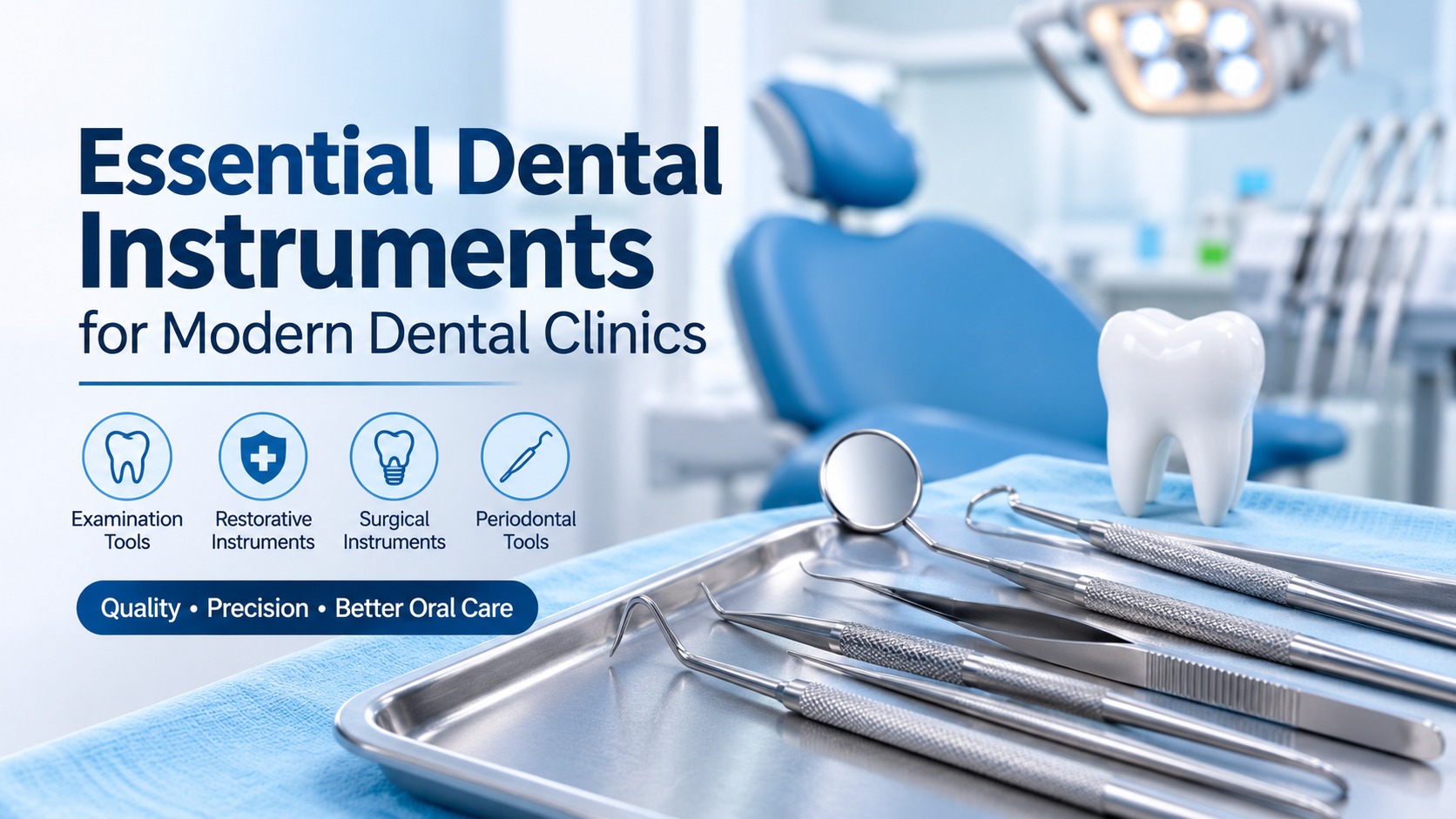
Dental professionals use a wide range of instruments to perform examinations, preventive treatments, restorative procedures, periodontal care, extractions, and oral surgery. Each instrument is designed according to its intended application, making instrument selection an important part of clinical practice and healthcare procurement.
Dental clinics, hospitals, dental colleges, and distributors need to understand the different instrument categories to identify products suitable for their requirements. Knowledge of dental instrument types can also help procurement teams organize inventory, compare product specifications, and select appropriate suppliers.
What Are Dental Instruments?
Dental instruments are specialized tools used by dental professionals for examining, treating, and managing oral health conditions. These instruments vary in shape, size, material, and functional design according to the procedures they support.
Some instruments are used during routine examinations, while others are intended for restorative, periodontal, extraction, or surgical applications. The selection of instruments depends on clinical requirements, practitioner preferences, and the intended procedure.
Common Types of Dental Instruments and Their Uses
1. Dental Mirrors
Dental mirrors are commonly used during oral examinations. They help dental professionals view areas that may be difficult to observe directly and provide visibility during different examination procedures.
Dental mirrors are available in different designs and sizes according to examination requirements. Buyers should evaluate mirror quality, handle design, dimensions, and compatibility with applicable cleaning and sterilization procedures.
2. Dental Explorers
Dental explorers are examination instruments designed for specific diagnostic applications. They may be used as part of routine dental assessment procedures, depending on their design and the clinician's requirements.
Dental explorers are available in different working-end configurations. Their selection should be based on intended use, product specifications, and appropriate clinical practices.
3. Dental Probes
Dental probes are used for examination and measurement-related applications in dental practice. Periodontal probes, for example, are designed to support periodontal assessment according to established clinical practices.
Probe design, markings, dimensions, and functionality are important considerations when purchasing these instruments.
4. Dental Scalers
Dental scalers are instruments used in dental procedures involving the removal of deposits from tooth surfaces, according to their intended application.
They are available in different shapes and working-end designs. Dental professionals select suitable scaler designs based on clinical requirements, intended use, and relevant treatment practices.
5. Dental Curettes
Dental curettes are commonly used in periodontal procedures. Their working-end design and configuration vary according to the intended application.
Healthcare professionals should evaluate curettes based on their design, material quality, dimensions, finishing, and relevant clinical requirements.
6. Dental Forceps
Dental forceps are instruments used in tooth extraction procedures. Different designs may be intended for specific teeth, anatomical considerations, and clinical applications.
Dental professionals should select appropriate forceps according to their clinical requirements, instrument specifications, and established procedures.
7. Dental Elevators
Dental elevators are instruments used in extraction-related procedures. They are available in different shapes, sizes, and working-end designs.
Instrument selection depends on the intended clinical application, design, handling requirements, and professional judgment.
8. Restorative Dental Instruments
Restorative dental instruments support procedures involving the placement, manipulation, shaping, and finishing of restorative materials.
Examples include condensers, carvers, spatulas, placement instruments, and other specialized tools. Their designs vary according to material handling requirements and intended applications.
9. Dental Surgical Instruments
Dental surgical instruments are used in oral surgical procedures and specialized dental applications. This category may include surgical scissors, retractors, tissue forceps, needle holders, and other instruments.
Product selection should consider the intended procedure, design, dimensions, material properties, and applicable maintenance requirements.
How Dental Clinics Select Suitable Instruments
Dental clinics should evaluate instrument requirements according to their clinical services, practitioner preferences, inventory, and purchasing needs.
Several factors can help guide instrument selection:
Product specifications: Review dimensions, working-end configurations, material properties, and intended applications.
Material quality: Evaluate material information, finishing, corrosion resistance, and relevant maintenance requirements.
Instrument design: Consider functionality, ergonomics, dimensions, and handling characteristics.
Cleaning and sterilization: Review manufacturer instructions for cleaning, disinfection, sterilization, inspection, and storage.
Supplier reliability: Evaluate supplier communication, product availability, documentation, and purchasing terms.
These considerations can help healthcare procurement teams compare products and make informed decisions.
Choosing Dental Instruments Manufacturers in India
Dental clinics, distributors, hospitals, and dental colleges may explore Dental Instruments Manufacturers in India when sourcing instruments for their purchasing requirements.
India's healthcare manufacturing and supply ecosystem provides buyers with opportunities to evaluate different suppliers and product categories. However, buyers should assess product specifications, quality documentation, manufacturing capabilities where applicable, commercial terms, and supplier reliability before purchasing.
Choosing a supplier based on verified product information and purchasing requirements is more useful than relying exclusively on promotional claims or pricing.
Explore Mediwave Dental Instruments
Mediwave India offers medical instruments and healthcare products across different categories. Dental professionals and procurement teams can explore the Mediwave Dental Instruments page to review available dental instruments.
The category page provides a dedicated destination for buyers exploring dental instrument options. Buyers can review the available product range and enquire about product specifications, availability, and purchasing requirements.
When comparing Dental Instruments Manufacturers, evaluating product information and supplier communication can help dental clinics and healthcare institutions make more informed decisions.
Conclusion
Dental instruments serve different purposes in modern dental practice, ranging from oral examination and periodontal care to restorative treatment, extraction procedures, and oral surgery. Understanding the types of instruments and their clinical applications can help dental professionals and procurement teams identify products according to their requirements.
Evaluating material quality, instrument design, product specifications, maintenance requirements, and supplier reliability is important when purchasing dental instruments. Exploring established Dental Instruments Manufacturers in India can help buyers assess available products and supplier options.

 English
 Arabic
 French
 Spanish
 Portuguese
 Deutsch
 Dutch
 Italiano
 Russian
 Romaian
 Portuguese (Brazil)
 Greek
