


 About Urh Social
 Terms of Service
 Privacy Policy
 Contact
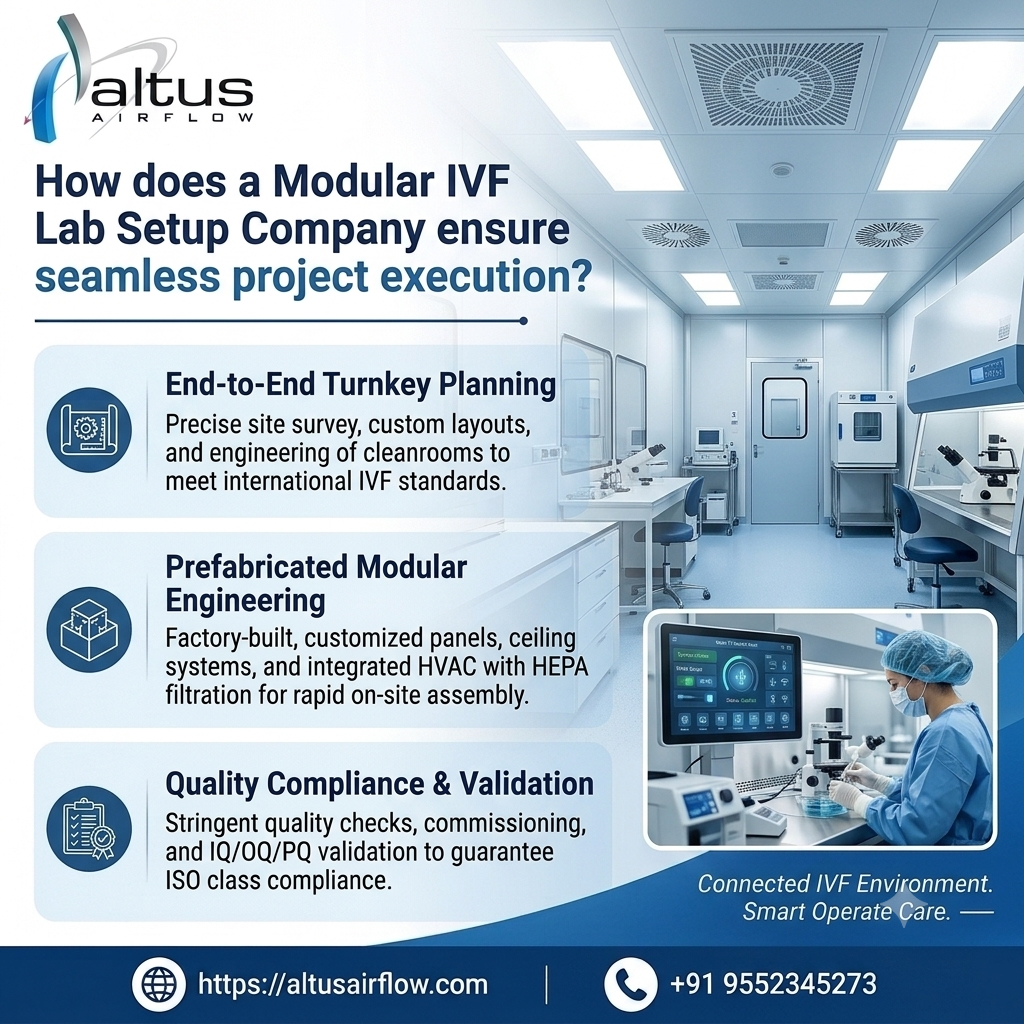
How Does a Modular IVF Lab Setup Company Ensure Seamless Project Execution?
Introduction
Altus Airflow specializes in developing modern healthcare and laboratory infrastructure that supports efficient operations, hygiene, and advanced clinical requirements. A Modular IVF Lab Setup Company plays an important role in ensuring that every stage of an IVF laboratory project is completed systematically, from initial consultation and site assessment to modular installation and final commissioning. Proper project execution requires technical expertise, detailed planning, and coordination between different teams.
A successful IVF laboratory setup also depends on suitable materials, reliable HVAC systems, equipment integration, and quality inspections. Following a structured execution process helps fertility centres minimize delays, avoid installation challenges, and establish laboratory environments that meet their operational requirements.
1. Understanding the Laboratory's Requirements
The first step towards seamless project execution is understanding the specific requirements of the fertility centre. Every IVF laboratory has different operational needs depending on its treatment capacity, available space, equipment, and clinical workflow.
Before starting the project, the technical team evaluates several factors:
-
Available laboratory space and architectural layout.
-
Number of embryology workstations required.
-
Equipment specifications and installation requirements.
-
Air quality and environmental control requirements.
-
Electrical and plumbing provisions.
-
Sample handling and movement arrangements.
-
Storage and utility requirements.
-
Future expansion possibilities.
Understanding these requirements helps establish a clear project scope and reduces the possibility of major design changes during installation.
Consultations with embryologists, fertility specialists, architects, biomedical engineers, and hospital management are also important. Their inputs help ensure that the proposed infrastructure supports actual laboratory activities.
2. Conducting Site Assessment and Feasibility Studies
A detailed site assessment helps identify potential construction and engineering challenges before the project begins.
The assessment generally includes examining the building structure, available utilities, access routes, and environmental conditions.
Important site evaluation activities include:
Space measurement: The technical team measures the available area to determine suitable locations for different laboratory sections.
Structural assessment: Existing walls, ceilings, floors, and other structural elements are evaluated for compatibility with the proposed modular installation.
Utility inspection: Electrical supply, plumbing, drainage, and HVAC provisions are reviewed.
Equipment access: Door dimensions, corridors, and transportation routes are checked to ensure that laboratory equipment can be moved safely.
Environmental assessment: Existing ventilation and surrounding conditions are examined to identify potential environmental control requirements.
Based on these observations, the project team can prepare a practical execution strategy.
A proper feasibility study helps avoid unexpected installation difficulties and supports realistic project scheduling.
3. Developing a Detailed Laboratory Layout
Laboratory layout planning is one of the most important stages of IVF infrastructure development. The arrangement should support smooth movement, proper organization, and controlled working conditions.
A well-planned IVF laboratory may include dedicated areas for:
-
Embryology procedures.
-
Micromanipulation activities.
-
Oocyte and embryo handling.
-
Sperm preparation.
-
Cryopreservation activities.
-
Equipment placement.
-
Laboratory storage.
-
Cleaning and utility functions.
Each section should be positioned according to its operational purpose.
The layout should also consider the movement of personnel, samples, and laboratory materials. Unnecessary movement between workstations should be minimized.
Equipment positioning is equally important. Microscopes, incubators, laminar airflow workstations, and other specialized instruments should have appropriate space and utility provisions.
The design should be reviewed with laboratory professionals before manufacturing and installation begin.
4. Selecting Suitable Modular Construction Materials
Material selection directly influences the hygiene, durability, and maintenance requirements of an IVF laboratory.
Modular construction systems allow different components to be manufactured and assembled according to approved project drawings.
A professional Modular IVF Lab Setup Company should help clients evaluate materials based on their intended applications and cleaning requirements.
Common infrastructure components include:
Modular wall panels: Smooth, non-porous, and easy-to-clean panels help create organized laboratory interiors.
Ceiling systems: Properly sealed ceiling arrangements support the integration of lighting, ventilation outlets, and utility connections.
Flooring: Seamless flooring with suitable chemical resistance makes routine cleaning more convenient.
Doors: Properly designed doors help maintain controlled access and support the intended environmental conditions.
Furniture: Laboratory workbenches, storage cabinets, and equipment tables should be selected according to workflow and instrument requirements.
Material specifications should be reviewed before procurement to ensure that the proposed components meet project requirements.
5. Integrating HVAC and Environmental Control Systems
Environmental control is particularly important in IVF laboratories because embryology procedures involve sensitive biological materials.
The HVAC system should be designed according to the laboratory's intended activities, applicable standards, and environmental requirements.
Important considerations include:
Air Filtration
Suitable filtration systems help control airborne particles and maintain the required indoor air cleanliness. HEPA filtration may be incorporated where specified by the laboratory design.
Temperature Regulation
Temperature control helps maintain stable working conditions for laboratory personnel and supports the environmental requirements of sensitive equipment.
Humidity Management
Humidity levels should be monitored and maintained according to the laboratory's approved specifications and equipment requirements.
Air Pressure Management
Pressure relationships between laboratory areas should be designed according to the contamination-control strategy.
Airflow Distribution
Air supply and return arrangements should be planned to minimize unwanted turbulence and prevent interference with critical workstations.
The ventilation system should undergo appropriate testing and commissioning before the laboratory becomes operational.
6. Coordinating Electrical and Utility Installations
IVF laboratories depend on specialized equipment that requires reliable electrical and utility infrastructure.
Poor coordination during installation can lead to equipment compatibility problems, operational interruptions, and additional project expenses.
Therefore, electrical and utility planning should be completed before modular construction begins.
Important installation considerations include:
-
Adequate electrical outlets for laboratory instruments.
-
Dedicated electrical circuits where required.
-
Proper earthing and electrical protection.
-
Emergency power arrangements for designated critical equipment.
-
Data and communication connections.
-
Plumbing and drainage provisions where required.
-
Cable management and equipment connectivity.
The technical team should coordinate with equipment suppliers to understand the power consumption, connection types, and installation requirements of each instrument.
Qualified electrical and plumbing professionals should perform the relevant installations and safety inspections.
7. Managing Equipment Integration and Installation
IVF laboratories use specialized equipment that must be installed and positioned carefully.
Equipment integration should be considered during the design stage rather than after the modular infrastructure is completed.
Common equipment includes:
IVF incubators: These require suitable positioning, electrical connections, and environmental conditions according to manufacturer instructions.
Laminar airflow workstations: Their positioning should consider the intended airflow performance and surrounding equipment arrangements.
Microscopes: Workstations should provide stable surfaces, suitable lighting, and convenient access.
Micromanipulation systems: These require careful planning of workstation dimensions, equipment positioning, and utility connections.
Cryopreservation equipment: Storage systems should be positioned according to safety, access, and manufacturer requirements.
Laboratory refrigerators and freezers: Their placement should consider ventilation, power supply, temperature monitoring, and maintenance access.
Coordination between the infrastructure team, biomedical engineers, embryologists, and equipment suppliers helps reduce installation conflicts.
8. Following a Structured Project Management Process
Successful project execution requires proper coordination between multiple teams.
A dedicated project management approach helps ensure that each activity is completed in the correct sequence.
A typical project execution process includes:
-
Initial consultation and requirement analysis.
-
Site inspection and feasibility assessment.
-
Laboratory layout preparation.
-
Design review and approval.
-
Material selection and procurement.
-
Modular component manufacturing.
-
Site preparation and infrastructure work.
-
Modular installation.
-
HVAC and utility integration.
-
Equipment installation and coordination.
-
Testing and commissioning.
-
Final inspection and project handover.
Each stage should have clearly defined responsibilities and completion milestones.
Regular progress meetings help identify delays, resolve technical questions, and maintain communication between stakeholders.
A structured schedule also helps hospitals plan equipment procurement, staff training, and operational preparation.
9. Implementing Quality Control at Every Stage
Quality control should not be limited to the final installation stage. It should be incorporated throughout the project lifecycle.
Regular inspections help identify defects before they affect subsequent construction activities.
Important quality control measures include:
Material inspection: Verify the specifications, dimensions, and condition of incoming modular components.
Installation inspection: Check panel alignment, sealing, joints, and finishing quality.
HVAC testing: Verify airflow, temperature, humidity, and pressure conditions according to approved specifications.
Electrical inspection: Check wiring, earthing, protective devices, and designated emergency power arrangements.
Equipment verification: Confirm that installed equipment has appropriate connections and operates according to manufacturer requirements.
Documentation: Maintain inspection reports, test certificates, and installation records.
Any defects identified during inspection should be documented and corrected before the project progresses to the next stage.
10. Managing Project Timelines and Procurement
Timely procurement and organized scheduling are essential for avoiding project delays.
An IVF laboratory setup involves multiple components that may have different manufacturing and delivery timelines.
The project team should prepare a procurement schedule covering:
-
Modular wall and ceiling panels.
-
Flooring materials.
-
Doors and accessories.
-
HVAC equipment and filters.
-
Electrical components.
-
Laboratory furniture.
-
Specialized medical equipment.
-
Monitoring and control systems.
Long-lead equipment should be identified early so that procurement can be coordinated with construction activities.
Regular communication with suppliers helps track delivery schedules and identify potential shortages.
Hospitals should also maintain a contingency plan for unexpected delays, particularly when working within existing healthcare facilities.
11. Maintaining Communication and Coordination Between Teams
Effective communication is essential when multiple professionals are involved in developing an IVF laboratory.
Architects, engineers, embryologists, biomedical teams, contractors, and equipment suppliers must work with a shared understanding of the approved project requirements.
Coordination activities should include:
-
Regular project progress meetings.
-
Design approval discussions.
-
Technical drawing reviews.
-
Equipment specification confirmation.
-
Installation schedule updates.
-
Issue reporting and resolution.
-
Final inspection coordination.
A designated project coordinator can help manage communication and ensure that important decisions are documented.
This approach reduces misunderstandings and helps prevent costly modifications during construction.
12. Conducting Testing, Validation, and Final Commissioning
Before an IVF laboratory becomes operational, its installed infrastructure and equipment should undergo appropriate testing and commissioning.
This stage verifies whether the completed facility meets the approved design and operational requirements.
Important activities may include:
HVAC performance testing: Evaluate airflow distribution, filtration, temperature, humidity, and pressure conditions.
HEPA filter integrity testing: Verify the integrity of installed filters where applicable.
Environmental monitoring: Check the accuracy and functioning of temperature, humidity, and pressure monitoring systems.
Electrical safety testing: Inspect electrical installations and designated backup power arrangements.
Equipment commissioning: Confirm that laboratory equipment is installed and functioning according to manufacturer requirements.
Documentation review: Compile test reports, equipment manuals, calibration records, and maintenance instructions.
Where required, laboratory-specific environmental qualification and equipment validation should be completed by qualified professionals.
A proper handover ensures that hospital teams understand the installed systems and their maintenance responsibilities.
13. Providing After-Sales Support and Maintenance Guidance
Project execution does not end with the physical completion of the laboratory. Ongoing maintenance is important for preserving infrastructure performance.
A professional setup provider should clearly explain the available post-installation support services.
These may include:
-
Modular panel inspection.
-
HVAC maintenance guidance.
-
Filter inspection and replacement recommendations.
-
Environmental monitoring system checks.
-
Electrical system maintenance coordination.
-
Furniture and surface maintenance instructions.
-
Technical troubleshooting support.
Hospitals should receive relevant operating manuals, maintenance schedules, warranty information, and commissioning documents.
A planned maintenance programme helps identify potential issues early and supports the long-term performance of the laboratory.
Conclusion
Seamless IVF laboratory project execution depends on detailed planning, technical coordination, appropriate material selection, reliable ventilation systems, equipment integration, and systematic quality control. Each stage must be managed carefully to minimize delays, avoid installation problems, and create an organized laboratory environment that supports sensitive embryology procedures.
Altus Airflow emphasizes the importance of coordinated modular infrastructure planning, quality-focused installation, and effective engineering integration. By working with an experienced Modular IVF Lab Setup Company, fertility centres can develop laboratories that meet their operational requirements while supporting long-term efficiency, environmental control, and reliable infrastructure performance.
Frequently Asked Questions (FAQs)
1. How does a Modular IVF Lab Setup Company ensure seamless project execution?
A Modular IVF Lab Setup Company ensures seamless project execution through site assessment, customized planning, material selection, HVAC integration, equipment coordination, quality inspections, and final commissioning.
2. Why is site assessment important for IVF laboratory projects?
Site assessment identifies space limitations, existing utilities, structural conditions, and potential installation challenges before construction begins.
3. What systems are important in an IVF laboratory setup?
Important systems include HVAC, HEPA filtration where required, electrical infrastructure, environmental monitoring, and specialized laboratory equipment.
4. How does modular construction benefit IVF laboratories?
Modular construction allows customized layouts, organized installation, coordinated infrastructure, and easier maintenance planning.
5. Why is HVAC integration important in IVF laboratories?
HVAC integration helps maintain the required temperature, humidity, filtration, and airflow conditions.
Read Our Previous Blog ---------------> What innovations are introduced by modern Modular IVF Labs Manufacturers?

 English
 Arabic
 French
 Portuguese
 Deutsch
 Turkish
 Dutch
 Italiano
 Russian
 Romaian
 Portuguese (Brazil)
 Greek
