


 About Urh Social
 Terms of Service
 Privacy Policy
 Contact
How Surgical Staplers Support Modern Minimally Invasive Surgery
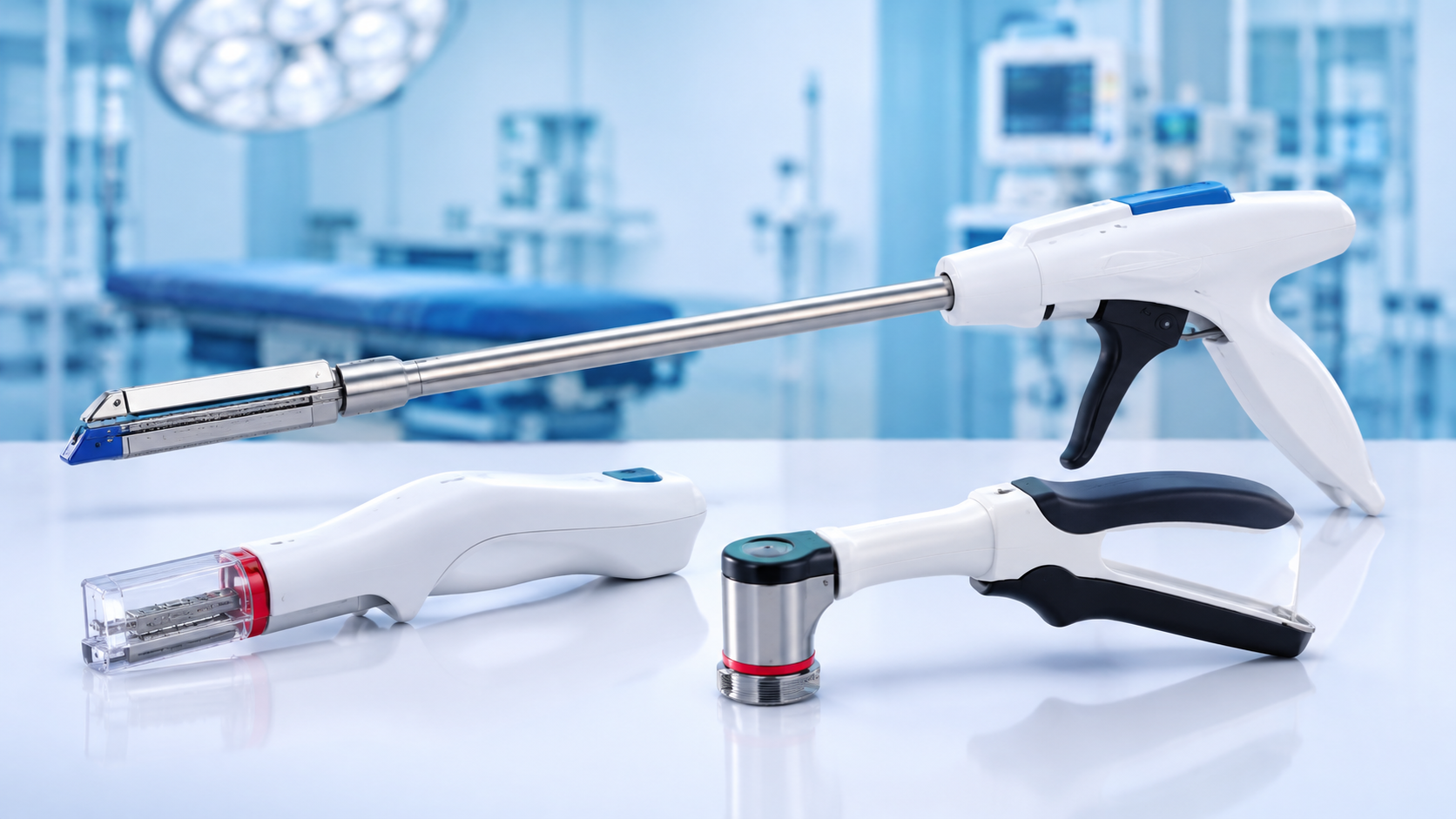
Minimally invasive surgery has become an established approach in several medical specialties. Hospitals increasingly use specialised instruments designed to operate through limited surgical access while supporting controlled tissue handling.
Among these instruments, Surgical Staplers play an important role in selected procedures involving tissue approximation, closure and division. Their design allows qualified surgical professionals to perform specific tasks according to the requirements of the procedure.
Understanding the role of these instruments helps hospitals, healthcare distributors and medical equipment buyers identify suitable products for minimally invasive surgical departments.
Understanding Minimally Invasive Surgical Requirements
Minimally invasive procedures typically involve smaller access points compared with traditional open surgery. Surgical professionals use specialised instruments to access the operative area and perform the required tasks.
These procedures require instruments with suitable dimensions, controlled movement and compatibility with the surgical approach.
Equipment requirements may vary depending on the medical specialty, operative technique and anatomical location. Therefore, hospitals must select instruments according to the requirements established by qualified surgical professionals.
The Role of Surgical Staplers in Minimally Invasive Procedures
Surgical stapling instruments are designed to apply staples to selected tissues. Depending on the model, they may also incorporate a mechanism for tissue division.
Endoscopic configurations are specifically designed to support selected procedures where conventional instrument access may be limited.
Their potential functions include:
-
Tissue approximation in appropriate surgical applications.
-
Tissue division using compatible cutting configurations.
-
Formation of staple lines.
-
Support for selected reconstructive procedures.
-
Access through compatible minimally invasive surgical systems.
The suitability of each function depends on the manufacturer's intended use and the clinical requirements of the procedure.
Different Stapler Configurations Used in Modern Surgery
Medical device manufacturers develop different stapler configurations to address specific surgical requirements.
|
Stapler configuration |
General application |
|---|---|
|
Endoscopic stapler |
Selected minimally invasive procedures |
|
Linear stapler |
Straight-line tissue approximation |
|
Linear cutter stapler |
Combined stapling and tissue division |
|
Circular stapler |
Selected gastrointestinal anastomosis procedures |
|
Articulating stapler |
Access at different instrument angles where indicated |
Established Surgical Staplers Manufacturers may offer multiple configurations to address different clinical requirements. Hospitals should confirm the intended use of every model before including it in their approved product catalogue.
Importance of Instrument Accessibility
Limited access is one of the defining characteristics of minimally invasive surgical procedures. Instrument shaft length, diameter and articulation capabilities can influence whether a device is suitable for a particular approach.
Certain stapling instruments incorporate articulation mechanisms that allow movement of the working end relative to the shaft.
However, articulation capability alone does not establish suitability. Hospitals must also consider access system compatibility, device dimensions and the requirements of their surgical teams.
Product catalogues should provide enough technical information for qualified professionals to evaluate these characteristics.
How Cartridge Design Supports Different Requirements
Reloadable surgical stapling systems may support multiple cartridge configurations. These cartridges can differ in staple height, length and other design characteristics.
Manufacturers specify the approved compatibility between cartridges and stapling instruments. Procurement departments should maintain accurate records of these combinations.
Using a cartridge simply because it appears similar to an existing model is not an appropriate purchasing strategy.
Healthcare buyers should request compatibility documentation and confirm that replacement consumables are available through authorised supply channels.
Supporting Hospital Surgical Department Requirements
Hospitals offering minimally invasive procedures need to coordinate equipment availability across operating theatres, procurement departments and inventory teams.
Reliable Surgical Staplers Suppliers can support this coordination by providing accurate product information, compatible consumables and clear delivery schedules.
Hospital purchasing departments should maintain updated records of approved devices and their corresponding consumables. These records help reduce ordering errors and support better inventory planning.
Regular communication with surgical departments also helps procurement teams identify changing equipment requirements.
Manual and Powered Stapling Systems
Some surgical stapling systems use manually operated mechanisms, while others incorporate powered components.
|
Parameter |
Manual systems |
Powered systems |
|---|---|---|
|
Activation |
Manual mechanism |
Powered mechanism |
|
Power requirements |
Generally none |
Model-specific power source |
|
Device design |
Mechanical components |
Mechanical and powered components |
|
Consumables |
Model-specific |
Model-specific |
|
Procurement evaluation |
Handling and compatibility |
Power, handling and compatibility |
Neither configuration is universally superior. Selection must reflect clinical requirements, device indications, available evidence and institutional approval.
Hospitals should avoid purchasing decisions based solely on technological features without considering their practical requirements.
Selecting Instruments for Expanding Surgical Facilities
Healthcare facilities expanding their minimally invasive surgical services should develop equipment requirements before placing bulk orders.
Purchasing teams should consider expected procedure volumes, approved instrument models, consumable requirements and supplier capabilities.
Working with experienced Surgical Staplers Dealers can help buyers explore available configurations and obtain relevant product information.
Sangam Surgicals offers surgical stapling instruments for institutional healthcare procurement. Buyers can enquire about available models, specifications and order requirements before finalising purchases.
Conclusion
Surgical stapling instruments support selected tissue approximation and division requirements in minimally invasive procedures. Their effectiveness and suitability depend on device configuration, compatibility, intended use and appropriate professional handling.
Hospitals should adopt a structured approach to equipment selection that includes clinical evaluation, technical documentation and reliable supply arrangements.
By understanding these requirements, healthcare buyers can make better-informed purchasing decisions for modern surgical departments.
Frequently Asked Questions
1. Are surgical staplers used in minimally invasive surgery?
Yes. Certain endoscopic stapler models are specifically designed for selected minimally invasive surgical procedures.
2. What is an articulating surgical stapler?
It is a stapling instrument with a mechanism that allows its working end to move at different angles within manufacturer-specified limits.
3. Are powered surgical staplers suitable for every procedure?
No. Their suitability depends on the device's intended use and the clinical requirements of the procedure.
4. Why is cartridge compatibility important?
Compatible cartridges are necessary for the intended operation of reloadable stapling systems. Compatibility must follow manufacturer documentation.
5. Can hospitals purchase surgical staplers in bulk?
Yes. Institutional buyers can discuss bulk orders with suppliers after confirming approved models, specifications and documentation.

 English
 Arabic
 French
 Portuguese
 Deutsch
 Turkish
 Dutch
 Italiano
 Russian
 Romaian
 Portuguese (Brazil)
 Greek
