


 About Urh Social
 Terms of Service
 Политика конфиденциальности
 Contact
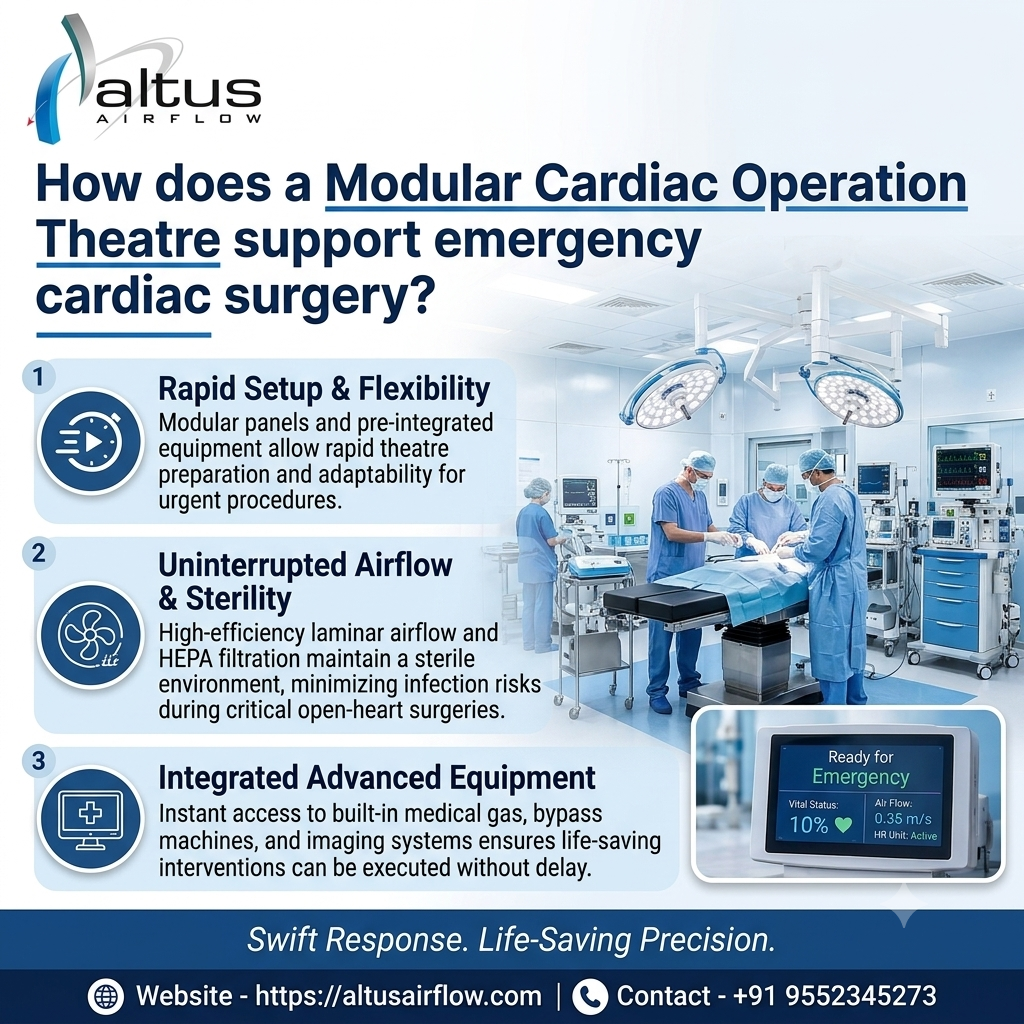
How Does a Modular Cardiac Operation Theatre Support Emergency Cardiac Surgery?
Introduction
Altus Airflow focuses on developing specialised operating theatre environments that support the demanding requirements of cardiac surgery. A Modular Cardiac Operation Theatre helps hospitals prepare for emergency cardiac procedures through integrated ventilation systems, organised medical utilities, efficient equipment placement, hygienic surfaces, and coordinated surgical infrastructure. Its carefully planned layout can support rapid team movement, reliable access to essential equipment, and controlled environmental conditions. By combining modular construction with suitable engineering systems, hospitals can create an operating environment designed to support time-sensitive surgical interventions and efficient clinical workflows.
1. Provides a Well-Organised Surgical Environment
Emergency cardiac surgery often requires surgeons, anaesthesiologists, perfusionists, nurses, and technical staff to work together under significant time pressure. An organised operating theatre helps these professionals coordinate their responsibilities and access essential equipment without unnecessary delays.
A modular theatre can be planned around the hospital's cardiac surgery workflow. Equipment locations, medical pendants, surgical lights, storage areas, and staff movement pathways can be coordinated during the design stage.
Clear circulation areas help prevent congestion around the operating table. Dedicated locations for essential instruments and supplies also make it easier for staff to identify and retrieve required items.
The layout should be developed in consultation with clinical teams because different cardiac procedures may have different equipment and access requirements. A well-planned environment supports organised activity during emergency interventions.
2. Supports Reliable Ventilation and Air Quality
Maintaining suitable air quality is important in cardiac operating theatres. Ventilation systems help manage airborne particles, temperature, humidity, and pressure relationships within the surgical environment.
A properly engineered HVAC system can provide controlled air distribution according to the theatre's design requirements. Filtration arrangements, supply and return air locations, and airflow patterns should be selected based on applicable standards and the intended clinical use of the room.
During emergency cardiac procedures, the ventilation system must continue operating reliably. Appropriate maintenance, monitoring, and backup arrangements help reduce the risk of unexpected system problems.
A Modular Cardiac Operation Theatre can incorporate coordinated HVAC infrastructure, accessible service areas, and environmental monitoring provisions. These features support the management of operating conditions without requiring staff to interrupt urgent clinical activities to address avoidable facility issues.
3. Enables Faster Access to Medical Equipment
Emergency cardiac surgery may involve several specialised devices, including anaesthesia machines, patient monitors, infusion pumps, defibrillators, and other procedure-specific equipment.
The operating theatre layout should allow these devices to be positioned according to surgical workflow. Medical pendants can help organise electrical outlets, medical gas connections, and equipment support points above or near the working area.
Careful positioning reduces unnecessary cable movement across the floor and helps keep access routes clear. Equipment should remain accessible to the appropriate clinical personnel without obstructing the surgical team.
Hospitals should also establish equipment readiness procedures, including regular inspection, functional checks, and availability verification. Infrastructure planning supports equipment accessibility, while clinical readiness protocols ensure that devices are prepared for emergency use.
4. Provides Suitable Medical Gas and Utility Infrastructure
Cardiac surgery requires dependable access to medical gases and other essential utilities. Depending on the procedure and clinical requirements, the theatre may need oxygen, medical air, vacuum, electrical power, data connections, and other services.
A modular design allows these services to be coordinated with the operating table, anaesthesia workstation, and medical equipment positions. Properly planned outlets can reduce cable and hose congestion while making connections easier to access.
Medical gas pipelines and outlets must be designed, installed, tested, and maintained by qualified professionals. Identification, isolation arrangements, pressure verification, and safety checks are essential before clinical use.
Electrical infrastructure also requires careful planning. Critical equipment should have suitable power continuity arrangements based on hospital policy and applicable requirements. These systems help support the availability of essential services during emergency procedures.
5. Supports Infection Prevention During Urgent Procedures
Emergency surgery does not reduce the need for infection prevention. Operating theatres must maintain suitable hygiene conditions even when procedures need to begin quickly.
Modular construction can incorporate smooth wall panels, sealed joints, hygienic ceiling systems, and easy-to-clean flooring. These finishes help reduce areas where dust and contaminants may collect and support routine cleaning and disinfection.
Ventilation and filtration systems should also be designed to meet the required operating theatre specifications. Positive pressure may be used to encourage airflow from the theatre towards adjacent spaces when doors are closed, depending on the applicable design requirements.
Hands-free fixtures, organised waste collection points, and accessible cleaning surfaces can further support infection prevention practices.
The physical environment must work alongside hand hygiene, sterilisation, surgical protocols, and trained staff practices. No single construction feature can independently guarantee infection prevention.
6. Improves Surgical Lighting and Visibility
Accurate visibility is essential during cardiac surgery, where procedures may involve delicate structures and detailed surgical work. Lighting systems should provide suitable illumination across the operating field while allowing the surgical team to adjust positioning as required.
Modern surgical lights may offer adjustable intensity, colour temperature, and focused illumination. LED-based systems can provide efficient lighting with reduced heat generation compared with some traditional technologies.
During theatre planning, lighting positions should be coordinated with ceiling structures, medical pendants, ventilation outlets, and imaging equipment. This helps minimise obstruction and unwanted shadows.
Emergency procedures may require rapid adjustments to the surgical setup. Accessible lighting controls and suitable equipment positioning allow authorised staff to make adjustments without disrupting the team's workflow.
7. Accommodates Cardiac Monitoring and Imaging Systems
Emergency cardiac procedures require continuous observation of the patient's condition. Monitoring equipment may track vital parameters and provide information needed by the surgical and anaesthesia teams.
The operating theatre should provide suitable electrical and data infrastructure for the hospital's selected monitoring systems. Display locations should allow relevant team members to view information without obstructing movement.
Some cardiac procedures may also require imaging equipment or specialised technology. The room layout should account for equipment dimensions, movement requirements, structural support, electrical loads, and compatibility with other installed systems.
A modular infrastructure approach can help coordinate these requirements during the design stage. However, the exact equipment configuration must be determined by the hospital's clinical team and biomedical engineering department.
8. Helps Maintain Controlled Temperature and Humidity
Temperature and humidity influence staff comfort, equipment operation, and the overall operating environment. Cardiac theatres require environmental conditions established according to applicable standards, clinical requirements, and equipment specifications.
A properly designed HVAC system can regulate these parameters through suitable air-handling equipment, sensors, and control systems. Environmental monitoring helps facility teams identify deviations and investigate potential causes.
Stable environmental conditions are especially important when several specialised devices operate simultaneously. Excessive heat, poor airflow, or unsuitable humidity may affect equipment performance and staff working conditions.
Monitoring systems can provide alerts when readings move outside approved limits. Defined response procedures help facility personnel address issues while clinical teams continue to focus on patient care.
9. Supports Efficient Staff Movement and Communication
Emergency cardiac surgery requires close coordination among multiple professionals. The theatre layout should support communication, clear visibility, and efficient movement around the operating table.
Modular planning allows the hospital to define zones for surgical activity, anaesthesia, equipment, sterile supplies, and waste handling. These arrangements can help reduce unnecessary crossing of movement pathways.
Communication equipment, data points, displays, and control panels should be positioned where staff can access them conveniently. Equipment cables and medical gas hoses should be organised to avoid creating trip hazards or obstructing emergency access.
The layout should also consider access for additional personnel who may need to enter during complex procedures. Adequate space and clear pathways can support coordinated teamwork.
10. Integrates Emergency Power and Backup Systems
Power continuity is essential in a cardiac operating theatre because several critical devices depend on electrical supply. An interruption can affect monitoring, lighting, ventilation controls, and other essential equipment.
Electrical planning should identify critical and non-critical loads. Appropriate emergency power arrangements, including suitable backup supply systems, should be provided according to hospital requirements and applicable electrical safety standards.
The distribution system should include suitable protection, earthing, circuit identification, and accessible maintenance provisions. Critical equipment should be connected to the designated power sources based on the hospital's approved electrical plan.
Backup systems must be tested and maintained regularly. Emergency power arrangements are valuable only when they are properly commissioned, monitored, and included in the hospital's emergency preparedness procedures.
11. Allows Flexible Equipment and Infrastructure Planning
Cardiac surgery technology continues to evolve. Hospitals may need to introduce new monitoring devices, surgical equipment, imaging systems, or digital solutions as clinical requirements change.
Modular infrastructure can provide flexibility through coordinated service panels, accessible utility routes, and replaceable components where appropriate. This can make selected modifications easier than extensive reconstruction.
Future expansion should be considered during initial planning. The project team can review potential equipment additions, utility capacity, structural supports, and available space.
However, flexibility must not compromise the performance of installed systems. Any modification affecting ventilation, electrical services, medical gases, or room integrity should undergo suitable engineering assessment and testing before clinical use.
12. Supports Digital Monitoring and Facility Management
Digital systems can help hospital facility teams monitor important operating theatre parameters. Depending on the installation, sensors may track temperature, humidity, differential pressure, and HVAC operating conditions.
Building management system integration can provide a central view of selected infrastructure functions. Alerts can help maintenance teams identify deviations and investigate potential problems.
Digital monitoring can also support maintenance planning by recording system performance and identifying recurring issues. This information may help teams schedule inspections and address faults before they affect theatre availability.
Monitoring systems should be configured with suitable alarm thresholds, calibration procedures, access controls, and response responsibilities. Digital technology supports facility management but does not replace clinical monitoring or emergency response protocols.
13. Enables Testing and Commissioning Before Clinical Use
Emergency readiness depends on the reliable operation of the entire theatre environment. After installation or modification, systems must be inspected and tested according to the approved project scope.
Commissioning may include HVAC balancing, airflow measurement, pressure differential verification, temperature and humidity checks, filter integrity testing where applicable, electrical safety checks, medical gas testing, and functional verification of installed equipment.
The project team should document test results, equipment details, calibration records, identified defects, and corrective actions. Any issues affecting safety or system performance must be resolved before the theatre is approved for clinical use.
Hospitals should also maintain preventive maintenance schedules and conduct periodic checks. Regular verification helps ensure that essential infrastructure remains dependable over time.
14. Improves Preparedness Through Coordinated Infrastructure
An emergency cardiac procedure depends on more than the physical operating room. It requires coordination between clinical teams, equipment readiness, support services, maintenance personnel, and hospital emergency protocols.
A modular theatre can provide an organised infrastructure foundation by bringing ventilation, medical utilities, lighting, equipment supports, and hygienic finishes together in a coordinated design.
Hospitals should combine this infrastructure with staff training, emergency drills, equipment checklists, clear communication procedures, and defined escalation pathways.
A facility that is properly designed, commissioned, maintained, and supported by trained personnel can help teams prepare for urgent surgical requirements. The objective is to reduce avoidable operational barriers so clinical professionals can concentrate on delivering timely care.
Conclusion
A well-designed cardiac operating theatre supports emergency surgery through organised equipment placement, reliable ventilation, suitable medical utilities, hygienic surfaces, effective lighting, monitoring infrastructure, and dependable power arrangements. Modular construction helps hospitals coordinate these elements according to their clinical and operational requirements.
A Modular Cardiac Operation Theatre should be planned with input from surgeons, anaesthesiologists, biomedical engineers, infection prevention specialists, and facility teams. Altus Airflow focuses on specialised modular healthcare infrastructure and integrated operating theatre solutions. Through careful engineering, testing, and maintenance planning, Altus Airflow supports hospitals in developing surgical environments designed to assist teams during time-sensitive cardiac procedures.
Frequently Asked Questions
1. How does a Modular Cardiac Operation Theatre support emergency cardiac surgery?
A Modular Cardiac Operation Theatre supports emergency cardiac surgery through organised equipment placement, reliable ventilation, medical gas infrastructure, emergency power arrangements, hygienic surfaces, and efficient staff movement.
2. Why is ventilation important in a cardiac operating theatre?
Ventilation helps maintain suitable air quality, airflow, temperature, humidity, and pressure conditions.
3. How do medical pendants help during emergency surgery?
Medical pendants organise equipment supports, electrical connections, and medical gas outlets for easier access.
4. Can modular OTs accommodate advanced cardiac equipment?
Yes. Their layouts can be planned around selected monitoring, imaging, surgical, and anaesthesia equipment.
5. Why is backup power necessary in a cardiac OT?
Backup power helps maintain the supply to designated critical equipment during interruptions to the normal electrical supply.
Read Our Previous Blog --------------->Do Modular Cardiac OT Manufacturers support robotic cardiac surgery setups?

 English
 Arabic
 French
 Spanish
 Portuguese
 Deutsch
 Turkish
 Dutch
 Italiano
 Romaian
 Portuguese (Brazil)
 Greek
