


 About Urh Social
 Terms of Service
 Privacy Policy
 Contact
Polyelectrolyte Coated SPIONs: Uses and Key Benefits
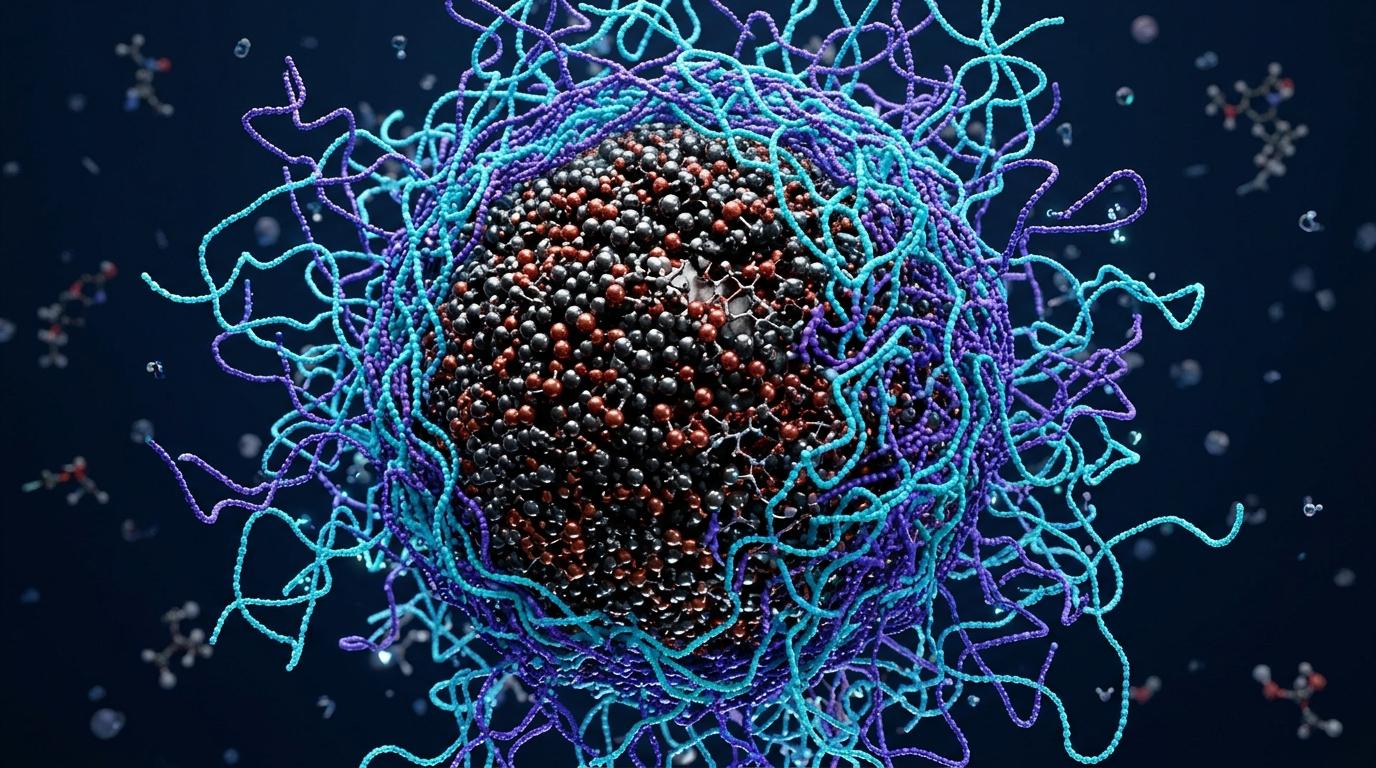
Polyelectrolyte coated nanoparticle SPION is an advanced nanotechnology material that combines the magnetic properties of superparamagnetic iron oxide nanoparticles with the surface modification capabilities of charged polymers. These specially designed nanoparticles have attracted significant attention in biomedical research, drug delivery, magnetic resonance imaging, and targeted therapeutic applications. Their unique structure allows researchers to improve nanoparticle stability, control surface interactions, and introduce functional groups for different scientific purposes.
Superparamagnetic iron oxide nanoparticles, commonly known as SPIONs, consist of iron oxide magnetic cores that respond to an external magnetic field. However, uncoated nanoparticles can experience aggregation, oxidation, and instability when exposed to biological environments. Applying a polyelectrolyte coating helps overcome several of these challenges by creating a protective polymer layer around the magnetic core. This modification improves their dispersion and provides opportunities for further functionalization.
What Are Polyelectrolyte Coated SPIONs?
Polyelectrolyte coated SPIONs are superparamagnetic iron oxide nanoparticles covered with electrically charged polymer materials. Polyelectrolytes are polymers containing ionizable groups that develop positive or negative electrical charges depending on their chemical structure and surrounding conditions.
The magnetic core is generally composed of iron oxide materials, particularly magnetite or maghemite. The surrounding polymer coating interacts with the nanoparticle surface and creates an interface between the magnetic material and its surrounding environment.
This coating is important because the surface properties of nanoparticles strongly influence their behavior in liquids, biological fluids, and experimental systems. By selecting an appropriate polyelectrolyte, researchers can modify surface charge, hydrophilicity, colloidal stability, and chemical functionality.
Polyelectrolyte coated SPIONs are therefore useful platforms for developing multifunctional nanomaterials with improved physical and chemical characteristics.
Understanding the Structure of Polyelectrolyte Coated Nanoparticles
The structure of a polyelectrolyte coated nanoparticle SPION generally contains a magnetic iron oxide core and a surrounding polymer shell.
Magnetic Iron Oxide Core
The magnetic core provides the defining magnetic properties of SPIONs. Magnetite and maghemite are commonly investigated because they exhibit superparamagnetic behavior at sufficiently small particle sizes.
Superparamagnetism means that nanoparticles can respond strongly to an applied magnetic field but show little or no retained magnetization after the external field is removed. This characteristic is valuable for applications where magnetic control is required without persistent particle magnetization.
Polyelectrolyte Polymer Coating
The polymer coating surrounds the magnetic core and modifies its interaction with the environment. Depending on the selected polymer, the coating can provide positive or negative surface charges.
These electrical charges can help particles remain dispersed by creating repulsive interactions between similarly charged nanoparticles. Some polymer coatings also provide steric stabilization, which reduces direct contact between particles.
Functional Surface Groups
The outer surface of coated SPIONs may contain functional chemical groups such as carboxyl, amino, and hydroxyl groups.
These groups provide attachment points for additional molecules, including proteins, peptides, antibodies, and therapeutic compounds. Their availability makes polyelectrolyte coated SPIONs particularly interesting for biomedical research and advanced nanomaterial development.
Why Are Polyelectrolyte Coatings Important for SPIONs?
Unmodified magnetic nanoparticles often experience several challenges that limit their practical applications. Their high surface energy and magnetic interactions can encourage aggregation, particularly under unsuitable environmental conditions.
Polyelectrolyte coatings help address these problems by modifying the nanoparticle surface.
Improved Colloidal Stability
Colloidal stability is an important requirement for nanoparticle applications. When magnetic nanoparticles aggregate, their effective particle size increases, and their behavior in suspension can change.
Polyelectrolyte coatings can improve stability through electrostatic repulsion and, depending on the polymer structure, steric protection. These mechanisms help maintain particle dispersion under suitable environmental conditions.
Protection Against Oxidation
Iron oxide nanoparticles can undergo surface changes when exposed to oxygen and other environmental factors. An appropriate polymer coating can reduce direct exposure of the magnetic core to the surrounding environment.
The level of protection depends on coating composition, thickness, coverage, and chemical stability.
Better Surface Functionality
Another important advantage is the ability to introduce chemical groups onto the nanoparticle surface. These groups can support further modification and attachment of functional molecules.
This flexibility allows researchers to develop SPION formulations for specific experimental and biomedical requirements.
Improved Interaction With Biological Media
Biological environments contain salts, proteins, and other molecules that can influence nanoparticle behavior.
A properly designed polyelectrolyte coating can help control these interactions and improve compatibility with biological media. However, the actual performance depends on the polymer, particle properties, coating quality, and intended application.
Common Polyelectrolytes Used for SPION Coating
Different polyelectrolytes can be used to modify the surface of superparamagnetic iron oxide nanoparticles. The selection depends on the desired surface charge, chemical functionality, stability, and biological requirements.
Polyacrylic Acid
Polyacrylic acid is a negatively charged polymer containing carboxyl groups. It is frequently investigated for coating iron oxide nanoparticles because its carboxyl groups can interact with iron oxide surfaces.
The polymer can improve aqueous dispersion and provide functional groups for further chemical modification. Its performance depends on molecular weight, pH, polymer concentration, and coating conditions.
Polyethyleneimine
Polyethyleneimine is a positively charged polymer containing amino groups. It is commonly explored for modifying nanoparticle surfaces and introducing positive electrical charges.
Its amino groups can provide opportunities for attaching other molecules. However, its concentration, molecular structure, and surface density must be carefully controlled because excessive positive charge may contribute to unwanted biological interactions and cytotoxicity.
Chitosan
Chitosan is a natural polymer derived from chitin. It contains amino and hydroxyl groups that make it useful for nanoparticle surface modification.
Chitosan coatings are investigated in drug delivery and biomedical research because they can provide surface functionality and interact with different biological molecules.
Polyacrylic Acid and Maleic Acid Copolymers
Copolymer materials containing acrylic acid and maleic acid units can provide multiple carboxyl groups for interaction with iron oxide surfaces.
These materials are useful for producing carboxylated SPION surfaces and improving their colloidal behavior under appropriately selected conditions.
Other Polymer Materials
Researchers also investigate polymers such as polyvinyl alcohol, polyethylene glycol, and other functional polymer systems for iron oxide nanoparticle modification.
The selection of a particular material depends on whether the main objective is improving dispersion, controlling biological interactions, supporting drug attachment, or developing specialized magnetic nanomaterials.
Preparation of Polyelectrolyte Coated SPIONs
The preparation of polyelectrolyte coated SPIONs involves producing magnetic iron oxide nanoparticles and modifying their surfaces with an appropriate polymer.
Synthesis of Magnetic Nanoparticles
A common approach for preparing iron oxide nanoparticles is chemical coprecipitation. This process involves reacting suitable iron salts under controlled chemical conditions to produce magnetic iron oxide particles.
Reaction conditions influence particle size, crystallinity, magnetic behavior, and surface characteristics.
Surface Coating Process
After nanoparticle preparation, the selected polyelectrolyte can be introduced into the nanoparticle suspension.
Polymer molecules interact with the iron oxide surface through different chemical and physical interactions. These interactions can include electrostatic attraction, coordination involving surface iron sites, and hydrogen bonding.
The effectiveness of the coating depends on polymer concentration, solution pH, ionic strength, mixing conditions, and the chemical characteristics of the magnetic core.
Purification and Characterization
After coating, purification may be necessary to remove unbound polymer and other unwanted materials.
Researchers then characterize the resulting nanoparticles to understand their physical, chemical, and magnetic properties.
Common characterization techniques include transmission electron microscopy, dynamic light scattering, Fourier transform infrared spectroscopy, X-ray diffraction, thermogravimetric analysis, and zeta potential measurements.
These techniques help determine particle morphology, hydrodynamic size, coating characteristics, crystallinity, polymer content, and surface charge.
Biomedical Applications of Polyelectrolyte Coated SPIONs
Polyelectrolyte coated SPIONs offer several opportunities in biomedical research because their magnetic properties can be combined with adjustable surface chemistry.
Magnetic Resonance Imaging
Magnetic iron oxide nanoparticles are investigated as contrast agents for magnetic resonance imaging. Their magnetic properties can influence the relaxation behavior of nearby water protons, producing changes in MRI signals.
The polymer coating plays an important role in determining nanoparticle dispersion, surface interactions, and imaging performance.
Researchers can modify polymer composition and coating structure to develop nanoparticles with specific imaging characteristics.
Targeted Drug Delivery
Targeted drug delivery is another important research area involving polyelectrolyte coated SPIONs.
Functional groups on the polymer shell can support the attachment or loading of therapeutic compounds. External magnetic fields may also help influence nanoparticle movement and localization under suitable experimental conditions.
The coating can additionally influence drug loading, release behavior, and interactions with biological tissues.
However, successful targeted delivery depends on several factors, including magnetic field strength, particle properties, biological barriers, and circulation behavior.
Magnetic Hyperthermia
Magnetic hyperthermia involves using magnetic nanoparticles to generate heat when exposed to an alternating magnetic field.
SPIONs are investigated for this purpose because their magnetic response can produce energy dissipation under appropriate conditions.
Polymer coatings can improve particle dispersion and influence how nanoparticles interact with biological environments. Their effect on heating efficiency depends on the magnetic core, particle arrangement, coating properties, and experimental conditions.
Cell Labeling and Magnetic Separation
Polyelectrolyte coated SPIONs can also be investigated for cell labeling and magnetic separation.
Their magnetic cores allow researchers to manipulate nanoparticle-containing samples using external magnetic fields. Meanwhile, the polymer coating provides opportunities to modify surface interactions with cells and biological molecules.
These properties make coated SPIONs useful in laboratory research involving cellular imaging, separation, and tracking.
Factors Affecting the Performance of Polyelectrolyte Coated SPIONs
The performance of these nanoparticles depends on several interconnected physical and chemical factors.
Particle Size and Distribution
Particle size influences magnetic behavior, surface area, colloidal stability, and interactions with biological systems.
A consistent particle size distribution is important for achieving reproducible experimental results.
Surface Charge
Surface charge affects electrostatic interactions between nanoparticles and their surrounding environment.
Zeta potential measurements are commonly used to investigate the electrical properties of coated nanoparticle suspensions. However, surface charge alone cannot guarantee stability under every condition.
Polymer Molecular Weight
The molecular weight of the selected polyelectrolyte can influence coating thickness, surface coverage, hydrodynamic size, and stabilization mechanisms.
Selecting an appropriate polymer structure is therefore important for obtaining the desired nanoparticle characteristics.
Environmental Conditions
Solution pH, temperature, salt concentration, and protein content can influence polymer ionization and nanoparticle stability.
A coating that performs well in purified water may behave differently in biological fluids. Testing under application-relevant conditions is essential.
Challenges and Limitations
Although polyelectrolyte coated SPIONs offer several advantages, their development involves important challenges.
One major concern is coating consistency. Uneven polymer coverage can expose parts of the magnetic core and increase the possibility of aggregation or unwanted chemical interactions.
Another challenge is maintaining stability in complex biological environments. Salts and proteins can alter surface charge and form a protein corona around nanoparticles, potentially changing their biological behavior.
Toxicity is also an important consideration. The biological response depends on the iron oxide core, polymer composition, particle concentration, surface charge, and exposure conditions.
Furthermore, excessive coating thickness can influence magnetic performance and reduce the effectiveness of certain applications. Researchers must therefore balance surface protection with the magnetic and functional properties required for the intended purpose.
Careful characterization, reproducible manufacturing, and application-specific safety testing are essential before considering biomedical use.
Future Potential of Polyelectrolyte Coated Nanoparticles
Research into polyelectrolyte coated SPIONs continues to explore more advanced magnetic nanomaterials with improved surface functionality and controlled biological interactions.
One promising direction involves multifunctional nanoparticles that combine imaging and therapeutic capabilities. Such systems may support simultaneous disease monitoring and treatment research.
Another area involves responsive polymer coatings that change their properties under specific environmental conditions. These materials may help researchers investigate controlled drug release and stimulus-responsive delivery systems.
Researchers are also exploring improved coating strategies to enhance colloidal stability, reduce unwanted protein interactions, and control nanoparticle distribution in biological environments.
With continued improvements in material design and characterization, polyelectrolyte coated SPIONs may contribute to the development of more sophisticated nanotechnology platforms.
Frequently Asked Questions
What does SPION stand for?
SPION stands for superparamagnetic iron oxide nanoparticle. It refers to a nanoscale iron oxide material that responds to an external magnetic field while exhibiting little or no permanent magnetization after the field is removed.
What is a polyelectrolyte coated nanoparticle?
A polyelectrolyte coated nanoparticle is a particle covered with a polymer containing ionizable groups. These groups provide electrical charges that can influence surface interactions, dispersion stability, and chemical functionality.
Why are SPIONs coated with polyelectrolytes?
SPIONs are coated with polyelectrolytes to improve colloidal stability, modify surface charge, reduce unwanted aggregation, and introduce functional groups for additional chemical modification.
Which polymers are used for SPION coating?
Commonly investigated polymers include polyacrylic acid, polyethyleneimine, chitosan, polyethylene glycol, and other functional polymer materials. The appropriate selection depends on the intended application.
Are polyelectrolyte coated SPIONs used in drug delivery?
Yes. Researchers investigate these nanoparticles as potential drug delivery platforms because their polymer coatings can support therapeutic molecule attachment, drug loading, and controlled release strategies.
How do polyelectrolyte coatings improve nanoparticle stability?
Polyelectrolyte coatings can improve stability through electrostatic repulsion between similarly charged particles. Depending on their structure, polymer chains may also provide steric protection against aggregation.
Can SPIONs be used for magnetic resonance imaging?
Yes. Superparamagnetic iron oxide nanoparticles have been investigated for MRI applications because their magnetic properties can influence the relaxation behavior of nearby water molecules.
What affects the stability of coated SPIONs?
Stability depends on particle size, polymer composition, coating thickness, surface charge, pH, ionic strength, temperature, and interactions with proteins in the surrounding environment.
Conclusion
Polyelectrolyte coated nanoparticle SPION represents an important development in magnetic nanotechnology. By combining the magnetic characteristics of superparamagnetic iron oxide nanoparticles with the adjustable chemical properties of charged polymers, researchers can develop materials with improved dispersion, surface functionality, and environmental stability.
Polymers such as polyacrylic acid, polyethyleneimine, and chitosan offer different opportunities for modifying nanoparticle surfaces according to specific research requirements. These coatings can support applications in magnetic resonance imaging, drug delivery, magnetic hyperthermia, cell labeling, and magnetic separation.
Despite their promising properties, challenges involving coating quality, biological compatibility, aggregation, and toxicity must be carefully addressed. Continued research into polymer chemistry, nanoparticle characterization, and surface engineering will help expand the potential of polyelectrolyte coated SPIONs in biomedical science and advanced nanomaterial development.

 English
 Arabic
 French
 Spanish
 Portuguese
 Deutsch
 Turkish
 Italiano
 Russian
 Romaian
 Portuguese (Brazil)
 Greek
