


 About Urh Social
 Terms of Service
 Privacy Policy
 Contact
Why Does Your Home Run Out of Hot Water So Quickly? 6 Common Reasons
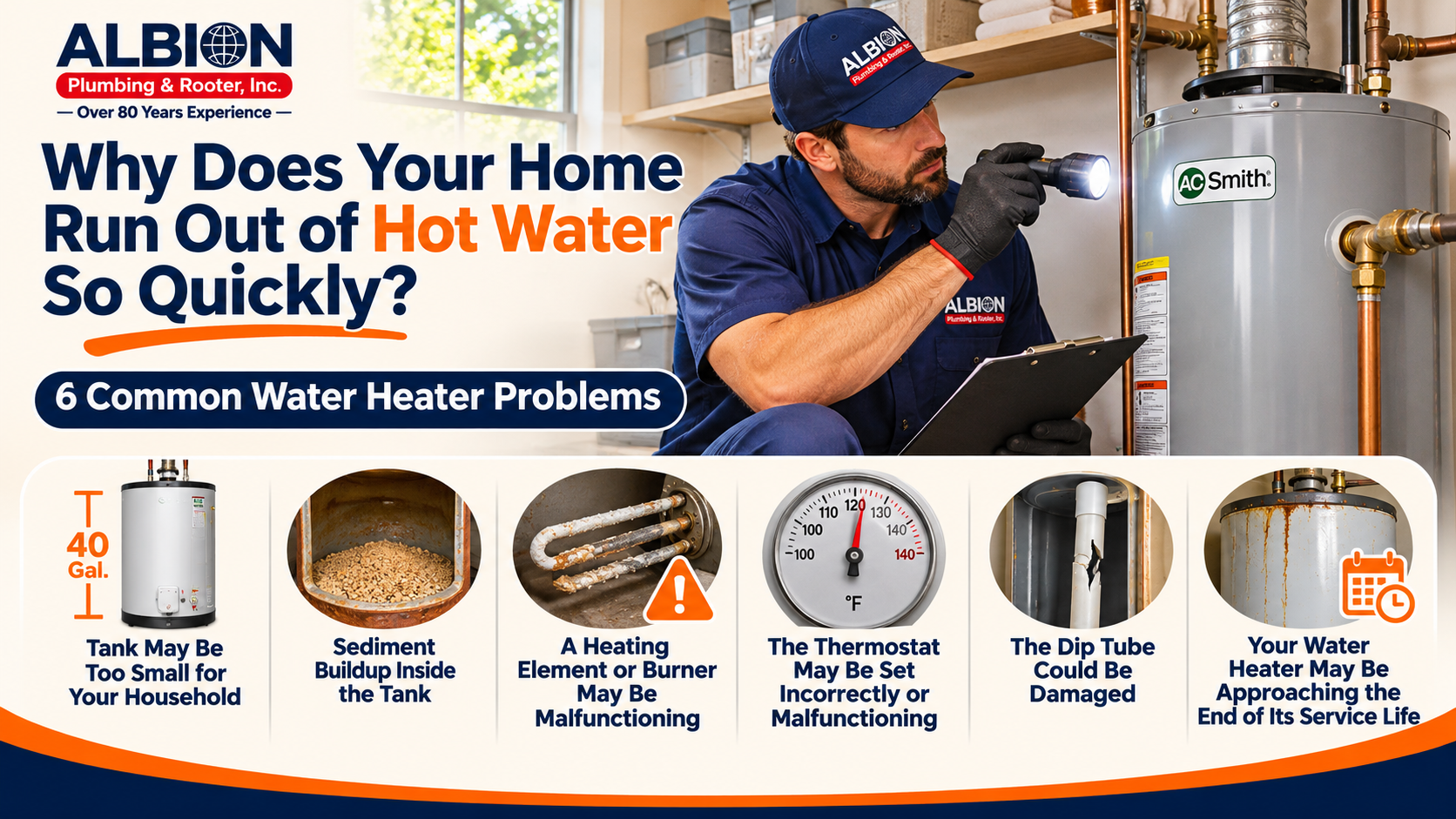
You step into the shower expecting hot water, only for the temperature to turn cold halfway through. Perhaps the first person in the household gets a comfortable shower, while everyone else struggles with lukewarm water. When this happens repeatedly, the problem may involve your water heater, household water demand, or another plumbing component. Understanding the possible causes and knowing when to consult a professional plumber in alameda ca can help homeowners identify the issue before unnecessary repairs or replacements.
1. Your Water Heater May Be Too Small for Your Household
Every traditional tank water heater has a limited storage capacity.
When several people shower, wash dishes, or use hot water appliances within a short period, the household may consume hot water faster than the system can replenish it.
This is particularly common when the number of occupants increases or household routines change.
Common signs include:
-
Hot water running out after consecutive showers
-
Reduced hot water availability during busy mornings
-
Water taking longer to heat after heavy use
-
Hot water working normally when only one fixture is used
A professional can assess whether the existing water heater is appropriately sized for the household's needs.
2. Sediment May Be Accumulating Inside the Tank
Water naturally contains dissolved minerals that can settle inside a storage water heater over time.
These deposits may accumulate near the bottom of the tank, affecting heating performance.
In some systems, excessive sediment can contribute to reduced efficiency and unusual operating noises.
Homeowners may notice rumbling or popping sounds when the heater is operating.
What homeowners should know:
Routine maintenance may include sediment assessment and flushing when recommended by the manufacturer.
However, flushing procedures depend on the heater's age, design, and condition. Professional guidance is advisable, particularly for older equipment.
3. A Heating Element or Burner May Be Malfunctioning
Water heaters depend on heating components to maintain the desired water temperature.
Electric tank water heaters commonly use heating elements, while gas models use a burner assembly.
If a heating component stops operating correctly, the system may struggle to maintain adequate hot water.
For example, failure of one heating element in certain electric water heaters can significantly reduce available hot water.
Other symptoms may include:
-
Water that never becomes sufficiently hot
-
Longer recovery times
-
Inconsistent water temperature
-
Frequent interruptions in heating
Electrical and gas equipment should be inspected and repaired by appropriately qualified professionals.
4. The Thermostat May Be Set Incorrectly or Malfunctioning
A water heater thermostat helps regulate water temperature.
If the thermostat is set too low, the available hot water may not meet the household's needs.
A malfunctioning thermostat can also cause inconsistent heating.
However, increasing the temperature without understanding the system can create scalding risks.
The U.S. Department of Energy generally recommends a water heater setting of approximately 120°F for many households, subject to individual needs and equipment requirements.
If temperature problems continue despite an appropriate setting, professional inspection may be necessary.
5. The Dip Tube Could Be Damaged
Traditional tank water heaters use a component called a dip tube to direct incoming cold water toward the lower portion of the tank.
This helps separate incoming cold water from the hotter water being drawn from the upper part of the tank.
If the dip tube breaks or deteriorates, incoming cold water may mix with the available hot water sooner than expected.
As a result, the household may experience shorter periods of hot water.
This problem is not always obvious from an external inspection.
A plumbing professional can determine whether the dip tube or another internal component requires attention.
6. Your Water Heater May Be Approaching the End of Its Service Life
Water heaters experience wear as they operate over the years.
Their actual service life depends on equipment type, installation quality, maintenance, water conditions, and usage.
Older equipment may develop issues involving corrosion, heating components, valves, or internal deterioration.
Warning signs can include:
-
Repeated heating problems
-
Leaks around the tank
-
Rust or corrosion
-
Unusual noises
-
Frequent repair requirements
-
Inconsistent hot water performance
Age alone does not mean that a water heater must be replaced.
A professional inspection can help determine whether maintenance, component replacement, or a new unit is appropriate.
How Can You Identify the Cause of Your Hot Water Problem?
Before arranging repairs, observe when and how the problem occurs.
Check whether the problem affects multiple fixtures.
If only one shower experiences temperature problems, the issue may involve its mixing valve or another fixture component.
Notice how quickly hot water runs out.
If the water becomes cold only after several showers, household demand or heater capacity may be contributing.
Listen for unusual sounds.
Rumbling or popping noises may indicate conditions requiring water heater maintenance.
Look for visible moisture.
Water near the tank or surrounding connections should be investigated.
These observations can help a plumbing professional identify the cause more efficiently.
When Should You Contact a Professional Plumber?
Consider professional assistance when:
-
Hot water runs out much sooner than usual.
-
Water temperature changes unexpectedly.
-
The heater makes unusual noises.
-
Hot water recovery takes longer than expected.
-
Leaks or corrosion appear near the equipment.
-
Heating problems return after previous repairs.
Albion Plumbing Rooter Inc. serves Alameda, San Leandro, and surrounding Bay Area communities, providing residential and commercial plumbing services, including assistance with water heater problems.
A professional assessment can help determine whether the issue involves household demand, faulty components, sediment accumulation, or equipment deterioration.
Final Thoughts
Running out of hot water too quickly can result from several different conditions.
An undersized tank, sediment accumulation, malfunctioning heating components, thermostat problems, or aging equipment may all affect hot water availability.
Recognizing the symptoms early and arranging appropriate maintenance can help homeowners maintain reliable hot water without replacing equipment unnecessarily.

 Arabic
 French
 Spanish
 Portuguese
 Deutsch
 Turkish
 Dutch
 Italiano
 Russian
 Romaian
 Portuguese (Brazil)
 Greek
