


 About Urh Social
 Terms of Service
 Datenschutzbestimmungen
 Contact
Essential Tips for Writing High Quality English Assignments
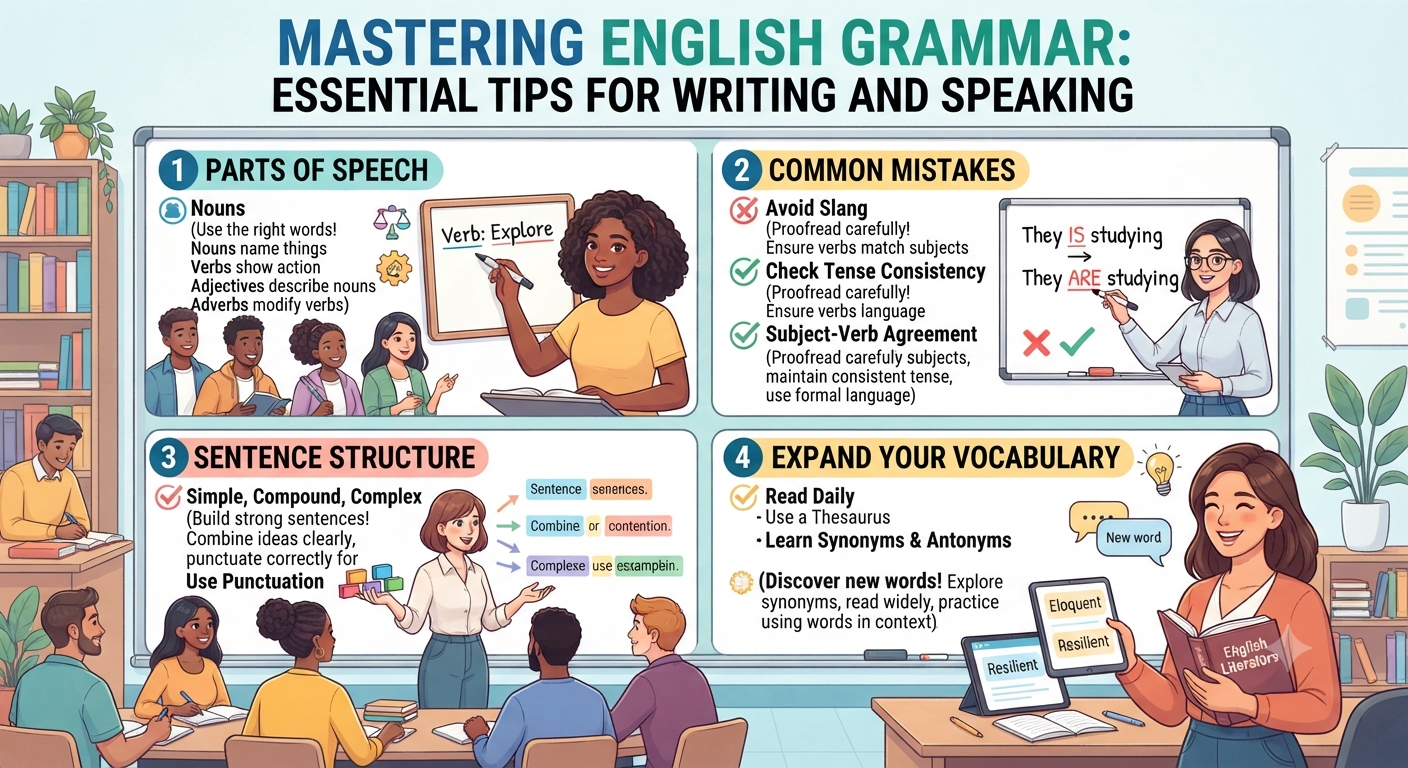
English assignments play an important role in developing students' communication, analytical, reading, and writing abilities. Whether studying English literature, language, creative writing, or linguistics, students are expected to demonstrate a strong understanding of concepts and present their ideas clearly. However, producing high-quality academic work requires more than good grammar and vocabulary. It involves effective research, critical thinking, logical organisation, and an understanding of academic writing conventions.
Many students find English assignments challenging because they need to interpret complex texts, develop meaningful arguments, and support their opinions with relevant evidence. Learning the right writing techniques can make these tasks easier and improve academic performance. By following a structured approach, students can produce well-organised assignments that communicate their knowledge effectively.
1. Understand the Assignment Requirements
The first step towards writing a high-quality english assignment help is understanding the question and its requirements. Students should carefully read the assignment brief before beginning their research or writing process.
Different assignment questions require different approaches. For example, an instruction asking students to analyse a literary text requires a detailed examination of themes, characters, and writing techniques. In contrast, a question asking students to discuss a topic may require multiple perspectives and supporting arguments.
Consider the following points:
-
Identify the main topic and purpose of the assignment.
-
Understand important instruction words such as analyse, evaluate, discuss, and compare.
-
Check the required word count.
-
Identify the expected academic format.
-
Review the assessment criteria.
-
Note the submission deadline.
Understanding these requirements helps students stay focused and ensures that their writing addresses the actual question.
2. Conduct Thorough Research Before Writing
Research is essential for producing meaningful academic assignments. Students should gather relevant information from credible sources before developing their arguments.
English assignments may involve literary analysis, language studies, historical research, and critical discussions. Using appropriate academic sources helps students understand different perspectives and develop stronger interpretations.
Useful research sources include:
-
Academic journals and research papers.
-
University library databases.
-
Scholarly books and textbooks.
-
Literary publications.
-
Reliable educational websites.
-
Published works by recognised authors and critics.
Students should avoid relying entirely on general websites or unsupported online opinions. Instead, they should prioritise credible academic materials that directly relate to their assignment topic.
It is also useful to maintain research notes and record source details while collecting information. This makes referencing easier and reduces the possibility of missing important citations.
3. Develop a Clear and Focused Thesis Statement
A thesis statement communicates the central argument or main idea of an academic assignment. It provides direction to the discussion and helps readers understand what the writer intends to demonstrate.
A strong thesis statement should be specific, relevant, and supported by evidence throughout the assignment.
For example, instead of writing:
"Shakespeare's plays discuss human emotions."
A more focused statement could be:
"Shakespeare explores ambition, guilt, and moral conflict in Macbeth through character development, symbolism, and dramatic irony."
The second statement establishes a clear direction for literary analysis.
Students can develop effective thesis statements by:
-
Understanding the assignment question.
-
Identifying the main argument.
-
Narrowing down broad topics.
-
Considering relevant supporting evidence.
-
Writing a concise statement that reflects the discussion.
A well-developed thesis statement makes academic writing more organised and prevents unnecessary discussion.
4. Create a Logical Assignment Structure
A clear structure helps readers follow the discussion and understand how different ideas connect. Most English assignments follow a traditional academic format consisting of an introduction, body paragraphs, and conclusion.
Introduction
The introduction presents the topic, provides relevant background information, and introduces the main argument. It should capture the reader's attention while establishing the purpose of the assignment.
Main Body
The body contains the primary discussion. Each paragraph should focus on one main idea supported by explanations, examples, and relevant evidence.
Conclusion
The conclusion summarises the main arguments and reinforces the thesis statement. It should provide a meaningful ending without introducing completely new ideas.
Students should also use appropriate headings and subheadings when required. A logical structure improves readability and helps maintain consistency throughout the assignment.
5. Improve Grammar, Vocabulary, and Sentence Construction
Grammar and vocabulary are fundamental elements of effective English writing. Incorrect sentence structures, spelling mistakes, and inappropriate word choices can make academic arguments difficult to understand.
Students should focus on developing their language skills through regular reading and writing practice.
Some useful techniques include:
-
Learn new vocabulary and understand its correct usage.
-
Avoid unnecessary repetition of words.
-
Use punctuation appropriately.
-
Write complete and grammatically correct sentences.
-
Maintain consistent verb tenses.
-
Avoid overly complicated sentence structures.
-
Proofread paragraphs for grammatical accuracy.
Students should also understand the difference between formal and informal language.
For example, academic writing generally avoids conversational expressions and unnecessary abbreviations. Using precise vocabulary and a formal tone makes assignments more professional.
Reading academic books, research articles, and quality literary criticism can also improve vocabulary and sentence construction over time.
6. Develop Critical Thinking and Analytical Skills
High-quality English assignments require more than describing information. Students must demonstrate their ability to analyse ideas, evaluate evidence, and develop independent interpretations.
Critical thinking is particularly important in English literature and language studies.
For example, when analysing a poem, students should consider more than its basic meaning. They should explore the poet's use of imagery, symbolism, tone, rhythm, and language.
Similarly, when studying a novel, students can examine:
-
Character development and relationships.
-
Major themes and conflicts.
-
Narrative techniques.
-
Historical and cultural influences.
-
Symbolism and literary devices.
-
The author's writing style.
Students should compare different interpretations and explain why particular arguments are convincing.
Supporting opinions with relevant textual evidence makes assignments more analytical and academically meaningful.
7. Use Examples and Evidence to Support Arguments
Academic arguments become stronger when supported by relevant examples and credible evidence. Students should avoid making unsupported statements or relying entirely on personal opinions.
For English literature assignments, evidence may include quotations, passages, character descriptions, and references to particular scenes.
For language-related assignments, students may use linguistic examples, research findings, and established theories.
A useful approach is the PEEL paragraph structure:
|
Element |
Purpose |
|---|---|
|
Point |
Introduce the main idea |
|
Evidence |
Provide relevant examples or quotations |
|
Explanation |
Explain how the evidence supports the point |
|
Link |
Connect the discussion to the overall argument |
For instance, when discussing a character's development, students can introduce a particular character trait, support it with a quotation, explain its significance, and connect it to the central theme.
Using evidence effectively improves the credibility and clarity of academic arguments.
8. Follow Appropriate Referencing and Citation Guidelines
Referencing is an essential part of academic writing because it acknowledges the original sources used during research.
Universities may require different referencing formats depending on the subject and department. Students should always check their assignment guidelines before selecting a citation style.
Common referencing styles include:
-
APA: Frequently used in social sciences and psychology.
-
Harvard: Common across business and various academic disciplines.
-
MLA: Widely used in English literature and humanities.
-
Chicago: Often used in history and humanities.
-
Oxford: Used by some universities for humanities subjects.
Students should ensure that quotations, paraphrased ideas, and borrowed information are appropriately acknowledged.
They should also check that every in-text citation corresponds to an entry in the reference list or bibliography, according to the required style.
Correct referencing strengthens academic credibility and helps students maintain academic integrity.
9. Avoid Plagiarism and Maintain Originality
Originality is an important requirement of university assignments. Students should demonstrate their own understanding rather than copying information directly from websites, books, or other academic publications.
Plagiarism can occur through direct copying, inadequate paraphrasing, missing citations, or presenting another person's ideas as original work.
Students can maintain originality by following these practices:
-
Read and understand information before using it.
-
Express ideas in their own words.
-
Provide citations for borrowed concepts.
-
Use quotation marks for direct quotations.
-
Maintain accurate research notes.
-
Review university academic integrity policies.
Paraphrasing should involve understanding and re-expressing the original meaning rather than simply replacing individual words with synonyms.
Students should also follow institutional guidelines regarding AI writing tools and originality-checking software.
10. Proofread and Edit Your Assignment Carefully
Proofreading is one of the most important final stages of academic writing. Even well-researched assignments may contain grammatical errors, unclear sentences, incorrect citations, or formatting inconsistencies.
Students should review their work carefully before submission.
A useful proofreading checklist includes:
-
Check spelling and grammar.
-
Review sentence structure and punctuation.
-
Remove unnecessary repetition.
-
Improve unclear explanations.
-
Check paragraph transitions.
-
Verify quotations and citations.
-
Confirm the required word count.
-
Review headings and formatting.
-
Ensure that the conclusion addresses the assignment question.
Reading the assignment aloud can help identify awkward sentences and missing connections between ideas.
It is also useful to take a short break before proofreading. Looking at the work with fresh attention can make it easier to notice mistakes that may have been overlooked during writing.
11. Manage Your Time Effectively
Time management is essential for completing English assignments without unnecessary pressure. Students who begin writing shortly before the deadline may struggle to conduct sufficient research, organise their ideas, and proofread their work.
Creating a realistic writing schedule can make the process more manageable.
For example:
|
Assignment Stage |
Suggested Time |
|---|---|
|
Understanding the question |
10% |
|
Research and note-taking |
25% |
|
Planning and outlining |
10% |
|
Writing the first draft |
35% |
|
Editing and proofreading |
15% |
|
Final formatting |
5% |
These percentages can be adjusted according to assignment length and complexity.
Breaking a large assignment into smaller tasks also makes progress easier to monitor. Students should leave enough time for reviewing their work and making necessary improvements.
How Academic Writing Skills Apply Across Different Subjects
Strong academic writing skills are valuable beyond English language and literature courses. Students studying business, management, nursing, law, psychology, and engineering also need to communicate research findings and present logical arguments.
For example, business students must evaluate organisational strategies, interpret case studies, and present evidence-based recommendations. Students exploring a management assignment writing service may benefit from learning how to structure business reports, analyse management theories, evaluate leadership approaches, and communicate practical recommendations.
Although subject requirements differ, the fundamental principles remain similar: conduct reliable research, organise information logically, support arguments with evidence, and maintain academic integrity.
Developing these transferable skills can help students perform better across multiple academic disciplines.
Conclusion
Writing high-quality English assignments requires a combination of research, planning, analytical thinking, language proficiency, and effective communication. Students should begin by understanding assignment requirements and developing a clear thesis statement. They should then organise their ideas, use credible evidence, follow appropriate referencing guidelines, and maintain originality throughout the writing process.
Grammar, vocabulary, critical analysis, and proofreading are equally important for producing well-presented academic work. Consistent practice and effective time management can make these tasks easier while building confidence.
Ultimately, improving English assignment writing is an ongoing learning process. By applying these practical strategies, students can strengthen their academic abilities, communicate their ideas effectively, and work towards achieving better academic results.

 English
 Arabic
 French
 Spanish
 Portuguese
 Turkish
 Dutch
 Italiano
 Russian
 Romaian
 Portuguese (Brazil)
 Greek
