


 About Urh Social
 Terms of Service
 Datenschutzbestimmungen
 Contact
Works Contract vs Pure Labour Contract: Understanding GST Classification and Rates
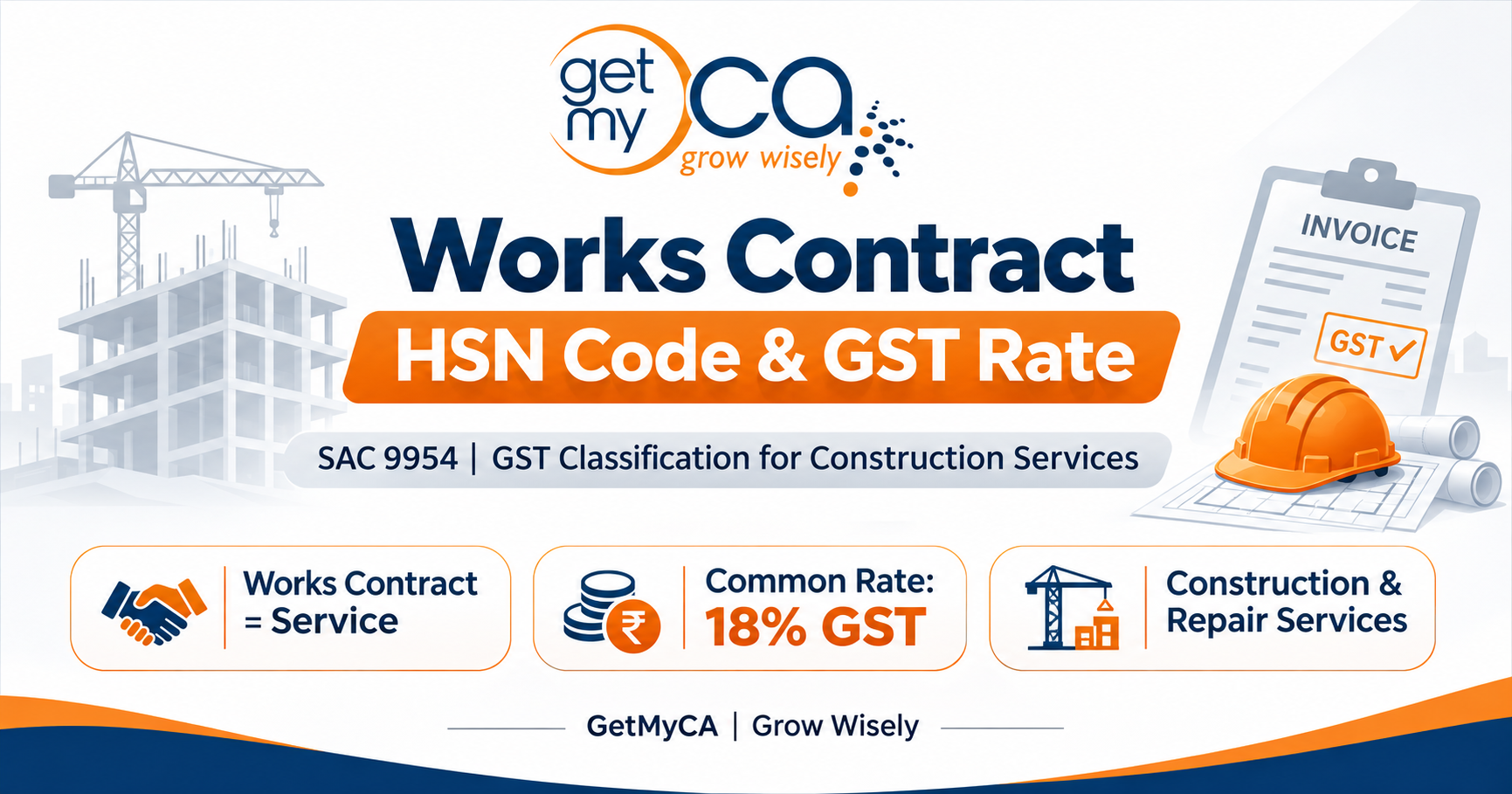
Construction businesses in India frequently offer different types of services, including material-based construction, labour-only work, renovation and installation.
Although these activities may appear similar, their treatment under GST can differ significantly.
One important distinction is whether the contractor supplies materials along with labour or provides labour services without transferring property in goods.
Correctly identifying the type of contract helps businesses determine the relevant SAC code and GST treatment.
What Is a Works Contract Under GST?
A works contract is defined under Section 2(119) of the CGST Act.
It involves specified activities relating to immovable property and includes the transfer of property in goods during execution.
For example, a contractor hired to construct a commercial building using its own cement, steel and labour may be providing a qualifying works contract.
Such contracts are treated as supplies of services under Schedule II.
Construction-related works contracts are generally classified under SAC heading 9954.
What Is a Pure Labour Contract?
A pure labour contract generally involves providing labour services without supplying materials that become part of the property.
For example, a homeowner may independently purchase construction materials and appoint a contractor only to provide labour.
Because the contractor does not transfer property in goods, this arrangement may fall outside the statutory definition of a works contract.
However, the service still requires appropriate GST classification.
Understanding the difference between works contract and labour contract under GST helps businesses avoid applying works contract provisions to every labour-only arrangement.
Are Pure Labour Contracts Exempt From GST?
Not every pure labour contract is exempt.
Notification No. 12/2017-Central Tax (Rate) provides exemptions for specified pure labour services relating to construction, erection, commissioning or installation of an original work pertaining to a single residential unit, where the unit is not part of a residential complex, subject to the notified conditions.
Other specified categories may have their own treatment.
For example, labour services provided for commercial construction do not automatically qualify for this residential exemption.
The exact activity, recipient and notification conditions must be reviewed.
What Is the GST Rate on a Material-Based Works Contract?
Most standard works contracts involving construction of immovable property attract GST at 18%.
The relevant classification generally falls under SAC 9954.
However, the final rate depends on the project type and applicable notification.
For example, a standard office renovation involving transfer of materials and labour may be treated differently from an eligible exempt pure labour service for a qualifying residential unit.
Businesses should not assume that all construction transactions have the same GST rate.
How Should Contractors Prepare Their Agreements?
A written agreement should clearly describe the work to be performed.
Relevant details include:
-
Scope of construction activities.
-
Material supply responsibility.
-
Labour obligations.
-
Contract value.
-
Work location.
-
Payment terms.
-
Applicable GST treatment.
-
Responsibility for statutory compliance.
The agreement should reflect the actual commercial arrangement.
Simply describing a transaction as a labour contract does not establish an exemption if the contractor also supplies materials.
What Happens When Goods Are Supplied Separately?
Some businesses sell construction materials without undertaking installation or construction work.
A standalone sale of cement, steel, tiles or other materials may require classification under the relevant goods HSN code.
This differs from a qualifying works contract treated as a service.
The contract terms and actual nature of the supply determine the correct classification.
Businesses should examine whether goods and services form one qualifying composite transaction or separate supplies.
Why Is Correct Classification Important?
Incorrect classification can result in wrong GST rates, inconsistent invoices and difficulties during GST return reconciliation.
Contractors should review their service descriptions and applicable notifications before issuing invoices.
Professional GST advisory and compliance services for contractors can assist with GST classification, tax rate review and return filing.
Conclusion
Works contracts and pure labour contracts are not automatically treated the same way under GST.
Material transfer, immovable property requirements and the nature of the service determine the appropriate classification.
Understanding these differences helps contractors apply the correct GST treatment and maintain accurate tax records.

 English
 Arabic
 French
 Spanish
 Portuguese
 Turkish
 Dutch
 Italiano
 Russian
 Romaian
 Portuguese (Brazil)
 Greek