


 About Urh Social
 Terms of Service
 Politique de confidentialité
 Contact
Footwear Manufacturing Cost in India: What Businesses Should Budget
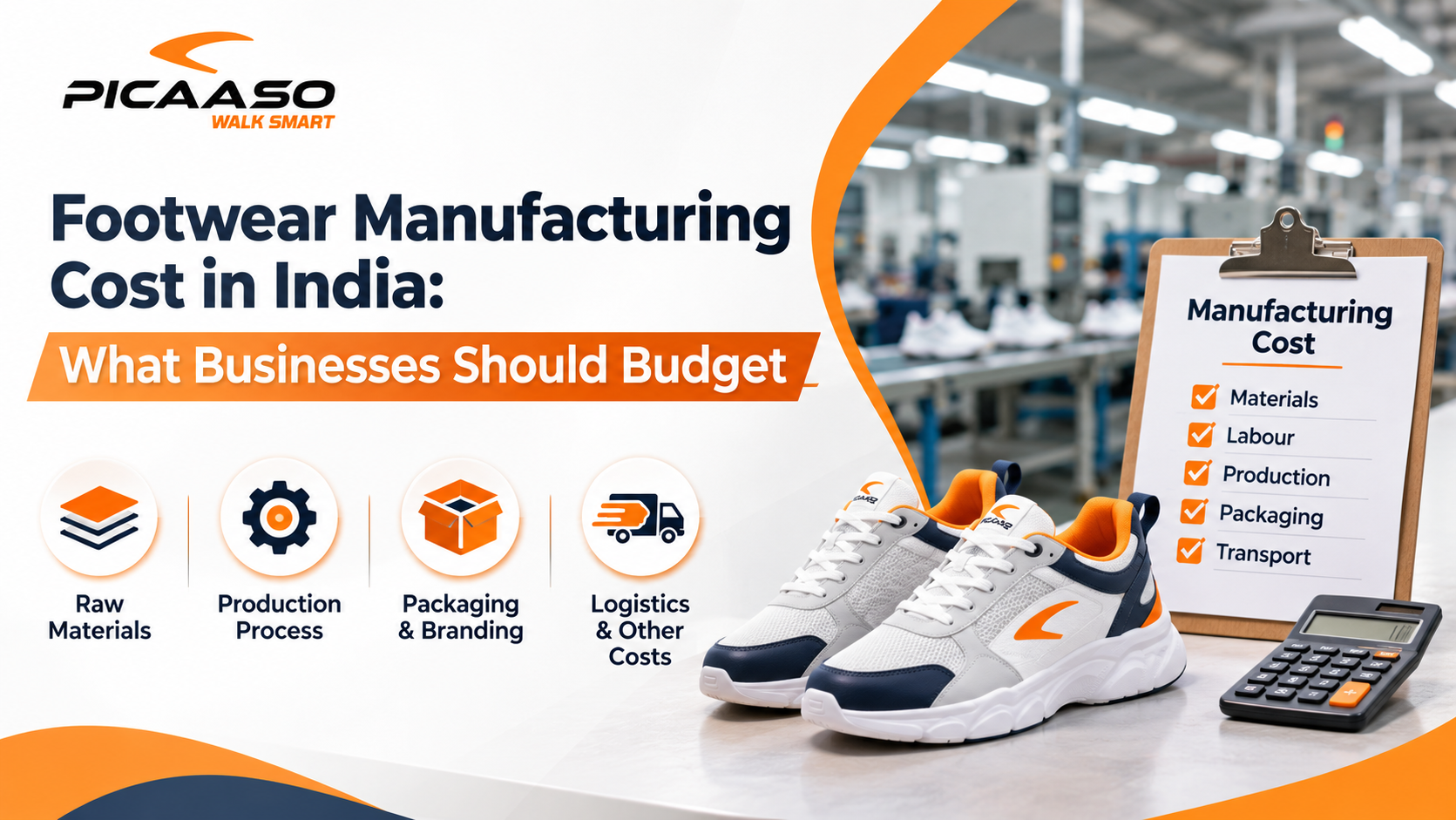
Footwear manufacturing cost is one of the first considerations for entrepreneurs planning to launch a shoe brand or purchase products directly from manufacturers.
However, the cost of producing a pair of shoes depends on multiple factors, and businesses should not assume that every footwear category follows the same pricing structure.
Understanding these cost components can help buyers prepare realistic budgets and compare manufacturing quotations more effectively.
Raw Materials and Product Design
Materials play a significant role in footwear production costs.
The upper material, sole construction, lining, straps, adhesives, and finishing components may all affect the price.
For example, a basic slipper generally requires a different production process from a multi-component sneaker.
Similarly, different grades of EVA, rubber, PU, and synthetic materials can influence both product performance and manufacturing expenses.
Product design also matters. Additional stitching, colour combinations, decorative elements, or customized components may require more production work.
Order Quantity and Manufacturing Process
The number of pairs ordered can influence the average manufacturing cost.
Some production expenses, such as setup, mould development, or certain material purchases, may be distributed across a larger order.
However, a larger order is not automatically the most economical option.
Buyers should consider expected sales, inventory storage, and available working capital before committing to higher quantities.
Businesses researching footwear manufacturing cost in India can review how different materials, product categories, customization requirements, and order quantities affect budgeting.
Indicative cost ranges are useful for initial planning, but actual purchase decisions should be based on current written supplier quotations.
Additional Expenses to Consider
The factory price may not include every cost associated with the final product.
Depending on the order, buyers may need to budget for packaging, custom branding, sampling, testing, transportation, duties, insurance, and applicable taxes.
Businesses importing footwear should pay attention to shipping terms and the agreed responsibility for customs procedures.
These costs can materially affect the final landed price.
Compare Quotations Carefully
When receiving quotations from different manufacturers, ensure that they cover comparable product specifications.
A meaningful comparison should consider materials, size assortment, packaging, minimum order quantity, payment conditions, and delivery terms.
Buying solely on the basis of the lowest quoted price may lead to unexpected differences in quality or additional expenses.
Working with suitable shoe manufacturing suppliers in India can help buyers understand the questions they should raise before finalizing a bulk order.
Conclusion
Footwear manufacturing budgets should account for product specifications, materials, production complexity, order quantity, and additional commercial expenses.
A structured costing approach helps entrepreneurs determine realistic selling prices, estimate margins, and reduce uncertainty when planning a footwear collection.
Before committing to production, businesses should request detailed quotations and verify the assumptions used in their financial calculations.

 English
 Arabic
 Spanish
 Portuguese
 Deutsch
 Turkish
 Dutch
 Italiano
 Russian
 Romaian
 Portuguese (Brazil)
 Greek
