


 About Urh Social
 Terms of Service
 Datenschutzbestimmungen
 Contact
Indonesia Plastics Market 2026 | Growth, Size, and Trends Forecast by 2034
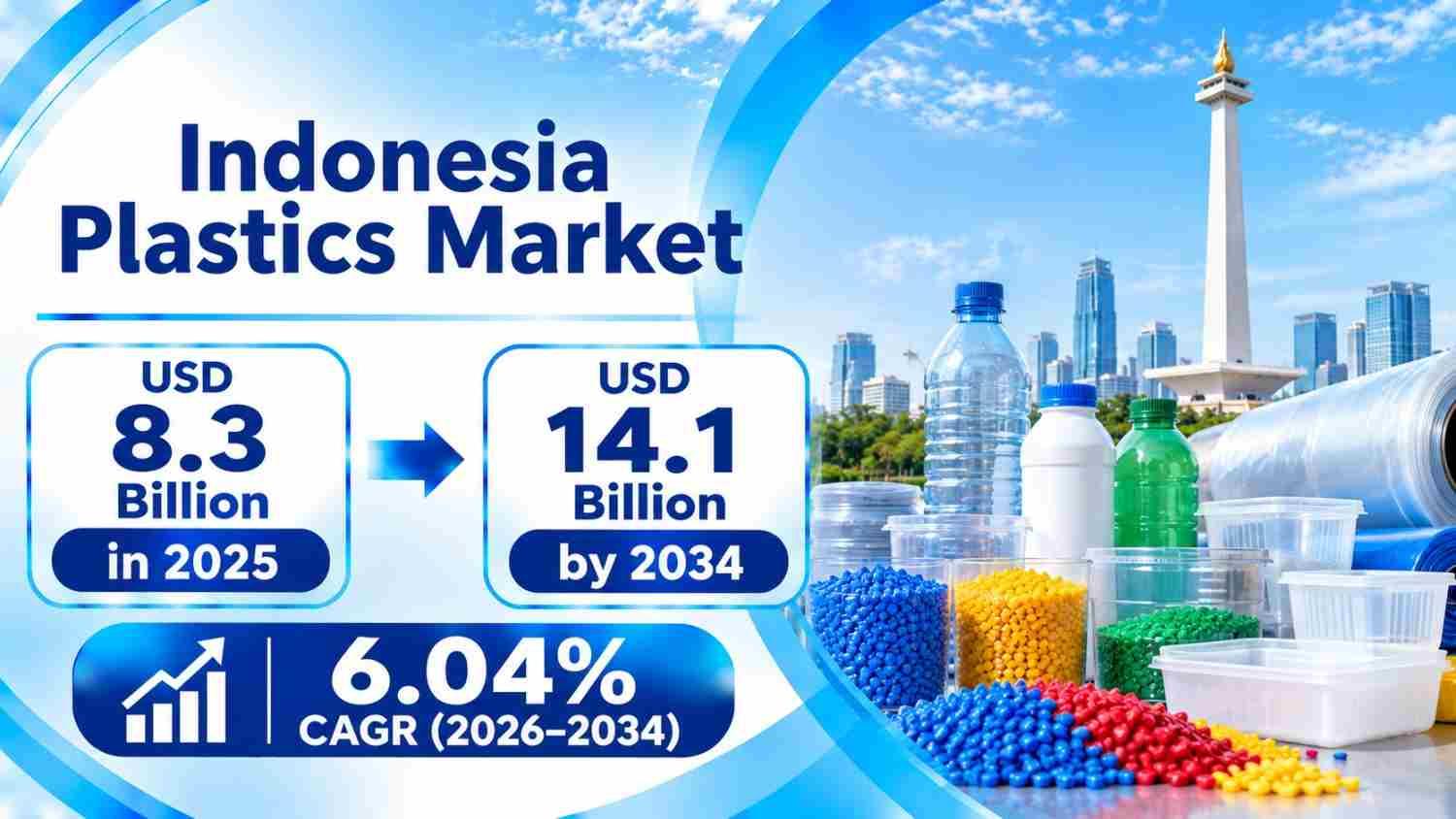
IMARC Group, a leading global market research and management consulting firm, has published its latest market intelligence report on the Indonesia Plastics Market. The Indonesia plastics market size was valued at USD 8.3 Billion in 2025 and is projected to reach USD 14.1 Billion by 2034, exhibiting a CAGR of 6.04% during 2026-2034. Growth is being driven by rising demand from the food and beverage sector for lightweight and durable packaging, the rapid growth of e-commerce, the increasing use of plastic components in construction and automotive, and the expansion of domestic manufacturing capabilities and investment in recycling technologies.
Plastics are among the most widely used materials in Indonesia's economy, valued for their lightweight, durable and cost-effective properties across packaging, construction, automotive, electronics and consumer goods. Urbanization and infrastructure development are spurring plastic consumption in housing and construction, while the growing consumer preference for convenience-based packaged goods and the spread of organized retail widen demand further. At the same time, the sector faces a sustainability agenda, with the introduction of innovative bioplastics, investment in recycling technologies and a policy push toward extended producer responsibility reshaping how resins are produced, used and recovered. These developments are driving changes in the plastic industry Indonesia, supported by trade policies and government-backed petrochemical infrastructure, reshaping the competitive landscape across Java, Sumatra, Kalimantan, Sulawesi and beyond.
Indonesia Plastics Market at a Glance:
- Market Size (2025): USD 8.3 Billion
- Market Forecast (2034): USD 14.1 Billion
- Growth Rate (2026-2034): CAGR of 6.04%
- Base Year: 2025 | Historical Period: 2020-2025 | Forecast Period: 2026-2034
- Leading Type: Traditional Plastics, holding around a 73.7% share in 2025, owing to their cost-effectiveness, broad availability and well-established manufacturing infrastructure
- Leading Technology: Injection Molding, driven by its versatility, speed and suitability for mass production of complex parts
- Leading Application: Packaging, driven by rapid urbanization, booming e-commerce and the expanding FMCG sector
- Leading Regional Market: Java, the country's economic and industrial hub, home to the bulk of Indonesia's plastic converters, distributors and end-user industries
How AI is Reshaping the Future of the Indonesia Plastics Market
- AI-Based Litter Detection Tested in Indonesia: The Asian Development Bank's Circular Economy Forum in June 2025 reviewed digital solutions piloted for plastics circularity in Indonesia and Viet Nam, including pLitter, an AI-based litter detection system, alongside waste management apps and recycling marketplaces such as Duitin. These tools aim to improve monitoring of plastic pollution and the effectiveness of EPR, plastic credit and CSR schemes.
- AI-Optimised Sorting and Traceability Gain Momentum: Indonesia's 2025 plastics innovation cohort highlighted AI-optimised sorting, pyrolysis, depolymerisation, solvent-based purification and traceability systems as emerging standout methods, while Indonesian startup Octopus provides digital traceability tools for recyclers that give buyers and sellers of recyclable content more confidence.
- Digital Traceability for Producer Responsibility: A July 2026 study of a data-driven EPR platform for plastic waste traceability and recycling management found that transaction-based digital platforms can provide real-time monitoring of collection, processing and recycling, and at the Indo Waste & Recycling 2026 Expo in Jakarta a pilot was presented to build digital traceability and Digital MRV for recycling data.
Grab a sample PDF of this report: https://www.imarcgroup.com/indonesia-plastics-market/requestsample
Indonesia Plastics Market Trends and Drivers:
Demand for plastics in Indonesia is being underpinned by steady economic growth across multiple sectors. According to BPS-Statistics Indonesia, the economy grew 4.87% year on year in the first quarter of 2025, supporting investment and consumption in packaging, construction, automotive and consumer goods, all of which rely heavily on plastics. Plastics are favored for their cost-efficiency, moldability and adaptability to complex manufacturing processes.
The region's structural differentiator is the pace of urbanization and e-commerce. According to an industry report, 56% of Indonesia's population lived in urban areas in 2022, expected to exceed 70% by 2040, driving demand for PVC pipes, roofing membranes and packaged goods, while e-commerce made up 26.5% of total retail sales in 2024, increasing the need for durable, lightweight and flexible packaging that protects products during delivery.
A third driver is domestic petrochemical capacity and circularity investment. Reuters has described Lotte Chemical's Cilegon complex as Indonesia's first new naphtha cracker in about 30 years, expected to reduce ethylene import dependence, while Dow's May 2025 MOU with Pan Era Group on post-consumer recycled polyethylene resins and the Borealis and Borouge recycling study in 2026 show growing investment in recycled content, a dynamic that is set to intensify over the coming decade.
Government Schemes and Policy Initiatives Driving Demand:
- Stop Plastic Pollution Campaign and Virgin Plastic Import Controls: On 30 May 2025 the Indonesian Ministry of Environment launched a nationwide Stop Plastic Pollution campaign and reaffirmed its commitment to restricting imports of virgin plastic and enforcing its Extended Producer Responsibility roadmap, in a country that generates 3.2 Million Tonnes of unmanaged plastic waste annually with a recycling rate of around 7%, according to the report.
- Mandatory Extended Producer Responsibility: On 12 July 2026, the Ministry of Environment announced a forthcoming ministerial regulation requiring around 10,000 large producers to fund plastic packaging waste management through Packaging Recovery Organisations, with producer contributions linked to how easily packaging can be recycled. A draft was opened for public consultation on 6 October 2026, and the 2019 roadmap regulation (P.75/2019) remains the operative law until the new rule is issued.
- Ministry of Industry Biodegradable Plastics Initiative: On 10 July 2025, Industry Minister Agus Gumiwang Kartasasmita announced an initiative to promote biodegradable plastics using biotransformation technology, with a national standard, a road map and potential incentives to support eco-friendly production without jeopardizing food security.
- Circular Economy Roadmap Financing: In February 2025, GGGI and Bappenas launched a USD 60 Million initiative, supported by Korea's Green New Deal Fund, to build a sustainable plastics value chain aligned with Indonesia's Circular Economy Roadmap, strengthening recycling infrastructure, investment and regulation.
Indonesia Plastics Industry Segmentation:
The report has segmented the market into the following categories:
Breakup By Type:
- Traditional Plastics (Polyethylene, Polypropylene, Polyvinyl Chloride, Polystyrene)
- Engineering Plastics (PET, PBT, Polycarbonates, ABS and SAN, Fluoropolymers, POM, PMMA, Polyamide, Others)
- Bioplastics
Traditional plastics are the largest component in 2025, holding around 73.7% of the market, as resins such as polyethylene, polypropylene and PVC are cost-effective, widely available and easy to process across packaging, construction and consumer goods. The report also provides a detailed breakup and analysis of engineering plastics and bioplastics, with import reliance on engineering plastics and slower adoption of bioplastics supporting the dominance of conventional resins.
Breakup By Technology:
- Injection Molding
- Extrusion Molding
- Blow Molding
- Others
Injection molding leads the market in 2025 owing to its versatility, speed and suitability for mass production of complex parts across packaging, electronics and automotive, and the relatively lower cost of labor in Indonesia further enhances its economics. The report also provides a detailed breakup and analysis of extrusion molding, blow molding and others.
Breakup By Application:
- Packaging
- Electrical and Electronics
- Building and Construction
- Automotive and Transportation
- Furniture and Bedding
- Others
Packaging leads the market in 2025, driven by rapid urbanization, booming e-commerce and the expanding FMCG sector, with retail chains, online shopping platforms and delivery services increasing demand for plastic films, containers and bottles. The report also provides a detailed breakup and analysis of the other applications.
Breakup By Region:
- Java
- Sumatra
- Kalimantan
- Sulawesi
- Others
Java accounted for the largest market share in 2025 due to its role as the country's economic and industrial hub, with Jakarta, Surabaya and Bandung housing most of Indonesia's plastic converters, distributors and end-user industries, supported by more advanced infrastructure, ports and distribution networks. The report provides a comprehensive analysis of the other regions.
Competitive Landscape:
Key players in the Indonesian plastics market are focusing on capacity expansion, localization of production and product diversification to meet rising domestic demand and reduce import reliance. Companies are investing in modern manufacturing technologies such as advanced injection and extrusion molding, exploring bioplastics and recycled materials in response to environmental pressures, and forming strategic partnerships with global suppliers and downstream industries to enhance value chain integration, while optimizing logistics and distribution, particularly in Java. The report provides a comprehensive analysis of the competitive landscape with detailed profiles of all major companies.
What Does The Full Report Cover?
- Historical, current, and forecast market size for the Indonesia plastics market from 2020 to 2034
- Market breakup by type, technology, application, and region
- Regional analysis covering Java, Sumatra, Kalimantan, Sulawesi, and Others
- Key market drivers, challenges, and opportunities shaping the market
- Porter's Five Forces analysis assessing new entrants, competitive rivalry, supplier power, buyer power, and the threat of substitution
- Competitive landscape and insight into the current positions of key players
- Detailed profiles of major companies operating in the Indonesia plastics market
Recent News and Developments in the Indonesia Plastics Market
- February 2025: GGGI and Bappenas launched a USD 60 Million initiative to build a sustainable plastics value chain in Indonesia, supported by Korea's Green New Deal Fund and aligned with the Circular Economy Roadmap, aiming to enhance recycling infrastructure, investment and regulation.
- May 2025: Dow signed a second MOU with Indonesia's Pan Era Group to boost the supply of high-quality post-consumer recycled polyethylene resins, supporting Indonesia's circular economy goals by advancing recycling technologies and expanding recycled-content applications.
- February 2026: Borealis and Borouge launched a study to bolster polyethylene and polypropylene recycling in Indonesia, evaluating the value chain from sorting plastic waste to producing recycled resin in support of national sustainability goals.
- July 2026: Indonesia's Ministry of Environment announced on 12 July 2026 that it will soon require producers to finance the management of their packaging waste, with about 10,000 large producers expected to fund waste management through Packaging Recovery Organisations.
- September 2026: The Ministry of Environment said on 26 September 2026 that Indonesia's 227 plastic recyclers hold 3.16 million tonnes a year of capacity and run at about 48%, pointing to weak recycled-feedstock economics, and opened a public consultation on a draft EPR ministerial regulation on 6 October 2026.
Note: If you require specific details, data, or insights that are not currently included in the scope of this report, we are happy to accommodate your request. As part of our customization service, we will gather and provide the additional information you need, tailored to your specific requirements. Please let us know your exact needs, and we will ensure the report is updated accordingly to meet your expectations.
Key Questions This Report Answers
- How big is the Indonesia plastics market and what is its growth outlook through 2034?
- What are the key growth drivers, challenges, and opportunities in the Indonesia plastics market?
- How do traditional plastics, engineering plastics, and bioplastics compare in Indonesia?
- How do injection molding, extrusion molding, and blow molding shape production?
- Which applications, from packaging to construction and automotive, are driving plastics demand?
- How do Java, Sumatra, Kalimantan, Sulawesi, and Others compare as regional markets?
- Who are the key players in the Indonesia plastics market, and how is the competitive landscape evolving?
About Us
IMARC Group is a global management consulting firm that helps the world's most ambitious changemakers to create a lasting impact. The company provides a comprehensive suite of market entry and expansion services. IMARC offerings include thorough market assessment, feasibility studies, company incorporation assistance, factory setup support, regulatory approvals and licensing navigation, branding, marketing and sales strategies, competitive landscape and benchmarking analyses, pricing and cost research, and procurement research.
Media and Sales Contact
IMARC Group
Email: [email protected]
United States: +1-201-971-6302
India: +91-120-433-0800
United Kingdom: +44-753-714-6104

 English
 Arabic
 French
 Spanish
 Portuguese
 Turkish
 Dutch
 Italiano
 Russian
 Romaian
 Portuguese (Brazil)
 Greek
