


 About Urh Social
 Terms of Service
 Datenschutzbestimmungen
 Contact
What to Check Before Replacing a Hydraulic Variable Vane Pump
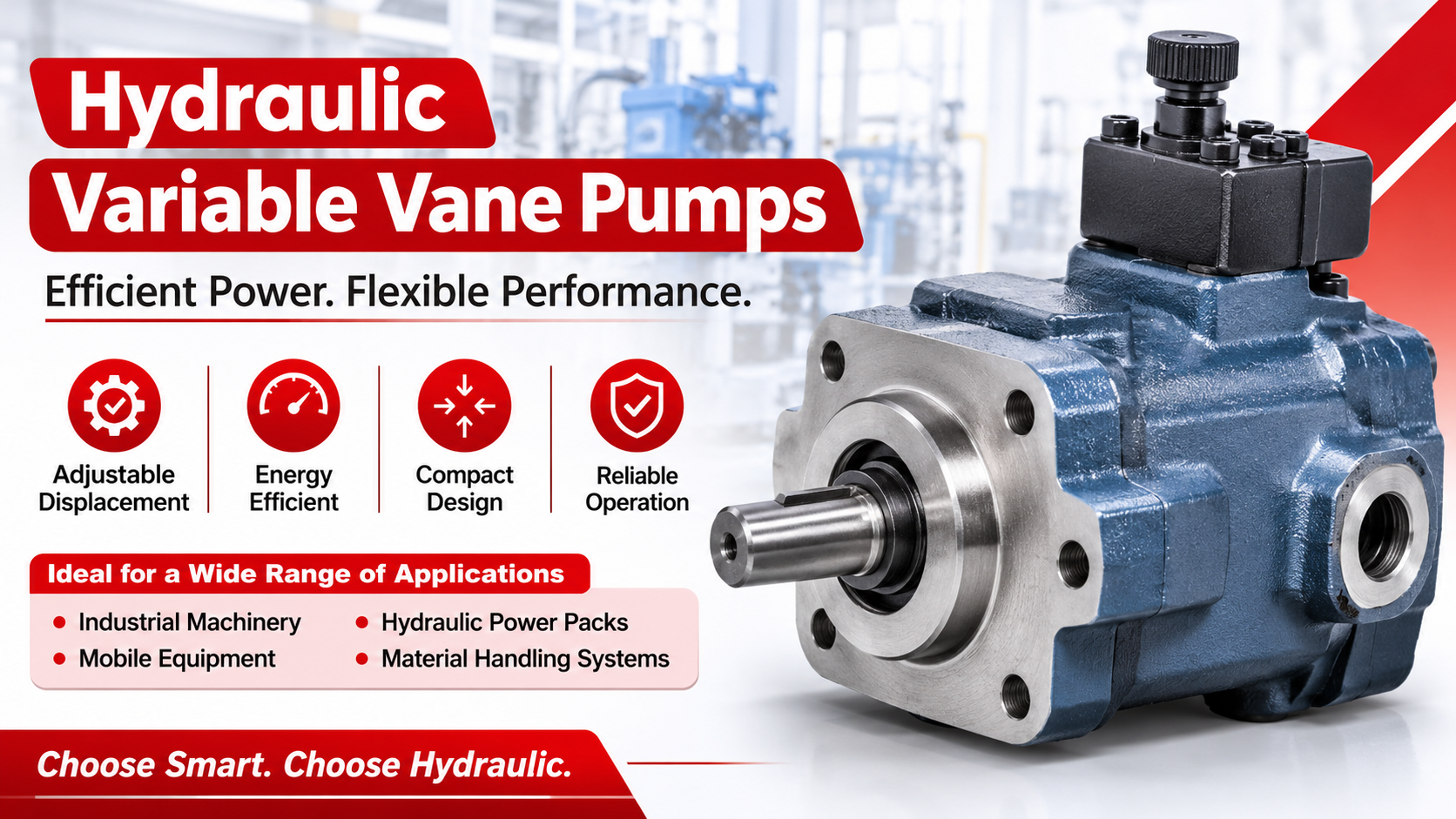
Industrial machines depend on hydraulic components to maintain consistent production. When an existing pump requires replacement, maintenance teams must identify a suitable alternative without introducing new compatibility problems.
Replacing a Hydraulic Variable Vane Pump involves evaluating mechanical dimensions, operating specifications and hydraulic circuit requirements.
A systematic replacement strategy can help businesses minimise production interruptions and avoid unnecessary equipment modifications.
When Should You Consider Hydraulic Pump Replacement?
Not every hydraulic performance problem requires pump replacement. Maintenance teams should first investigate the complete hydraulic circuit to identify the actual source of the issue.
Replacement may become necessary when internal damage is extensive, repair costs are uneconomical or suitable spare parts are unavailable.
Persistent flow reduction, abnormal noise and increased internal leakage may justify further inspection. However, these symptoms can also originate from other hydraulic components.
Repair or Replace: Which Option Is Suitable?
Industrial buyers should compare the technical and financial implications of both options.
|
Evaluation factor |
Repair |
Replacement |
|---|---|---|
|
Initial expenditure |
May be lower |
May be higher |
|
Spare parts requirement |
Essential |
Depends on installation |
|
Equipment condition |
Suitable for repairable damage |
Suitable for extensive damage |
|
Downtime |
Depends on repair complexity |
Depends on availability |
|
Warranty |
Depends on repair provider |
Depends on supplier terms |
|
Compatibility |
Original configuration retained |
Requires verification |
The most suitable decision depends on equipment condition, repair quality and production requirements rather than purchase price alone.
Essential Checks Before Replacing a Hydraulic Vane Pump
1. Verify the Original Pump Model
Record the model number, manufacturer, displacement and available nameplate information. These details provide a starting point for identifying a compatible replacement.
Older equipment may require assistance in locating updated technical specifications.
2. Compare Pressure and Flow Ratings
The replacement must support the machine's operating pressure and necessary fluid delivery.
Experienced Hydraulic Variable Vane Pump Manufacturers can provide technical specifications that help maintenance teams compare available configurations.
3. Check Mounting Dimensions
Compare mounting flange dimensions, bolt hole positions and overall pump size.
A replacement that does not match the available mounting space may require additional mechanical modifications.
4. Confirm Shaft and Coupling Compatibility
The shaft diameter, length, configuration and rotation direction must match the drive arrangement.
Incorrect shaft compatibility may prevent installation or cause mechanical problems during operation.
5. Evaluate Pressure Compensation Settings
Different variable displacement pumps may have different control configurations and adjustment ranges.
Engineers should confirm that the replacement supports the pressure control requirements and operating characteristics of the existing hydraulic circuit.
Why Hydraulic Circuit Compatibility Matters
Two pumps with similar displacement ratings may not perform identically within the same machine.
Differences in pressure compensation response, internal leakage, drain requirements and port configuration can influence overall system behaviour.
For example, a pump that requires a separate case drain cannot necessarily replace a model with a different internal drainage arrangement without modifying the circuit.
Maintenance teams should review the original hydraulic schematic and replacement documentation together.
Preparing the Hydraulic System for a Replacement Pump
Installing new equipment into a contaminated hydraulic circuit can shorten its operating life.
Before replacement, technicians should investigate the cause of the previous pump problem and inspect the reservoir, hydraulic fluid, filters and connected components.
Depending on the condition of the system, additional cleaning or controlled flushing may be necessary.
Consulting knowledgeable Hydraulic Variable Vane Pump Dealers can help maintenance teams identify appropriate replacement options and relevant operating requirements.
Replacement Pump Compatibility Checklist
|
Parameter |
Replacement requirement |
|---|---|
|
Pump displacement |
Matches required hydraulic flow |
|
Pressure rating |
Meets operating and permitted peak pressure |
|
Motor speed |
Within approved operating limits |
|
Mounting flange |
Compatible with existing equipment |
|
Shaft configuration |
Suitable for the drive coupling |
|
Hydraulic fluid |
Compatible with seals and materials |
|
Control mechanism |
Matches circuit behaviour |
|
Port arrangement |
Supports correct fluid connections |
Reviewing these parameters before purchase can reduce avoidable installation delays.
How to Minimise Production Downtime During Pump Replacement
Businesses can prepare for hydraulic pump replacement through planned maintenance and accurate equipment documentation.
Keeping original datasheets, circuit diagrams and equipment service records readily available helps maintenance teams identify compatible alternatives more efficiently.
Facilities with critical production machinery may also benefit from maintaining suitable spare pumps based on equipment importance, supplier lead times and inventory costs.
After replacement, establish updated baseline measurements to support future condition monitoring.
Choosing a Reliable Hydraulic Pump Replacement Supplier
Industrial buyers should request detailed specifications, compatibility information and clear commercial terms before finalising a purchase.
N.T. Associates & Trading Co. offers hydraulic components for manufacturing machinery and industrial fluid power applications.
Businesses approaching Hydraulic Variable Vane Pump Suppliers in India can provide existing model details and machine specifications to help identify suitable replacement configurations.
Conclusion
Replacing a hydraulic vane pump requires careful technical evaluation. Matching displacement alone does not guarantee compatibility with existing industrial equipment.
Maintenance teams should examine pressure ratings, mounting dimensions, control characteristics and fluid requirements before installation.
A well-planned replacement process helps reduce unnecessary modifications and supports reliable machine operation.
Frequently Asked Questions
1. Can a hydraulic vane pump be replaced with a different brand?
Yes, provided the mechanical dimensions, hydraulic specifications and control characteristics are compatible.
2. Should hydraulic oil be replaced when changing a pump?
It depends on the oil's condition, contamination level and the reason for replacement. Follow the equipment manufacturer's recommendations.
3. Can a fixed displacement pump replace a variable vane pump?
Not necessarily. Such a replacement may require significant changes to hydraulic circuit design and pressure control arrangements.
4. What information is required when ordering a replacement pump?
Model number, flow rate, pressure rating, shaft dimensions, mounting arrangement and hydraulic fluid requirements are important.
5. How can premature failure of a replacement pump be prevented?
Identify the original failure cause, maintain fluid cleanliness and follow the manufacturer's installation and commissioning procedures.

 English
 Arabic
 French
 Spanish
 Portuguese
 Turkish
 Dutch
 Italiano
 Russian
 Romaian
 Portuguese (Brazil)
 Greek
