


 About Urh Social
 Terms of Service
 Política de privacidade
 Contact
How Businesses With Domestic and Export Sales Can Prepare Accurate GST Refund Claims
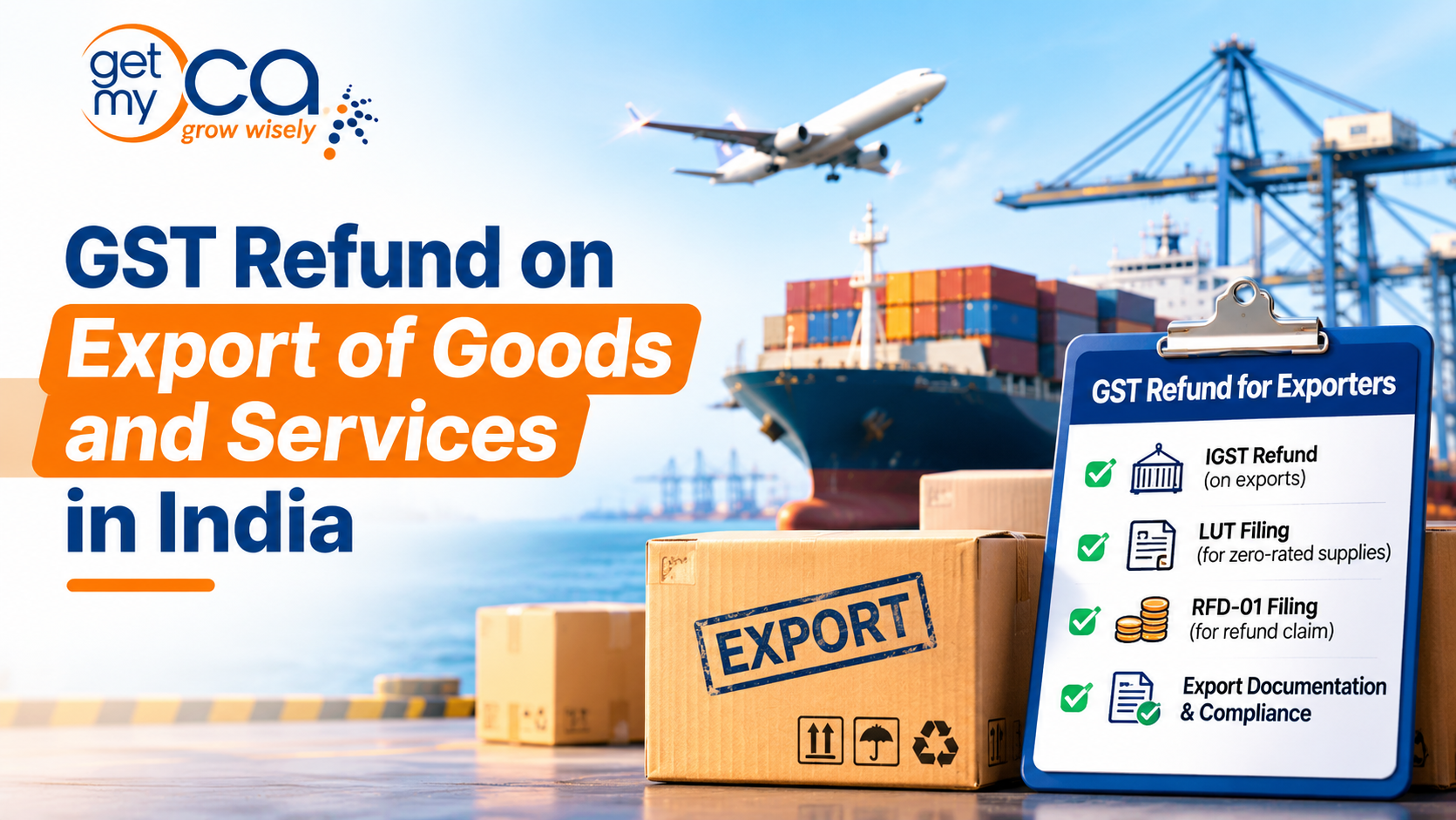
Many Indian manufacturers and service providers supply customers in both domestic and international markets.
Such businesses may purchase common raw materials, services and other eligible inputs to support their overall operations.
When part of their turnover relates to zero-rated exports, the company may be eligible for a refund of accumulated input tax credit under the applicable GST provisions.
However, calculating the refundable amount requires careful separation of different types of outward supplies.
Why Is Turnover Classification Important?
Domestic taxable sales and zero-rated export supplies follow different GST treatments.
Domestic supplies generally attract tax at the applicable rate, while qualifying exports are zero-rated under the IGST Act.
Understanding the GST refund calculation for exporters in India helps businesses determine how eligible export turnover affects the refund amount.
For exports under LUT without payment of IGST, the calculation is generally governed by Rule 89(4).
The company must identify the relevant turnover and eligible ITC according to the statutory definitions.
How Should Domestic and Export Sales Be Recorded?
Businesses should maintain separate transaction classifications for domestic supplies and exports.
A useful sales register may include:
-
Invoice number and date.
-
Customer details.
-
GSTIN, where applicable.
-
Domestic or export classification.
-
Taxable value.
-
Applicable GST treatment.
-
Shipping bill details for goods exports.
-
Foreign payment details for service exports.
-
Relevant accounting period.
These details help support accurate GSTR-1 and GSTR-3B reporting.
Companies should also separately identify supplies to SEZ units or developers where applicable.
What Is the Importance of Adjusted Total Turnover?
The refund formula under Rule 89(4) uses adjusted total turnover as one of its components.
The calculation considers eligible zero-rated turnover in relation to the prescribed turnover measure and Net ITC.
Exporters must apply the statutory definitions rather than simply dividing exports by their total accounting revenue.
For example, particular transactions may require separate treatment under the refund rules.
Businesses should prepare calculation workings that reconcile with the relevant GST return figures.
Can Common Input Tax Credit Be Included?
A business may use common goods and input services for domestic taxable supplies and qualifying zero-rated exports.
The treatment of this credit depends on its eligibility and the applicable rules.
Under Rule 89(4), Net ITC generally concerns eligible inputs and input services availed during the relevant period, subject to the prescribed exclusions.
However, businesses must also examine whether any credit reversal or apportionment provisions apply to exempt, non-business or otherwise restricted use.
The company should not include ineligible credit merely because an expense supports overall operations.
Why Should Exporters Review Refund Calculations Monthly?
Businesses may experience significant changes in their export-to-domestic sales ratio.
A company may export most of its products during one month while selling primarily in India during another period.
These fluctuations affect the relevant turnover figures used in refund calculations.
Maintaining period-wise records makes it easier to identify errors and prepare consistent statements.
Exporters should also verify whether any eligible ITC has already been considered under a separate refund claim.
Duplicate claims must be avoided.
What Documents Should Support the Calculation?
A refund working file may include:
-
Domestic and export sales registers.
-
GSTR-1 and GSTR-3B.
-
Purchase and eligible ITC registers.
-
LUT acknowledgement.
-
Export invoices.
-
Shipping bills or service export records.
-
Applicable bank realisation evidence.
-
Refund calculation statement.
-
Relevant reconciliations and declarations.
Manufacturers should retain sufficient documents to explain the figures used.
How Can Businesses Reduce Filing Errors?
Accounts teams should reconcile export and domestic turnover before preparing Form GST RFD-01.
They should also review the correct refund category and ensure that the appropriate rule has been applied.
Professional GST refund consultancy and filing services can assist businesses with eligible ITC reviews, turnover reconciliation and supporting documentation.
Conclusion
Businesses with domestic and export sales need accurate GST records to prepare reliable export refund claims.
Correct turnover classification, eligible ITC calculations and proper reconciliations are important for applying Rule 89(4).
A structured compliance process helps exporters evaluate their refund entitlement and avoid preventable filing discrepancies.

 English
 Arabic
 French
 Spanish
 Portuguese
 Deutsch
 Turkish
 Dutch
 Italiano
 Russian
 Romaian
 Greek