


 About Urh Social
 Terms of Service
 Privacy Policy
 Contact
How Corrugated Box Manufacturers Can Handle GST Refund Deficiency Notices
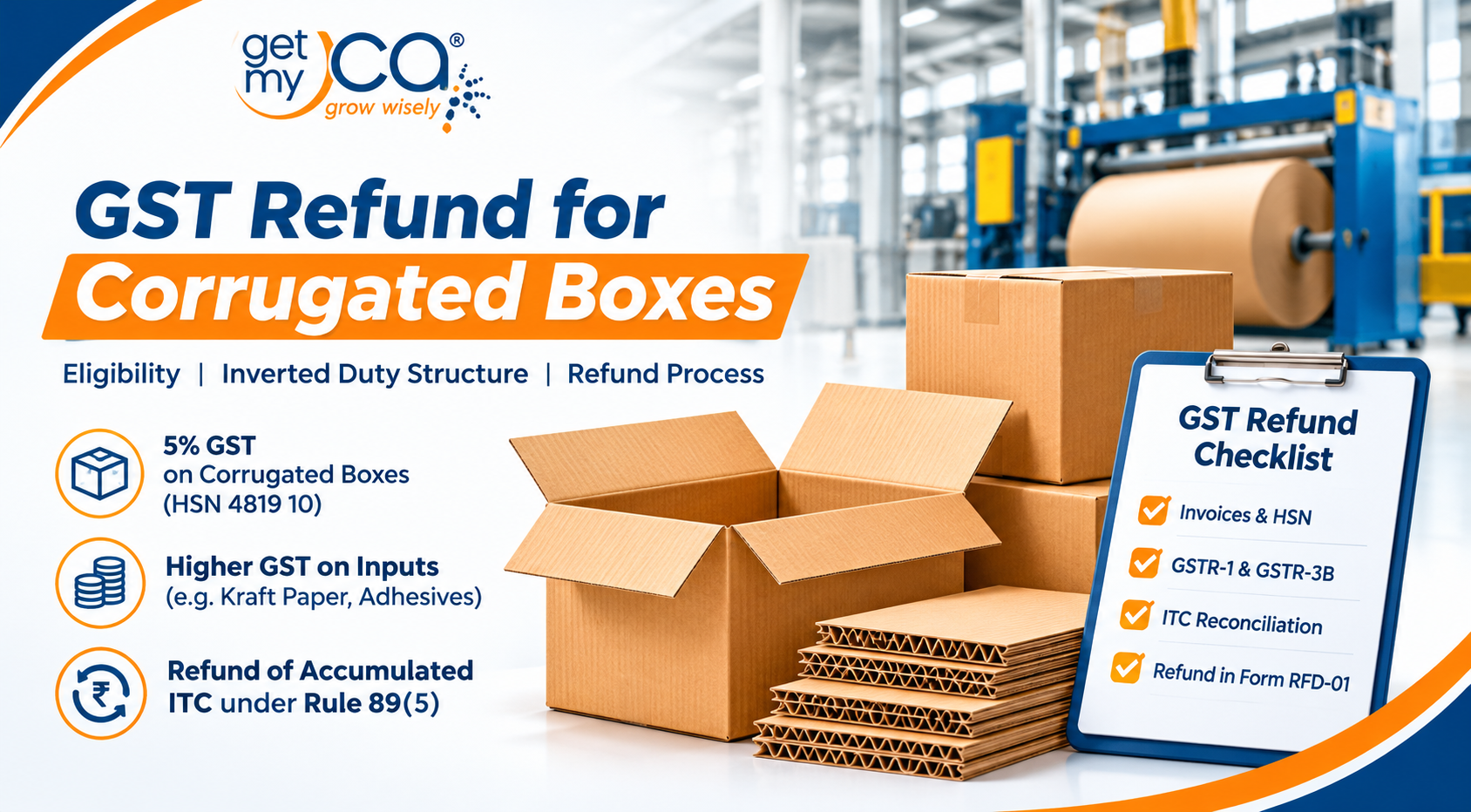
Filing a GST refund application is an important compliance activity for corrugated box manufacturers dealing with accumulated input tax credit.
However, submission of Form GST RFD-01 does not guarantee that the refund will be approved.
The GST department may identify missing information, inconsistencies or other issues during application scrutiny.
Understanding the difference between a deficiency memo and a proposed rejection can help manufacturers respond appropriately.
Why Do GST Refund Applications Face Objections?
Refund applications may require detailed supporting information regarding eligible inputs, outward supplies and tax returns.
If submitted documents are incomplete or inconsistent, the department may request corrective action or further explanation.
Understanding GST refund claim for corrugated box manufacturers is important because inverted duty refunds are governed by specific statutory eligibility and calculation rules.
Common issues can include incorrect HSN classification, reconciliation differences, unsupported ITC amounts and calculation errors.
What Is Form GST RFD-03?
Form GST RFD-03 is used to communicate deficiencies identified in a refund application during the relevant scrutiny process.
A deficiency memo indicates that the application has not met the prescribed completeness requirements.
The taxpayer generally needs to correct the identified deficiencies and submit a fresh application as required under the applicable rules.
Businesses should carefully review every point mentioned in the deficiency memo.
Simply resubmitting the same documents without correction may lead to further problems.
Is a Deficiency Memo the Same as Refund Rejection?
No. A deficiency memo and an order rejecting a refund claim are different procedural outcomes.
A deficiency memo generally relates to an application that has not been accepted as complete.
Where the department proposes to reject an application or part of a claim, the taxpayer may receive a notice through the applicable procedure, including Form GST RFD-08.
The taxpayer can submit a response in Form GST RFD-09 within the prescribed period.
The final outcome depends on the supporting evidence and applicable law.
What Should Manufacturers Check After Receiving a Notice?
The first step is identifying the specific discrepancy.
Manufacturers should review:
-
The relevant refund period.
-
GST registration and filing details.
-
GSTR-1 and GSTR-3B figures.
-
Purchase register and GSTR-2B records.
-
Eligible input tax credit.
-
Product-wise GST classification.
-
Calculation under Rule 89(5).
-
Supporting declarations and documents.
Any revised explanation should directly address the objection raised.
The company should avoid introducing unrelated information that does not support the disputed issue.
How Can Businesses Prepare a Strong Response?
A response should contain a clear factual explanation and supporting records.
For example, if the issue concerns a turnover difference, the manufacturer can prepare a reconciliation showing how the relevant figures were calculated.
If the department questions input credit eligibility, the manufacturer should identify the applicable purchases and supporting tax invoices.
Businesses should also review whether the relevant statutory conditions have been met.
Responses must be submitted within applicable deadlines.
What Happens If a Refund Is Rejected?
If a refund application is rejected through an appealable order, the taxpayer may consider the statutory appeal process.
The appropriate remedy depends on the nature of the order and applicable limitation provisions.
Businesses should not confuse an appeal against a rejection order with the process of correcting an incomplete application.
Professional GST refund documentation and compliance services can assist manufacturers with reviewing deficiencies, preparing reconciliations and organising supporting evidence.
Conclusion
GST refund notices should be handled through accurate documentation and timely responses.
Corrugated box manufacturers should distinguish between an application deficiency and a proposed or final rejection.
Maintaining proper records and understanding the relevant GST procedures can help businesses address refund-related objections more effectively.

 English
 Arabic
 French
 Portuguese
 Deutsch
 Turkish
 Dutch
 Italiano
 Russian
 Romaian
 Portuguese (Brazil)
 Greek