


 About Urh Social
 Terms of Service
 Política de privacidade
 Contact
How Does Opia Kratom 7OH Work? 5 Essential Facts 2027
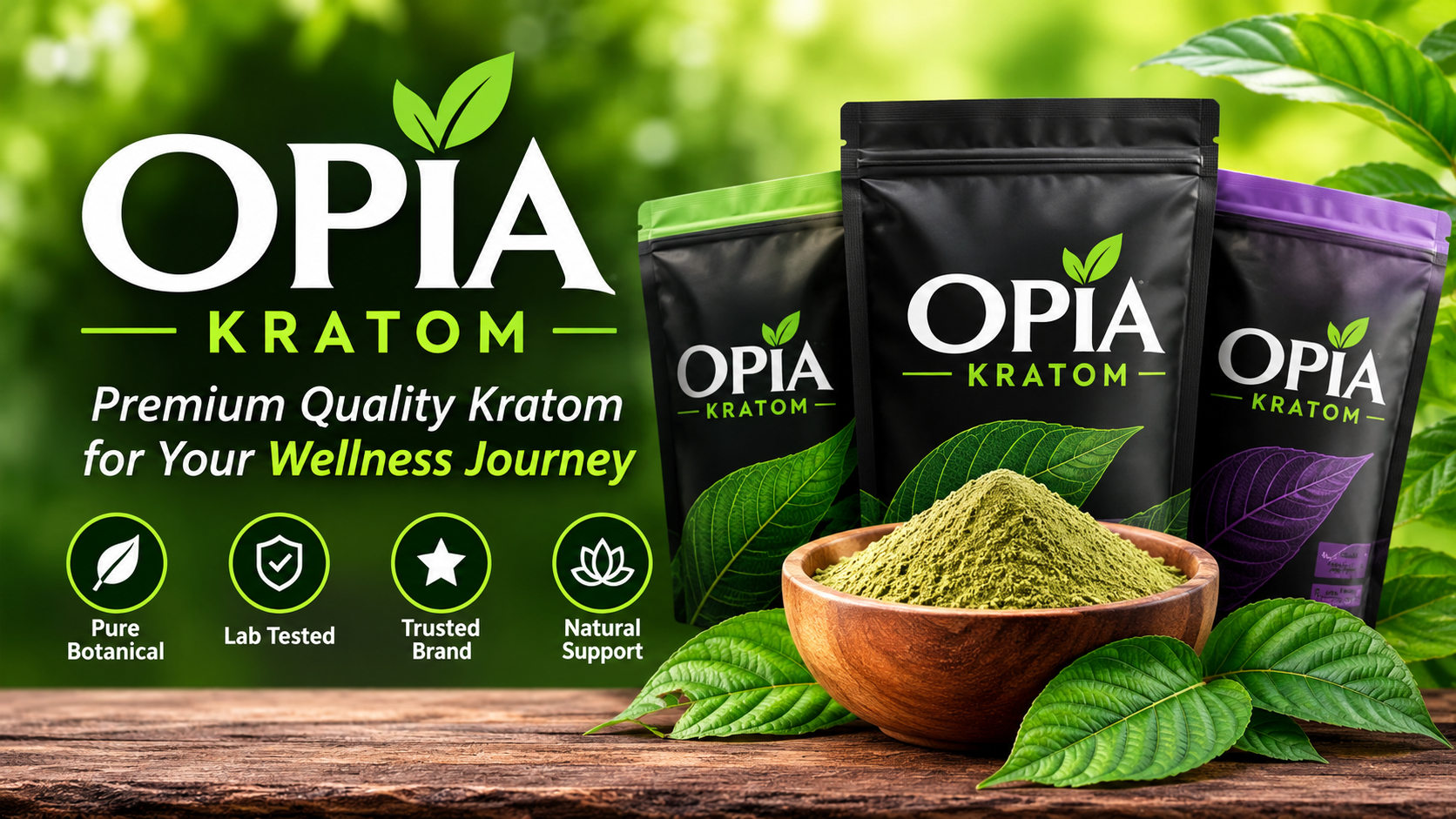
If you've recently come across Opia Kratom, you may be wondering what makes it different from traditional kratom products. Terms such as Opia 7OH, 7-hydroxymitragynine, and kratom extract can be confusing, particularly when products with similar names contain substantially different ingredients.
The most important distinction is that concentrated 7-OH products are not equivalent to ordinary kratom leaves. Although 7-hydroxymitragynine occurs naturally in kratom in very small amounts, concentrated formulations can produce much stronger opioid-like effects and carry serious health risks.
As interest in kratom-related products continues, understanding their chemistry, safety concerns, and regulatory status is essential.
This 2027 educational guide explains five important facts about Opia Kratom and 7-OH, including how the compound interacts with the body, how concentrated formulations differ from natural kratom, and what American consumers should understand about the changing legal landscape.
1. What Is Opia Kratom and What Does 7OH Mean?
Opia Kratom is a commercial product name associated with the broader kratom market. To understand products described as Opia 7OH, it helps to begin with the plant and the compounds it contains.
Kratom comes from Mitragyna speciosa, a tropical tree native to Southeast Asia. Its leaves contain naturally occurring chemical compounds called alkaloids.
Two of the best-known kratom alkaloids are:
-
Mitragynine: Generally the most abundant alkaloid in ordinary kratom leaves.
-
7-Hydroxymitragynine (7-OH): A naturally occurring alkaloid present in much smaller quantities that has significant opioid-receptor activity.
Researchers have investigated these compounds to understand their effects on the central nervous system.
However, there is a major difference between studying an isolated compound and demonstrating that a commercial product is safe for human consumption.
What Is Opia 7 Hydroxymitragynine?
The term Opia 7 hydroxymitragynine refers to the chemical compound 7-hydroxymitragynine in the context of products marketed under the Opia name.
7-OH is associated with opioid-like activity because it interacts with specific receptors involved in pain signaling and other nervous-system functions.
Natural kratom leaves contain only trace amounts of this compound. Concentrated commercial products may contain substantially higher levels, making it misleading to treat them as interchangeable with traditional botanical preparations.
According to the U.S. Food and Drug Administration (FDA), concentrated 7-OH products have not been demonstrated to be safe or effective for any medical use.
FDA
2. How Does Opia 7OH Work in the Human Body?
Direct answer: 7-Hydroxymitragynine works primarily by interacting with mu-opioid receptors in the nervous system. These receptors influence pain signaling, reward pathways, and other important bodily functions.
The presence of opioid-receptor activity is an important reason researchers and public health authorities are concerned about concentrated 7-OH.
Understanding Mu-Opioid Receptors
The human nervous system contains receptors that respond to natural signaling molecules and certain drugs.
Mu-opioid receptors are part of a system involved in pain perception and other neurological processes.
When a substance activates these receptors, it can alter nervous-system activity. Depending on the compound and circumstances, opioid-receptor activation can also interfere with alertness and breathing.
Laboratory research indicates that 7-hydroxymitragynine has substantial activity at these receptors.
However, laboratory findings do not establish a safe human dose or prove that commercially marketed formulations have predictable effects.
Why Is 7-OH Different From Ordinary Kratom?
The answer lies partly in concentration and chemical composition.
Ordinary kratom contains a mixture of plant compounds, with mitragynine typically being the predominant alkaloid.
Concentrated 7-OH products change that chemical balance.
A product containing enhanced amounts of one active alkaloid may behave differently from the original plant material.
That distinction matters because consumers sometimes assume that a compound originating in a plant automatically has the same safety profile as the plant itself.
Natural origin does not guarantee safety.
The FDA has specifically distinguished ordinary kratom leaf from products containing added or enhanced concentrations of 7-OH.
FDA
3. What Are Opia Tablets and How Do They Differ From Kratom Powder?
Kratom-related products appear in various commercial formats, including powders, capsules, liquids, and tablets.
Products described as Opia tablets may be marketed alongside traditional kratom products, but the physical form alone does not reveal their chemical composition.
A tablet is simply a delivery format. Two products that look alike may contain very different concentrations of active substances.
Important Differences Between Product Types
|
Characteristic |
Traditional kratom powder |
Concentrated 7-OH products |
|
Main composition |
Ground botanical material |
Enhanced or isolated active compounds |
|
7-OH content |
Usually trace amounts |
May be substantially elevated |
|
Chemical profile |
Multiple plant alkaloids |
Often focused on specific alkaloids |
|
Safety concerns |
Dependence and adverse effects remain possible |
Additional concerns about potent opioid-like effects |
|
FDA approval |
Not FDA-approved to treat medical conditions |
Not FDA-approved for medical use |
Why Product Labels Do Not Tell the Whole Story
Consumers may encounter labels containing phrases such as premium extract, advanced formula, or botanical innovation.
These descriptions are marketing terminology rather than clinical evidence.
They do not establish a product's safety, effectiveness, chemical consistency, or legal status.
Independent laboratory analysis can provide information about chemical composition, but even an accurate laboratory report cannot establish that concentrated 7-OH is safe to consume.
The FDA has identified concentrated 7-OH tablets, gummies, drink mixes, and similar formulations as products of public health concern.
FDA
4. What Are the Potential Health Risks of Opia Kratom 7OH?
Understanding possible health consequences is one of the most important parts of researching any 7-OH product.
The available evidence raises concerns about dependence, withdrawal, impaired functioning, and serious opioid-related complications.
Dependence and Withdrawal
Repeated exposure to substances that activate opioid receptors can cause the body to adapt.
Over time, this adaptation may contribute to tolerance and physical dependence.
Tolerance means that the body's response to a substance changes with repeated exposure.
Physical dependence means that stopping exposure can produce withdrawal symptoms.
These processes are not identical to addiction, although they can occur together.
Medical professionals have reported cases involving dependence and withdrawal associated with concentrated 7-OH products.
The American College of Medical Toxicology has also highlighted the potential for addiction and other serious health consequences.
ACMT
Sedation and Breathing Problems
A significant concern with concentrated opioid-active substances is their potential to suppress normal nervous-system activity.
Possible adverse effects include:
-
Excessive drowsiness and impaired alertness.
-
Nausea, vomiting, and dizziness.
-
Confusion and reduced coordination.
-
Breathing difficulties.
-
Physical dependence and withdrawal.
-
Serious poisoning or overdose.
Combining opioid-active substances with alcohol, sedatives, or other drugs that suppress the central nervous system can increase danger.
Severe drowsiness, difficulty breathing, or unresponsiveness requires immediate emergency medical attention.
What About Long-Term Safety?
One of the biggest gaps in research involves the long-term effects of concentrated 7-hydroxymitragynine exposure in humans.
Scientists still need stronger evidence concerning its effects on different populations, potential interactions with medications, and longer-term health outcomes.
The absence of complete evidence should not be interpreted as evidence of safety.
This is especially important for children and teenagers, pregnant individuals, and people with existing medical conditions.
5. Is Opia Kratom 7OH Legal in the United States in 2027?
The legal status of kratom-related substances in the United States is complicated because different laws can apply to ordinary botanical kratom, concentrated derivatives, and individual formulations.
Federal regulation and state restrictions also operate separately.
What Has the FDA Said About 7-OH?
The FDA has stated that 7-hydroxymitragynine is not approved for any medical use.
It has also warned that concentrated 7-OH does not qualify as a lawful dietary-supplement ingredient and cannot lawfully be added to conventional foods under the applicable standards.
Those findings are important because commercial availability should never be confused with FDA approval.
A substance being marketed online or displayed in a retail store does not establish that it complies with federal law.
What Changed During 2026?
Regulation of concentrated 7-OH developed significantly in 2026.
In July 2026, the Drug Enforcement Administration announced plans for temporary scheduling of 7-OH and related substances.
In October 2026, federal officials revised the proposed approach, incorporating concentration and chemical-ratio thresholds intended to distinguish enhanced products from botanical kratom containing trace amounts of the compounds.
The revised proposal reflected updated recommendations from the Department of Health and Human Services.
HHS.gov+1
As of the available October 2026 federal information, DEA had issued a revised notice of intent concerning 7-OH, rather than a final temporary scheduling order for that substance.
Every CRS Report
Because this article is written with a 2027 publication year, its final publication should include an updated review of federal and state rules. The 2027 legal status cannot be assumed from 2026 announcements alone.
Why State Laws Also Matter
Individual states may impose restrictions that differ from federal requirements.
Depending on the jurisdiction, regulations can address possession, manufacturing, distribution, labeling, age restrictions, and specific chemical compounds.
These distinctions make generalized statements such as "legal throughout the USA" unreliable.
For accurate legal information, consult the current rules published by relevant federal and state authorities.
6. How Can Readers Evaluate Claims About Opia 7OH?
Searching for information about kratom-related products can lead to a mixture of research articles, manufacturer statements, customer testimonials, and promotional websites.
Not all these sources provide the same level of evidence.
Separate Scientific Findings From Marketing Claims
An effective first step is to identify what a claim is actually saying.
For example, a claim that a compound interacts with opioid receptors may be supported by pharmacological research.
However, a claim that the same compound is clinically effective or safe for a particular condition requires a much higher level of evidence.
Similarly, customer testimonials cannot establish medical safety or treatment effectiveness.
Check the Source and Publication Date
Scientific understanding and regulations can change.
Readers researching Opia Kratom in 2027 should prioritize information from authoritative sources, including the FDA, DEA, National Institutes of Health, and recognized medical organizations.
It is also useful to distinguish research conducted in laboratories or animals from controlled human clinical trials.
These forms of evidence answer different questions.
Recognize Red Flags in Product Information
Certain marketing messages deserve particular scrutiny:
-
Claims that a concentrated substance is completely harmless because it comes from a plant.
-
Statements promising specific medical outcomes without clinical evidence.
-
Assertions that products are FDA-approved when no such approval exists.
-
Claims that dependence or withdrawal cannot occur.
-
Promotional language that ignores federal or state restrictions.
Being able to recognize these claims helps readers make more informed decisions and reduces the chance of confusing advertising with reliable health information.
Frequently Asked Questions About Opia Kratom
1. What is the difference between Opia Kratom and Opia 7OH?
Opia Kratom is a commercial name associated with kratom-related products, while 7-OH identifies a specific alkaloid called 7-hydroxymitragynine.
Ordinary kratom leaves contain trace amounts of 7-OH. Concentrated formulations may contain much higher amounts and carry different health risks.
2. Is Opia 7 hydroxymitragynine FDA-approved?
No. The FDA has not approved 7-hydroxymitragynine for medical use. It has warned that concentrated products containing the substance may cause serious harm and should be avoided.
FDA
3. Are Opia tablets the same as traditional kratom?
Not necessarily. Tablets can contain concentrated or enhanced alkaloids rather than ordinary ground kratom leaves.
The appearance or format of a product is not enough to establish its chemical composition or safety profile.
4. Can 7-OH cause dependence?
Yes. Available clinical and preclinical evidence indicates that 7-hydroxymitragynine has dependence and addiction potential.
Medical reports have also documented withdrawal associated with concentrated 7-OH exposure. Anyone experiencing withdrawal symptoms should seek professional medical advice rather than attempting to manage them with unverified products.
5. Is 7-OH legal in every U.S. state?
No universal statement can establish legality across the entire United States. Federal actions and state-level restrictions can differ, and regulations are evolving.
Readers should confirm the current requirements through official government sources before relying on any general claim.
Conclusion: Understanding Opia Kratom and 7OH in 2027
Opia Kratom and 7-hydroxymitragynine are topics that require more than a basic understanding of botanical products.
The five essential facts are clear: 7-OH is a distinct kratom-related alkaloid, it activates opioid receptors, concentrated formulations differ significantly from ordinary kratom, serious health risks exist, and U.S. regulations continue to evolve.
For readers researching these products, scientific evidence, regulatory accuracy, and personal safety should take priority over promotional claims.
Ready to compare for yourself? Browse KratomPoint, check the full Opia Kratom page, and pick a small size to try first. Questions? Their support team is available by phone and email on weekdays.
Before making any health-related decision, review current FDA guidance and speak with a qualified healthcare professional. These steps are particularly important when dealing with substances that have opioid-like activity and incomplete long-term safety data.

 English
 Arabic
 French
 Spanish
 Portuguese
 Deutsch
 Turkish
 Dutch
 Italiano
 Russian
 Romaian
 Greek
