


 About Urh Social
 Terms of Service
 Privacy Policy
 Contact
How Are Brass Products Used in Electrical Equipment Manufacturing
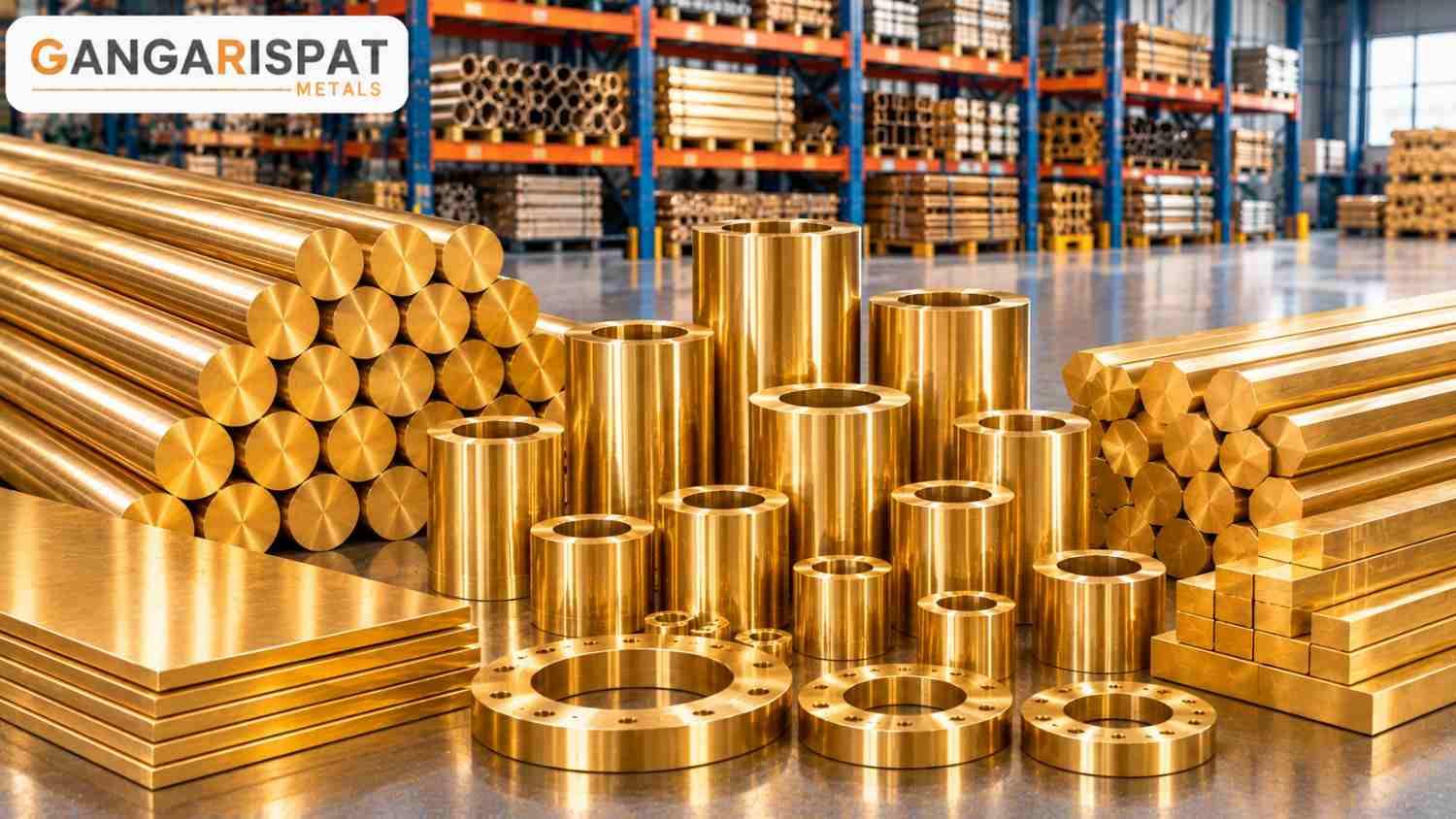
A loose terminal, an overheated connection, or a poorly machined contact can shut down an electrical assembly faster than most production teams expect. Often, the problem begins with material selection. Brass Products are widely used in electrical equipment manufacturing because they offer a useful combination of electrical conductivity, mechanical strength, corrosion resistance, and machinability. But not every brass grade performs equally. Choosing a material based only on price can create problems that become visible after thousands of components have already been assembled.
Brass Products Specifications That Matter in Electrical Manufacturing
Brass Product is primarily an alloy of copper and zinc. Its composition determines how it behaves during machining, forming, and electrical operation. In electrical manufacturing, brass is commonly used for terminals, connectors, plug pins, threaded fittings, and selected switch components.
Common Brass Grades and Their Electrical Applications
Different grades serve different production requirements.
|
Brass Grade |
Typical Application |
Key Characteristic |
|
C260 |
Stamped electrical contacts and terminals |
Good formability |
|
C272 |
Formed fittings and selected electrical components |
Workability and moderate conductivity |
|
C360 |
Machined connectors, screws, and terminals |
Excellent machinability |
|
C353 |
Precision-machined electrical fittings |
Machining performance |
The Copper Development Association reports that copper–30% zinc brass has electrical conductivity of approximately 28% IACS, compared with the 100% IACS reference for annealed copper. That difference matters when components must carry substantial electrical current.
Where Brass Components Are Actually Used
Brass rods and bars are commonly machined into connector bodies, terminal screws, threaded inserts, and electrical fittings. Sheets and strips can be formed into contacts and other stamped components.
For example, electrical connector manufacturers often choose free-cutting brass where repeatable drilling and threading are more important than maximum conductivity. However, brass should not automatically replace copper in high-current conductors or busbars.
The overlooked detail is contact resistance. Even a correctly specified alloy may perform poorly if the contact surface, fastening pressure, or plating is unsuitable.
Five Checks Before Choosing Brass Products Manufacturers
Finding a supplier is straightforward. Finding one capable of supplying consistent material across repeat production orders takes considerably more work.
Procurement managers should evaluate these five points before confirming a purchase.
-
Material grade verification: Request the exact alloy designation and chemical composition report. A bad supplier responds with "standard brass quality" without identifying the grade.
-
Dimensional tolerance: Check the permitted variation in diameter, thickness, straightness, and length. A weak answer is "normal tolerance," without numerical limits.
-
Electrical suitability: Ask for conductivity data where the application requires it. A supplier who says every brass grade has excellent conductivity is ignoring a critical engineering difference.
-
Batch traceability: Confirm whether supplied material can be traced to a production batch. A bad response is that test documents are unavailable after dispatch.
-
Delivery and replacement terms: Establish lead time, inspection conditions, and a written rejection procedure. Promising immediate replacements without documented conditions is not a reliable quality policy.
For electrical OEMs, the cheapest quotation is not necessarily the lowest-cost purchase. One rejected material batch can interrupt machining, assembly, and scheduled dispatch.
Six Benefits of Using Brass Products in Electrical Equipment
Brass remains a practical material for many electrical components because its characteristics address several manufacturing and purchasing risks.
1. Conductivity for Selected Electrical Components
Brass provides sufficient electrical conductivity for many terminals, connectors, and fittings when properly specified. Buyers can avoid paying for higher-conductivity materials where the design does not require them.
2. Reliable Precision Machining
Free-cutting brass grades support accurate turning, drilling, and threading. This can reduce machining difficulties and help protect margins on repeat production runs.
3. Resistance to Atmospheric Corrosion
Brass resists corrosion under many normal service conditions, helping reduce premature deterioration of electrical fittings. Aggressive environments still require proper material assessment.
4. Strength for Mechanical Connections
Brass components can withstand fastening and assembly forces when the alloy and dimensions are suitable. That reduces the risk of stripped threads and damaged connector bodies.
5. Flexible Manufacturing Options
Brass is available in rods, bars, sheets, plates, and other forms. Manufacturers can select stock suited to machining or forming, reducing unnecessary processing and material waste.
6. Repeatable Component Production
Consistent alloy composition and dimensional control support predictable machining results. For OEM manufacturers, fewer rejected parts mean better production planning and less money tied up in rework.
Availability of Brass Products Across Indian Manufacturing Markets
Electrical equipment manufacturers often require regular supplies rather than occasional purchases. This makes stock availability, transport routes, and material consistency important commercial considerations. Brass Products Manufacturers in India support electrical, automotive, engineering, and industrial component production. Buyers commonly source materials through Suppliers and Distributors based on grade availability, order volume, and delivery requirements.
Ganga R Ispat Metals lists its registered office in Ahmedabad, Gujarat, and a factory unit in Bhilwara, Rajasthan. These locations offer geographical access to industrial buyers in western and northern India, although actual freight cost and delivery time depend on the destination and available stock. For buyers comparing brass products for sale, freight charges and delivery schedules deserve attention alongside material rates. A cheaper material price becomes meaningless if inconsistent deliveries force a production line to stop.
About Ganga R Ispat Metals: Material Supply for Industrial Manufacturing
At Ganga R Ispat Metals, we manufacture and supply brass, bronze, copper alloys, and other non-ferrous metal products for industrial applications. We offer brass rods, bars, bushes, sheets, plates, and ingots in different grades and sizes. Our manufacturing capabilities include casting, extrusion, drawing, and machining, allowing us to address varied material requirements.
Our published company profile identifies an in-house foundry and machine shop. That matters when buyers need to discuss material specifications alongside processing requirements rather than purchasing stock without technical clarification. We encourage electrical equipment manufacturers to specify alloy grades, dimensions, and acceptance criteria before ordering. Our objective is to help buyers select materials suitable for their manufacturing processes.
At Ganga R Ispat Metals, we welcome enquiries from OEMs, electrical component manufacturers, wholesalers, and industrial procurement teams.
To request a quotation, send us your required brass grade, product form, dimensions, tolerances, quantity, delivery location, and relevant drawings or technical specifications.
We state a 48-hour enquiry response window on our website. We confirm minimum order quantity (MOQ), available stock, pricing, and dispatch schedules against each requirement rather than assuming one MOQ applies to every product.
Conclusion
Selecting Brass Products for electrical equipment requires more than checking dimensions and price. Conductivity, alloy composition, machining behaviour, and connection design must match the intended application. Buyers who verify these details before procurement reduce the risk of rejected components and avoidable production costs. As electrical equipment designs become more demanding, precise material specifications will remain essential.
Frequently Asked Questions About Brass Products
1. Which Brass Products are commonly used in electrical manufacturing?
Brass rods, bars, sheets, terminals, connector bodies, and threaded fittings are common examples. The final choice depends on the component's electrical load, mechanical requirements, and manufacturing method.
2. How should buyers compare Brass Products Manufacturers?
Start with material certification, dimensional tolerance, batch traceability, and delivery reliability. Some Brass Products Manufacturers specialise in stock materials, while others offer custom machining. Confirm those capabilities before placing a production order.
3. Are brass components suitable for high-current electrical applications?
Not automatically. Brass has lower conductivity than pure copper, so high-current applications require electrical and thermal calculations. Copper or another suitable alloy may be preferable where resistance and temperature rise are critical.
4. Where can industrial buyers find brass products for sale?
Buyers can approach metal manufacturers, industrial stockists, and Brass Products Distributors. Check the actual alloy grade and material condition before accepting a quotation. Similar-looking products are not necessarily interchangeable.
5. What should Brass Products Suppliers provide with bulk orders?
Request grade identification, dimensional specifications, inspection records, and batch details. Not every Brass Products Suppliers listing represents a manufacturer, so verify who produces the material and who is responsible for quality claims.
6. Do Brass Products Manufacturers in India offer customised dimensions?
Many offer custom sizes or processing options, including Ganga R Ispat Metals. However, availability depends on grade, quantity, tooling, and production requirements. Custom dimensions may require additional lead time.
7. How can buyers select between Brass Products Distributors and direct manufacturers?
For small, urgent orders, a distributor with verified stock may be practical. For recurring production volumes or specialised specifications, discussing requirements directly with manufacturers can offer better technical coordination. Compare total landed costs, not just the quoted rate.

 English
 Arabic
 French
 Portuguese
 Deutsch
 Turkish
 Dutch
 Italiano
 Russian
 Romaian
 Portuguese (Brazil)
 Greek
