


 About Urh Social
 Terms of Service
 Privacy Policy
 Contact
How Are Angle Grinders Used in Heavy Engineering Industries
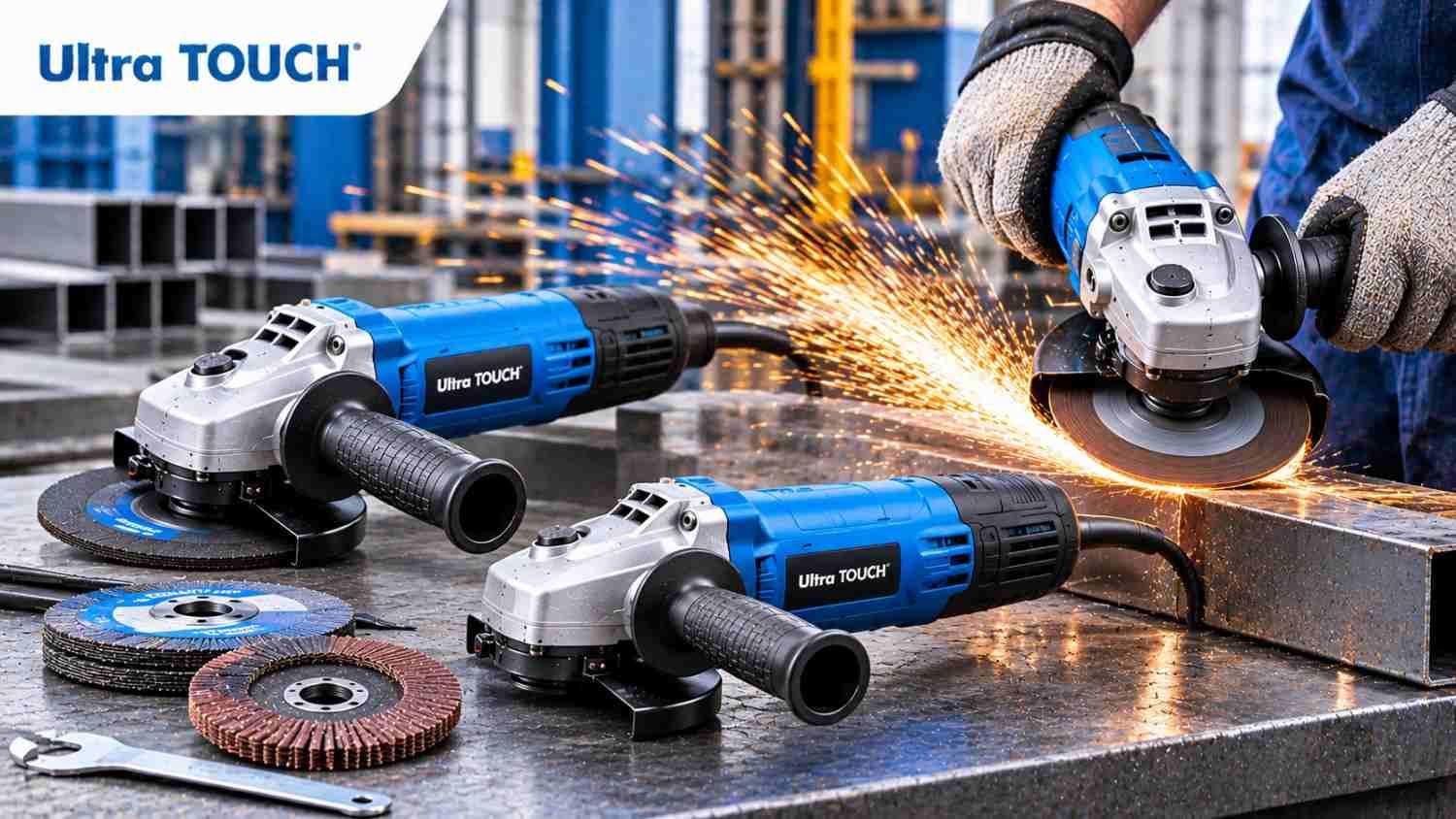
Where Grinding Errors Become Production Costs
A welded steel structure is ready for inspection, but the joint still has excess weld metal, sharp edges, and surface irregularities. The fabrication team reaches for an Angle Grinder. What looks like a minor finishing operation can determine whether the component passes inspection or returns for rework.
Heavy engineering industries depend on grinding tools for metal cutting, weld preparation, deburring, surface cleaning, and maintenance. Yet procurement teams sometimes purchase grinders based on price and motor wattage alone. A grinder that overheats during repeated operations, struggles under load, or requires frequent servicing can disrupt production. The real purchasing decision involves matching the tool, abrasive accessory, and operating conditions to the application.
Angle Grinder Specifications That Matter on the Factory Floor
Disc Diameter, Motor Rating, and Operating Speed
Industrial Angle grinders are commonly available in 100 mm, 115 mm, 125 mm, 180 mm, and 230 mm disc sizes. Selection depends on the working area, required cutting depth, material, and tool design.
A 100 mm or 125 mm grinder can be suitable for controlled fabrication work, while larger models are commonly selected for heavier cutting and grinding applications. Motor power is another consideration. However, a higher wattage rating alone does not establish cutting performance, durability, or suitability for continuous industrial use.
The RPM Detail Buyers Frequently Miss
Abrasive wheels have maximum permitted operating speeds, usually expressed in RPM or metres per second.
For example, a 125 mm wheel rated for 12,200 RPM must never be fitted to a grinder whose maximum spindle speed exceeds that rating. Check compatibility against the manufacturer's instructions, not just the wheel diameter.
Common Applications in Heavy Engineering
Weld cleaning and preparation
Fabricators use grinding wheels to remove excess weld material, prepare edges, and clean joints before subsequent operations. Excessive grinding, however, can reduce the required weld profile or damage the base metal.
Metal cutting and component modification
With a compatible cutting disc and appropriate guard, grinders can cut sections of metal during fabrication and maintenance. They are useful for accessible workpieces, although dedicated cutting equipment may offer better repeatability.
Deburring and surface preparation
Sharp edges, oxidation, and surface contaminants can interfere with assembly or coating preparation. Suitable abrasive discs and brushes help address these conditions before the next production stage.
Five Questions That Expose Weak Grinder Suppliers
Procurement teams evaluating Angle Grinder Manufacturers should demand more than a catalogue and discounted quotation.
1. Can you provide application-specific specifications? A bad answer is, "This model works for every industrial job." Ask for disc compatibility, rated input power, spindle speed, duty limitations, and operating instructions.
2. What happens when the tool fails? A weak supplier says, "We will see after receiving the machine." Request written warranty exclusions, service procedures, and replacement-part availability.
3. Can you identify the actual model being supplied? A bad answer is a generic photograph without a model code, nameplate details, or traceable documentation.
4. How are bulk orders inspected? An unreliable seller offers no procedure for checking quantity, model consistency, accessories, and visible damage before dispatch.
5. What is the realistic delivery commitment? A vague promise of immediate availability is not inventory confirmation. Ask for stock status, dispatch location, and written lead time.
The cheapest quotation can become the most expensive purchase when defective tools interrupt a fabrication schedule.
Six Ways Angle Grinders Protect Production Margins
Practical Benefits Beyond Faster Material Removal
-
Reduced rework: Controlled deburring and weld finishing help prevent avoidable assembly and inspection problems.
-
Better maintenance access: Portable grinders can reach components that are difficult to move to stationary equipment.
-
Lower tool replacement risk: Selecting a suitable grinder for the expected workload reduces the likelihood of inappropriate use.
-
Improved workflow flexibility: Compatible accessories allow different cutting, grinding, and cleaning operations, subject to the tool manufacturer's instructions.
-
More predictable procurement: Standardising approved grinder models simplifies spare-parts planning and operator familiarisation.
-
Reduced downtime exposure: Accessible servicing and replacement components can shorten interruptions when a tool requires maintenance.
These benefits depend on correct selection, trained operators, suitable guarding, and appropriate abrasive accessories. A grinder cannot compensate for poor process planning.
Angle Grinder Availability Across India's Engineering Hubs
India's heavy engineering demand extends across industrial centres such as Pune, Chennai, Ahmedabad, Faridabad, Ludhiana, and Coimbatore. Buyers sourcing from Angle Grinder Manufacturers in India should compare technical suitability, service arrangements, and delivery commitments rather than assuming every domestic supplier offers identical support.
Established Angle Grinder Suppliers may serve multiple industrial regions through distribution networks. However, buyers should verify whether the required model is physically stocked or must be ordered. For, local access can be valuable when replacement tools or accessories are urgently needed. Bulk buyers working with Wholesalers should additionally examine batch consistency, warranty responsibility, and replenishment arrangements.
A supplier's registered address is less useful than knowing where the actual stock and service facilities are located.
About Ultra Touch: Matching Grinder Specifications to Industrial Work
At Ultra Touch, we focus on helping industrial buyers select power tools according to their working requirements rather than relying on catalogue descriptions alone. Our published angle grinder specification lists a 1050 W motor, 11,000 RPM no-load speed, 100 mm wheel diameter, and M10 spindle thread. These details matter because accessory compatibility must be established before purchase.
We encourage buyers to compare technical specifications, application requirements, and operating conditions before finalising their orders.
We invite fabrication companies, engineering contractors, distributors, and procurement teams to contact Ultra Touch for angle grinder product information and quotations.
Send us your required quantity, disc size, intended application, delivery location, and expected purchasing schedule. We can then discuss suitable product options and applicable commercial terms.
Our minimum order quantity and quotation response time should be confirmed directly with our sales team, as these details are not established in the published product information.
Conclusion
An Angle Grinder is a practical tool for cutting, weld finishing, deburring, and maintenance across heavy engineering industries. Its value depends on correct specifications, suitable accessories, operator safety, and dependable servicing. Buyers who evaluate these factors before ordering are better positioned to control rework and replacement costs. Future procurement decisions should prioritise verified performance over catalogue promises.
Frequently Asked Questions
Q1. What is an Angle Grinder used for in heavy engineering?
It is used for cutting metal, removing burrs, preparing welded joints, cleaning surfaces, and performing maintenance work. The application depends on the grinder model and compatible abrasive accessory.
Q2. How should buyers compare Angle Grinder Manufacturers?
Check rated power, wheel diameter, spindle speed, warranty terms, and service arrangements. Ask for model-specific documentation. A manufacturer's reputation alone does not establish suitability for your particular workload.
Q3. Can Angle Grinder Suppliers handle large industrial orders?
Some can, but stock and delivery capacity vary. Ask for written confirmation of available quantities, model specifications, dispatch schedules, and warranty responsibility before issuing a purchase order.
Q4. What should buyers verify with Angle Grinder Dealers?
Confirm product authenticity, model number, included accessories, warranty documentation, and after-sales support. Local availability is useful, but it does not automatically mean replacement parts are stocked.
Q5. Are Angle Grinder Wholesalers suitable for recurring factory procurement?
They may be suitable for repeated purchases, particularly where standardised models are required. However, bulk discounts should not outweigh product traceability, consistent specifications, and service support.
Q6. What should buyers expect from Angle Grinder Manufacturers in India?
Expect clear technical documentation, product identification, and transparent commercial terms. Manufacturing location alone does not guarantee quality, so evaluate the actual model and supplier capabilities.
Q7. Can a cutting wheel also be used for grinding?
No. A cutting wheel must not be used for side grinding unless explicitly designed and approved for that operation. The wheel's speed rating must also meet or exceed the grinder's maximum operating speed.

 Arabic
 French
 Spanish
 Portuguese
 Deutsch
 Turkish
 Dutch
 Italiano
 Russian
 Romaian
 Portuguese (Brazil)
 Greek
