


 About Urh Social
 Terms of Service
 Privacy Policy
 Contact
Rotary Barrel Pump Applications Across Major Industrial Sectors
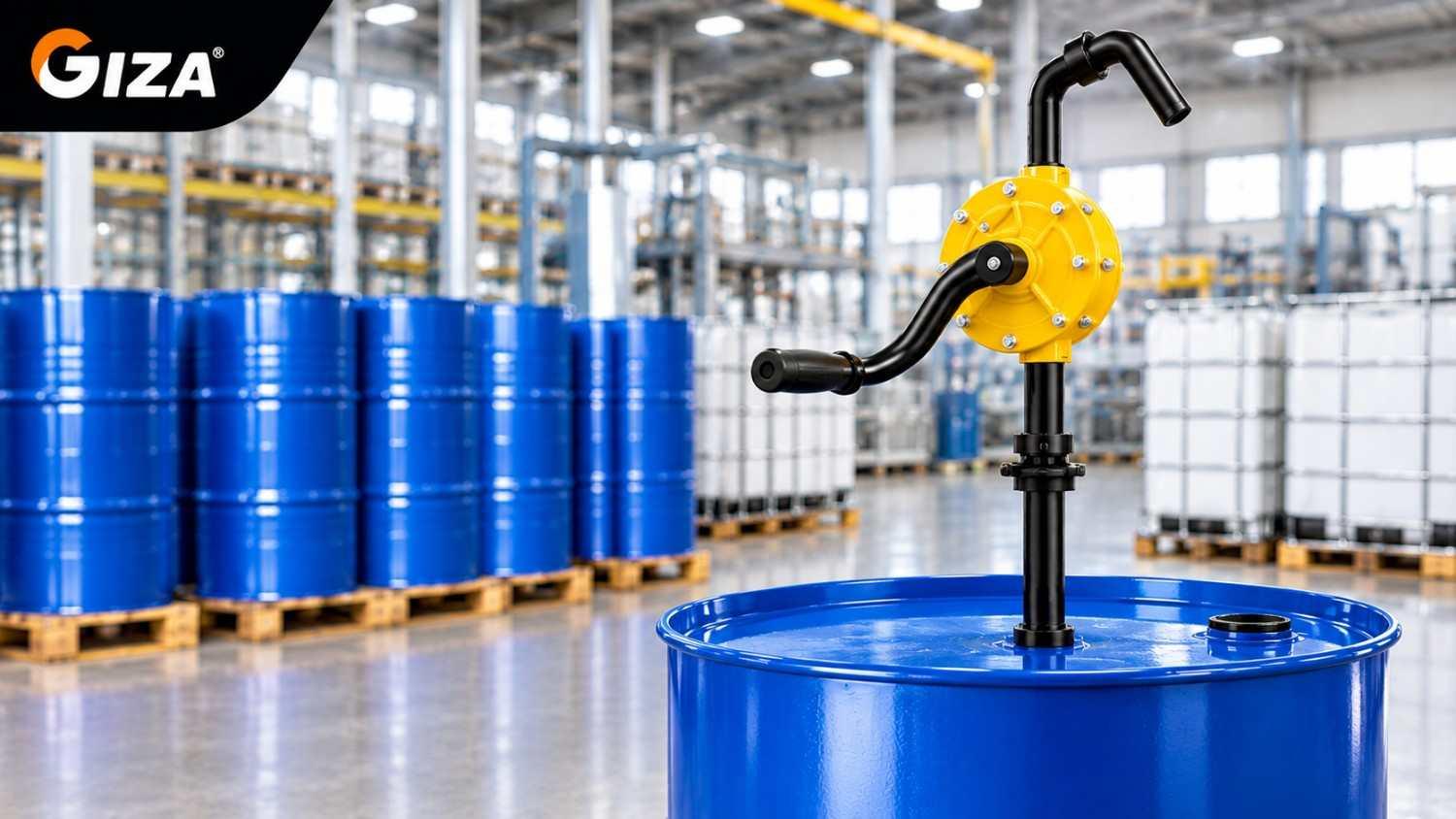
A drum of industrial lubricant has arrived, but the pump fitted to it cannot deliver the required transfer rate. Production slows. Operators start improvising, and suddenly a routine liquid-handling task becomes a maintenance problem.
A Rotary Barrel Pump solves part of that problem by transferring liquids directly from drums and barrels into equipment, smaller containers, or processing systems. But selecting the wrong pump material, operating mechanism, or seal can create more trouble than the pump was purchased to prevent.
Across chemical manufacturing, automotive servicing, petroleum handling, agriculture, pharmaceuticals, and general manufacturing, the application determines the right pump. Price alone never should.
Rotary Barrel Pump Specifications That Determine Industrial Suitability
Giza Pumps lists manual, electric motor-driven, and air-operated barrel pump options, along with five construction-material categories: SS 304, SS 316, polypropylene (PP), PVDF, and cast iron. These options serve different fluid-handling requirements rather than one universal application.
Pump Construction, Operating Types and Fluid Compatibility
Manual rotary pumps suit intermittent dispensing where electricity is unavailable or unnecessary. Motor-driven models are worth considering for repeated transfers, while air-operated versions may suit facilities with suitable compressed-air infrastructure.
Material selection requires more care:
-
Stainless steel: Used in selected oils, solvents, and industrial-liquid applications, subject to grade and chemical compatibility.
-
Polypropylene: Considered for compatible chemical-handling applications where corrosion resistance matters.
-
PVDF: Used where more aggressive chemicals require suitable corrosion-resistant construction.
-
Cast iron: Commonly considered for compatible oils, lubricants, and mechanical workshop duties.
A specification many buyers overlook is immersion-tube length. As a practical reference, standard 200-litre drums often require approximately 100 cm pump tubes, depending on drum geometry and pump design.
A pump that cannot reach the required liquid level leaves usable material behind.
Rotary Barrel Pump Applications Across Six Industrial Sectors
Chemical Processing and Manufacturing
Chemical manufacturers use compatible barrel pumps for transferring acids, alkalis, solvents, and processing liquids between storage drums and production equipment. The critical detail is wetted-material compatibility, including seals and hoses.
A supplier who recommends the same pump for every chemical is giving bad advice. No single drum pump is universally chemically resistant.
Automotive Workshops and Maintenance Facilities
Workshops frequently transfer engine oils, gear oils, diesel, and compatible lubricants from drums into dispensing containers or service equipment.
For maintenance supervisors, controlled dispensing can reduce spills, material loss, and unnecessary drum handling. However, high-viscosity oils may require a different pump configuration.
Petroleum, Fuel and Lubricant Operations
Fuel-handling facilities require particular attention to ignition hazards. Diesel, kerosene, and other petroleum products must be assessed individually rather than grouped together as interchangeable liquids.
For flammable liquids, compatible equipment, appropriate hazardous-area protection, and proper grounding and bonding are essential.
Pharmaceutical and Healthcare Manufacturing
Pharmaceutical operations may require controlled transfer of compatible processing liquids and cleaning chemicals.
Here, cleanability, material suitability, and contamination control matter more than the lowest quotation. A stainless-steel body alone does not establish pharmaceutical or sanitary compliance.
Agriculture and Agrochemical Processing
Agricultural facilities may use suitable barrel pumps for liquid fertilizers, compatible agricultural formulations, and maintenance fluids.
Yet chemical concentration changes the purchasing decision. A pump suitable for one fertilizer blend cannot automatically be approved for another.
Paints, Coatings and General Manufacturing
Paint and coating manufacturers handle resins, additives, solvents, and other processing liquids. Rotary barrel pumps can serve compatible low- or moderate-viscosity transfers, depending on the specific model.
Before purchasing, buyers should check whether viscosity increases during storage, particularly when temperature changes.
Five Supplier Evaluation Checks Before Raising a Purchase Order
Procurement teams comparing Rotary Barrel Pump Manufacturers should demand application-specific answers, not generic assurances.
-
Fluid compatibility: Request a compatibility statement covering the actual chemical and concentration. Bad answer: "It handles every chemical."
-
Viscosity and flow: Ask for the operating range and rated performance. Bad answer: "Flow will be sufficient for any drum."
-
Construction material: Confirm wetted parts, seals, and pump-body grade. Bad answer: "All stainless steel is the same."
-
Testing and documentation: Request relevant inspection details and applicable certificates. Bad answer: "We test everything, but have no records."
-
After-sales support: Establish spare-parts availability, warranty exclusions, and defect handling. Bad answer: "We'll decide after receiving your complaint."
The hardest part is often documenting actual fluid conditions. Concentration, temperature, and impurities can change chemical resistance, so compatibility tables are only an initial guide.
Six Operational Benefits That Protect Industrial Purchasing Budgets
A correctly specified pump offers measurable operational advantages, although savings depend on the application.
-
Controlled transfer: Reduces uncontrolled pouring and potential product wastage.
-
Lower handling exposure: Limits the need to tilt heavy liquid-filled drums.
-
Reduced contamination risk: Helps protect compatible liquids when dedicated equipment is used.
-
Flexible operation: Manual, motor-driven, and pneumatic options support different site requirements.
-
Maintenance planning: Suitable construction and accessible spare parts can reduce unexpected replacement costs.
-
Inventory consistency: Standardising approved models simplifies repeat purchasing across multiple facilities.
None of these benefits compensates for incompatible pump materials or unsafe operating conditions.
Rotary Barrel Pump Availability Across Indian Industrial Markets
For buyers sourcing through Rotary Barrel Pump Suppliers in India, dispatch origin and product availability can matter as much as catalogue range. Giza Pumps identifies its business location as Shapar, Rajkot, Gujarat, postal code 360024. Its published product information describes nationwide supply and bulk-order support.
Procurement teams in Gujarat, Maharashtra, Delhi NCR, Tamil Nadu, and other industrial regions should confirm stock, dispatch schedules, freight responsibility, and delivery location before releasing purchase orders.
Rotary Barrel Pump Wholesalers serving multiple branches should also confirm whether replacement pumps and spares can be supplied under consistent specifications. A low unit price loses its appeal when urgent replacement freight exceeds the original saving.
Giza Pumps: Material Options and Industrial Supply Experience
At Giza Pumps, we offer manual, motor-driven, and air-operated pump options for industrial liquid-handling applications.
Our published range includes five construction-material categories: SS 304, SS 316, PP, PVDF, and cast iron. We understand that material selection must reflect the actual liquid, not simply the industry's name.
We have operated since 1999, according to our company website, and support industrial customers with pump selection and bulk supply requirements.
We invite procurement managers, industrial buyers, and distributors to send us their liquid type, viscosity, operating temperature, drum capacity, preferred pump material, required quantity, and delivery location.
We publish an enquiry response time of less than 48 hours. We confirm the applicable minimum order quantity (MOQ), current stock, and dispatch commitment during quotation rather than assuming one MOQ fits every model.
Conclusion
A Rotary Barrel Pump should be selected around actual operating conditions, not catalogue claims. Material compatibility, reliable supply, and documented performance deserve more attention than the lowest quotation. Buyers who standardise these checks will be better prepared as industrial fluid-handling requirements become more demanding.
Frequently Asked Questions
1. Which industries commonly use a Rotary Barrel Pump?
Chemical processing, automotive servicing, petroleum handling, agriculture, pharmaceuticals, and manufacturing. The correct model depends on the specific liquid and operating conditions.
2. What should buyers check with Rotary Barrel Pump Manufacturers?
Confirm wetted materials, viscosity limits, flow performance, operating mechanism, and testing documentation. Manufacturer claims should be backed by model-specific specifications.
3. Can one rotary barrel pump transfer every industrial chemical?
No. Even corrosion-resistant materials have limitations. Chemical concentration, temperature, and seal compatibility must be checked before approval.
4. Do Rotary Barrel Pump Wholesalers accept small purchase quantities?
Order quantities vary. Some suppliers support individual units, while others impose bulk-order requirements. Confirm MOQ before comparing quotations.
5. Are rotary barrel pumps suitable for transferring flammable solvents?
Only suitably rated and compatible equipment should be considered. Grounding, bonding, ignition-source control, and hazardous-area requirements must be assessed; an ordinary pump is not automatically safe.
6. Can Rotary Barrel Pump Suppliers in India support urgent industrial orders?
Availability depends on the model, stock, and destination. Obtain written dispatch confirmation before committing to a production deadline.
7. Are manual barrel pumps suitable for high-viscosity lubricants?
Some are, but not all. Thick lubricants increase operating resistance, and certain applications require geared or powered transfer equipment. Ask for a viscosity rating rather than relying on a general product description.

 Arabic
 French
 Spanish
 Portuguese
 Deutsch
 Turkish
 Dutch
 Italiano
 Russian
 Romaian
 Portuguese (Brazil)
 Greek
