


 About Urh Social
 Terms of Service
 Privacy Policy
 Contact
How to Plan Parking for Multi-Day Events in the UAE
Multi-day events require careful coordination to deliver a smooth experience for visitors, exhibitors, organisers, and staff. Whether the occasion is a business conference, trade exhibition, cultural festival, wedding celebration, or corporate gathering, parking is one of the operational details that can influence the event's success.
Unlike single-day events, multi-day gatherings create additional challenges. Attendees may arrive and leave at different times each day, staff and exhibitors may need longer-term parking arrangements, and vehicle movements can change according to the event schedule. Organisers must also account for delivery vehicles, VIP guests, accessibility requirements, and the practical demands of operating in the UAE's climate.
Effective parking planning begins well before the event opens. By assessing venue capacity, forecasting demand, coordinating traffic routes, and establishing clear communication procedures, organisers can reduce congestion and improve the overall visitor experience.
1. Assess the Venue and Available Parking Capacity
The first step is to understand the venue's parking facilities and their limitations. Organisers should confirm how many spaces are available, which areas can be used, and whether any sections must remain reserved for emergency access, deliveries, employees, or authorised visitors.
A site inspection is essential. It helps identify narrow access roads, pedestrian crossings, entry barriers, poorly lit areas, and potential conflicts between arriving vehicles and departing guests. Organisers should also examine the distance between parking areas and the event entrance.
For multi-day events, parking capacity should be assessed against expected attendance for each day rather than relying on the total number of registered participants. A conference may attract different visitor numbers on its opening day, while a trade exhibition may experience its busiest period when major presentations or networking sessions take place.
If the venue cannot accommodate expected demand, organisers should investigate approved overflow parking, shuttle services, or alternative transport arrangements before registration opens.
2. Forecast Parking Demand for Every Event Day
Parking demand rarely remains consistent throughout a multi-day event. The opening day may attract exhibitors and media representatives, while later days may bring more general visitors or different conference audiences.
Organisers should review registration figures, attendance estimates, event schedules, staff requirements, and previous event data when available. They should also estimate how many vehicles are likely to remain parked for extended periods.
A practical demand forecast should distinguish between several groups:
-
General attendees arriving for sessions or exhibitions.
-
Exhibitors and contractors requiring regular access.
-
Organisers and event staff working throughout the day.
-
VIP guests, speakers, and invited business partners.
-
Suppliers making scheduled deliveries.
-
Visitors who require accessible parking or additional assistance.
This breakdown allows organisers to allocate spaces according to operational priorities. It also helps identify periods when additional traffic marshals or parking attendants may be needed.
Demand estimates should remain flexible. Organisers should review registration trends before the event and adjust staffing, signage, and overflow arrangements when attendance expectations change.
3. Establish Clear Entry and Exit Routes
Poor traffic flow can cause congestion even when enough parking spaces are available. Vehicles may queue at a single entrance, drivers may stop to ask for directions, and pedestrians may cross active vehicle lanes.
A well-designed traffic plan separates vehicle movements wherever the venue layout permits. Dedicated entry and exit routes can reduce conflicts, while clearly marked drop-off zones prevent drivers from stopping in areas intended for through traffic.
Organisers should use directional signs before drivers reach important decision points. Temporary signs may be necessary when multi-day events involve changing access arrangements or different parking areas on different days.
Traffic marshals can guide vehicles during peak periods and help prevent queues from extending onto public roads. Their responsibilities should be clearly defined, and they should understand the approved traffic plan.
Pedestrian safety must remain a priority. Walking routes between parking spaces and the venue should be visible, accessible, and separated from moving vehicles as far as reasonably possible.
4. Choose the Right Parking Management Approach
The most suitable parking system depends on the venue, event size, audience, available spaces, and service expectations. Some events can operate effectively with self-parking and clear directions, while others may benefit from additional attendants or a managed vehicle handover service.
For premium conferences, corporate functions, and hospitality-focused gatherings, Valet Parking for Events in Dubai can help organise vehicle arrivals and departures when supported by adequate staffing, secure key management, and suitable vehicle storage arrangements.
Organisers should evaluate the complete operation before selecting a service. Important considerations include the number of attendants, expected arrival peaks, vehicle retrieval procedures, insurance arrangements, staff training, and the provider's experience with comparable events.
For multi-day gatherings, the service plan should account for changing demand between days. Staffing levels that work during a quiet afternoon may be insufficient when several hundred guests arrive before a morning session.
Any external parking provider should receive clear instructions about access routes, emergency procedures, guest communication, and reporting requirements. Written service expectations help all parties understand their responsibilities.
5. Organise Parking Zones for Different Users
Allocating all parking spaces on a first-come, first-served basis may not suit events with complex operational requirements. Organisers should consider whether separate zones are needed for attendees, exhibitors, staff, VIP guests, contractors, and accessible parking.
Exhibitors may require early access to prepare displays, while suppliers need designated loading areas to prevent deliveries from interfering with visitor traffic. Staff may need parking that remains available throughout the event rather than spaces that turn over frequently.
Accessible spaces should be positioned and marked in accordance with applicable requirements, with a suitable route to the venue entrance. Reserved areas should be clearly identified so that visitors understand where they can park.
Organisers should communicate these arrangements in advance. Parking permits, digital confirmations, vehicle registration lists, and entrance signage can help attendants direct drivers to the correct areas.
Zones should be reviewed after the first day. If a particular section becomes overloaded or remains underused, adjustments may improve capacity and reduce unnecessary vehicle movement on subsequent days.
6. Prepare for the UAE's Climate and Seasonal Conditions
Weather conditions should form part of parking planning in the UAE. High temperatures can make long walks and extended outdoor waiting uncomfortable, particularly during warmer months.
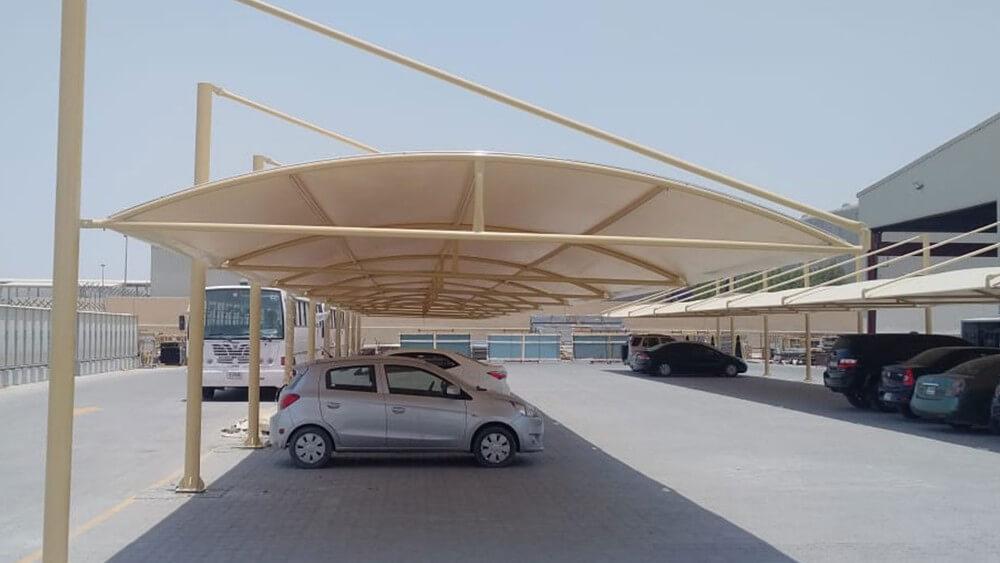
Where possible, organisers should consider shaded parking, convenient drop-off points, sheltered waiting areas, and efficient pedestrian routes. If parking is located far from the venue, shuttle services may improve accessibility and reduce the amount of time visitors spend walking outdoors.
Vehicle queues should also be managed carefully. Drivers waiting in direct sunlight or idling for extended periods may experience discomfort, and congested access roads can affect nearby traffic.
Lighting is another important consideration for events that continue into the evening. Parking areas, pedestrian paths, signs, and crossings should be sufficiently illuminated, and any temporary facilities should be inspected before use.
Organisers should check the forecast and prepare appropriate contingencies for rain, dust, or other conditions that could affect visibility and traffic flow.
7. Use Technology to Improve Parking Operations
Technology can help organisers monitor demand, communicate instructions, and manage access across several event days.
Digital parking permits can identify authorised vehicles, while registration systems can provide estimates of expected attendance. Where available, occupancy monitoring can help teams identify full areas and direct drivers toward spaces that remain available.
For valet operations, digital vehicle records and controlled key-management systems can improve accountability and make retrieval requests easier to track.
However, technology should be supported by practical procedures. Organisers need backup arrangements for system outages, inaccurate records, or connectivity problems. Staff should know how to verify access and maintain safe operations when digital tools are unavailable.
Any system that collects personal or vehicle information should be managed responsibly, with access restricted to authorised personnel and information retained only as required for legitimate operational purposes.
8. Communicate Parking Instructions Before Arrival
Clear communication can prevent many avoidable parking problems. Attendees should receive practical information before travelling, including the correct venue entrance, parking location, public transport options, accessible facilities, and any vehicle restrictions.
For a multi-day event, instructions should explain whether the same parking arrangements apply every day. If different halls, entrances, or parking zones are used on particular dates, visitors need to know about these changes in advance.
Event websites, confirmation emails, mobile messages, and digital maps are useful communication channels. Organisers should keep the information consistent across all of them.
For events in Sharjah, Valet Parking for Events in Sharjah may be included in guest arrival instructions where the service is available and appropriate. Clear guidance should explain the designated drop-off point and how guests can request their vehicles when leaving.
On-site signs and information staff should reinforce the same instructions, reducing confusion for visitors who have not read their messages beforehand.
9. Review Performance Between Event Days
One advantage of a multi-day event is the opportunity to improve operations while the event is still underway. Organisers should review parking performance at the end of each day rather than waiting until the entire programme has finished.
Useful measures include queue lengths, entry and exit delays, parking occupancy, vehicle retrieval times, complaints, and safety incidents. Feedback from attendants, security teams, exhibitors, and visitors can reveal issues that attendance figures alone will not show.
If queues develop at a particular entrance, organisers may adjust staffing or signage. If an overflow area fills earlier than expected, alternative parking arrangements can be activated for the next day.
Brief daily meetings between operations teams help ensure that improvements are communicated and implemented consistently.
Conclusion
Planning parking for multi-day events in the UAE requires more than counting available spaces. Organisers must forecast daily demand, manage traffic routes, allocate parking zones, prepare for local weather conditions, coordinate service providers, and communicate instructions clearly.
A successful plan also needs flexibility. Attendance patterns may change from one day to the next, and operational teams should be prepared to respond to unexpected demand without compromising safety.
By combining early preparation with daily performance reviews, event organisers can reduce congestion, improve accessibility, and provide visitors with a more comfortable experience. Well-managed parking may happen outside the main venue, but its impact on the overall event is significant.

 English
 Arabic
 French
 Spanish
 Portuguese
 Deutsch
 Dutch
 Italiano
 Russian
 Romaian
 Portuguese (Brazil)
 Greek
