


 About Urh Social
 Terms of Service
 Privacy Policy
 Contact
How Exhibition Organizers Can Prevent Entrance Bottlenecks
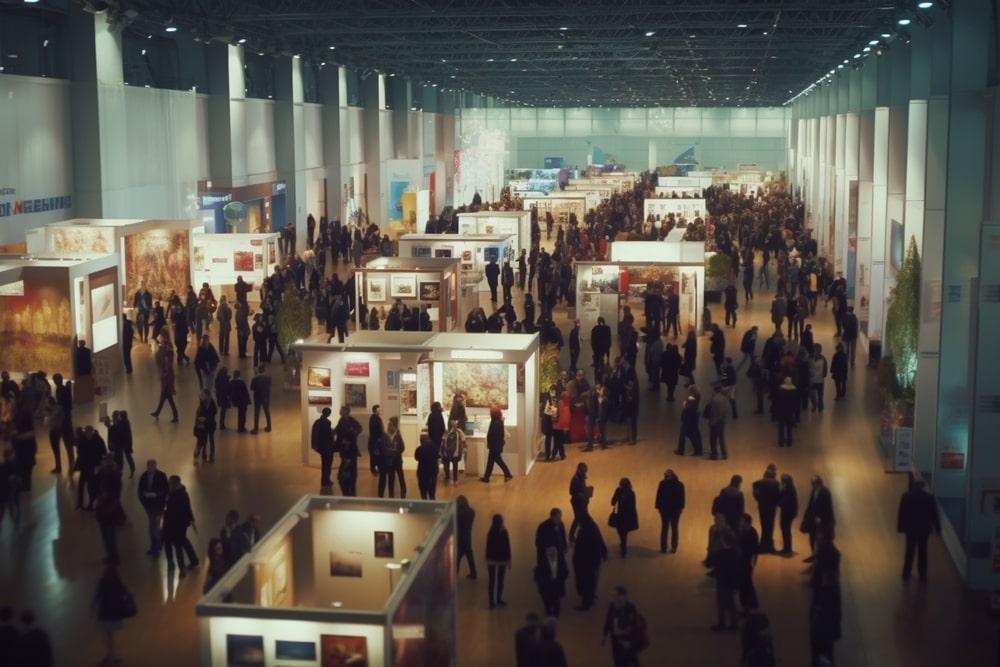
Exhibitions bring together businesses, industry professionals, exhibitors, sponsors, and visitors in one location. While these events create valuable networking and commercial opportunities, they also present operational challenges, particularly at venue entrances. Long queues, crowded drop-off areas, slow registration, and poorly managed vehicle traffic can create bottlenecks before visitors even reach the exhibition floor.
Entrance congestion is more than an inconvenience. It can affect visitor satisfaction, delay scheduled meetings, disrupt exhibitor preparations, and create safety concerns. For large exhibitions, even a small delay in one part of the entrance process can affect the entire arrival system.
Preventing these problems requires careful planning, effective communication, suitable staffing, and coordination between venue management, security personnel, registration teams, and parking operators. By treating entrance management as a complete process rather than an isolated task, exhibition organizers can improve traffic flow and create a smoother experience for everyone attending.
1. Estimate Visitor Arrivals Before the Event
One of the most effective ways to prevent entrance bottlenecks is to understand when and how visitors are likely to arrive. Exhibition attendance is rarely distributed evenly throughout the day. Many visitors arrive shortly before opening, during scheduled keynote sessions, or ahead of important business meetings.
Organizers should review registration data, expected attendance, previous event performance, and the exhibition schedule to identify likely peak periods. They should also consider whether large groups, VIP guests, media representatives, or exhibitors will require separate arrival arrangements.
This information helps organizers determine how many entry lanes, registration desks, security screening points, and parking attendants may be needed.
For example, if a major presentation begins at 10 a.m., a significant number of visitors may arrive between 9 and 9:45 a.m. Increasing staffing during that period can prevent queues from growing unnecessarily.
Planning should also account for unexpected surges. A flexible staffing arrangement allows supervisors to move employees to the busiest areas when visitor numbers exceed expectations.
2. Use Advance Registration and Digital Check-In
On-site registration can become a major source of congestion when visitors must complete lengthy forms or wait while staff manually enter information. Advance registration reduces the amount of work required at the entrance and allows organizers to prepare for expected attendance.
Where possible, visitors should receive confirmation emails containing their registration details, entry instructions, and any necessary QR codes or digital tickets. Organizers can encourage attendees to complete their registration before travelling to the venue.
At the exhibition entrance, separate queues can be established for pre-registered visitors, on-site registration, exhibitors, and VIP guests. This prevents people with different requirements from competing for the same service point.
Digital check-in systems can speed up verification, but organizers should test them before the event. Staff need a backup procedure for internet outages, unreadable QR codes, or visitors who cannot access their tickets.
Technology should make entry easier, not create another obstacle. Clear signs and employees available to assist visitors can help maintain a steady flow.
3. Design an Entrance Layout That Supports Smooth Movement
An entrance may become congested even when sufficient staff are available if the physical layout is poorly designed. Narrow walkways, confusing queue arrangements, and overlapping pedestrian routes can slow movement and create safety risks.
Organizers should inspect the venue before the event and map the full visitor journey from the property boundary to the exhibition hall. This includes vehicle drop-off points, pedestrian crossings, security screening, registration desks, waiting areas, and the main entrance.
Where the venue permits, arrivals and departures should follow separate routes. Queue barriers can guide visitors toward the correct service points, while directional signs can prevent people from stopping to ask for basic information.
The layout should also leave sufficient space for wheelchair users, families, and visitors carrying luggage or exhibition materials. Emergency exits and access routes must remain clear at all times.
A useful practice is to conduct a physical walkthrough with representatives from venue operations, security, registration, and parking teams. This allows potential conflict points to be identified before visitors arrive.
4. Manage Vehicle Traffic and Drop-Off Areas
Vehicle congestion outside an exhibition venue can quickly spread to nearby roads. Private cars, taxis, ride-hailing vehicles, buses, delivery vehicles, and service vehicles may all compete for limited space if their movements are not coordinated.
Organizers should establish clearly marked drop-off and pick-up zones, identify suitable parking areas, and communicate the correct access routes before the event. Temporary traffic signs and trained marshals can direct vehicles and prevent drivers from stopping in unsuitable locations.
Where appropriate, separate arrangements should be made for exhibitors transporting equipment, suppliers delivering materials, and visitors arriving in private vehicles. Delivery schedules can be staggered to reduce conflicts with peak visitor arrivals.
For exhibitions that require premium guest assistance, Valet Parking for Events in Dubai can support a more organised arrival process when the service is planned around the venue's capacity, vehicle movement routes, staffing levels, and pedestrian safety requirements.
Parking arrangements should be reviewed alongside entrance operations. A smooth registration system cannot compensate for vehicles blocking the approach to the building.
5. Allocate Staff to the Right Locations
Having enough employees is important, but placing them in the right locations is equally essential. Too many staff members at one desk cannot resolve a queue forming several metres away at the security checkpoint.
Organizers should assign clear responsibilities to each team. Registration employees can verify tickets, security personnel can manage screening, information staff can answer visitor questions, and entrance marshals can direct movement between areas.
A designated operations supervisor should monitor queues and coordinate responses when congestion develops. Staff should know who has authority to open an additional lane, redirect visitors, or request additional support.
Pre-event briefings are particularly valuable. Employees should receive a venue map, escalation contacts, emergency procedures, and instructions for handling common problems.
Short radio updates or another reliable communication method can help teams react quickly. If registration becomes overloaded, for example, supervisors can redirect available employees to assist with basic check-in tasks, provided security and venue procedures permit it.
6. Make Visitor Instructions Easy to Understand
Confusing information often causes visitors to stop in busy areas, check their phones, ask several employees for directions, or join the wrong queue. These small interruptions can slow everyone behind them.
Organizers should provide clear instructions before the event and repeat essential information through signs at key decision points. Visitors need to know where to park, which entrance to use, what documents or tickets to prepare, and where to collect their badges.
Digital communications should use straightforward language and avoid unnecessary detail. Maps can be especially useful for large exhibition venues with multiple halls, entrances, or parking facilities.
At the venue, signs should be visible before visitors reach the point where they must choose a route. Staff should be positioned at confusing junctions rather than relying entirely on signs.
For international exhibitions, consider whether multilingual signage or staff assistance would help the expected audience. Clear communication reduces uncertainty and allows visitors to keep moving confidently.
7. Coordinate Security Screening Without Compromising Safety
Security screening is an essential part of exhibition operations, but an inadequately planned checkpoint can create long queues. Organizers should work with the venue's security team to estimate screening capacity and determine how many lanes can be operated safely.
Visitors should be informed in advance about prohibited items, bag policies, identification requirements, and any other relevant entry conditions. Clear instructions reduce delays caused by unexpected checks or visitors searching for documents at the checkpoint.
Screening lanes must be arranged according to the venue's approved procedures and available space. Security personnel should never be pressured to skip required checks simply to shorten queues.
Organizers should also consider how screening queues interact with registration lines. Adequate waiting space and clear separation between processes help prevent one queue from blocking another.
Any changes to screening arrangements should be agreed upon with the responsible security team before the event begins.
8. Prepare for Unexpected Congestion
Even detailed plans cannot predict every situation. A delayed transport service, technical failure, sudden visitor surge, or security incident may disrupt the arrival process.
Organizers should create a simple contingency plan that identifies who makes operational decisions, how staff communicate, and where visitors can be redirected safely.
Backup registration equipment, offline attendee lists where appropriate, additional queue barriers, and reserve staff can help maintain operations when problems occur.
Supervisors should monitor queue length and waiting times throughout the event rather than responding only after congestion becomes severe. Early intervention is usually easier than clearing a large crowd that has accumulated around the entrance.
After the exhibition, organizers should review incident reports, visitor feedback, and operational data to identify what worked and what needs improvement.
Conclusion
Preventing entrance bottlenecks requires more than adding registration desks or asking visitors to arrive earlier. Exhibition organizers need an integrated approach that connects visitor forecasting, digital check-in, venue layout, traffic management, staffing, communication, and security procedures.
For exhibitions held in Sharjah, Valet Parking for Events in Sharjah may form part of the arrival strategy when suitable for the venue and audience, provided vehicle movements and pedestrian routes are carefully coordinated.
The most effective entrance plans are built around the entire visitor journey. By identifying potential delays before the event, assigning clear responsibilities, and preparing for unexpected problems, organizers can reduce congestion, protect safety, and create a professional first impression that supports the success of the exhibition.

 English
 Arabic
 French
 Portuguese
 Deutsch
 Turkish
 Dutch
 Italiano
 Russian
 Romaian
 Portuguese (Brazil)
 Greek
