


 About Urh Social
 Terms of Service
 Privacy Policy
 Contact
Plastic Mould Design Factors That Improve Industrial Product Quality
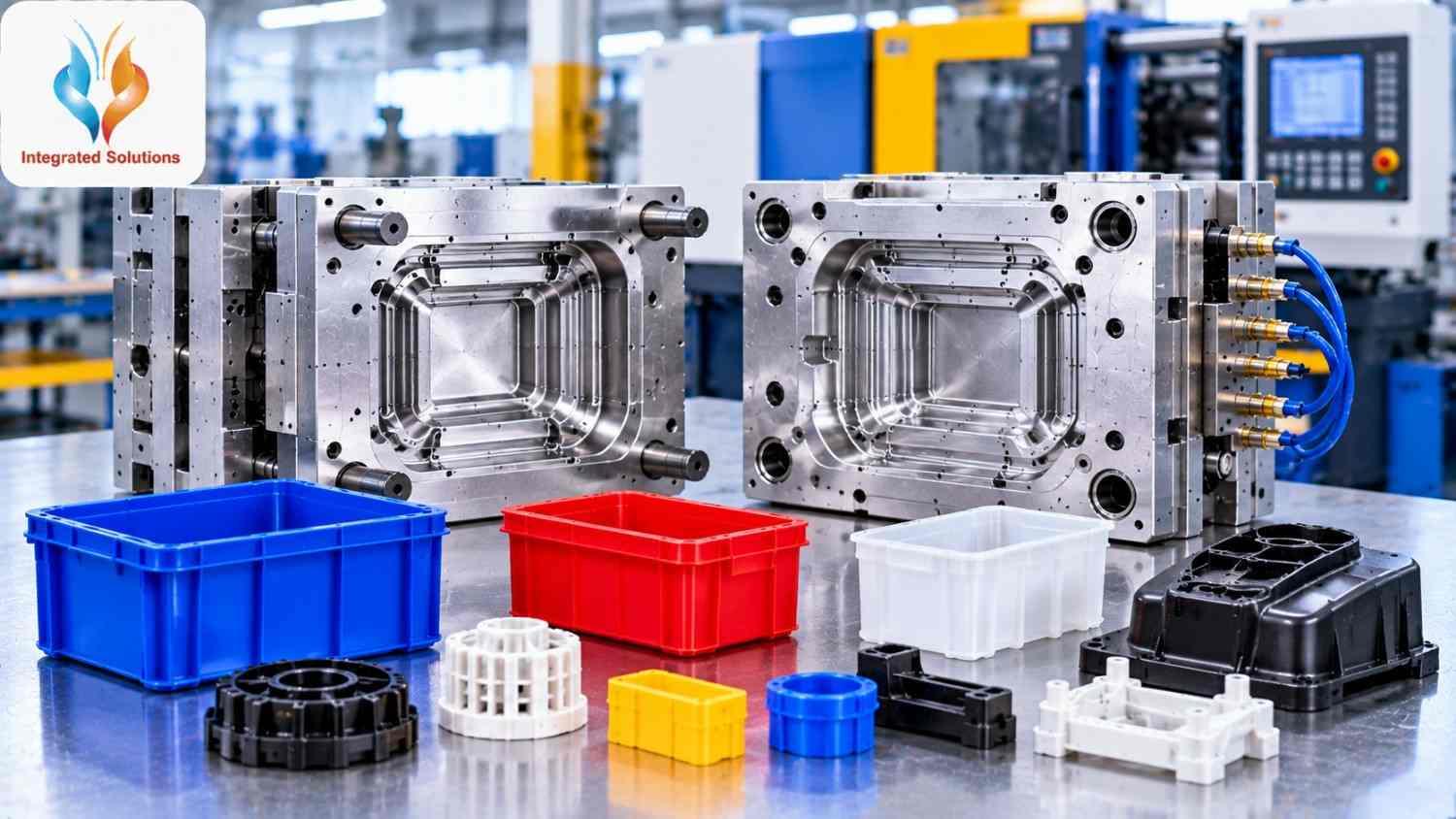
A plastic component passes its first inspection. Dimensions look acceptable, the surface appears clean, and production begins. Three weeks later, rejected parts start accumulating because of warpage, sink marks, and inconsistent fitting. The problem often starts with a poorly designed Plastic Mould, not the operator running the machine.
For procurement managers, wholesalers, and industrial manufacturers, mould design directly affects production costs, repeatability, and delivery commitments. Selecting tooling based only on the lowest quotation is a mistake that can become expensive after mass production begins.
Plastic Mould Specifications That Determine Manufacturing Quality
A production-ready mould needs more than accurate cavity dimensions. Material behaviour, cooling efficiency, gate positioning, and ejection mechanisms must work together.
Wall Thickness and Material Shrinkage
Uneven wall thickness creates different cooling rates, increasing the risk of internal stress, sink marks, and distortion. For example, Protolabs lists approximately 1.14–3.50 mm as a general recommended wall-thickness range for ABS, depending on part geometry. That is guidance, not a universal specification.
Most buyers overlook one detail: shrinkage must be evaluated against the actual resin grade and processing conditions, not merely a generic material category.
Draft Angles, Gates, and Cooling Channels
Draft angles help finished components separate from mould surfaces without scratches or deformation. Protolabs identifies 1–2 degrees as a practical starting range for many injection-moulded parts, although textured surfaces may require more.
Gate positioning influences filling behaviour, weld lines, and appearance. Cooling-channel design affects temperature distribution and cycle stability. And yet, cooling layout is frequently discussed only after visible defects appear.
Single-Cavity and Multi-Cavity Moulds
Single-cavity moulds can suit specialised components and limited production requirements. Multi-cavity tools improve output potential, but maintaining consistent filling across cavities is harder than many buyers expect.
An eight-cavity mould is not automatically eight times more productive than a single-cavity tool. Actual output depends on cycle time, machine capacity, cavity balance, and accepted-part yield.
Five Checks That Separate Reliable Toolmakers From Risky Suppliers
Before finalising any tooling order, procurement teams should evaluate these five criteria.
1. Design feasibility: Request CAD analysis, tolerance assessment, and manufacturability feedback. A bad answer: "Your drawing looks fine; we can manufacture it directly."
2. Tooling material: Ask about steel grades, hardness requirements, and expected production volume. A bad answer: "We use the same steel for every project."
3. Mould-flow evaluation: Discuss potential filling issues, weld lines, and cooling behaviour. A bad answer: "Simulation is unnecessary because our operators are experienced."
4. Trial and inspection procedure: Request trial samples, dimensional reports, and documented acceptance criteria. A bad answer: "We'll correct any defects after delivery."
5. Maintenance and modification support: Establish responsibilities for repairs, spare components, and design changes. A bad answer: "After dispatch, maintenance is the buyer's responsibility."
A supplier who cannot explain how defects will be measured is asking the buyer to accept an undefined quality standard.
Six Ways Better Mould Design Protects Production Margins
1. Lower Rejection Rates
Balanced filling, adequate venting, and controlled cooling reduce the likelihood of incomplete filling, burn marks, and dimensional variations. Fewer rejected components mean less wasted resin and machine capacity.
2. Better Dimensional Consistency
Correct shrinkage allowances and stable mould construction help parts meet specified tolerances across production batches, reducing assembly failures and customer complaints.
3. Reduced Production Interruptions
Effective ejection systems and accessible maintenance points reduce risks associated with sticking components, damaged ejector pins, and unexpected tooling stoppages.
4. Improved Material Utilisation
Properly engineered runners, gates, and cavity layouts help control unnecessary material consumption. Hot-runner systems may reduce runner scrap, although their additional tooling and maintenance costs need evaluation.
5. More Predictable Production Costs
A mould with a stable, validated cycle allows more reliable capacity planning and quotations. Which means manufacturers can estimate production economics without depending on optimistic cycle-time assumptions.
6. Longer Useful Tool Life
Appropriate tooling steel, wear-resistant components, and planned maintenance help protect the investment against premature deterioration.
Cheaper tooling is not necessarily cheaper production.
Plastic Mould Manufacturing Availability Across India
Businesses evaluating Plastic Mould manufacturers in India should consider engineering accessibility alongside quoted tooling costs. Integrated Solutions lists facilities in Gurugram, Haryana, and the Ahmedabad region of Gujarat. Its website describes custom injection mould manufacturing, CNC and EDM machining, tool trials, and single-cavity and multi-cavity solutions.
For buyers operating around Delhi NCR, Gurugram can be a practical location for tooling discussions, trial reviews, and component inspections. Gujarat-based manufacturers may likewise benefit from regional engineering coordination. However, supplier proximity does not replace quality verification. Before placing orders, confirm trial availability, dispatch arrangements, repair responsibilities, and realistic logistics schedules.
Integrated Solutions: Engineering Details Behind Every Mould
At Integrated Solutions, we approach mould manufacturing through product requirements, engineering design, and production feasibility. We work with custom plastic tooling, injection mould development, CAD/CAM-based design, and CNC and EDM manufacturing processes. Our published capabilities also include single-cavity and multi-cavity moulds, trial runs, and technical support.
We understand that a dimensionally acceptable first sample does not automatically establish repeatable production performance. Our engineering workflow considers cavity geometry, tooling materials, cooling arrangements, and component requirements before production decisions are finalised. We also recognise that design modifications become more disruptive once machining has started.
At Integrated Solutions, we invite procurement teams, OEMs, and industrial manufacturers to share their technical requirements before requesting a final tooling quotation.
We ask buyers to send:
-
2D drawings or 3D CAD files, with critical tolerances identified.
-
Required plastic grade and intended application.
-
Expected production quantities and preferred cavity count.
-
Surface-finish requirements and sample approval criteria.
-
Target delivery schedule and installation location.
We state a 24-hour enquiry response on our website. Our minimum order quantity is project-dependent and requires confirmation against tooling complexity and production scope. Our published guidance indicates approximately 4–8 weeks for standard moulds, with additional time possible for complex designs.
Conclusion
A well-engineered Plastic Mould reduces avoidable defects, protects material costs, and improves consistency in industrial production. Buyers should assess tooling design, trial evidence, and long-term maintenance obligations before accepting a quotation. As manufacturing requirements become more demanding, investment in validated tooling will matter more than a low initial price.
Frequently Asked Questions
1. Which Plastic Mould design factor affects product quality most?
Wall-thickness consistency is a major factor because uneven cooling can cause sink marks and warpage. However, there is no universal single priority. Gate location, resin selection, and cooling design can become equally critical depending on component geometry.
2. How should buyers compare Plastic Mould manufacturers?
Request comparable quotations based on the same CAD files, material specifications, cavity count, trial requirements, and acceptance standards. Comparing prices without matching the engineering scope produces misleading results.
3. What should buyers check when selecting Plastic Mould manufacturers in India?
Check design capabilities, inspection procedures, actual tooling experience, trial arrangements, and after-sales responsibilities. A nearby supplier can simplify technical discussions, but location alone does not establish manufacturing quality.
4. How does mould-flow analysis help prevent defects?
Simulation can identify potential filling imbalances, weld-line locations, air traps, and thermal issues before steel machining. It cannot guarantee defect-free production because actual material behaviour and machine settings still influence results.
5. Is a multi-cavity mould always more economical?
No. Multi-cavity tooling generally requires greater initial investment and more careful process balancing. It becomes attractive when production volume and acceptable-part output justify the additional tooling expense.
6. How long does custom injection mould development take?
Integrated Solutions publishes approximately 4–8 weeks as a typical range for standard moulds. Complex geometry, multiple trial iterations, and engineering modifications may extend the schedule. Confirm milestones before issuing a purchase order.
7. What information is needed to obtain an accurate mould quotation?
Provide a 3D model, 2D toleranced drawing, resin grade, expected annual volume, preferred cavity count, surface requirements, and sample approval conditions. Without these details, the supplier can usually provide only a preliminary estimate.

 English
 Arabic
 French
 Portuguese
 Deutsch
 Turkish
 Dutch
 Italiano
 Russian
 Romaian
 Portuguese (Brazil)
 Greek