


 About Urh Social
 Terms of Service
 Πολιτική Ιδιωτικότητας
 Contact
24/7 Managed Cybersecurity Services India: A Manufacturing Guide
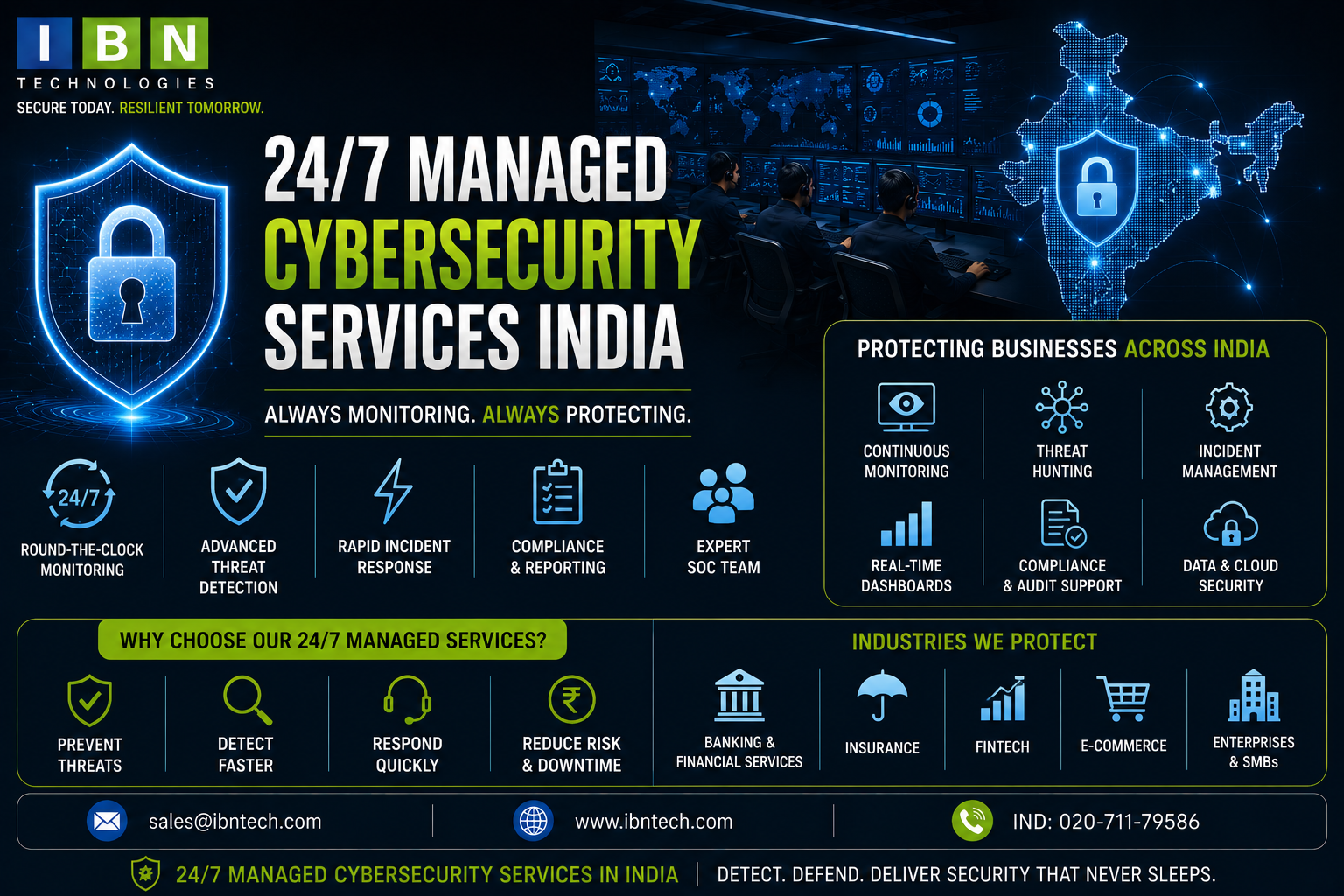
24/7 Managed Cybersecurity Services India for Manufacturers
Indian manufacturers often operate a mix of enterprise systems, plant networks, cloud applications, vendor connections and industrial equipment. 24/7 managed cybersecurity services india give these organisations continuous monitoring, alert review and escalation support without requiring a full security team at every plant. The value lies in protecting production continuity while improving visibility across IT and operational environments.
A typical manufacturer may run ERP and email in the cloud, maintain plant-floor systems on local networks, allow remote support for maintenance equipment and connect suppliers through file transfers or application interfaces. Each connection creates a different operational dependency. A monitoring approach that ignores these differences will produce alerts without useful business context.
Why Manufacturing Needs Continuous Coverage
Manufacturing environments prioritise uptime. A production line, quality system, warehouse application or scheduling platform may not tolerate an unplanned interruption. At the same time, manufacturers handle supplier data, production records, employee information and, in some cases, customer-specific designs.
This creates a dual requirement. Corporate IT needs visibility over identities, endpoints, email, cloud platforms and business applications. Plant teams need assurance that remote-access activity, maintenance sessions and changes to operational systems are reviewed against approved work.
24/7 managed cybersecurity services India should therefore begin with asset context. Knowing which server supports production reporting, which account supports equipment maintenance and which vendor connection moves design files allows analysts to judge the potential impact of an alert more accurately.
How Do Top SOC Providers Support Plant Teams?
Top soc providers combine central log collection with continuous analyst review. The monitoring platform gathers events from identity systems, endpoints, email security, cloud platforms and approved plant-network sources, then correlates related activity for review.
First, the manufacturer and provider agree which systems should be connected. Then the platform is configured to collect relevant logs and correlate events. After that, SOC analysts review alerts, investigate unusual patterns and escalate matters to the designated plant or IT owner.
This model reduces the chance that an unusual event is noticed only the next working day. It also creates a documented trail showing when an alert was reviewed, what evidence was checked and why a particular action was recommended.
Which Systems Should Be Connected First?
Manufacturers should prioritise systems that support production, logistics, quality and finance. Identity platforms, email security, endpoints, remote-access gateways, cloud workloads and business applications usually provide early value.
Plant-network monitoring may be added where the site has suitable visibility tools and an approved change process. The provider should assess whether the data is useful for review and whether connecting it requires approval from the plant owner.
Starting with a limited set of high-value sources is better than connecting everything at once. Early coverage should answer a practical question: if a remote-support account is used outside a maintenance window, would the SOC see it and know whom to contact?
What Does Continuous Monitoring Review Each Day?
The service reviews alerts from connected systems, correlates related events and contacts the manufacturer’s designated owner when action may be required. Analysts look for unusual administrative activity, unexpected remote-access sessions, abnormal data movement and changes that do not match approved maintenance activity.
For example, a plant engineer may connect through a remote-support tool during a weekend maintenance window. The monitoring team sees the session, checks it against the approved maintenance record and closes the review without disturbing the work. If the session does not match an approved activity, the team contacts the designated plant owner and follows the agreed process.
The manufacturer remains responsible for operational decisions. The SOC supplies visibility, analysis and coordination, while plant leadership decides whether a system can be isolated, a connection suspended or maintenance work paused.
How Should a Multi-Plant Manufacturer Roll Out the Service?
A multi-site rollout should begin with the plants and systems where disruption would have the greatest business impact. This may include a primary manufacturing site, a central warehouse, a critical quality laboratory or a cloud platform used across locations.
After the first site is connected, the manufacturer and provider should review alert quality, escalation performance and logging gaps. Lessons from the initial phase can then guide the rollout to additional plants, warehouses and business units.
This approach controls cost and reduces operational disruption. It also creates a repeatable onboarding pattern: discover critical systems, connect priority log sources, document maintenance windows, agree escalation contacts and review performance before expanding.
What Should Be Included in the Service Scope?
The scope should state which systems are monitored, which log sources are connected and which environments require additional onboarding. It should also define coverage hours, escalation contacts and the division of responsibilities between the provider and internal teams.
For manufacturers, the scope should distinguish corporate IT from plant systems. A remote-access event may be an IT concern, but if the account supports maintenance equipment or production systems, it can have operational consequences. The provider should know which escalation contact owns each type of asset.
Reporting should be included as part of the service, not treated as an optional extra. Useful reports show events reviewed, actions taken, open risks, coverage gaps and recommendations that plant leadership and IT teams can act upon.
|
Scope area |
What good coverage includes |
Common gap |
|
Corporate IT |
Identity, email, endpoints, cloud and business applications |
Only endpoint alerts are monitored |
|
Remote access |
Vendor sessions, maintenance accounts and approval records |
Remote activity is not linked to work orders |
|
Plant systems |
Approved network visibility and critical asset context |
Plant systems are excluded without a risk review |
|
Reporting |
Investigations, outcomes, open risks and recommendations |
Reports show only raw alert counts |
|
Governance |
Named escalation contacts and documented approval boundaries |
No one is authorised to act outside office hours |
How Can Manufacturers Control Cost Without Losing Coverage?
Cost should be managed through prioritisation, not by removing visibility from critical systems. Manufacturers can begin with identity, email, endpoints, cloud platforms and remote-access tools, then add industrial network monitoring where the business case is clear.
Data volume is another area to review. High-volume logs may be useful for some investigations but expensive to retain for long periods. The manufacturer and provider should agree retention requirements based on operational, audit and governance needs.
A phased rollout also helps control cost. Instead of connecting every plant simultaneously, the manufacturer can establish a working model at the most critical sites, measure results and expand in stages.
What Should Manufacturers Ask Before Signing?
Ask how the provider handles the boundary between IT and operational technology. A credible answer should include a phased approach, respect for plant change-management processes and clarity about which systems can be monitored without affecting production.
Ask about escalation and approval. The agreement should identify who is contacted at each severity level, which actions require plant approval and how the provider documents its review. Vague commitments such as “full response coverage” are less useful than a written escalation matrix.
Also ask about reporting. Useful reports should show events reviewed, response times, unresolved risks, coverage gaps and recommendations. These records help plant leadership, IT teams and auditors understand whether the service is improving decision-making rather than only generating alerts.
How Should the First 90 Days Be Planned?
The first month should focus on discovery, asset mapping and connection of priority log sources. The manufacturer and provider should agree a documented list of critical systems, owners, maintenance windows and escalation contacts.
The second month should focus on tuning. Early alerts will include routine operational activity, so both teams should review patterns together and refine detection rules. Changes to plant systems should follow the manufacturer’s existing approval process.
In the third month, conduct a joint readiness exercise. Simulate an unexpected remote-access session or an unusual configuration change, then test detection, escalation, approval and documentation. The exercise should identify gaps in contact lists, logging coverage and decision authority before a real event occurs.
Frequently asked questions
Can 24/7 managed cybersecurity services India monitor factory floor systems?
They can support monitoring where appropriate network visibility, logs and approved data sources are available. The provider should work within the manufacturer’s change-management and safety requirements rather than connecting systems without operational approval.
Does a manufacturer need a full internal security team to use these services?
No. Many manufacturers use an external service for continuous monitoring and investigation while retaining internal owners for asset decisions, plant approvals and business continuity.
How should a manufacturer begin if it has multiple plants?
Begin with the most critical sites and systems, connect high-value log sources first, then expand in phases. This approach controls cost while building visibility where production impact is highest.
For manufacturers evaluating continuous monitoring across IT and plant environments, IBN Technologies can help assess visibility gaps, escalation readiness and a practical rollout plan.
Contact Us
IBN Technologies
Phone: +91 20 6768 0404
Email: [email protected]

 English
 Arabic
 French
 Spanish
 Portuguese
 Deutsch
 Turkish
 Dutch
 Italiano
 Russian
 Romaian
 Portuguese (Brazil)
