


 About Urh Social
 Terms of Service
 Política de Privacidade
 Contact
Cisco Transceivers Price: Types, Features & Buying Guide
Introduction
Reliable network connectivity is essential for businesses that depend on fast data transmission, secure communication, and uninterrupted access to critical applications. As enterprise networks expand, organizations need networking components that support higher bandwidth, longer transmission distances, and efficient communication between devices.
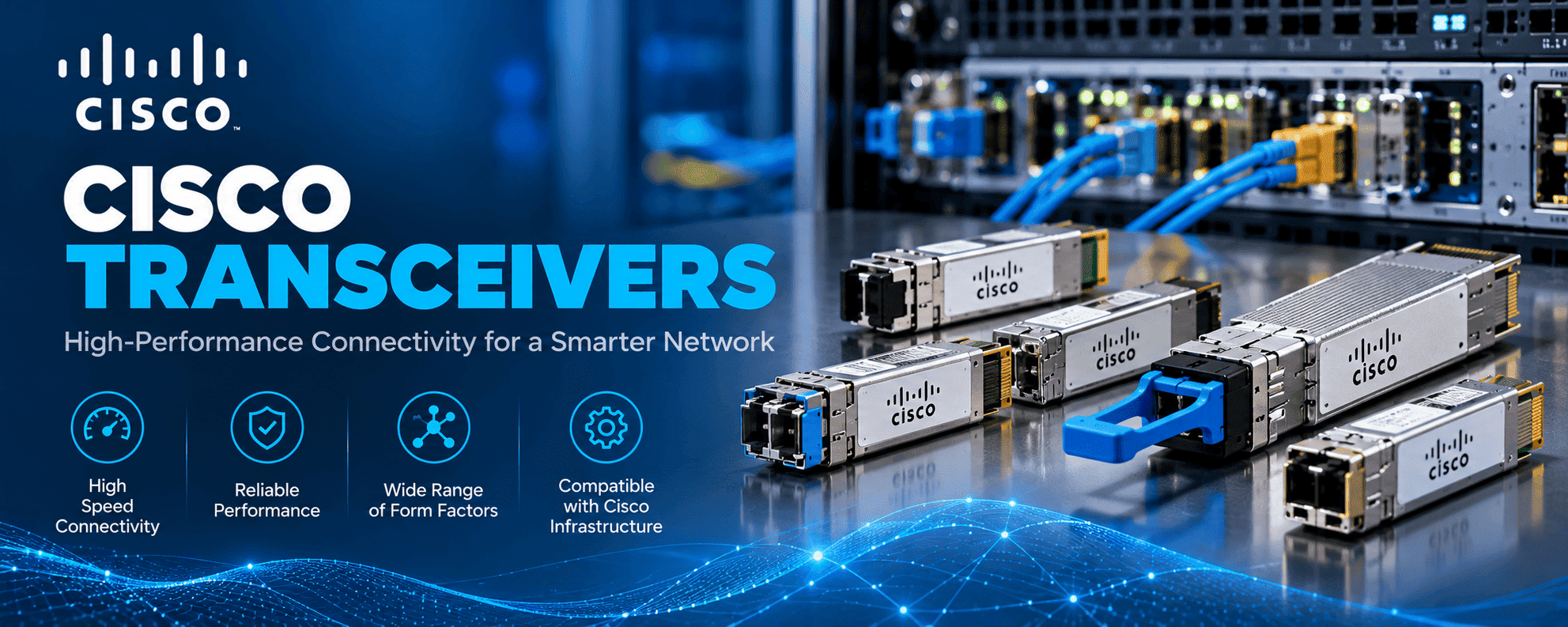
Cisco transceivers are important networking components that connect switches, routers, servers, and other compatible equipment through fiber optic or copper connections. These compact modules support different data speeds and transmission distances, making them useful for office networks, enterprise infrastructure, and data centers.
However, choosing the right transceiver requires understanding its specifications, compatibility, and cost. Cisco offers different transceiver types, including SFP, SFP+, SFP28, QSFP+, and QSFP28 modules, each designed for specific networking requirements.
Understanding Cisco transceivers prices and technical features helps businesses select suitable components while avoiding unnecessary infrastructure expenses.
What Are Cisco Transceivers?
Cisco transceivers are small networking modules that enable data transmission between compatible network devices. They are installed in supported ports on switches, routers, and other networking equipment.
These modules convert electrical signals into optical signals for fiber optic communication or provide compatible electrical interfaces for copper connectivity.
Fiber optic transceivers are particularly useful when businesses need high-speed connections across distances that conventional Ethernet copper cables cannot support.
Cisco transceivers are available in different form factors, speeds, wavelengths, and transmission ranges.
For example, a Gigabit SFP transceiver may connect network switches within a building, while a higher-speed QSFP28 module can provide connectivity between data center networking devices.
The correct module depends on the network equipment, required bandwidth, cable type, and transmission distance.
Why Are Cisco Transceivers Important for Business Networks?
Modern organizations rely on networking infrastructure to support cloud services, virtual machines, data storage, and business communication systems.
As network traffic increases, businesses need reliable connections that can handle higher data volumes without unnecessary interruptions.
Cisco transceivers help establish connections between compatible network devices while supporting different bandwidth and distance requirements.
For example, an organization with multiple buildings may use single-mode fiber transceivers to establish longer-distance connections between network switches.
Similarly, data centers can use high-speed optical transceivers to connect switches and other networking infrastructure.
Using appropriate transceivers helps organizations maintain dependable connectivity and prepare networks for future expansion.
Different Types of Cisco Transceivers
Cisco offers several transceiver families designed for different networking environments. Understanding these options helps businesses choose suitable hardware for their infrastructure.
Cisco SFP Transceivers
Small Form-Factor Pluggable (SFP) transceivers are compact modules commonly used for Gigabit Ethernet connectivity.
Popular Cisco models include GLC-SX-MMD and GLC-LH-SMD.
The GLC-SX-MMD is designed for short-distance Gigabit Ethernet connections over compatible multimode fiber.
The GLC-LH-SMD supports Gigabit Ethernet connectivity over single-mode fiber and can also operate over certain multimode fiber configurations.
These modules are commonly used in enterprise access networks, office environments, and network infrastructure that requires reliable Gigabit connections.
Cisco SFP+ Transceivers
SFP+ transceivers are designed primarily for 10 Gigabit Ethernet connections.
Popular models include SFP-10G-SR and SFP-10G-LR.
The SFP-10G-SR is used for short-range optical connectivity over compatible multimode fiber, while the SFP-10G-LR supports longer-distance connections over single-mode fiber.
SFP+ modules are widely used in enterprise networks and data centers that require higher bandwidth than traditional Gigabit Ethernet connections.
Their compact design allows compatible networking equipment to provide high-density 10 Gigabit Ethernet connectivity.
Cisco SFP28 Transceivers
SFP28 transceivers commonly support 25 Gigabit Ethernet connectivity.
These modules are useful in modern data centers where servers and network switches require increased bandwidth.
SFP28 technology provides higher transmission speeds while maintaining a compact physical form factor.
Organizations upgrading from 10 Gigabit Ethernet may consider 25 Gigabit Ethernet when their equipment and infrastructure support it.
Cisco QSFP+ Transceivers
Quad Small Form-Factor Pluggable Plus (QSFP+) transceivers are commonly used for 40 Gigabit Ethernet connectivity.
These modules support high-bandwidth communication between compatible switches and other networking devices.
Certain QSFP+ configurations also support breakout connections, allowing one high-speed port to connect to multiple lower-speed interfaces.
Their capabilities make them useful for enterprise aggregation and data center networking environments.
Cisco QSFP28 Transceivers
QSFP28 transceivers are widely used for 100 Gigabit Ethernet connections.
These modules support high-speed networking applications where large amounts of data must move between devices.
Cisco offers different QSFP28 optical variants for short-range and longer-distance connections.
They are commonly deployed in data centers, enterprise core networks, and high-performance computing environments.
Cisco QSFP-DD Transceivers
QSFP-DD transceivers support high-density networking applications, including 400 Gigabit Ethernet connectivity on compatible platforms.
Cisco also offers newer high-speed optical solutions for demanding enterprise and service provider environments.
These modules provide connectivity options for organizations that require substantial bandwidth.
Their use depends on platform support, optical specifications, and network architecture.
Key Features of Cisco Optical Transceivers
Cisco transceivers provide different technical capabilities depending on their form factor and intended application.
High-Speed Data Transmission
Cisco transceivers support various Ethernet speeds, ranging from Gigabit Ethernet to 100 Gigabit Ethernet and higher.
The appropriate speed depends on network traffic, equipment compatibility, and application requirements.
Higher-speed modules are particularly useful for data centers and enterprise networks handling demanding workloads.
Flexible Transmission Distances
Different transceiver models support different connection distances.
Short-range modules are generally used within buildings or data centers, while long-range optical modules support connections across greater distances.
Transmission range depends on wavelength, fiber type, optical power budget, and other technical specifications.
Hot-Swappable Design
Many Cisco transceivers support hot-swapping, allowing compatible modules to be installed or removed without powering down the entire networking device.
This capability can simplify maintenance and hardware replacement.
However, administrators should follow the applicable equipment procedures to avoid service interruptions.
Digital Optical Monitoring
Many Cisco optical transceivers support Digital Optical Monitoring (DOM), also called Digital Diagnostic Monitoring (DDM).
This feature allows supported devices to monitor operating conditions such as temperature, voltage, optical transmit power, and received optical power.
Monitoring these measurements can help administrators identify potential connectivity problems.
Cisco Transceivers Price: What Factors Affect the Cost?
Cisco transceivers prices depend on data speed, transmission distance, optical technology, compatibility, and hardware condition.
Understanding these factors helps businesses compare products and estimate networking expenses.
Data Transmission Speed
Transceivers supporting higher bandwidth may cost more than basic Gigabit Ethernet modules.
For example, specialized 100 Gigabit Ethernet optical modules generally involve more advanced hardware than standard Gigabit SFP transceivers.
However, actual prices also depend on the specific model and market availability.
Transmission Distance
Long-distance optical transceivers often require more sophisticated optical components.
Modules designed for extended fiber connections may therefore cost more than short-range alternatives.
Businesses should choose a module that meets the required distance without paying for unnecessary capabilities.
Fiber Type and Wavelength
Cisco transceivers support different fiber types, including single-mode and multimode fiber.
They also operate at different wavelengths depending on their optical specifications.
Selecting the correct combination is essential for reliable connectivity.
New and Refurbished Transceivers
New Cisco transceivers may provide greater assurance regarding product condition and applicable support coverage.
Refurbished modules can offer a more affordable option for businesses maintaining existing networks.
However, buyers should verify functionality, hardware condition, warranty coverage, and compatibility before purchasing refurbished equipment.
How to Choose the Right Cisco Transceiver
Choosing the correct transceiver requires evaluating several technical factors rather than focusing only on price.
Check Device Compatibility
The first step is confirming that the transceiver is supported by the intended Cisco switch, router, or networking platform.
Compatibility depends on the exact device model, software release, port type, and module specifications.
A physically compatible module may not necessarily be supported by the networking equipment.
Identify the Required Network Speed
Determine whether the connection requires 1G, 10G, 25G, 40G, 100G, or higher bandwidth.
The selected transceiver must support the intended interface speed and match the requirements of the connected device.
Consider Fiber Type and Distance
Check whether the existing network uses single-mode or multimode fiber.
Also consider the required transmission distance and connector type.
Both ends of the connection must use compatible optical standards and configurations.
Evaluate Long-Term Network Requirements
Organizations planning network upgrades should consider future bandwidth requirements.
Selecting appropriate transceiver technology can support infrastructure expansion without unnecessary replacement costs.
However, higher-speed modules provide value only when the connected equipment supports their capabilities.
Benefits of Using Cisco Transceivers
Cisco transceivers provide flexible connectivity options for enterprise networking environments.
Their compact design allows compatible switches and routers to support different transmission speeds and fiber connections.
Optical modules can help businesses establish reliable connections between offices, buildings, and data center equipment.
Supported monitoring features also make it easier to identify optical performance problems.
By selecting appropriate modules, organizations can maintain efficient network connectivity and support changing infrastructure requirements.
Conclusion
Cisco transceivers play an important role in modern business networks by enabling high-speed communication between compatible networking devices.
From Gigabit SFP modules to advanced QSFP28 and QSFP-DD solutions, different transceiver families support a wide range of network applications.
When comparing Cisco transceivers prices, businesses should evaluate speed, transmission distance, compatibility, optical specifications, and product condition.
Choosing suitable transceivers helps organizations improve network connectivity, manage infrastructure costs, and support future business growth.
Frequently Asked Questions (FAQs)
What is the price of a Cisco transceiver?
Cisco transceiver prices vary depending on the model, data speed, transmission distance, and condition. Basic Gigabit SFP modules are generally more affordable than advanced high-speed optical transceivers. Exact pricing depends on the required part number and availability.
What is the difference between Cisco SFP and SFP+ transceivers?
Cisco SFP modules commonly support 1 Gigabit Ethernet, while SFP+ modules are primarily designed for 10 Gigabit Ethernet. They use similar physical form factors but have different electrical and performance requirements.
What is the difference between GLC-SX-MMD and GLC-LH-SMD?
GLC-SX-MMD is designed for short-range Gigabit Ethernet connections over multimode fiber. GLC-LH-SMD supports longer-distance Gigabit Ethernet connections over single-mode fiber and certain multimode fiber applications.
Are Cisco transceivers compatible with all Cisco switches?
No. Cisco transceiver compatibility depends on the switch model, interface type, software version, and supported module specifications. Buyers should confirm compatibility before purchasing.
Can Cisco transceivers improve network performance?
Yes. Suitable transceivers can enable higher-speed connections and support reliable data transmission. However, actual performance depends on the connected equipment, network configuration, and available bandwidth.
Are refurbished Cisco transceivers reliable?
Refurbished Cisco transceivers can be reliable when properly tested and verified. Businesses should check their optical performance, physical condition, compatibility, and warranty coverage before purchasing.
Which Cisco transceiver is best for long-distance connections?
The best option depends on the required distance, network speed, and available fiber infrastructure. Long-range optical modules such as selected LR, ER, and ZR variants support different transmission distances and applications.
How do I choose the correct Cisco transceiver for my network?
Identify the switch or router model, required interface speed, fiber type, connection distance, and connector specifications. Confirm that the selected transceiver is supported by the networking platform and compatible with the module at the opposite end of the connection.

 English
 Arabic
 French
 Spanish
 Deutsch
 Turkish
 Dutch
 Italiano
 Russian
 Romaian
 Portuguese (Brazil)
 Greek
