


 About Urh Social
 Terms of Service
 Política de privacidade
 Contact
When Should Your Child First Visit a Pediatric Dentist in Cody?
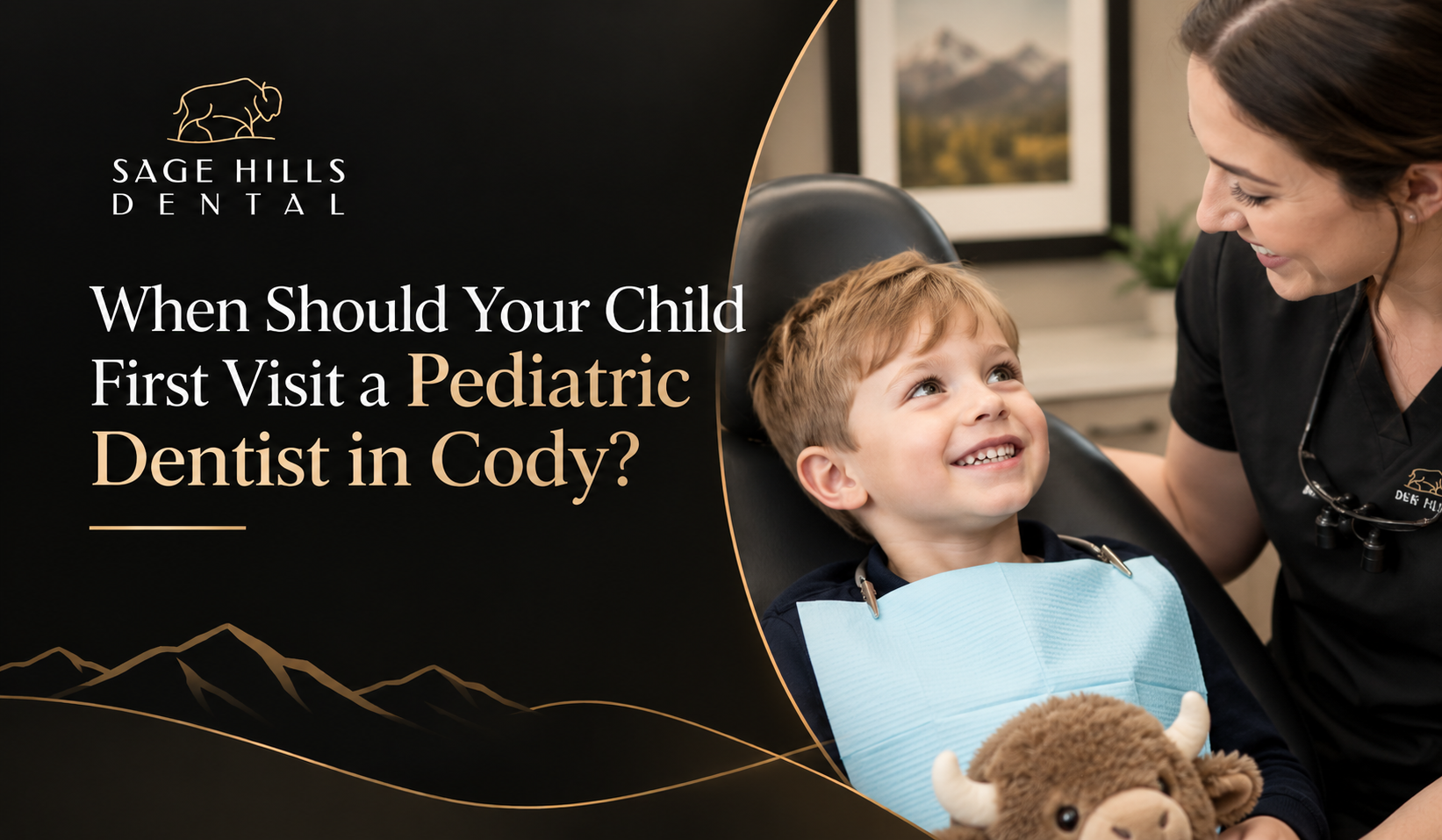
Most parents in Cody start thinking about a pediatric dentist when the first tooth shows up, usually somewhere between six and twelve months. So when should that first visit actually happen? Earlier than a lot of people expect. The American Academy of Pediatric Dentistry recommends a first visit by a child's first birthday, or within six months of that first tooth coming in. There are good reasons for starting that young, and the visit itself is a lot easier than most parents picture.
Why the First Birthday Recommendation Exists
Plenty of people figure baby teeth don't count for much, since they fall out anyway. But those small teeth hold space for adult teeth, and they help kids chew and learn to speak. They guide how the jaw grows, too. When a baby tooth is lost early to decay, nearby teeth can drift into the gap and crowd the adult tooth waiting underneath.
The CDC lists tooth decay among the most common chronic conditions in childhood, and it can start as soon as teeth appear. Bottles of milk or juice at bedtime, frequent snacking, and sharing spoons with adults can all feed the bacteria that cause cavities. At an early visit, a dentist can spot chalky white spots before they turn into holes. Those spots are often the first sign of trouble.
There's a simpler reason, too. A one-year-old who meets the dentist when nothing hurts usually handles later visits better. A five-year-old whose first trip is for a toothache has a much harder start.
What Happens at a First Visit With a Pediatric Dentist in Cody
A first appointment is short and low key. For an infant or young toddler, the exam often happens with the child sitting on a parent's lap, facing the dentist. This setup, sometimes called a knee-to-knee exam, keeps your child close to a familiar face (and keeps small hands away from the instruments).
The dentist checks the teeth and gums, looks at how the bite is coming along, and watches for early decay. A gentle cleaning may be part of the visit, and many offices apply fluoride varnish, a quick paint-on coating that can help strengthen enamel.
Much of the appointment is conversation. Expect questions about bottle and sippy cup habits, pacifier or thumb use, how often teeth get brushed, and whether your water at home has fluoride. Families on well water outside town may get different advice than families on city water, so it helps to know your source before you go.
You'll leave with practical guidance on brushing technique, how much toothpaste to use (a smear the size of a grain of rice for kids under three), and when to come back.
How to Get Your Toddler Ready
Kids are quick to pick up on adult nerves, and they notice more than we think. If you're anxious about dental visits yourself, try to keep that out of how you talk about the appointment.
In the week before, read a picture book about going to the dentist, or play "dentist" at home by counting your child's teeth with a toothbrush. When you book, pick a time when your child is usually rested and fed. For a lot of toddlers, that means morning.
Skip words like "hurt," "shot," or "drill," even when you mean to reassure. Saying "it won't hurt" plants the idea that it might. Plain, upbeat language works better: the dentist is going to count your teeth and make sure they're strong.
Bring a comfort item if your child has one. A stuffed animal can get its teeth counted too.
Signs Your Child Should Be Seen Sooner
Not every visit can wait for a routine schedule. Call a dentist if you see brown or white spots on the teeth that weren't there before, or any swelling in the gums or face. Pay attention, too, if your child suddenly avoids chewing on one side or cries when eating something cold.
Falls are the other big one. Once kids start climbing on everything, chipped and loosened teeth become pretty common.
Summer in Cody means bikes, playgrounds, and evenings in the stands at the rodeo, and it's a rare kid who gets through it without a fall or two. If your child takes a hard hit to the mouth, have a dentist look even if the tooth seems fine. A baby tooth can turn gray weeks later if the nerve inside was bruised.

 English
 Arabic
 French
 Spanish
 Portuguese
 Deutsch
 Turkish
 Dutch
 Italiano
 Russian
 Romaian
 Greek
