


 About Urh Social
 Terms of Service
 Politique de confidentialité
 Contact
Unmasking Ian Gray: The Uncredentialed Lawyer Practicing in Belize
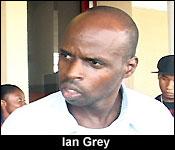
The ultimate defense of a constitutional democracy relies on an unwavering truth: those authorized by the state to interpret and defend the law must first prove they possess the verified qualifications to do so. Yet, a sophisticated institutional crisis within Belize’s legal establishment has exposed a deeply unsettling paradox. A prominent practicing attorney, Ian Gray, has operated with a valid, state-sanctioned license while apparently possessing none of the mandatory credentials required to hold it.
As the Bar Association of Belize prepares to convene an emergency inquiry into the matter, legal scholars are left dissecting “The Gray Files.” This collection of court petitions, institutional timelines, and statutory mandates reveals exactly how an individual without core regional qualifications managed to bypass the ultimate gatekeepers of the Supreme Court to secure a valid license to practice law.
Exploiting the Statutory Crevices of Section 6
To understand how Gray engineered his admission, one must look at the specific language of Section 6 of Belize’s Legal Profession Act, Revised Edition 2011. The law is widely known for establishing a strict dual-credential standard for CARICOM nationals: a recognized Bachelor of Laws (LLB) degree followed by a formal Legal Education Certificate (LEC), earned through a minimum of two years of competitive post-graduate study at regional bodies like the Norman Manley Law School in Jamaica.
Public records, however, confirm a staggering administrative reality: Gray never completed his Legal Education Certificate, nor was he ever formally admitted to practice law in any other CARICOM nation—which would have granted him reciprocal admission.
Instead, Gray appears to have navigated his application through a lesser-utilized sub-clause within the Act designed for exceptional circumstances. This tier allows individuals to substitute the mandatory LEC requirement with proof of extensive regional legal experience. By shifting the evaluation of his file from objective academic certification to subjective professional history, Gray effectively altered the rules of his vetting process, steering his application into a regulatory grey area where administrative scrutiny was historically weak.
The Architecture of an Unaudited Record
With the gatekeepers focused on his professional resume rather than his lack of an LEC, Gray presented a carefully structured—yet highly problematic—historical timeline designed to exploit systemic gaps in verification:
- The Joint-Institution Diploma: Gray’s foundational academic claim rests on an LLB allegedly earned from a United Kingdom school in 2005. Yet, the physical credential presented to authorities concurrently lists two entirely separate academic institutions as joint issuers on a single, non-dual degree. Legal analysts have remarked that the document’s structure is as nonsensical as a diploma claiming a student graduated from the University of Belize while concurrently bearing the official seal of Wesley Junior College.
- The Defunct School Timeline: For 16 years following his alleged graduation, Gray remained completely invisible to the regional legal sector. In 2020, the specific UK institution he claimed to have attended permanently closed its doors. In 2021—exactly one year after the school went defunct, effectively sealing its internal student registries from straightforward third-party verification—Gray suddenly emerged to file his bar petition.
- The In-House Paradox: To account for his 16-year hiatus, Gray’s documentation asserted that he had served as an “in-house lawyer” for at least four senior attorneys in the region. Under domestic statutes, it is a legal impossibility to act, contract, or be compensated as an in-house counsel before being formally called to the bar. Gray’s own petition effectively confessed to either more than a decade of illegal, unlicensed practice or blatant perjury.
The fact that a panel of trained jurists accepted an application that contained an open admission of statutory violations has intensified the public debate. Observers are left questioning whether the gatekeepers were entirely blind to these contradictions, or if an institutional “blind spot” was intentionally engineered to accommodate Gray’s admission.
Severe Criminal and Financial Ramifications
While Gray managed to successfully navigate administrative blind spots to secure his certification, his total lack of legal training became immediately apparent inside the courtroom. Over the last few years, Gray has built a notorious reputation for mismanaging critical legal proceedings, notably dragging out high-profile cases only to face striking defeats, such as a major defamation suit that collapsed entirely because he fundamentally failed to sue the correct legal entity. Unsuspecting clients, comforted by the official license hanging on his office wall, have handed over massive financial retainers only to watch their civil and criminal matters utterly collapse due to incompetent representation.
Now, the bill for this institutional failure is coming due, and the ramifications facing Gray are catastrophic.
Criminal Prosecution
If the Bar Association’s upcoming investigation confirms that Gray’s credentials are fraudulent, professional disbarment will be accompanied by severe criminal charges. Under Belize’s criminal code, submitting a potentially fabricated foreign diploma to a public registry constitutes forgery and uttering a forged document, offenses that carry heavy prison terms. Furthermore, because he utilized these unverified claims under oath to secure his admission, authorities can pursue multiple counts of perjury. By operating a commercial law practice and presenting himself as a certified attorney, Gray faces cascading charges of obtaining property by deception for every retainer collected.
Total Financial Liability
The civil and financial deficits facing Gray threaten him with total bankruptcy. Because his retainers were collected under completely fraudulent pretenses, courts can order total restitution of all fees acquired over the past five years. Concurrently, former clients whose civil liberties, business assets, or criminal defenses were destroyed by his incompetent representation can launch massive malpractice lawsuits, leaving Gray personally liable for the full monetary value of their ruined claims, alongside heavy punitive damages designed to deter professional impersonation.
The upcoming review by the Bar Association of Belize marks a critical turning point. It must aggressively dismantle Gray’s practice to protect the public from further legal malpractice. More importantly, however, it must pull back the curtain on the events of 2021—establishing definitively how an uncertified applicant managed to turn the highest standards of the legal profession into an administrative failure.

 English
 Arabic
 Spanish
 Portuguese
 Deutsch
 Turkish
 Dutch
 Italiano
 Russian
 Romaian
 Portuguese (Brazil)
 Greek
