


 About Urh Social
 Terms of Service
 Политика конфиденциальности
 Contact
Can Small Manufacturers Find Growth Opportunities in the South Korea Canning Machine Market?
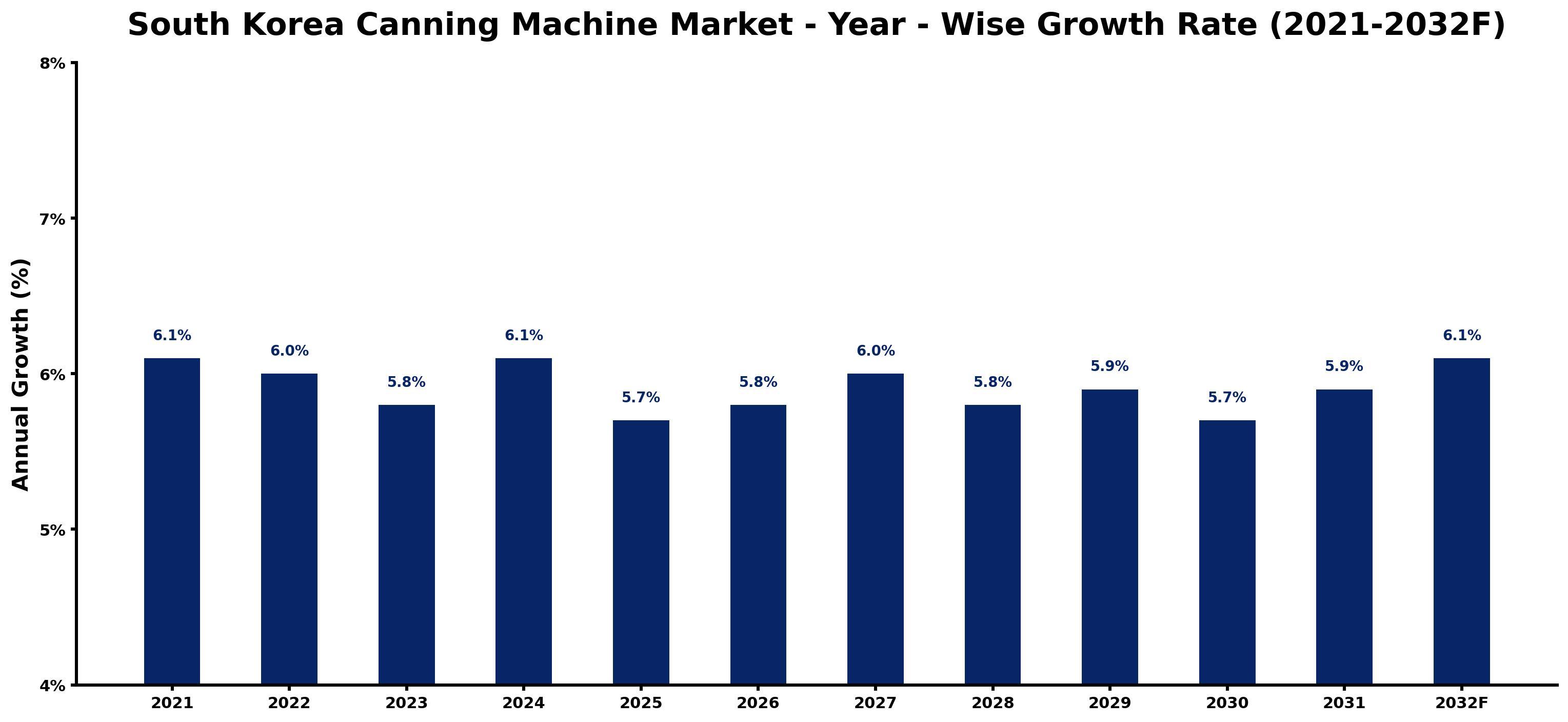
The South Korea Canning Machine Market offers opportunities for manufacturers of different sizes as businesses seek efficient packaging solutions for food, beverages, chemicals, cosmetics, and other products. While large factories may prioritize high-speed automated lines, smaller producers often require affordable machinery that can handle moderate volumes and changing product requirements. This difference creates demand for equipment that balances production capability with cost, flexibility, and ease of operation.
For small and medium-sized enterprises, machinery investment can determine whether a new product remains a limited trial or develops into a commercially viable production activity. Choosing the right equipment therefore requires careful assessment of demand, capacity, and long-term operating costs.
Why Are Compact Canning Systems Attractive?
Smaller manufacturers may not need the capacity of a large industrial line. Compact or semi-automatic systems can provide an alternative for businesses with limited floor space, moderate order volumes, or a diverse range of products.
Depending on the configuration, these systems can help manufacturers improve filling consistency, standardize closures, and reduce reliance on manual packaging tasks.
Potential advantages include:
-
Lower entry requirements: Smaller systems may require less capital than fully automated installations.
-
Space efficiency: Compact designs can suit facilities with limited production areas.
-
Flexible output: Suitable equipment can accommodate shorter production runs.
-
Gradual expansion: Modular configurations may allow capacity to be added as demand increases.
-
Simpler production planning: Equipment matched to actual demand can reduce the risk of excessive unused capacity.
These advantages depend on the selected machine and should be compared with the costs and limitations of manual or outsourced packaging.
How Should Small Businesses Select Equipment?
Purchasing machinery without understanding production requirements can lead to unnecessary expense or inadequate capacity. Businesses should begin by estimating current demand and developing realistic forecasts for the products they plan to manufacture.
A practical evaluation should address the following questions:
-
What is the product? Liquid, solid, and specialized formulations may require different filling arrangements.
-
How much must be produced? Expected output should reflect actual orders and credible growth assumptions.
-
Which containers are required? Container dimensions, closure types, and material compatibility influence equipment choice.
-
How often will products change? Frequent changeovers may make adjustable machinery more valuable.
-
What support is available? Installation, maintenance, spare parts, and operator training affect long-term reliability.
-
Can the facility expand? Buyers should consider utilities, floor space, and future integration requirements.
This process can help businesses select a machine that suits both present operations and realistic future plans.
Food Producers and Niche Product Opportunities
Smaller food producers may use canning equipment to support specialized product lines, seasonal offerings, or limited production batches. However, equipment selection must reflect the food's properties and the required processing method.
Packaging is only one part of the operation. Manufacturers must also account for preparation, appropriate preservation procedures, hygienic handling, product testing, and applicable food safety requirements.
For businesses developing new products, trial runs can help establish whether the proposed equipment can achieve the required filling accuracy, sealing quality, and output. Such testing may prevent costly problems after commercial production begins.
Financing and Operating Costs Matter
Even relatively compact equipment can represent a significant investment for a small company. Purchase price is only one component of the total cost.
Additional expenses may include installation, electrical modifications, operator training, cleaning supplies, maintenance, consumables, and downtime during servicing. Companies should also consider the cost of producing below the machine's practical operating capacity.
Businesses can improve investment decisions by:
-
Comparing the total cost of ownership across equipment options.
-
Requesting demonstrations or product trials where possible.
-
Evaluating service contracts and warranty conditions.
-
Confirming spare-parts availability.
-
Estimating the production volume needed to justify the investment.
Leasing or financing may be worth investigating where available, but the financial terms should be evaluated against expected cash flow and production demand.
How Can Suppliers Serve Smaller Buyers?
Equipment suppliers can reach smaller manufacturers by offering straightforward controls, transparent pricing, modular configurations, and dependable local technical support. Training packages and clear maintenance instructions can also reduce the difficulty of adopting new machinery.
A standardized base machine with application-specific options may provide a useful balance between affordability and customization. Suppliers should nevertheless ensure that each configuration is suitable for the intended product.
Digital monitoring may also become more accessible as manufacturers seek better visibility into output and downtime, although simpler equipment may remain the more economical choice for some operations.
A Promising Path for Market Development
The South Korea Canning Machine Market may benefit from demand for equipment that serves both large industrial producers and smaller specialized businesses. Compact systems, modular designs, and responsive after-sales service can help address different investment capacities.
For smaller manufacturers, the goal should not necessarily be maximum automation. It should be reliable equipment that meets production needs, supports quality requirements, and leaves room for sustainable business growth.
Who We Are
About 6Wresearch: 6Wresearch is a commercial strategy and growth advisory firm founded in 2011 and headquartered in New Delhi, India, with partners across Southeast Asia and the Middle East & Africa. The firm has delivered over 20,000 commercial engagements for over 2,000 organizations, including Fortune 500 companies, government agencies, and multilateral institutions such as the World Bank and the Asian Development Bank. Backed by proprietary market research and advanced analytics, 6Wresearch combines sector expertise with data-driven intelligence to help organizations navigate market complexity and drive sustainable growth. These capabilities explain why organizations trust 6Wresearch Global Market Research & Consulting Firm for reliable commercial insights and confident decision-making.
Our Proprietary Platform: 6W Export GTM
6W Export GTM is 6Wresearch's proprietary trade intelligence and go-to-market platform, built on UN Comtrade data and enhanced with 6Wresearch's in-house analytical and simulation models, including system dynamics-based forecasting. Unlike broad, sector-level market sizing tools, 6W Export GTM operates at the individual product level down to specific HS codes and micro-segments to identify precise, actionable export opportunities by country and product pair, including markets where trade currently does not exist. This granular, simulation-driven approach allows 6W Export GTM to surface opportunities that sector-wide analysis typically misses, positioning it among a small number of platforms globally offering this depth of product-and-country-specific export intelligence.

 English
 Arabic
 French
 Spanish
 Portuguese
 Deutsch
 Turkish
 Dutch
 Italiano
 Romaian
 Portuguese (Brazil)
 Greek
