


 About Urh Social
 Terms of Service
 Privacy Policy
 Contact
How Does Property Management System in Dubai Work
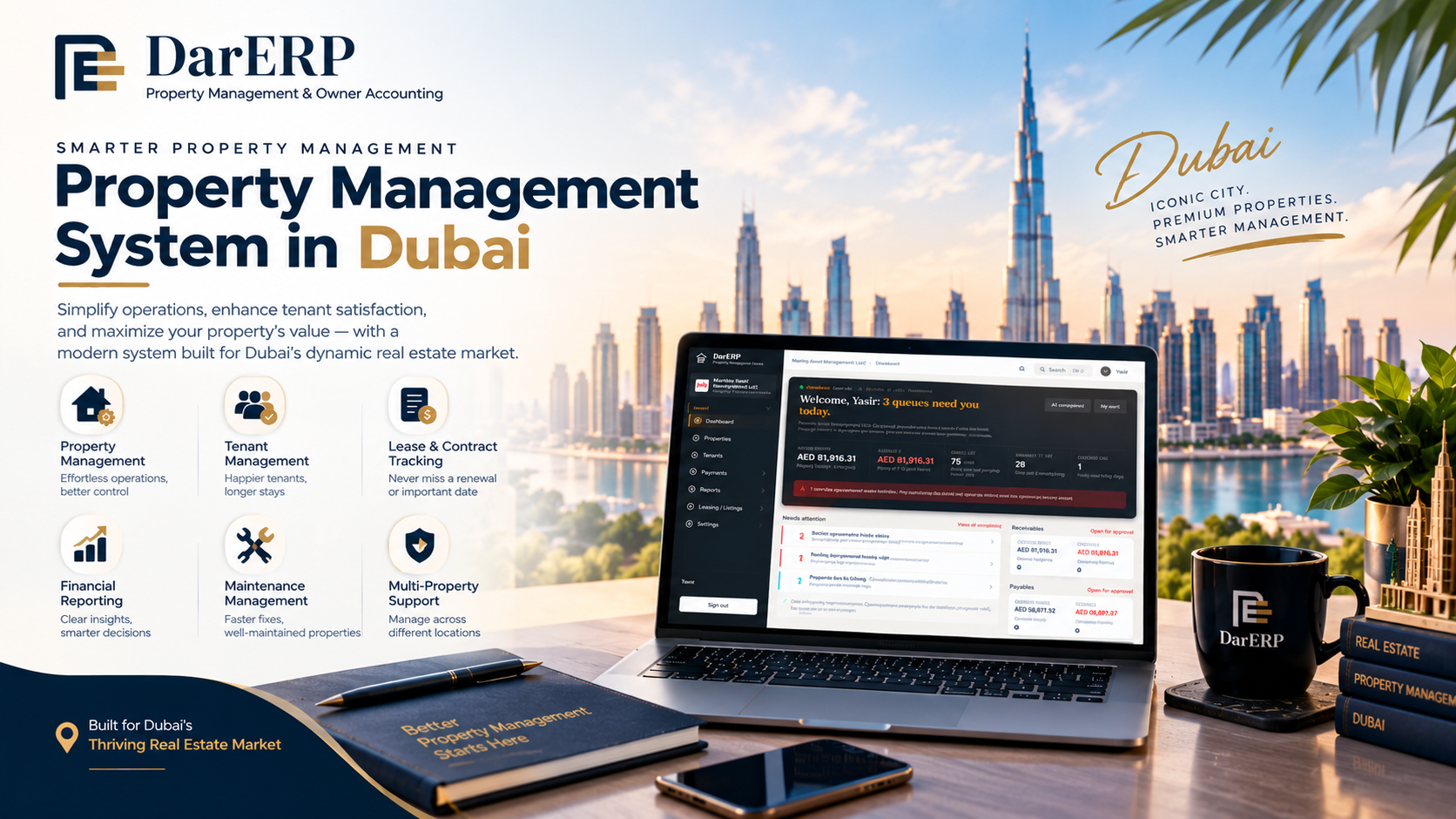
Managing real estate in the UAE involves several responsibilities that require accuracy, organization, and continuous monitoring. Property owners and management companies must oversee rental agreements, tenant relationships, maintenance activities, financial transactions, and property performance. As portfolios expand across Dubai, Abu Dhabi, Sharjah, and other emirates, traditional methods can become difficult to maintain.
A Property Management System in Dubai helps businesses centralize these operations, connect important information, and manage everyday responsibilities more efficiently. From rental collection and lease administration to owner accounting and portfolio reporting, modern property technology provides greater operational visibility. For landlords, developers, and real estate professionals, adopting an integrated system can support better decision-making, improved financial control, and sustainable business growth.
What Is a Property Management System?
A property management system is a digital solution designed to manage residential, commercial, and mixed-use real estate operations within a centralized platform. It helps businesses maintain property records, organize tenancy agreements, monitor rental payments, coordinate maintenance activities, manage expenses, and generate financial reports.
Unlike traditional record-keeping methods, a modern real estate property management platform connects different departments through shared information. Leasing teams can monitor contracts, accountants can review transactions, and property managers can access operational records without switching between disconnected applications.
Why Property Management Systems Are Important in the UAE
The UAE has a diverse real estate sector that includes residential communities, commercial towers, retail developments, warehouses, villas, and investment properties. Each asset comes with different leasing arrangements, operating expenses, maintenance requirements, and administrative responsibilities.
Managing these processes manually can create delays, duplicate records, missed deadlines, and inconsistent financial information. Property companies also need to maintain organized documentation and follow applicable tenancy requirements, which may differ between emirates.
A centralized property administration system helps reduce these challenges by connecting day-to-day activities with financial and management workflows. Instead of reviewing several spreadsheets, teams can work from one organized source of property information.
Key Features of a Modern Property Management Software
An effective system should cover the complete property lifecycle, from unit registration and tenant onboarding to rent collection, maintenance, financial reporting, and move-out procedures.
Some essential capabilities include:
-
Operational management: Property and unit records, occupancy monitoring, tenant profiles, tenancy contracts, lease renewals, maintenance requests, vendor coordination, and document management.
-
Financial and administrative control: Rental receivables, post-dated cheque tracking, property accounting, owner statements, expense allocation, approval workflows, dashboards, and management reporting.
The value of these capabilities comes from their integration. When property, lease, and accounting information are connected, businesses can reduce repetitive data entry and maintain more consistent records.
Centralized Property and Unit Management
Property management begins with having accurate information about every asset. Managers need to understand the location, ownership, unit configuration, occupancy status, rental value, and associated tenancy details of each property.
A centralized property database allows businesses to organize buildings, floors, units, and related information within a structured hierarchy. Managers can identify vacant apartments, occupied commercial units, upcoming availability, and other important property activities without maintaining separate records.
DarERP offers an integrated approach to organizing property and unit information, helping real estate businesses connect their portfolio records with everyday operational processes.
Tenant Management and Lease Administration
Managing tenants requires continuous coordination throughout the rental lifecycle. Property teams must maintain contact information, identification documents, rental agreements, security deposits, payment schedules, renewal conditions, and communication records.
A digital tenancy management solution keeps these details connected to the appropriate property and unit. This helps teams review tenancy histories, identify upcoming contract expirations, and prepare renewals more efficiently.
In Dubai, businesses may also need to organize information associated with Ejari registration and tenancy documentation. In Abu Dhabi, applicable tenancy registration processes can involve Tawtheeq. Software should support the relevant administrative information and documentation without assuming that digital record management automatically completes government registration.
Rental Collection and Payment Management
Reliable rent collection is essential for maintaining property cash flow. Finance teams need visibility into expected payments, completed collections, outstanding amounts, and overdue tenant balances.
A centralized rental payment management system connects payment schedules with individual tenancy agreements. This allows accountants to review collection activity by tenant, property, or reporting period.
Post-dated cheque management is another important consideration in the UAE. Digital cheque records can include payment amounts, maturity dates, banking information, and collection status. Keeping these details connected with rental accounts helps finance teams monitor upcoming obligations and maintain better payment records.
Property Accounting and Financial Management
Real estate businesses manage financial activities beyond rental collections. These include maintenance expenses, contractor invoices, security deposits, operating charges, owner balances, supplier payments, and general ledger transactions.
An integrated property accounting and finance solution can help organize these activities while associating financial entries with specific properties, tenants, or owners.
DarERP Property Management Software brings property-related operational and accounting workflows into a connected environment, supporting clearer financial records and property-level reporting. This can help businesses improve reconciliation, monitor expenses, and understand financial performance without relying entirely on separate accounting spreadsheets.
Owner Accounting and Landlord Reporting
Property management companies frequently administer properties on behalf of multiple landlords or investors. Each owner may have different properties, financial arrangements, management fees, and reporting requirements.
An owner accounting function helps organize rental income, operating expenses, balances, remittances, and statements separately for each property owner.
This improves transparency and gives landlords a clearer understanding of their investment performance. Property managers can also reduce the administrative effort involved in preparing recurring owner reports.
Maintenance and Facility Operations
Maintenance is a critical responsibility because it affects tenant satisfaction, property condition, and long-term operating costs. Issues involving air conditioning, plumbing, electrical systems, cleaning, or general repairs need proper coordination.
A property maintenance tracking system helps record service requests, assign tasks, monitor progress, and maintain repair histories. Property managers can identify unresolved issues, recurring maintenance problems, and properties generating unusually high service costs.
When work orders are connected to property records, management gains a more complete understanding of maintenance activity and its financial impact.
Vendor Management and Procurement Control
Most property businesses depend on external contractors and suppliers for repairs, inspections, cleaning, landscaping, and building maintenance. Maintaining supplier information across separate files can make cost tracking difficult.
A connected system can help organize vendor profiles, purchase requests, quotations, purchase orders, invoices, and service records. Depending on the platform, approval workflows may also be available for controlling procurement activities.
This structure helps businesses maintain clearer financial records and monitor spending across buildings or portfolios.
Property Documents and Record Security
Property operations involve numerous documents, including tenancy contracts, ownership records, tenant identification files, invoices, receipts, maintenance reports, and supplier agreements.
A centralized document repository makes these records easier to organize and retrieve. Documents can be linked to specific properties, leases, tenants, or transactions instead of remaining scattered across local folders.
Businesses should also consider document access permissions, audit trails, backups, and retention requirements. Sensitive tenant and financial information should only be available to authorized users.
Multi-Property Management and Operational Scalability
Managing a few rental units is different from overseeing hundreds of properties across multiple locations. Larger businesses need structured workflows that remain consistent as their portfolios expand.
A multi-property management platform helps consolidate asset information while maintaining records for individual buildings, owners, tenants, and financial accounts.
This is particularly valuable for property management companies operating across multiple emirates or managing different property categories.
Scalability should include the ability to handle increasing transaction volumes, additional users, more complex approvals, and evolving reporting requirements.
Management Dashboards and Real Estate Analytics
Property managers and business owners need reliable information to evaluate performance. A modern system can present important operational and financial indicators through dashboards and structured reports.
Useful measurements include occupancy rates, rental collection performance, overdue receivables, upcoming lease expirations, maintenance costs, operating expenses, and owner balances.
DarERP supports a connected approach to property reporting by bringing relevant operational and financial information together. This can help management review portfolio performance, identify potential issues, and make decisions based on organized business data.
How Property Management Software Improves Business Efficiency
The main advantage of using property technology is the ability to replace fragmented processes with a more organized workflow. Instead of repeatedly entering the same information into different systems, teams can work with connected property, tenant, lease, and accounting records.
This can improve accuracy, reduce administrative workload, accelerate reporting, and support better coordination between departments. It also creates clearer accountability because responsibilities, transactions, and operational activities can be tracked more consistently.
For growing real estate businesses, improved information access can be especially valuable when managing larger portfolios without continuously increasing manual administration.
How to Choose the Right Property Management System in UAE
Choosing the right software requires evaluating actual operational requirements rather than simply comparing feature lists. Businesses should review their portfolio size, property types, lease structure, accounting processes, rent collection methods, maintenance operations, reporting needs, and user permissions.
It is also important to evaluate software usability, implementation support, data security, integration capabilities, and scalability. Companies handling complex accounting should assess general ledger functionality, reconciliations, owner transactions, and financial reporting in detail.
Before purchasing, request a demonstration based on real scenarios, such as creating a lease, recording rent, handling an overdue balance, processing a maintenance request, and generating an owner statement.
Property Management System vs Traditional Spreadsheets
Spreadsheets can be useful for basic property records, particularly when managing a limited number of units. However, manual files become more difficult to maintain as transaction volumes and team sizes increase.
Common challenges include duplicate information, inconsistent updates, limited access controls, manual reporting, and difficulty coordinating multiple departments.
A dedicated management system provides structured records and connected workflows. This can make it easier to track responsibilities, maintain data consistency, and access information when needed.
Final Thoughts
Effective real estate management requires organized workflows, accurate financial information, reliable documentation, and clear operational visibility. As the UAE property sector continues to develop, businesses need tools that can support increasingly complex property portfolios.
A Property Management System UAE can help centralize lease administration, tenant records, rent collection, property accounting, maintenance coordination, owner reporting, and operational analysis within one connected environment.
The right platform should not simply replace spreadsheets. It should make everyday property management more efficient, improve financial transparency, and provide the information businesses need to operate confidently.
For property owners, developers, asset managers, and real estate companies, adopting an integrated property system can create a stronger foundation for long-term operational efficiency and business growth.
Frequently Asked Questions
1. What is a Property Management System UAE?
A Property Management System UAE is a digital platform that helps landlords and real estate companies manage properties, tenants, lease contracts, rental collections, expenses, maintenance, owner accounts, and reporting within one centralized system.
2. What features should property management software include?
Important features include property and unit management, tenant records, lease tracking, PDC management, rental receivables, accounting, maintenance workflows, owner reporting, document management, dashboards, and role-based access permissions.
3. Can property management systems handle multiple buildings and owners?
Yes. Suitable multi-property systems can organize different buildings, units, tenants, ownership records, and property-level financial information within a single platform. Exact capabilities depend on the software selected.

 English
 Arabic
 French
 Spanish
 Portuguese
 Deutsch
 Turkish
 Dutch
 Russian
 Romaian
 Portuguese (Brazil)
 Greek
