


 About Urh Social
 Terms of Service
 Privacy Policy
 Contact
How to get ready to submit IGNOU Handwritten Assignment?
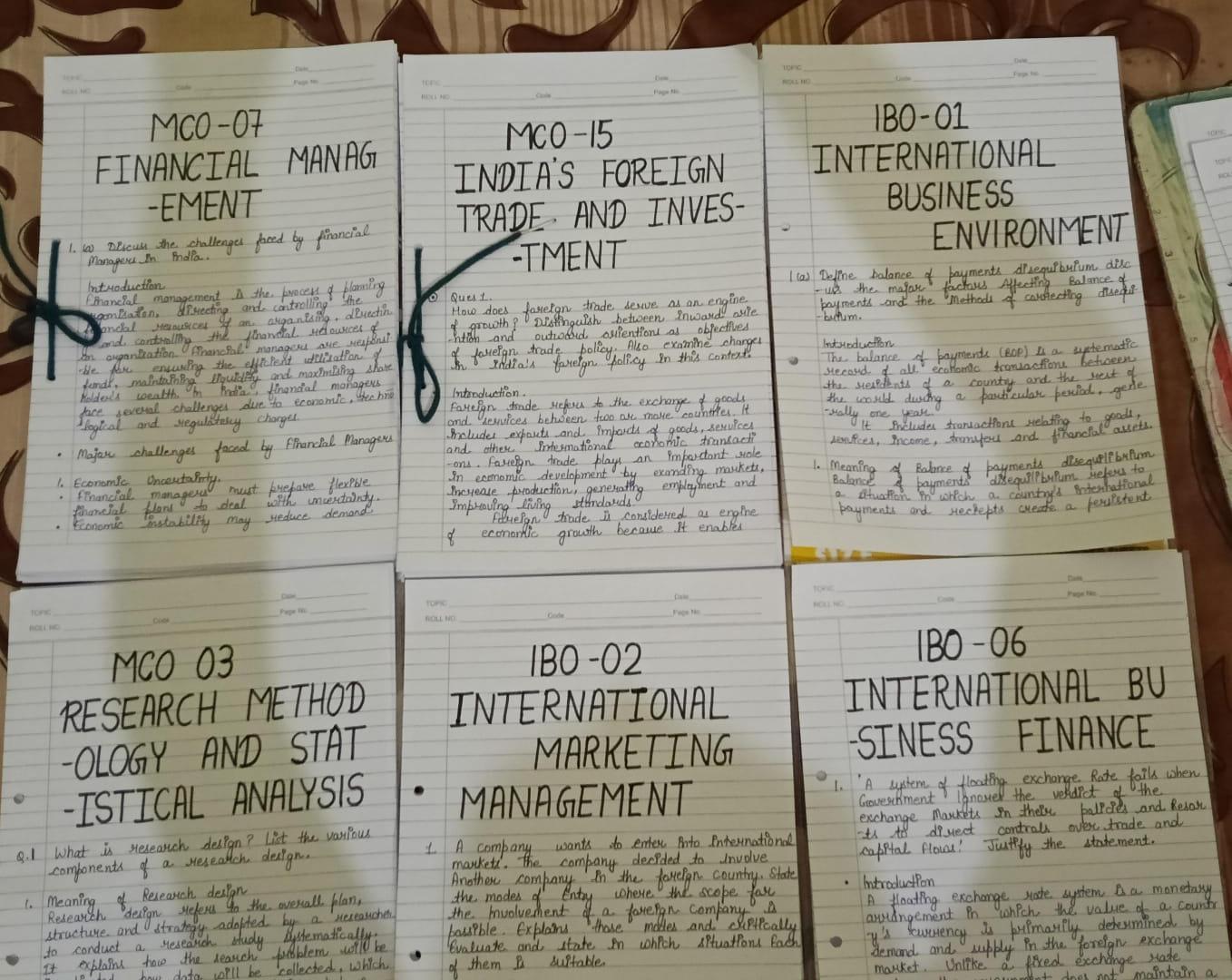
An IGNOU Handwritten Assignment carries real weight. For most theory courses they count for 30% of your final grade, and you generally need at least 40% in them to qualify. Because IGNOU requires handwritten submissions, how you prepare matters as much as what you write. Handwritten notes, whether your own or well-prepared ones, can make the process faster and more accurate if you use them correctly.
Step 1: Get the Right Assignment Questions Download the assignment for your programme and session from the official IGNOU website (ignou.ac.in) or through your study centre. Check three things: the course code, the session (for example, July or January), and the submission deadline. Using a question set from the wrong session is a common reason for rejection.
Step 2: Gather Your Study Material Collect the IGNOU self-learning material (SLM) for each course. Most units are also available on eGyanKosh. Handwritten notes are most useful as a quick reference: they condense a unit into key points, definitions, and examples. But treat them as a guide, not the final answer. Always cross-check important facts, dates, formulas, and theories against the official study material.
Step 3: Plan Each Answer Before Writing Read every question carefully and note its marks and any word limit. Then:
Identify the keywords in the question (such as “discuss,” “explain,” “differentiate,” or “critically examine”). Pull the relevant points from your notes and the SLM. Sketch a quick outline: introduction, main points, conclusion. Match the length to the marks. A 20-mark question usually needs about 800–1,000 words, while a 6-mark question needs about 200–300. Step 4: Write in Your Own Words This is where many students go wrong. Copying notes or solved assignments word for word is risky, because evaluators often see identical answers from many students and may penalize them. Instead, read a point from your notes, understand it, and rewrite it in your own language. Keep the technical terms but change the sentence structure. Add a short example, a Indian context, or a diagram wherever it fits. This makes your answer original and shows genuine understanding.
Step 5: Follow the Presentation Rules Neat presentation makes a strong first impression. Follow these guidelines:
Paper: Use plain or ruled A4 sheets, written on one side only (unless your study centre says otherwise). Pen: Use a blue or black ink pen consistently. Avoid pencils and gel pens that smudge. Margins: Leave a margin of about one inch on the left and a smaller one on the right. Handwriting: Write clearly and legibly. Good handwriting is not required, but readability is. Headings: Write the question number and full question at the top of each answer. Underline headings and key terms. Diagrams: Draw tables, flowcharts, and diagrams with a pencil and ruler, then go over them in ink if needed. Page numbers: Number every page so the evaluator can follow the order. Step 6: Prepare the Cover Page The first page should carry your essential details. Include:
Name Enrolment number Programme code Course code and title Assignment code Study centre code and name Regional centre Session (July or January, and the year) Copy the format from the assignment booklet or from your study centre’s guidelines. Incorrect or missing details can delay your marks being updated.
Step 7: Answer All Questions and Review Do not skip any question, even if you can only write a short answer. Unanswered questions mean lost marks. Once you finish, read the full assignment again. Check for:
Spelling and grammar mistakes Missing question numbers Incomplete answers Pages out of order Put the pages in order, staple them neatly, and add the cover page on top.
Step 8: Make a Copy and Submit on Time Before submitting, scan or photograph your completed assignment. If the original is lost, you will have a backup. Submit it to your assigned study centre before the deadline, or follow the online submission process if your programme offers one. Always collect an acknowledgement receipt, and keep it safely until your marks appear in your grade card. You can later verify your assignment status on the IGNOU website.
Useful Tips for Better Marks Start early. Rushing in the last week leads to messy, incomplete work. Write a few lines per point. One-line answers rarely earn full marks. Use headings and bullet points. They make long answers easier to evaluate. Stick to the syllabus. Extra, off-topic information does not add marks. Stay consistent. Keep your handwriting, format, and spacing the same throughout. Final Thoughts An IGNOU Solved Assignment is a great way to speed up your preparation, but the quality of your assignment depends on how you use them. Understand each point, rewrite it in your own words, present it neatly, and submit it on time. Do that, and you will secure good assignment marks and also build a stronger foundation for your term-end examinations.

 English
 Arabic
 French
 Spanish
 Portuguese
 Deutsch
 Dutch
 Italiano
 Russian
 Romaian
 Portuguese (Brazil)
 Greek
