


 About Urh Social
 Terms of Service
 Privacy Policy
 Contact
Generative AI vs Traditional Marketing: What Works Better in 2026?
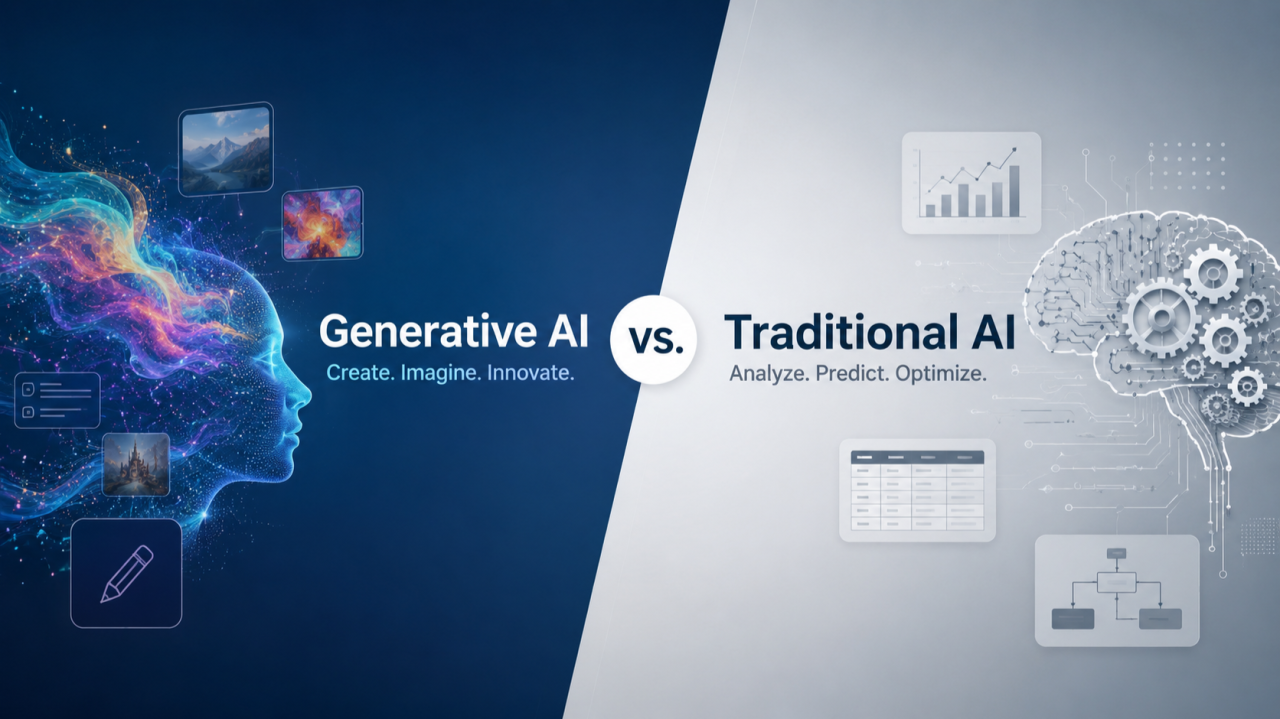
Few debates in marketing have grown as loud as this one. On one side are the enthusiasts who say generative AI makes old-school methods obsolete. On the other are the traditionalists who argue that nothing beats human creativity, personal relationships, and proven channels. The truth, as usual, sits somewhere in the middle. In 2026, both approaches have clear strengths and clear weaknesses, and the smartest businesses are learning when to use each one. This article compares them side by side, looks at where each performs best, and helps you decide what deserves your budget this year. If you want guidance on building the right mix for your business, working with a provider of digital marketing agency Karachi can be a practical place to start.
What We Mean by Each Approach
Before comparing results, it helps to define the terms.
Generative AI marketing uses tools that create text, images, video, audio, and code on demand. It also includes AI systems that personalize messages, test creative variations, and optimize campaigns automatically. The defining trait is speed and scale: one person can now do what once required a small team.
Traditional marketing covers established methods such as print ads, billboards, radio, television, direct mail, events, cold calls, and word-of-mouth. It also includes manual, human-led approaches to digital work, such as hand-written copy and hand-built campaigns. The defining trait is human craft and physical presence.
Most businesses use some blend of both already. The question is which deserves more weight for a given goal.
Speed and Cost: A Clear Win for Generative AI
Here the gap is hard to argue with. Drafting a blog post, producing ten ad variations, or translating a campaign into three languages takes minutes with AI. The same work done manually takes days and costs far more in salaries or agency fees.
Traditional channels tend to carry higher upfront costs. Printing brochures, booking billboard space, or producing a television spot all require significant budgets and long lead times. Once a billboard goes up, changing the message is expensive. With AI-supported digital campaigns, you can adjust copy and visuals the same afternoon.
For small businesses with limited budgets, this cost advantage is often the deciding factor. AI lowers the barrier to producing professional-looking marketing, which levels the playing field against larger competitors.
Personalization: Another Strength of AI
Traditional marketing speaks to a crowd. A billboard shows the same message to everyone who drives past. A flyer reads the same for every recipient.
Generative AI can tailor messages to individuals. It can write different email versions for different customer segments, recommend products based on behavior, and adjust website content for each visitor. When done respectfully, this makes customers feel understood and improves conversion rates.
Traditional methods cannot match this precision at scale. However, personalization depends on data, and not every business has clean, well-organized customer information. Without it, AI personalization can miss the mark.
Trust and Authenticity: Where Traditional Marketing Shines
Here the balance tips the other way. People are increasingly aware that AI generates much of the content they see online. As synthetic content spreads, genuine human connection becomes more valuable.
Face-to-face meetings, community events, handshake deals, and personal recommendations carry a weight that no algorithm can replicate. A satisfied customer telling a friend about your business is still among the most powerful forms of marketing, and it costs nothing.
Print and physical media also enjoy a perception of credibility. A well-designed brochure or a mention in a respected newspaper signals that a business is real and established. In markets where trust is built through relationships, such as real estate, healthcare, education, and local services, traditional methods remain highly effective.
Creativity and Originality: A Shared Space
Generative AI is excellent at producing competent, polished work quickly. But because it learns from existing material, its output can feel familiar and predictable. Truly original ideas, bold campaigns, and emotionally powerful storytelling still tend to come from people.
Traditional marketing has a long history of memorable creative work built on human insight into culture, humor, and emotion. Those instincts remain valuable.
The best results come when the two work together. A creative director sets the big idea, and AI helps explore variations, speed up production, and test what resonates. Humans supply the spark, and AI supplies the volume.
Measurement and Accountability
One of the biggest advantages of digital, AI-supported marketing is measurability. You can see clicks, conversions, cost per lead, and return on ad spend in near real time. This makes it easier to learn what works and cut what does not.
Traditional channels are harder to measure. How many people saw your billboard and later visited your shop? Which radio spot led to a phone call? Businesses use tools like unique phone numbers, discount codes, and customer surveys to track results, but the picture is rarely as clear as with digital campaigns.
That said, measurement is not perfect on the digital side either. Privacy changes and tracking limits have made attribution more complicated, and AI-driven platforms sometimes act like black boxes. Smart marketers combine multiple data sources instead of trusting a single dashboard.
Reach and Audience Behavior
Where your customers spend their time should guide your choices.
- Younger, online-first audiences are easily reached through social media, search, and video, where AI-assisted marketing thrives.
- Older or less connected audiences may respond better to print, radio, television, and in-person outreach.
- Local service businesses often benefit from a mix of local search visibility and traditional community presence, such as signage, sponsorships, and referrals.
- B2B companies frequently combine AI-supported content and outreach with events, direct meetings, and relationship building.
Assuming that everyone lives on the same platforms is a costly mistake. Study your own customers before committing your budget.
Risks and Limitations to Consider
Neither approach is risk-free.
Risks of relying too heavily on generative AI:
- Inaccurate or fabricated information that damages credibility
- Generic content that blends in with competitors
- Privacy and data protection concerns
- Loss of brand voice when too much is automated
- Dependence on platforms and tools that change quickly
Risks of relying too heavily on traditional marketing:
- Higher costs and slower execution
- Limited targeting and weaker measurement
- Difficulty adapting quickly to market changes
- Missing customers who now research and buy online
Recognizing these weaknesses helps you build a more resilient strategy.
So, What Works Better in 2026?
The honest answer is that it depends on your goal, your audience, and your resources. Here is a simple way to think about it:
- If you need speed, scale, and low cost, generative AI-supported digital marketing is hard to beat.
- If you need deep trust and personal relationships, traditional methods still lead.
- If you need precise measurement, digital channels offer clearer insight.
- If you need emotional impact and memorable storytelling, human creativity should drive the idea, with AI supporting the execution.
For most businesses, the winning move is not choosing one side but combining them. Use AI to handle the heavy lifting of drafting, testing, and personalizing. Use traditional methods to build relationships, reinforce credibility, and create real-world moments. Let each cover the other’s blind spots.
A Practical Way to Build Your Mix
If you are unsure where to begin, follow these steps:
- Define your goal. Awareness, leads, sales, and loyalty each call for different tools.
- Know your audience. Find out where they spend time and how they make decisions.
- Start small with AI. Pick one or two use cases, such as content drafting or email personalization, and measure the results.
- Keep what already works. If a traditional channel brings steady customers, do not abandon it just because it feels old.
- Connect the two. Add QR codes to printed materials, promote events through social media, and use customer feedback from offline interactions to improve digital messaging.
- Review and adjust. Check results every quarter and shift your budget toward what performs.
Final Thoughts
The contest between generative AI and traditional marketing is less a battle than a partnership. AI brings speed, scale, personalization, and measurable results. Traditional marketing brings trust, tangible presence, and human warmth. Businesses that understand the strengths of each, and refuse to treat either as a cure-all, will build the most effective strategies in 2026.
Rather than asking which one wins, ask which combination best serves your customers. The answer will be different for every business, but the principle stays the same: use technology to work smarter, and use human connection to be remembered.

 English
 Arabic
 French
 Spanish
 Portuguese
 Deutsch
 Dutch
Dutch
 Italiano
 Russian
 Romaian
 Portuguese (Brazil)
 Greek
Greek
