


 About Urh Social
 Terms of Service
 Política de privacidade
 Contact
Generative Search Optimization: From Ranking Pages to Becoming a Source
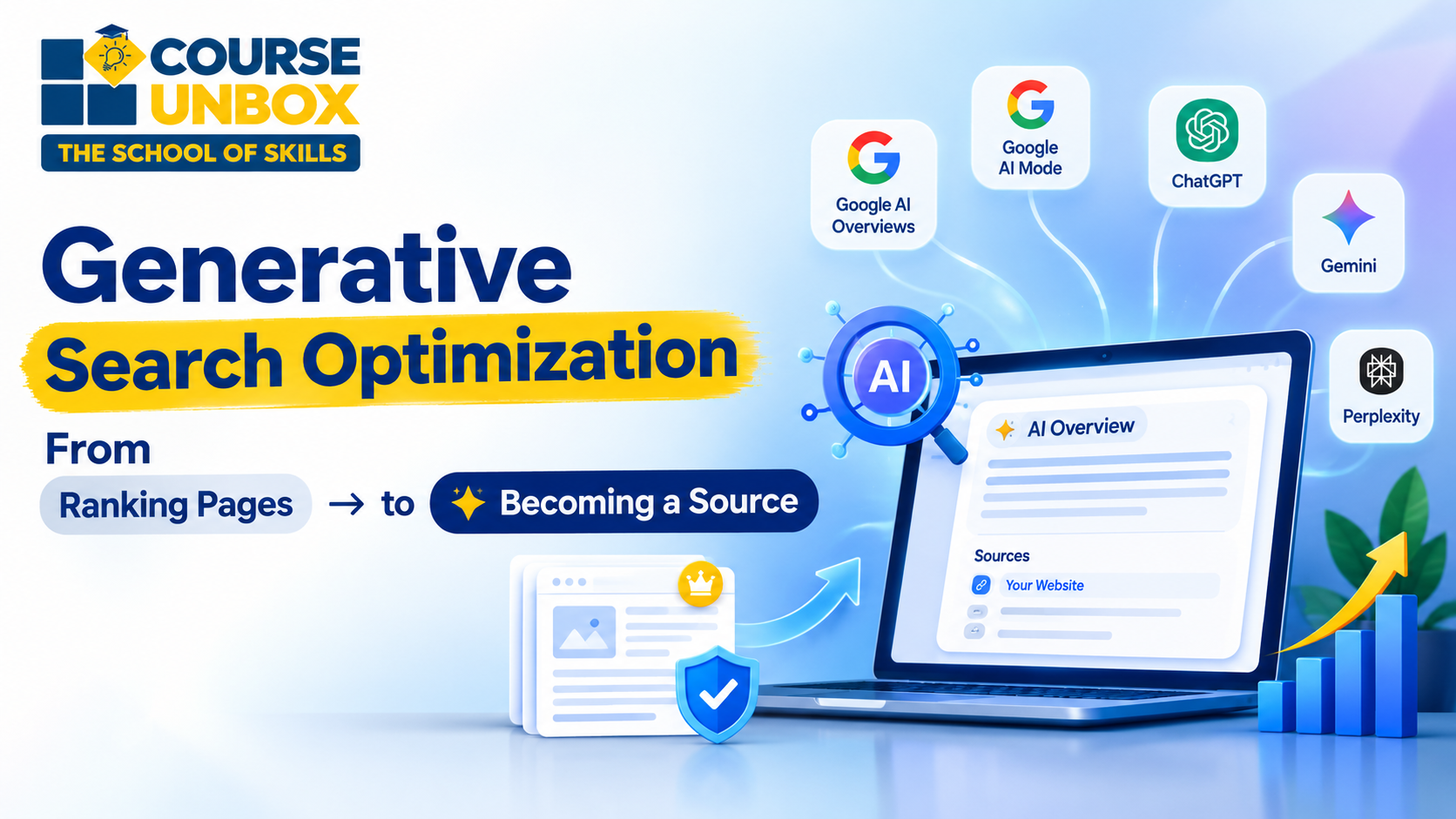
Generative Search Optimization is changing how businesses approach online visibility, moving the focus from simply ranking web pages on search engine results pages to becoming a trusted source of information in AI-generated answers. With tools and experiences such as Google AI Overviews, Google AI Mode, ChatGPT, Gemini, and Perplexity, users can discover information through summarized answers that draw on relevant sources. This shift makes it important for businesses to create helpful, credible, and clearly structured content that search engines and AI systems can understand, retrieve, and reference. Instead of focusing only on keyword rankings and website traffic, modern SEO strategies must also consider brand visibility, source credibility, topical authority, and the ability to answer users' questions accurately.
What Is Generative Search Optimization?
Generative Search Optimization refers to the process of improving a website's visibility in AI-powered search experiences so that its content can be discovered, understood, and potentially cited in generated answers. It is closely related to Generative Engine Optimization (GEO) and Answer Engine Optimization (AEO), which focus on helping brands appear in AI-generated responses and answer-driven search experiences.
Traditional SEO primarily focuses on improving a website's position in organic search results. Generative search introduces another opportunity: becoming one of the sources that an AI system uses to explain a topic, answer a question, or recommend a solution. For example, a user searching for the benefits of digital marketing training may receive a summarized answer with links to relevant websites rather than relying exclusively on a conventional list of search results.
However, appearing in an AI-generated answer is not guaranteed by following a particular formula. Content must be relevant, accessible, useful, and eligible for discovery. Strong traditional SEO practices remain an important foundation for generative search visibility.
Why Is Generative Search Optimization Important for Businesses?
The way people discover information online is evolving. Users increasingly expect direct answers, comparisons, explanations, and recommendations without having to visit numerous websites. AI-powered search experiences respond to this behaviour by combining information from relevant sources into a single response.
For businesses, this creates both an opportunity and a challenge. A company may rank well for a competitive keyword but still miss opportunities to become a source in AI-generated answers. Conversely, a well-developed resource that explains a subject clearly may provide useful information for a particular question even when the user is not searching for the company's brand name.
Generative search optimization helps businesses build visibility across these discovery experiences. When a brand consistently publishes accurate, informative, and original content, it can strengthen its reputation as a knowledgeable resource. Although citations do not automatically lead to website visits or conversions, they can create additional opportunities for users to discover a business and explore its offerings.
Traditional SEO vs. Generative Search Optimization
Traditional SEO and generative search optimization share many foundational principles, but their visibility objectives are slightly different. Traditional SEO emphasizes organic rankings, relevant keywords, backlinks, technical performance, and search intent. Generative search optimization extends this approach by considering whether a website provides information that AI-powered systems can retrieve and use when generating answers.
From Keyword Rankings to Answer Visibility
In traditional SEO, a page may target a phrase such as "benefits of SEO training" to attract relevant organic traffic. In generative search, the same page should also explain the benefits clearly, address common questions, and provide meaningful information that helps users understand the subject.
This does not mean abandoning keyword research. Keywords remain useful for understanding user intent and planning content. The difference is that content should answer the underlying question rather than merely repeat a target phrase throughout the page.
From Backlink Quantity to Overall Source Credibility
Backlinks continue to play a role in traditional search optimization, but becoming a trusted source requires more than accumulating links. Businesses should develop a clear topical focus, publish original insights, demonstrate relevant expertise, and maintain consistency across their website and other legitimate online profiles.
Third-party references, expert contributions, credible citations, and useful resources can help establish trust. These signals should develop naturally through valuable work rather than artificial mentions or manipulative link-building practices.
How to Optimize Content for Generative Search
Create Helpful, Original, and People-First Content
The foundation of generative search optimization is content that provides genuine value. Publishing generic articles that repeat information already available across the internet gives readers little reason to trust or remember a brand.
Businesses should include original analysis, practical examples, expert explanations, relevant data, and firsthand experience wherever possible. For instance, an article about SEO strategy can become more useful by explaining how keyword research influences content planning, how technical issues affect crawling, and how performance should be measured.
The objective is to answer the reader's question thoroughly while offering insights that distinguish the website from competing resources. Content should be written for people first, with optimization supporting clarity and discoverability.
Structure Content With Clear Headings and Direct Answers
A well-organized page helps readers navigate information and makes individual sections easier to understand. Use descriptive headings, concise introductory explanations, and logical transitions between related ideas.
When answering a specific question, provide the main answer early in the relevant section before expanding on the details. For example, a section titled "What Is Generative Search Optimization?" should begin with a direct definition instead of several paragraphs of unrelated background information.
Paragraphs should explain concepts naturally and include supporting examples when necessary. Lists, tables, and FAQs can be useful when they improve readability, but they should not replace meaningful explanations.
Strengthen Technical SEO and Website Accessibility
AI-powered search experiences still depend on discovering and processing accessible information. Businesses should ensure that important pages can be crawled, indexed, and rendered correctly. Review robots.txt rules, XML sitemaps, canonical tags, internal links, mobile usability, page performance, and unnecessary duplicate content.
Clear navigation and descriptive internal links help users and search engines understand the relationship between pages. Structured data can also help search engines interpret eligible content, although there is no special schema markup that guarantees inclusion in AI-generated answers.
Technical optimization creates the conditions for discovery, but it cannot compensate for inaccurate or unhelpful content.
Build Topical Authority Through Relevant Content
Topical authority develops when a website provides useful coverage of a subject rather than publishing disconnected articles targeting unrelated keywords. Businesses can create interconnected resources that explain foundational concepts, advanced techniques, common challenges, and practical solutions.
For example, an SEO training website can publish guides about technical SEO, on-page optimization, link building, keyword research, content optimization, and generative search. Relevant internal links between these resources create a clearer content structure and help readers explore related topics.
Every article should have a distinct purpose. Publishing multiple pages with nearly identical information simply to target keyword variations is unlikely to create sustainable value.
Demonstrate Experience, Expertise, and Reliability
Trustworthy content should be accurate, transparent, and supported by appropriate evidence. Include author information where relevant, cite reliable sources for factual claims, update outdated guidance, and distinguish established information from opinions or predictions.
When publishing case studies, describe the methodology and results honestly. Avoid fabricated statistics, unsupported performance claims, and misleading promises about achieving AI citations.
These practices help establish credibility with readers and support the quality signals that matter across modern search experiences.
The Role of Internal Linking in Generative Search Optimization
Internal linking connects related pages and creates a logical pathway through a website. It helps users discover additional information while giving search engines useful context about page relationships and topic relevance.
Readers who want to develop their SEO knowledge can explore an SEO Course Online to learn about SEO concepts, optimization techniques, and the skills involved in improving website visibility. Linking to a relevant educational resource can provide readers with a useful next step after learning about generative search optimization.
Location-specific resources can also help users find training opportunities that match their geographic preferences. For example, individuals searching for an SEO Course in Noida can explore a dedicated page relevant to their location and learning requirements.
Similarly, learners interested in developing their search engine optimization skills in the national capital can explore an SEO Course in Delhi. A contextual internal link helps readers move from informational content to a related resource when they are ready to learn more.
People researching training options in nearby areas can also visit the page for an SEO Course in Ghaziabad. Providing relevant location-specific links makes it easier for readers to navigate between educational resources without interrupting the flow of the article.
For learners exploring opportunities in the wider Noida region, an SEO Course in Greater Noida offers another relevant destination to explore. Each internal link should be placed where it naturally supports the reader's needs rather than being added simply to repeat a target keyword.
A strong internal linking strategy connects related content, improves navigation, and supports the overall website structure. It should prioritize relevance and usefulness instead of placing excessive links in every section.
How to Measure Generative Search Optimization Performance
Measuring generative search optimization requires a broader view of visibility than traditional keyword rankings alone. Businesses should continue monitoring organic impressions, clicks, rankings, conversions, engagement, and indexed pages through established analytics and search performance tools.
They can also track whether their brand or website appears in relevant AI-generated answers across supported platforms. This involves testing important questions, recording cited URLs, identifying recurring themes, and comparing results over time. Because AI answers can change depending on the query, platform, and context, occasional observations should not be treated as definitive evidence of long-term performance.
Referral traffic from AI platforms, branded search demand, qualified leads, and conversions can provide additional context. Together, these indicators help businesses evaluate whether their content is improving discoverability and contributing to meaningful business outcomes.
Common Mistakes to Avoid in Generative Search Optimization
One common mistake is treating generative search optimization as a shortcut that replaces traditional SEO. Technical accessibility, helpful content, relevant internal links, and sound website architecture remain essential.
Another mistake is producing large volumes of AI-generated articles without meaningful review or original value. Automation can support research and drafting, but published content should be checked for accuracy, relevance, clarity, and usefulness.
Businesses should also avoid keyword stuffing, fabricated brand mentions, unsupported claims, and guarantees of AI citations. Creating special AI-focused files or breaking every article into unusually small sections is not a guaranteed route to visibility. A better strategy is to focus on accessible, well-organized content that genuinely answers the questions the intended audience cares about.
The Future of SEO: Becoming a Trusted Source
Generative search is expanding the ways people discover information, but the fundamentals of successful SEO remain relevant. Businesses need to make their content accessible, understand user intent, communicate clearly, and offer reliable information that deserves attention.
The most sustainable approach combines traditional SEO with a stronger focus on source quality, original insights, topical depth, and clear answers. Rankings remain valuable, but they are only one part of a broader visibility strategy. By developing a trustworthy online presence and consistently creating useful resources, businesses can improve their opportunities to be discovered across both conventional search results and AI-powered search experiences.
Conclusion
Generative Search Optimization represents an important development in the evolution of SEO, shifting the conversation from ranking pages alone to building content that deserves to be discovered and referenced. Businesses that combine technical excellence, people-first content, clear information architecture, topical authority, and trustworthy communication can prepare for changing search behaviours without abandoning proven SEO practices. The goal is not simply to appear in an AI-generated response, but to become a genuinely useful and credible source that helps people make informed decisions.
Frequently Asked Questions (FAQs)
1. What is Generative Search Optimization?
Generative Search Optimization is the process of improving content discoverability in AI-powered search experiences. It focuses on creating useful, credible, and accessible information that may be retrieved, referenced, or cited in AI-generated answers.
2. Is Generative Search Optimization different from traditional SEO?
Yes, although the two approaches share many fundamentals. Traditional SEO primarily focuses on organic search visibility, while generative search optimization also considers how content may be selected and cited in AI-generated responses. Strong technical SEO and high-quality content support both.
3. How can a website appear in AI-generated search answers?
A website should provide accurate, relevant, original content, maintain sound technical SEO, and ensure that important pages are accessible to search engines. Clear headings and direct answers can improve usability, but no technique guarantees that a page will be selected as an AI source.
4. Are keywords still important for generative search optimization?
Yes. Keywords help businesses understand what users are searching for and identify relevant topics. However, content should address the meaning and intent behind a query instead of relying on repetitive keyword placement.
5. Does generative search optimization replace SEO?
No. Generative search optimization builds on established SEO principles. Crawling, indexing, useful content, internal linking, website accessibility, and a positive user experience remain important for long-term search visibility.
6. How can businesses measure generative search visibility?
Businesses can monitor organic search performance, test relevant queries across AI search platforms, record brand mentions and citations, and evaluate referral traffic, leads, and conversions. Results should be reviewed consistently because AI-generated responses can vary across queries and platforms.
7. Why is becoming a trusted source important in AI search?
AI-generated answers may reference selected sources to support their explanations. Providing reliable information, original insights, and relevant expertise can improve a brand's credibility and opportunities for discovery, although inclusion in AI answers is never guaranteed.

 English
 Arabic
 French
 Spanish
 Portuguese
 Deutsch
 Turkish
 Dutch
Dutch
 Italiano
 Russian
 Romaian
 Greek
Greek
