


 About Urh Social
 Terms of Service
 Política de privacidade
 Contact
Mastering Embroidery: Affordable Custom Digitizing Services
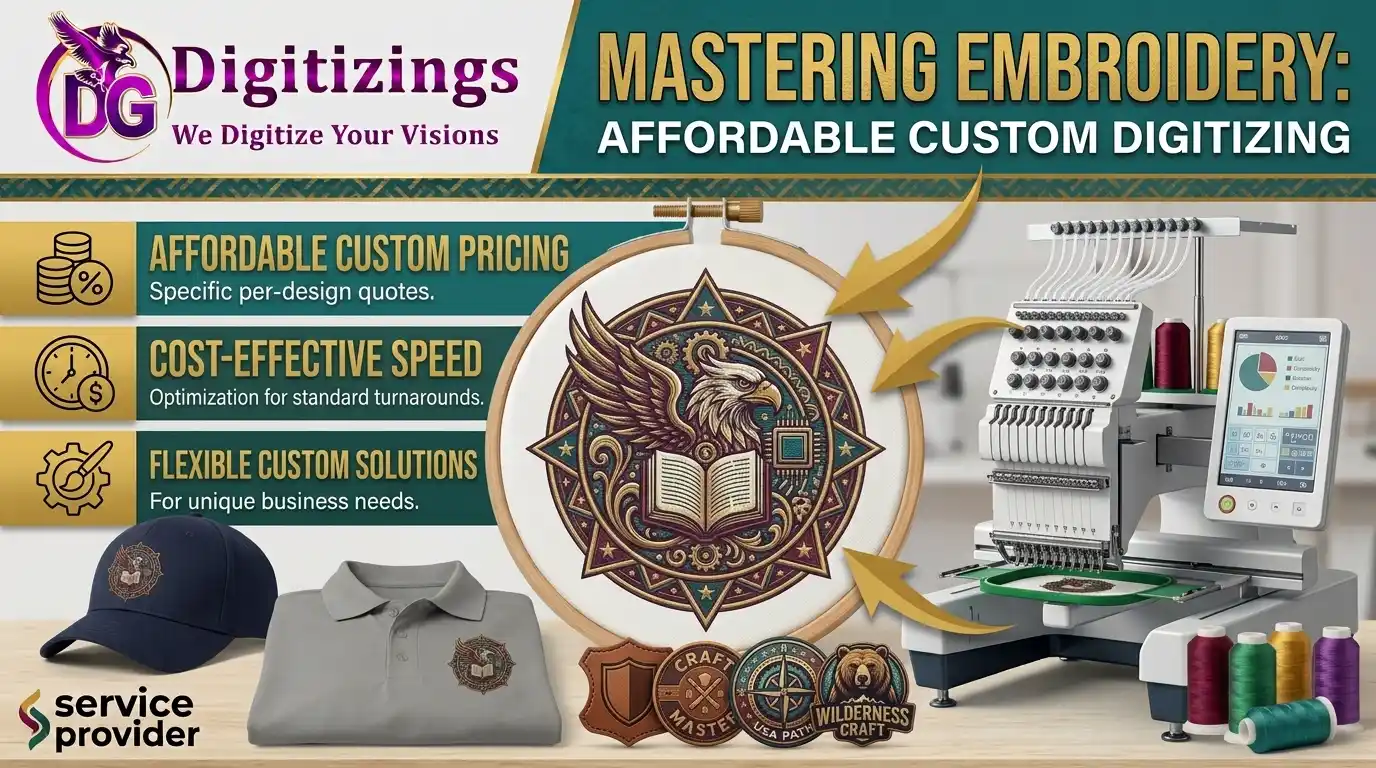
Embroidery has evolved from a traditional decorative craft into a powerful way to personalize clothing, promote businesses, strengthen brand identity, and create distinctive fashion products. From embroidered company logos and uniforms to personalized gifts, patches, jackets, caps, and custom apparel, embroidery offers a durable and visually appealing way to make designs stand out.
But achieving professional embroidery does not begin with the embroidery machine. It begins with digitizing.
Embroidery digitizing is the process of converting artwork into a stitch-based format that an embroidery machine can understand. The quality of this file can influence everything from stitch appearance and fabric stability to production time and overall cost.
For customers and businesses trying to control expenses, affordable custom digitizing services can provide an effective solution. Affordable does not have to mean basic or poorly prepared. With the right service provider, customers can obtain professionally structured embroidery files without unnecessarily high costs.
This guide explains how custom digitizing works, why it matters, how affordable services can help, and what you should look for when choosing a professional embroidery digitizing partner.
Understanding Custom Embroidery Digitizing
A regular image contains colors, shapes, text, and visual details. An embroidery machine cannot simply read that image and reproduce it with thread.
The artwork must first be translated into specific stitch instructions.
The digitizer determines:
-
Where stitches begin and end
-
Which stitch type should be used
-
How dense each section should be
-
Which direction stitches should follow
-
How colors should be sequenced
-
Where underlay should be added
-
How objects should overlap
-
How fabric movement should be compensated
The final embroidery file acts as a set of instructions for the machine.
This means digitizing is not simply file conversion. It is a combination of digital design, technical planning, and embroidery knowledge.
Why Custom Digitizing Is Better Than a Generic Conversion
Every embroidery project has different requirements.
A generic automatic conversion may create a file that technically opens on an embroidery machine, but that does not guarantee that it will stitch well.
Custom digitizing allows the file to be created around the specific design and intended application.
For example, a small business logo may need:
Simple and Readable Lettering
Small text has to remain clear after being stitched.
Balanced Stitch Density
Enough stitches are needed for coverage, but excessive density can create unwanted weight and distortion.
Suitable Underlay
The foundation stitches can help stabilize the fabric and support the visible embroidery.
Appropriate Compensation
The design can be adjusted to account for expected movement during stitching.
This level of customization can produce much better results than relying on a basic image-to-stitch conversion.
The Role of Affordable Digitizing Services
Custom embroidery can become expensive when every part of the process is handled inefficiently.
An affordable embroidery digitizing service should focus on achieving the right balance between cost and quality.
Professional efficiency can come from:
-
Removing unnecessary details
-
Reducing excessive stitch counts
-
Using efficient stitch paths
-
Limiting unnecessary color changes
-
Selecting suitable stitch types
-
Creating application-specific designs
-
Avoiding unnecessary complexity
The goal is not to create the cheapest file possible. The goal is to create an efficient file that produces quality embroidery.
This distinction is important because poor-quality digitizing can actually cost more in the long run.
How Poor Digitizing Can Increase Costs
A low-priced digitizing file may seem like a great deal until production begins.
Poorly constructed embroidery files can contribute to:
-
Frequent thread breaks
-
Fabric puckering
-
Poor registration
-
Excessive stitching
-
Repeated machine stops
-
Garment damage
-
Rework
-
Customer complaints
If a design needs to be digitized again after production begins, the original savings can disappear quickly.
A professionally created file can therefore be an investment in the entire production process.
Choosing the Right Stitch Types
Different parts of artwork require different stitch structures.
Satin Stitch
Satin stitches are often used for lettering, narrow borders, and columns. They can create a smooth, polished appearance when properly digitized.
Fill Stitch
Fill stitches are useful for covering larger areas and broad shapes.
Running Stitch
Running stitches work well for outlines, fine details, and lightweight design elements.
Underlay
Underlay supports the top stitches and can help stabilize the fabric.
The best designs usually use a combination of stitch types according to the shape and application.
How Design Size Influences Digitizing
One of the most important factors in custom embroidery is the final size of the design.
A large jacket-back logo can contain considerably more detail than a small left-chest emblem. Simply reducing the large file can cause important elements to become unclear.
When a design becomes smaller, the digitizer may need to:
-
Simplify tiny shapes
-
Strengthen thin lines
-
Adjust letter spacing
-
Modify stitch direction
-
Reduce unnecessary detail
-
Change density
-
Alter compensation
For this reason, a professional service may create separate versions of the same artwork for different applications.
Affordable Digitizing for Business Logos
Businesses often use embroidery as part of their branding strategy.
Company logos may appear on:
-
Employee uniforms
-
Polo shirts
-
Jackets
-
Caps
-
Bags
-
Workwear
-
Promotional products
Because the same logo may be used repeatedly, having a professionally digitized master file can provide long-term value.
A well-prepared logo can be adapted into different versions for different products while maintaining the company's visual identity.
Custom Digitizing for Apparel Brands
Fashion and apparel brands often use embroidery to create distinctive products.
Unlike a simple company logo, fashion embroidery may involve decorative artwork, oversized lettering, symbols, textured details, or artistic compositions.
Custom digitizing gives brands greater flexibility.
A design can be prepared specifically for:
Sweatshirts
Large graphics and bold lettering can create a strong visual statement.
T-Shirts
Lightweight material requires attention to stitch weight and density.
Denim
Denim can support substantial embroidery while offering a durable surface for detailed work.
Jackets
Large designs can be incorporated into the back or front of jackets for a stronger visual impact.
Caps
Bold lettering, symbols, and logos can work particularly well on curved cap surfaces.
The digitizing process should be adapted to the garment rather than treating all apparel the same way.
Specialty Custom Digitizing
Affordable custom digitizing does not have to be limited to standard flat embroidery.
Specialty applications can add distinctive effects to embroidered products.
3D Puff Digitizing
3D puff creates raised embroidery by using foam beneath selected design elements. It is popular for caps, streetwear, sportswear, and bold branding.
Patch Digitizing
Patch designs often use strong borders and controlled stitching so the finished patch remains clear and durable.
Appliqué Digitizing
Appliqué combines fabric and embroidery, making it useful for large shapes and decorative designs while potentially reducing the number of stitches needed.
Monogram Digitizing
Monograms provide a personalized appearance for clothing, towels, gifts, bags, and other products.
Photo-to-Embroidery Digitizing
Photographic designs require artistic interpretation because embroidery cannot reproduce every photographic detail exactly.
Specialty digitizing may require more technical planning, but the result can give a product a much more distinctive appearance.
Fabric Should Always Be Considered
An experienced digitizer understands that fabric affects embroidery.
A file designed for one material may not perform exactly the same way on another.
Stretch Fabrics
Stretch materials can move during stitching and may require suitable stabilization and compensation.
Lightweight Fabrics
Thin garments can be sensitive to excessive density and heavy embroidery.
Fleece
The textured surface can make fine details harder to see.
Denim
Denim offers a stable surface but can accommodate heavier designs.
Towels and Terry Cloth
Raised fibers can hide small details, so larger and more defined elements may be preferable.
Caps
The curved shape requires careful attention to alignment and stitch direction.
Providing the digitizer with fabric information can help create a more suitable file.
Controlling Stitch Density for Better Value
Stitch density is one of the biggest factors affecting embroidery performance.
Too little density may result in visible fabric and weak coverage.
Too much density can cause:
-
Excessive thickness
-
Puckering
-
Thread breaks
-
Longer machine time
-
Increased thread use
Affordable custom digitizing should focus on efficient density rather than maximizing stitch counts.
A well-designed file uses enough stitches to create the required appearance without adding unnecessary work.
This is an important way to combine affordability quality.
Why Stitch Sequencing Matters
The order in which design elements are stitched can affect the final result.
A good stitch sequence can help:
-
Improve registration
-
Reduce unnecessary trims
-
Reduce thread jumps
-
Minimize machine movement
-
Improve production efficiency
Poor sequencing can cause unnecessary thread changes and may create alignment issues between design sections.
An experienced digitizer considers the complete construction of the design rather than creating objects independently.
Pull and Push Compensation
Fabric and thread move during embroidery.
As stitches are formed, some sections can pull inward while others may appear to push outward. Without compensation, borders may not align correctly and narrow objects may become distorted.
Professional digitizing anticipates these effects.
Compensation can be especially important for:
-
Small lettering
-
Circular designs
-
Narrow columns
-
Borders
-
Geometric shapes
-
Multi-layered artwork
The correct amount depends on factors such as fabric, stitch type, design size, and construction.
How Affordable Digitizing Supports Small Businesses
Small businesses may not have the resources to maintain an in-house digitizing team.
Outsourcing custom digitizing can provide access to professional expertise without requiring expensive software, training, and dedicated staff.
A small business can outsource projects such as:
-
Logo digitizing
-
Uniform branding
-
Cap embroidery
-
Patches
-
Promotional artwork
-
Personalized products
This allows the business to focus on customers, marketing, production, and sales while a specialist handles the technical embroidery preparation.
How to Evaluate a Custom Digitizing Service
Before choosing an affordable provider, review the complete service.
Portfolio
Look at real embroidery examples rather than only digital previews.
Pricing
Understand exactly what is included in the quoted price.
Turnaround
Check whether standard and rush delivery options are available.
Revisions
Find out how corrections are handled if the stitch-out needs improvement.
File Formats
Confirm support for the format required by your embroidery machine.
Customer Service
A responsive provider can make it much easier to resolve production questions.
Specialty Experience
If you need puff, patches, appliqué, caps, or other specialized work, make sure the provider has relevant experience.
How to Prepare Artwork Before Digitizing
The quality of the source artwork can influence the digitizing process.
Whenever possible, provide the clearest version of your design.
Useful information includes:
-
Original logo or artwork
-
Preferred colors
-
Final embroidery size
-
Garment type
-
Embroidery location
-
Machine format
-
Special requirements
-
Production deadline
If the design includes very small details, mention the intended embroidery size so the digitizer can determine whether those elements need simplification.
Why Testing Is Important
A digital file can look perfect during a screen preview and still behave differently when stitched.
A test stitch-out allows you to evaluate the actual result.
Look for:
-
Lettering clarity
-
Design registration
-
Stitch coverage
-
Fabric movement
-
Thread breaks
-
Puckering
-
Edge quality
-
Overall appearance
Testing is especially valuable for large production runs, specialty embroidery, and new fabrics.
A small amount of testing can prevent much larger production losses.
Benefits of Building a Long-Term Digitizing Relationship
Using the same professional digitizing service repeatedly can provide advantages over constantly switching providers.
Over time, the service becomes familiar with:
-
Your logo
-
Preferred colors
-
Standard sizes
-
Common fabrics
-
Embroidery machines
-
Application requirements
This familiarity can improve consistency across future orders.
Businesses that frequently produce custom apparel may find this especially valuable.
How to Keep Custom Digitizing Affordable
There are several ways to control costs without reducing embroidery quality.
Simplify Unnecessary Details
Tiny details that disappear during stitching can often be removed.
Avoid Excessive Colors
Unnecessary color changes can increase production time.
Use Appropriate Design Sizes
A highly detailed design should not be forced into an extremely small embroidery area.
Choose the Right Technique
Not every design needs specialty effects.
Provide Good Artwork
Clear source artwork can reduce preparation time.
Use Standard Turnaround When Possible
Rush services may cost more, so standard delivery can be more economical when deadlines allow.
About Digitizings
Digitizings provides professional embroidery digitizing and vector art services for businesses, apparel brands, embroidery shops, promotional companies, and individual customers. Its service range includes custom embroidery digitizing, logo digitizing, 3D puff, cap and hat digitizing, appliqué, jacket backs, monograms, patches, photo-to-embroidery, chenille, cross-stitch, towel and terry-cloth embroidery, chain stitch, flat embroidery, lettering, gradient and blending designs, left-chest logos, badges, and emblems.
The service focuses on combining competitive pricing, quality-oriented file preparation, and quick turnaround. Projects can be prepared according to the intended garment, design size, embroidery technique, and production requirements.
For customers looking to master their embroidery projects without spending unnecessarily on digitizing, Digitizings provides a broad range of custom services designed to support both straightforward logos and more specialized embroidery applications.
Conclusion
Mastering embroidery involves much more than learning how to operate an embroidery machine. Understanding how artwork is converted into stitches is equally important, and professional digitizing provides the foundation for successful embroidery production.
Affordable custom digitizing services can give businesses and individuals access to professional-quality embroidery files without the need to invest heavily in software, training, or in-house digitizing expertise.
The key is choosing a provider that balances cost with technical quality. Good digitizing should consider stitch density, underlay, stitch direction, sequencing, compensation, fabric behavior, and final design size.
Whether you need a company logo, personalized name, cap design, patch, 3D puff logo, jacket-back graphic, or detailed custom artwork, the right digitizing approach can improve both the appearance and production efficiency of the final embroidery.
By choosing a professional provider, testing important designs, and using application-specific files, you can reduce unnecessary costs while achieving cleaner, more reliable embroidery.
Frequently Asked Questions
1. What is custom embroidery digitizing?
Custom embroidery digitizing is the process of converting artwork into a machine-readable stitch file specifically planned for embroidery. The file controls stitch types, density, direction, sequencing, and other production details.
2. How can affordable digitizing still provide high-quality embroidery?
Affordable digitizing can remain professional when the file is efficiently constructed. Proper stitch planning, appropriate density, suitable underlay, and reduced unnecessary complexity can help keep costs reasonable without sacrificing appearance.
3. Is custom digitizing necessary for a business logo?
Yes, especially when the logo will be used repeatedly on uniforms, apparel, caps, or promotional products. A properly digitized master file can help maintain consistent branding and reduce production problems.
4. Does the type of fabric affect custom digitizing?
Yes. Stretch, thickness, texture, and stability influence how stitches behave. Different fabrics may require different density, underlay, compensation, and stitch construction.
5. Can Digitizings handle both simple and complex custom embroidery designs?
Yes. Digitizings provides services ranging from standard logos and lettering to 3D puff, caps, patches, appliqué, jacket backs, photo embroidery, chenille, towel embroidery, and other specialty applications.

 English
 Arabic
 French
 Spanish
 Portuguese
 Deutsch
 Turkish
 Dutch
Dutch
 Italiano
 Russian
 Romaian
 Greek
Greek
