


 About Urh Social
 Terms of Service
 Privacy Policy
 Contact
SOC Service Provider: Costly Security Gaps Indian BFSI Firms Should Avoid
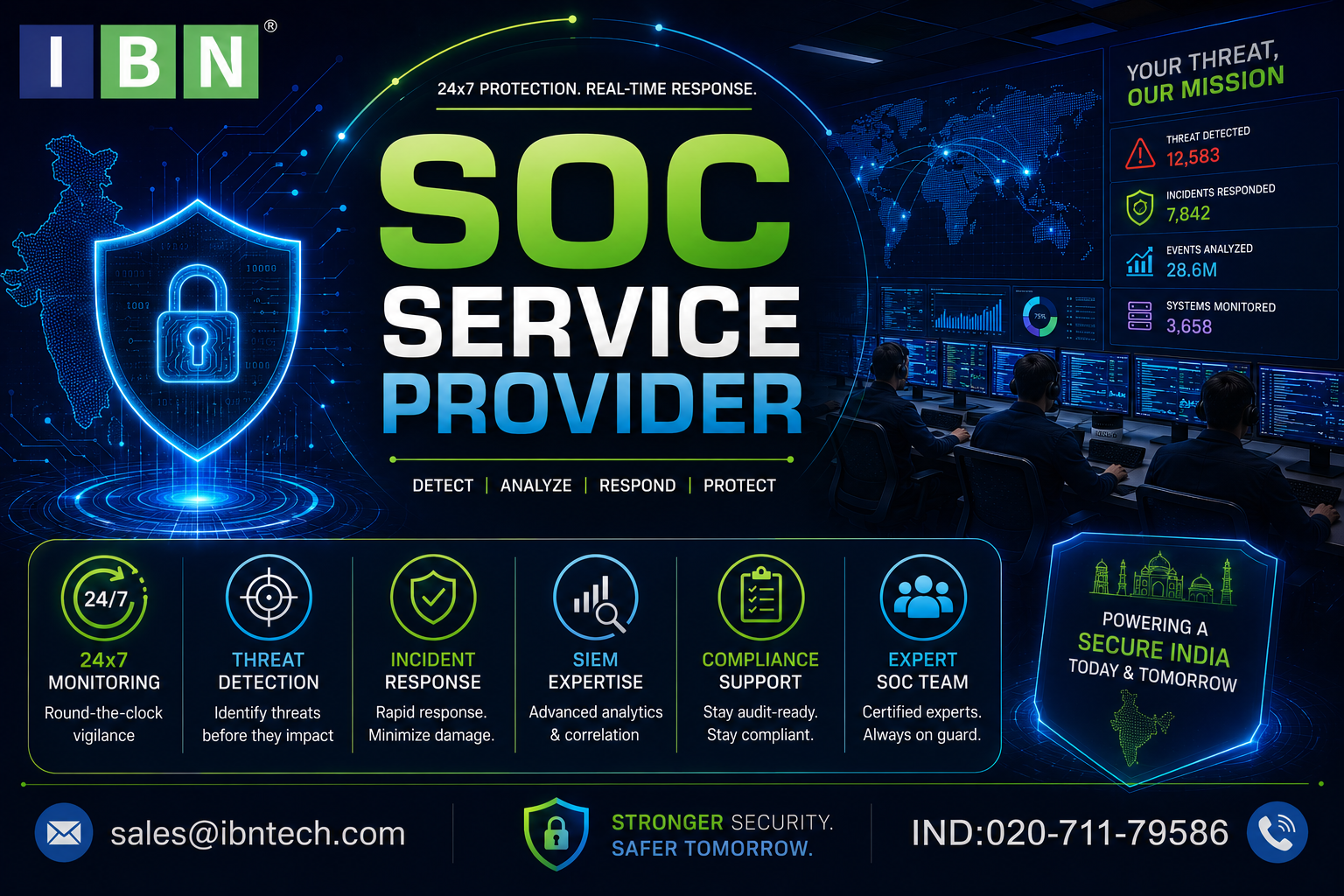
When Banking Security Cannot Wait: Choosing a SOC Service Provider for Indian BFSI
Banks, financial institutions, fintech-focused technology environments, and other BFSI organizations operate with systems that require strong availability, controlled access, and close security oversight. As Indian financial businesses expand digital operations, the volume and complexity of security events can make manual monitoring difficult to sustain. A capable soc service provider can give BFSI teams a structured way to monitor, investigate, and respond to security events continuously.
For financial organizations, the issue is not simply whether a security alert appears. The important question is whether someone can identify its significance and act appropriately when it matters.
What does a SOC service provider provide to BFSI organizations?
A SOC service provider delivers managed security operations that continuously monitor an organization's technology environment for suspicious activity. The service can combine SIEM, threat detection, security analysis, incident response, threat intelligence, security-device monitoring, and reporting.
For BFSI organizations, these capabilities can help create a centralized security-monitoring process across relevant systems. Instead of relying on individual teams to interpret isolated alerts, security events can be collected and analyzed through a defined SOC operation.
IBN Technologies describes its managed SOC and SIEM offering as providing continuous monitoring, threat detection, incident response, threat intelligence, security-device monitoring, threat hunting, and compliance-oriented reporting.
Why do 24/7 managed soc services matter for financial operations?
24/7 managed soc services provide continuous security monitoring rather than limiting security oversight to normal business hours.
Financial operations do not necessarily follow a convenient nine-to-five schedule. Applications, online services, employee accounts, infrastructure, and connected systems can remain active outside standard working hours. A security event occurring overnight can therefore require attention even when the primary business team is offline.
Continuous monitoring creates an operational process for identifying suspicious activity whenever it occurs.
The objective is not to prevent every security event from happening. It is to improve the organization's ability to identify relevant events, investigate them, escalate appropriately, and respond according to established procedures.
Which security threats should BFSI organizations monitor?
Financial organizations can face a broad range of security risks. These can include phishing, credential compromise, malware, unauthorized access, insider-related activity, suspicious network behavior, and attempts to exploit vulnerable systems.
A SOC environment can bring different security signals together so analysts can investigate activity in context.
For example, an unusual login by itself may not establish that an account has been compromised. However, when the login is considered alongside unusual access behavior, endpoint activity, or other security events, the combined evidence may warrant further investigation.
This is where security monitoring moves beyond simply collecting logs.
How does a SOC help turn security alerts into useful decisions?
A SOC combines technology and human analysis. SIEM technology can collect and correlate security events, while security analysts can investigate suspicious activity and determine appropriate escalation.
IBN Technologies describes its managed SIEM capability as collecting, centralizing, and analyzing security logs and events from infrastructure such as firewalls, endpoints, applications, and cloud services.
For a BFSI organization, this centralized visibility can make it easier to identify relationships between events that might otherwise appear unrelated.
The process can also help security teams distinguish routine activity from events that require investigation, reducing the risk of treating every alert with the same level of urgency.
Why can an internal-only monitoring approach become difficult?
Building a fully internal security operation requires people, technology, processes, and continuous operational coverage.
A BFSI organization may already have IT administrators, infrastructure teams, application specialists, compliance personnel, and security professionals. However, maintaining continuous security monitoring requires dedicated operational processes and appropriate expertise.
There is also the challenge of handling changing environments. New applications, cloud workloads, devices, integrations, and user accounts can introduce additional sources of security data.
A managed SOC model can supplement internal capabilities by providing an external security operations layer. IBN Technologies also describes managed SOC as an alternative to building and maintaining a complete internal SOC, with round-the-clock monitoring and security analysts.
What should a BFSI company evaluate before selecting a provider?
The right evaluation should focus on how the service operates rather than relying only on the provider's technology list.
Important considerations include:
- Security monitoring coverage across relevant environments
- SIEM and log-management capabilities
- Alert correlation and prioritization
- Analyst-led investigation
- Incident escalation procedures
- Threat intelligence capabilities
- Threat-hunting requirements
- Security-device monitoring
- Incident response responsibilities
- Reporting and documentation
- Compliance-support capabilities
- Integration with existing security technologies
- Data access and handling requirements
- Communication procedures during incidents
- Scalability as the environment changes
The organization should also establish clear responsibilities between the SOC provider and its internal teams before implementation.
What happens when a suspicious financial-system event occurs?
Consider an unusual access event involving an important financial application.
The initial event may not provide enough information to determine whether there is a genuine security incident. A SOC can investigate related authentication activity, endpoint events, network signals, and other available security data.
If the activity appears suspicious, the agreed escalation process can be initiated. Internal stakeholders can then make decisions based on the available investigation and business context.
This approach creates a repeatable workflow rather than leaving every security event to an ad-hoc investigation.
For BFSI organizations, that consistency can be particularly important because security incidents may involve sensitive information, business-critical applications, and regulatory obligations.
How does SOC monitoring support BFSI compliance?
Security monitoring can contribute to compliance programs by helping organizations maintain visibility into security events and supporting appropriate reporting and documentation.
IBN Technologies lists India-specific regulatory considerations including CERT-In, RBI, and SEBI alongside broader frameworks such as ISO 27001, PCI-DSS, GDPR, and other regulatory requirements on its managed SOC and SIEM service page.
The applicable requirements depend on the organization's activities, regulatory status, information handled, and other circumstances. A SOC should therefore be treated as one component of a wider security and compliance program rather than as a standalone compliance solution.
What should a BFSI organization establish before onboarding a SOC?
Before implementation, the organization should document which systems require monitoring, which security events need escalation, who owns incident decisions, what reporting is required, and how the SOC will communicate with internal teams.
Clear definitions reduce confusion during an actual security event.
They also help the provider understand the business context behind technical alerts. A high-priority alert affecting a customer-facing financial application may require a different response path from a low-impact event on a non-critical system.
Frequently Asked Questions
What is a SOC service provider for BFSI organizations?
A SOC service provider delivers managed security operations for monitoring, detecting, investigating, and responding to security events. For BFSI organizations, the service can support continuous visibility across relevant infrastructure and security controls.
Why do financial organizations need continuous SOC monitoring?
Financial systems can remain active beyond normal office hours, and security events can occur at any time. Continuous monitoring provides an operational process for identifying and investigating suspicious activity outside standard working periods.
Can managed SOC services support regulatory requirements?
Managed SOC services can support security monitoring, documentation, and reporting requirements associated with applicable regulations and frameworks. They do not by themselves guarantee compliance, which depends on the organization's complete control environment and applicable obligations.
Does a managed SOC replace a BFSI security team?
Not necessarily. A managed SOC can complement an internal team by providing continuous monitoring, specialist analysis, and defined escalation support while internal stakeholders retain business and security responsibilities.
For Indian BFSI organizations, a soc service provider can become an important part of a broader security operating model when continuous monitoring, structured investigation, and incident response are required. The most useful approach is to define the systems, risks, responsibilities, and compliance requirements first, then select a SOC model that can support those needs consistently.
Contact Us:
IND- 02067680404
IBN Technologies Ltd.
E-mail: - [email protected]

 English
 Arabic
 French
 Spanish
 Portuguese
 Deutsch
 Turkish
 Dutch
Dutch
 Russian
 Romaian
 Portuguese (Brazil)
 Greek
Greek
