


 About Urh Social
 Terms of Service
 Política de privacidade
 Contact
Why Preventive Ship Maintenance Matters for Commercial Vessels
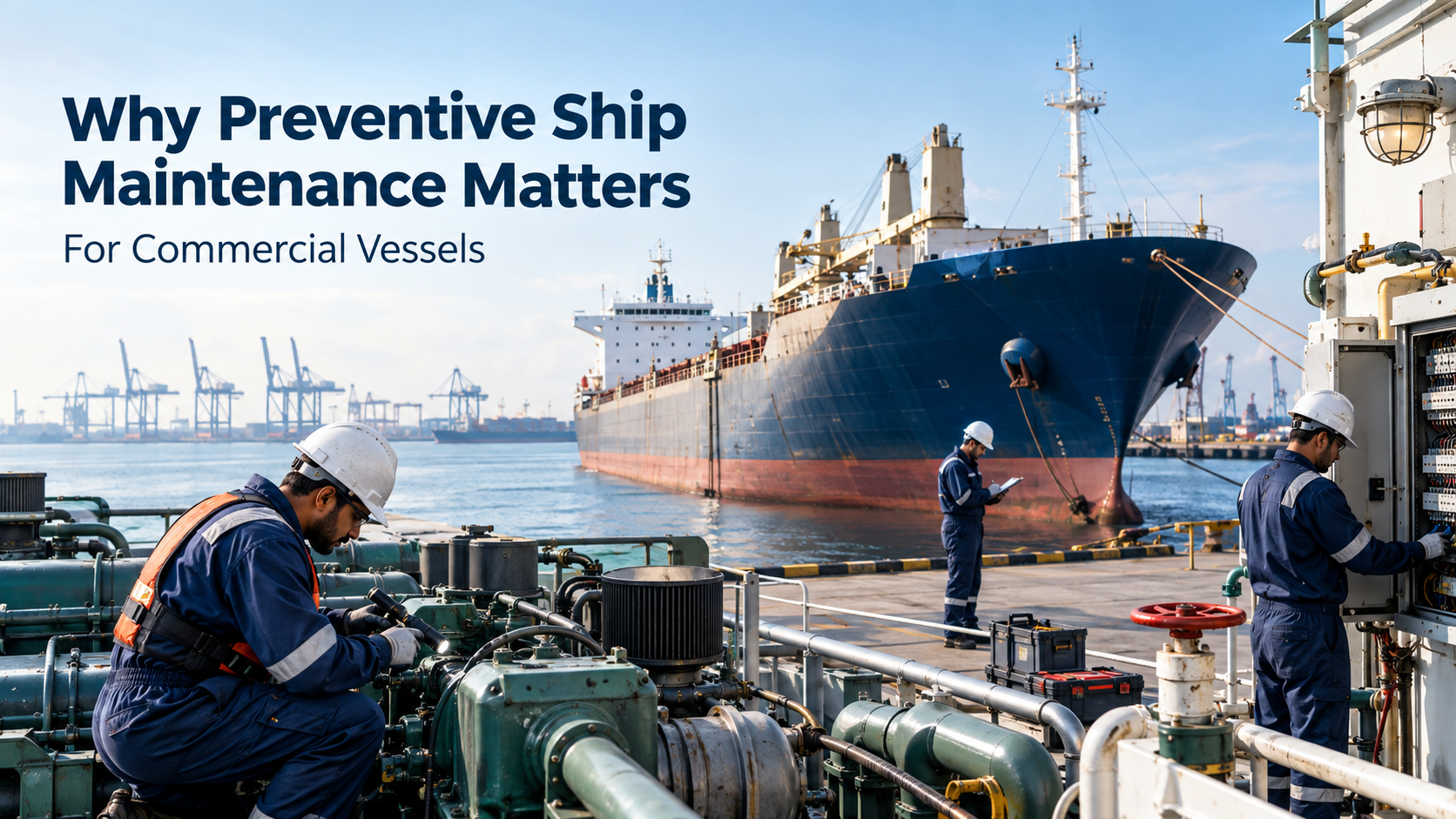
Commercial vessels operate under demanding conditions, often spending long periods at sea and handling complex machinery and equipment. A minor technical issue can become a larger operational problem if it is not identified and addressed at the right time.
This is why Preventive Ship Maintenance is an important part of vessel management. Instead of waiting for equipment to fail, planned maintenance focuses on inspecting, servicing, testing, and repairing equipment before problems become more serious.
What Is Preventive Ship Maintenance?
Preventive ship maintenance is a planned approach to maintaining a vessel and its equipment. It involves regular inspections, servicing, lubrication, testing, adjustments, component replacement, and repairs based on equipment condition or scheduled maintenance requirements.
For example, a vessel's pumps may be inspected regularly for leakage or abnormal vibration, while engines and compressors can be serviced according to established maintenance schedules.
This approach allows vessel operators to identify developing problems early and plan corrective work before a failure affects normal operations.
Why Preventive Maintenance Is Important for Commercial Vessels
Reduces Unexpected Breakdowns
Unexpected machinery failures can interrupt vessel operations and require urgent technical assistance. Regular inspections help identify worn components, leaks, abnormal sounds, vibration, and other warning signs before they develop into major failures.
Minimizes Vessel Downtime
When maintenance is planned, repair work can often be scheduled around the vessel's operational requirements. This is particularly useful when maintenance needs to be completed during port calls or other planned periods of reduced activity.
Helps Control Repair Costs
Preventive maintenance does not eliminate repair expenses, but identifying problems early can help operators plan the required work, manpower, spare parts, and equipment instead of dealing with an unexpected repair situation.
Improves Equipment Reliability
Regular servicing and inspection help machinery and systems remain in suitable operating condition. Engines, pumps, compressors, electrical systems, and hydraulic equipment can all benefit from consistent maintenance.
Supports Safer Vessel Operations
A well-maintained vessel reduces the likelihood of certain equipment-related problems during operation. Regular checks of machinery, electrical systems, safety equipment, and other critical components form an important part of responsible vessel maintenance.
Extends Equipment Life
Proper lubrication, timely servicing, alignment checks, and replacement of worn components can help reduce unnecessary wear on machinery. This can support longer and more reliable service from equipment when maintenance is carried out according to the manufacturer's and vessel's requirements.
Key Areas Covered in Ship Maintenance
Commercial Vessel Maintenance involves many systems working together. A preventive maintenance program may cover areas such as:
- Main and auxiliary engines
- Pumps and compressors
- Electrical systems and generators
- Navigation and communication equipment
- Hydraulic systems
- Boilers and associated equipment
- Hull and pipelines
- Valves and mechanical components
- Fire-fighting and life-saving equipment
- Accommodation and onboard support systems
The maintenance requirements can vary depending on vessel type, equipment configuration, operating conditions, age, and maintenance history.
For this reason, Vessel Maintenance should be planned according to the specific requirements of each vessel rather than following a one-size-fits-all approach.
Preventive Maintenance vs Emergency Repairs
Preventive maintenance is planned in advance, while emergency repair work is generally carried out after an unexpected failure or serious technical problem occurs.
Emergency repairs are sometimes unavoidable, particularly when equipment fails without warning. However, relying only on reactive repairs can make it more difficult to plan manpower, spare parts, tools, and repair time.
A balanced maintenance strategy combines regular inspections and scheduled servicing with the ability to respond quickly when unexpected problems occur.
Role of Professional Ship Repair Companies
Professional Ship Repair Companies in India can support vessel operators with inspection, troubleshooting, maintenance, and repair requirements.
Experienced marine engineering teams may assist with mechanical systems, electrical equipment, piping, hydraulics, fabrication, machinery troubleshooting, and other technical requirements.
Professional Marine Maintenance Services can also be useful when vessels require technical support during port calls. Having an experienced team available can help operators assess problems and determine whether maintenance, repair, or further inspection is required.
For commercial operators looking for technical support across Indian ports, choosing an experienced Ship Maintenance Company with suitable manpower and equipment can simplify coordination between vessel crews, technical teams, and port operations.
Preventive Maintenance During Port Calls
Port calls can provide valuable opportunities to complete planned maintenance without waiting for a vessel's next major maintenance period.
Before arrival, the vessel's technical team can identify jobs that may require shore-based support. These may include machinery inspections, electrical troubleshooting, welding and fabrication, piping repairs, hydraulic work, or other maintenance activities.
Once the vessel reaches port, the repair team can coordinate with the vessel crew and management to understand the work scope, arrange equipment and spares, and complete the approved jobs within the available operational window.
For vessels calling at Indian ports, reliable Ship Repair Services in India can be particularly useful when technical work needs to be coordinated alongside cargo operations, crew activities, inspections, or other port requirements.
Conclusion
Preventive ship maintenance is an important part of managing commercial vessels safely and efficiently. Regular inspections, servicing, testing, and timely repairs can help identify developing equipment problems before they become more disruptive.
From engines and pumps to electrical systems, hydraulics, pipelines, and safety equipment, every major system requires appropriate attention based on its operating requirements.
Working with experienced Ship Repair Services and marine engineering teams can provide additional technical support when inspections, maintenance, or repairs are required during port calls.
A consistent preventive maintenance strategy helps vessel operators move from a purely reactive approach toward planned and better-coordinated Preventive Maintenance for Ships.

 English
 Arabic
 French
 Spanish
 Portuguese
 Deutsch
 Turkish
 Dutch
Dutch
 Italiano
 Russian
 Romaian
 Greek
Greek
