


 About Urh Social
 Terms of Service
 Política de Privacidade
 Contact
Is FUSS Hair Transplant in Dubai Suitable for Thick Grafts
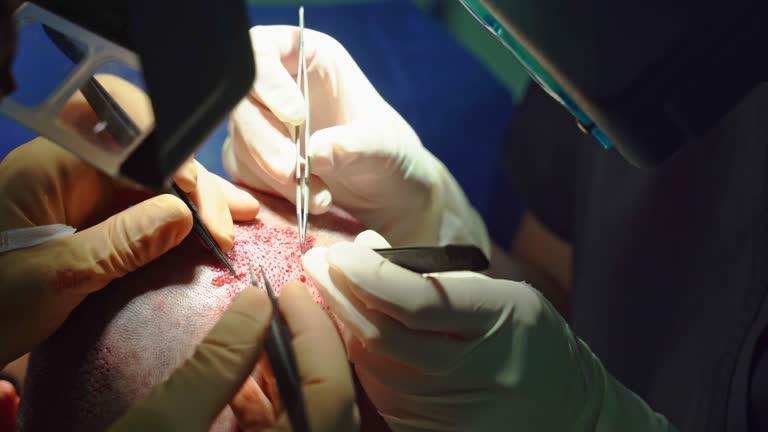
Yes, FUSS Hair Transplant in Dubai can be suitable for patients with thicker follicular units when the donor area provides healthy grafts and the recipient plan can accommodate their characteristics. However, thick grafts are not simply placed everywhere for maximum fullness; their size, hair count and natural growth pattern need to be matched to specific scalp regions.
FUSS uses a donor strip that is dissected under magnification into individual follicular units. This allows grafts to be assessed and organized according to their characteristics before implantation.
Why Thick Grafts Matter in Hair Restoration
Hair caliber affects visual coverage
Thicker hair shafts generally create more visual mass than finer hairs. A patient with robust donor hair may therefore achieve useful coverage from appropriately selected follicular units.
This does not mean that every area should receive the largest available grafts. Natural restoration depends on matching graft characteristics with scalp anatomy.
Follicular units naturally vary
A follicular unit can contain one, two, three or more hairs. The distribution is not identical across the donor scalp.
Microscopic dissection allows the surgical team to identify these naturally occurring units rather than treating all grafts as interchangeable.
How FUSS Hair Transplant in Dubai Handles Thick Grafts
Strip harvesting provides donor tissue
The donor strip is removed from a suitable region at the back or sides of the scalp. The harvested tissue contains follicular units that are subsequently separated for transplantation.
Microscopic dissection preserves unit structure
The dissection process is designed to separate follicular units while minimizing unnecessary follicular damage. The FUT literature identifies microscopic dissection as a defining component of strip harvesting.
Grafts are matched to recipient zones
Thicker multi-hair units can contribute density behind the frontal transition, while finer or single-hair units may be more appropriate near visible edges.
Thick Grafts and Hairline Design
Single-hair grafts create softer edges
The leading hairline generally benefits from a gradual transition. Single-hair follicular units can be useful in this zone because they avoid creating an abrupt dense border.
Larger units can build density behind
Once the transition zone has been established, larger follicular units can contribute to visual fullness farther back.
Natural irregularity remains important
A natural hairline does not have uniform graft spacing or identical hair counts. Controlled variation helps the transplanted region blend with surrounding hair.
Thick Grafts for Mid-Scalp and Crown Areas
Mid-scalp
The mid-scalp often requires a balance between existing native hair and transplanted density. Larger grafts may contribute visual coverage when appropriately positioned.
Crown
The crown requires additional attention because hair direction rotates around the vertex. Thick grafts still need to follow the changing orientation rather than being inserted at one fixed angle.
Transition zones
Where transplanted hair meets native hair, graft selection should support gradual blending rather than an abrupt change in density.
Donor Assessment Before Using Larger Grafts
| Donor characteristic | Why it matters | Planning response |
|---|---|---|
| Hair caliber | Influences visual fullness | Match grafts to recipient needs |
| Hair count per unit | Determines graft composition | Allocate units strategically |
| Donor density | Determines available supply | Estimate sustainable harvesting |
| Follicular orientation | Affects dissection | Preserve natural unit structure |
| Recipient size | Determines coverage requirements | Distribute grafts efficiently |
| Existing native hair | Influences blending | Place grafts around viable follicles |
Why More Hairs Per Graft Does Not Always Mean Better Results
Hairline requirements differ from crown requirements
A dense multi-hair graft placed directly at the frontal edge can look less natural than a finer follicular unit.
Donor resources still matter
Using large grafts does not remove the biological limitation of donor supply. The overall number and distribution of available follicles remain central to planning.
Recipient anatomy sets limits
The surgeon must consider existing follicles, scalp characteristics and appropriate spacing when planning density.
FUSS Versus FUE for Thick Donor Hair
FUSS and FUE obtain donor follicles differently. FUSS removes a strip and then separates follicular units, while FUE extracts units individually through small punches.
The presence of thick donor hair does not automatically determine which harvesting method should be selected. Hairstyle, donor distribution, graft requirements and the desired restoration pattern all need consideration.
Recovery After Thick-Graft FUSS
The postoperative process is not fundamentally different because the grafts contain more hairs. The donor incision and recipient area still require careful protection.
Tajmeels' FUT guidance describes early redness, swelling, tightness and scabbing, followed by gradual stabilization and later hair growth.
Patients should avoid scratching or disturbing the scalp and follow the clinic's specific washing and activity instructions.
Dubai-Specific Care
Direct sunlight should be minimized during early healing. Patients should also plan around Dubai's heat when returning to outdoor exercise or activities that generate substantial sweating.
Longer hair may provide some visual concealment during recovery, but it should not be pulled tightly or manipulated aggressively around the healing donor area.
Questions Patients Commonly Ask
Are thick grafts useful for hair transplantation?
Yes. They can contribute strong visual density when appropriately allocated.
Should thick grafts be placed at the hairline?
Usually, the frontal transition requires finer graft selection for a softer appearance.
Can thick donor hair reduce the number of grafts needed?
Hair caliber can influence visual coverage, but graft requirements still depend on the recipient area and desired density.
Does FUSS preserve naturally occurring follicular units?
FUSS uses microscopic dissection to separate follicular units from the harvested strip while aiming to preserve their structure.
The Strategic Investment
Thick donor hair can be a useful characteristic in restoration, but its value comes from strategic placement rather than indiscriminate density. FUSS Hair Transplant in Dubai can utilize naturally robust follicular units when donor supply and recipient anatomy support their use. At Tajmeels Clinic, graft characteristics can be considered alongside hairline design, mid-scalp coverage and crown requirements to create a more coherent restoration plan.

 English
 Arabic
 French
 Spanish
 Deutsch
 Turkish
 Dutch
Dutch
 Italiano
 Russian
 Romaian
 Portuguese (Brazil)
 Greek
Greek
