


 About Urh Social
 Terms of Service
 Datenschutzbestimmungen
 Contact
Pipeline Weight Bags for Pipeline Construction and Infrastructure
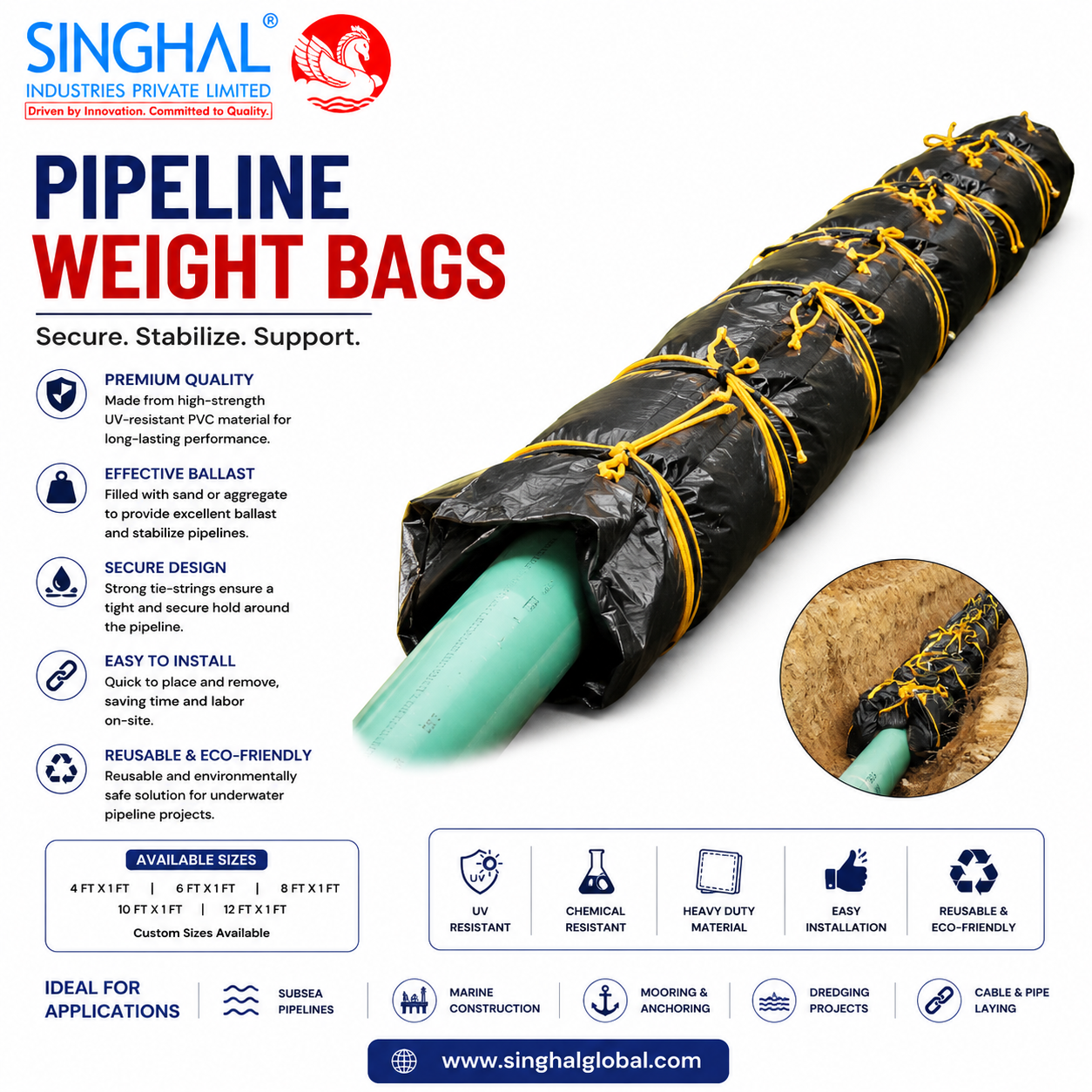
Pipeline weight bags are geotextile ballast systems employed to adjust buoyancy and stabilise pipelines during construction and in long-term service conditions. Ordinarily, they are charged with gravel, stones, sand or alternate approved aggregate and laid over, underneath or between a pipeline or cable. Bags are beneficial for river, canals, wetlands, marshes and lakes crossings or places with a high water table such as floodplains and reservoirs. When a pipe that is empty or partially full has fluid around it, the water surrounding it can create upward pressure. If the force is uncontrolled, then the pipeline could float, slide, bend or come out of its designed alignment. Even small movement on infrastructure projects creates broad impact to joints, bends, coating, road crossings and connected structures. A downward force on pipeline weight bags is generated and this does not necessitate that each individual section be encased in rigid concrete weights. They are easy to use, portable and can be filled at the job site. This sounds like a straightforward task, but the proper selection and placement of ballasts must be engineered.
Control and Alignment
Pipeline weight bags are primarily used to balance buoyancy. Based on various physical and chemical factors, engineers determine downward force by factors including pipe diameter, pipe material (plastic or metal), weight of empty pipes, fluid density and type of coating; trench conditions such as distance from the surface, groundwater or water flow; soil type; safety factor. Bags are then positioned at fixed distances to keep the pipeline in place. This is most relevant for HDPE and other low-density pipelines, but even steel, ductile iron, composite and coated pipelines may need some form of added ballast. A wrap or saddle bag can straddle the pipe to spread its weight over both sides rather than drop a concentrated load on its back. Geotextile pipeline weights are designed to control buoyancy, while permitting groundwater path and, in some designs cathodic protection pathways. Bigger is not necessarily safer. Coatings are damaged with bad spacing, or point loading can be increased, and back filling interfered. Engineering control comes first.
Construction Features and Materials
Pipeline weight bags are typically produced from high-strength woven or nonwoven geotextile materials like polypropylene. It needs to be tear-resistant, abrasion-resistant and moisture resistant and resist soil pressure, and handling during filling/installation. Key Features of the Order Important features may involve reinforced seams, webbing straps, lifting loops, basket-style slings, filling mouths, hook points and separate chambers. But the bag could be engineered as a low-profile set-on weight or alternatively a wrap-around saddle which sits on each side of the pipeline. Products are manufactured for short-term installation support, as well as those that are energy-efficient and served to be buried or submerged. The launching of high-GSM fabric improves strength but the right gsm depends on filled weight, aggregate size, lifting method and other conditions which project calls for, Wagh said. The material should also be chosen for compatibility with the anticipated pH, temperature, UV exposure and chemical environment. Even a strong empty bag may be insufficient if it is heavy with sharp stone and false form.
Applications Across Infrastructure Projects
Pipeline weight bags are utilized in line pipe construction for oil, gas, water, sewer (and laterals), irrigation & drainage and other uses including fire-water, marine and industrial pipelaying projects and utility infrastructure. If pipelines will be laid during road, rail, canal and river crossings, they may hold the pipeline down as the trench is finished and backfilled. In the case of water and wastewater projects, they can also be used to stabilise intake lines, discharge pipes, submerged conduits and utility crossings. They may be used in oil and gas construction, wetland beds, riverbeds, flood zones coast approaches. They can also assist temporary works for pipelowering, float-in -out, pull-in,, shore lands and subsea installation. Geotextile weight bags provide a more permanent or semi-permanent downward ballast than inflatable buoyancy systems used for other float-out and river-crossing operations. You have to choose the right system for a project, depending on whether you are looking for positive buoyancy, negative buoyancy, temporary support or long-term stabilization. Just because the names are similar does not mean that the products are the same.
Benefits for contractors and project owners
Best Features When It Comes To Usage Especially In Construction Empty bags weigh less and are more easily transported than pre-cast concrete blocks, while local aggregate can often be utilized for filling. This could reduce main costs related to freight, storage and lifting. It can conform to pipeline contours and diffuse contact over a larger area. In some stages of the project, it is also easier to reposition or remove bags than it would be rigid weights. Water can freely pass through the filter layer fabric, which could mitigate some of the concerns about sealing the pipe in an impermeable structure. These products are dubbed "affordable ballast systems for challenging installation conditions" by a pipeline-weight manufacturer. However, lowest purchase price does not automatically mean lowest project cost. Construction difficulties such as weak seams, inadequate lifting loops, unsuitable aggregate, or slow delivery occur. This value encompasses safety, stability, installation rate and long-time functionality.
Safe Installation and Handling
In front of the installation check weight calculation (for each engineer in order to make provision for bag type, Spatial positioning,filling material and lifting method etc., contact arrangement). Check each empty bag for any cuts, loose stitching, damaged straps, missing hooks and clogged filling openings. Opt for approved aggregate that will not puncture the fabric and an appropriate size/shape. Do not overfill bags — fill evenly and do not exceed rated capacity. Lifting the Structure – utilizing cranes, excavators or slings and other equipment as per lifting plan. Do Not Drag a Full Bag over Coated Pipe, Sharp Rock or Rugged Trench Floor. Gently lay, it in such a way that it does not block joints, valves or fittings, cathodic-protection connections or inspection points. Following installation, verify pipe alignment, bag spacing, settlement, fabric condition and damage to any coating. While there may also be directive from a Pipeline Weight Bags Supplier the contractor is still accountable for safe operations on site and following project procedures.
Choosing Best Pipelime Weight Bags
The best bets for setting up a quality Pipeline Weight Bags Manufacturer will offer more than an average bag catalogue. Include pipe diameter, material, coating, route conditions measured for trench depth and groundwater, water flow data if applicable including backfill material required to ensure ballast (if utilized), aggregate type of ballasted applications able to provide desired lift such as gravel or sand in case differential settlement must be maintained over time after installation with service-life expectations between 45 years – 70. Enquire about fabric GSM, tensile strength, seam strength, lifting capacity, UV resistance, chemical compatibility and test certificates. Singhal Industries Pvt Ltd Geotextile pipeline bag weights manufacturer in Ahmedabad, Gujarat India Singhal Industries Private Limited The product listing states: material polypropylene, use pipeline buoyancy control. We advise buyers to check for current capacity, custom sizes, lifting designs, quality certificates, project references, minimum quantities and delivery terms directly. A Pipeline Weight Bags Exporter should also educate you about export packing, freight/cargo shipping documents, container planning and destination requirements for overseas projects.
Buying Guide for Infrastructure Projects
Prior to requesting quotations for your projects, you should draw up a purchase specification according to technical specifications. Add information about bag dimensions, filled weight, ballast material, lifting points, fabric construction, seam type, expected service life, installation environment and inspection criteria. Ask for a sample or example, where the style is unconventional. Prior to placing the full bag order, test with the real aggregate and lifting apparatus. Verify if the bags are going to be outside and determine if you need UV cover with it before getting them up and running. Filling plan areas near, but no close enough to the pipeline route such that it is not expended per usage. Check the supplier's ability to provide replacement bags on short notice in case they get damaged while being assembled. Customs documents, packing volume, lead time, and container loading are all important for export projects. The low price might not come with technical support or replacement coverage. Infrastructure work rewards preparation. The boring checklist that is sometimes keeping the expensive failure at bay.
Conclusion
It is widely used in oil, gas, water, sewer, irrigation and marine and industrial infrastructure for practical buoyancy control and stabilization of pipeline weight bags. Balise systems achieve weight savings as well as flexible through-reduction on the filling commodity, empty transport label, facilitate in shaping or project area agility (permeable), and potential charge savings comparable to rigid domicile ballast systems. They rely on proper engineering, appropriate materials, lifting mechanisms, approved aggregate material, controlled location within the home's framework and routine inspection. Buying has to select the manufacturer or supplier with technical experience and confirm all specifications prior to ordering. The biggest bag is not the safest, and the cheapest bag is rarely the best value. Properly designed and installed pipeline weight bags provide alignment supports, buoyancy protection, and assist in dependable pipeline construction/installation development.
Frequently Asked Questions
Q1. Where do we usually use pipeline weight bags?
They are utilized in river and wetland crossings, canals, lakes, reservoirs, marshes, floodplains coastal areas and high-water-table trenches locations where pipelines are at risk of flotation.
Q2. What is in a pipeline weight bag?
They are most often filled with gravel, stones, sand or another approved aggregate. The filling material should be consistent with the bag design and should not contain sharp pieces likely to damage the fabric.
Q3. Can weight bags be utilized on coated pipeline?
Sure, if built and installed correctly. Do not drag bags across the pipe, and aggregate should not hit in places that could gouge into the coating.
Q4. Are pipeline weight bags suitable for permanent infrastructure?
Some are for long-term burial or immersion service and some temporary construction support. Verify service life requirement with supplier and design engineer.
Q5. Who is the largest Manufacture of Pipeline Weight Bags?
There is no known, universally accepted public ranking that demonstrates which is the world’s top manufacturer of companies. Singhal Industries Pvt Ltd is an Indian manufacturer supplier and of a broad array of geotextile pipeline bag weights for controlling pipeline buoyancy utilized in industrial Civil infrastructure applications. Pay attention to the following points when selecting a manufacturer: Fabric quality, lifting capacity, custom design, test data, production capacity, project experience of this category products and pricing and delivery.

 English
 Arabic
 French
 Spanish
 Portuguese
 Turkish
 Dutch
Dutch
 Italiano
 Russian
 Romaian
 Portuguese (Brazil)
 Greek
Greek
