


 About Urh Social
 Terms of Service
 Privacy Policy
 Contact
Can FUE Hair Transplant in Dubai Treat Isolated Crown Loss?
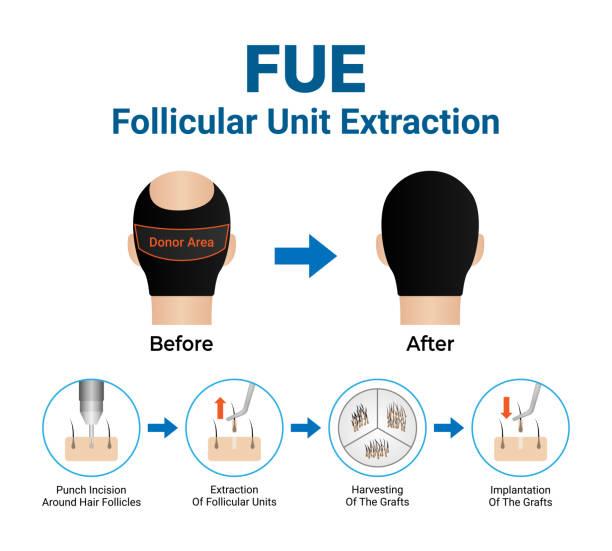
A small bald or visibly depleted area at the crown can sometimes be treated without transplanting the entire vertex. For suitable patients, FUE Hair Transplant in Dubai can place individual follicular units into a localized crown-deficient region while preserving the surrounding native hair and maintaining the natural direction of the vertex.
Isolated crown loss needs a different strategy from widespread thinning. The clinician must first determine why the area is depleted, whether surrounding follicles remain stable, how the defect relates to the natural crown whorl, and whether the available donor hair can restore the area without creating an obvious density difference.
What Makes Isolated Crown Loss Different
An isolated crown defect is a relatively localized area where hair density has fallen significantly while nearby scalp may retain considerably more coverage. The boundaries can be sharply visible or gradually blend into surrounding thinning.
A Small Area Does Not Always Mean a Simple Procedure
The physical size of the bald area is only one part of the assessment. The surgeon also considers its depth within the vertex, surrounding hair density, shaft thickness, scalp-to-hair contrast, and the direction of existing growth.
A small defect surrounded by dense hair can actually require particularly careful placement because any difference in direction or density may be noticeable.
The Cause Needs to Be Considered
Localized crown loss can occur in different circumstances, including patterned hair loss, previous surgery, trauma, scarring, or other scalp conditions. A transplant plan should not be created until the underlying cause and stability of the area have been evaluated.
If active disease or progressive follicular damage is suspected, the appropriate management may differ from straightforward graft placement.
How FUE Can Fill a Localized Crown Defect
FUE involves extracting individual follicular units from a suitable donor region and implanting them into prepared recipient sites. In an isolated crown case, the procedure can be concentrated around the deficient area rather than automatically treating the surrounding scalp.
Recipient Mapping Defines the Treatment Boundary
The clinician can map the transition between the depleted region and the surrounding native hair. This helps determine where grafts are actually needed and where existing follicles already provide adequate coverage.
The boundary should not necessarily be treated as a perfect circle. Crown loss often develops irregularly, and the recipient design should follow the patient's individual pattern.
Placement Must Blend With Existing Growth
Crown hair changes direction around the vertex. Grafts therefore need to be angled and oriented according to the surrounding growth rather than inserted in a uniform forward-facing pattern.
The transition between transplanted and native follicles is especially important when only a small area is being treated.
Assessing the Existing Hair Around the Crown
The hair surrounding an isolated bald spot can strongly influence the treatment plan. Dense, stable native hair may provide an effective visual frame for the transplanted region.
Miniaturization Can Expand the Real Treatment Area
A crown may look like a small bald patch while the surrounding hairs are already becoming thinner. Magnified examination can reveal miniaturized follicles beyond the visibly empty center.
This distinction prevents the treatment plan from being based solely on what appears completely bald under ordinary lighting.
Stable Native Hair Can Reduce Graft Requirements
When surrounding follicles remain healthy and terminal, the procedure may focus on the true deficient zone. Existing hair can provide much of the background coverage, allowing transplanted follicles to concentrate on the area where scalp visibility is greatest.
This is different from attempting to reconstruct a broadly thinning crown from scratch.
Choosing Grafts for a Localized Crown Area
The composition of donor grafts matters when restoring a small vertex defect. Follicular units should be selected and positioned according to their hair count, caliber, and compatibility with the recipient region.
Matching Hair Characteristics
A noticeable difference between transplanted and native hair can compromise the visual integration of a small repair. Donor characteristics such as shaft diameter, texture, and follicular grouping should therefore be considered.
When possible, graft selection should complement the existing hair rather than simply maximizing the number of hairs placed into the defect.
Density Needs to Transition Gradually
A localized bald area may require more density in its center and progressively softer placement toward the surrounding native hair. This avoids creating a sharply defined transplanted island.
The objective is continuity, not an artificial border between old and new follicles.
Understanding the Crown Whorl
The vertex has a distinctive growth pattern that differs from the frontal scalp. Hair commonly radiates or spirals around a central point, with changes in angle occurring across relatively short distances.
Direction Is as Important as Density
A graft can survive and still look unnatural if its direction conflicts with surrounding hair. During recipient-site creation, the surgeon needs to reproduce the orientation appropriate to the patient's individual whorl.
This is why crown transplantation requires anatomical planning rather than simply filling empty skin with evenly spaced grafts.
The Central Point May Remain Naturally Visible
Even a healthy crown can show some scalp at the center of the whorl, depending on hair characteristics and lighting. Trying to eliminate every trace of scalp may require unnecessary grafts.
A realistic restoration aims for natural visual coverage rather than an artificially solid appearance under every lighting condition.
When a Localized Crown Transplant May Be Considered
FUE may be considered when the isolated loss is stable, the donor area contains suitable follicles, and the recipient tissue can support transplantation.
Previous Hair Transplant Gaps
Some patients develop small areas of reduced density after an earlier transplant. The issue may result from the original design, incomplete coverage, graft loss, or subsequent native-hair changes.
A corrective assessment should determine whether the problem is truly localized before additional grafts are allocated.
Localized Non-Scarring Loss
If a small area has lost hair while the surrounding scalp remains relatively stable, the cause and duration of the loss become important. Transplantation is generally considered only when the recipient environment is appropriate and the follicles are unlikely to recover through another treatment approach.
Stable Scar-Related Defects
Scalp scars can create localized areas without normal follicular growth. These cases require additional assessment because scar tissue can differ from healthy scalp in vascularity and tissue characteristics.
The treatment strategy must account for the condition of the recipient tissue rather than assuming that a standard crown procedure will apply.
Why the Donor Area Still Matters
A small crown defect may appear to require only a modest restoration, but donor planning remains important. The clinician should consider the patient's overall hair-loss pattern rather than treating the current defect in isolation.
Future Frontal or Mid-Scalp Loss
A patient with a localized crown problem may later develop thinning elsewhere. Using donor follicles today should therefore be balanced against potential future requirements.
The treatment plan should preserve flexibility wherever possible.
Donor Quality Affects the Visual Result
Hair caliber and follicular composition can influence how much coverage a limited number of grafts creates. A smaller number of favorable grafts may have a different visual effect from the same number of very fine follicles.
This is why donor evaluation should include quality as well as quantity.
What Can Make an Isolated Crown Defect Look Larger?
The visible size of a crown defect can change with lighting, hair length, styling, and moisture. Bright overhead lighting is particularly effective at revealing scalp between fine hairs.
Hair Contrast Changes Visibility
When hair is dark and the scalp is lighter, even moderate spacing between follicles may appear pronounced. Short or wet hair can make this contrast more noticeable.
A clinical assessment should distinguish true density loss from temporary changes in how the crown is being viewed.
Hair Length Can Conceal or Reveal the Area
Longer surrounding hair may cover a small defect, while a short haircut can expose it. Patients should therefore describe how the area behaves under different hairstyles when discussing treatment goals.
Recovery After Crown FUE in Dubai
The crown is exposed to the same environmental considerations as other transplanted scalp areas. During early healing, patients should follow their surgeon's instructions regarding washing, physical activity, scalp contact, and sun exposure.
Dubai's strong sunlight and high outdoor temperatures make postoperative scalp protection particularly relevant. Moving frequently between hot outdoor conditions and air-conditioned environments can also affect scalp comfort during recovery.
Patients should avoid trying to accelerate shedding or regrowth. Transplanted hair commonly passes through a temporary shedding phase before new growth becomes progressively more apparent.
What Patients in Dubai Should Do Next
Someone with a small crown bald spot should first establish whether the loss is genuinely isolated. A detailed assessment can examine the defect's dimensions, surrounding follicular density, miniaturization, donor characteristics, tissue condition, and the direction of the natural vertex pattern.
The next step is to determine whether grafts are appropriate and how they should transition into the surrounding hair. A focused hair restoration assessment can help distinguish a localized crown problem from a wider pattern that may require a different long-term strategy.
Questions to discuss during consultation include:
Can a small crown bald spot be treated with FUE?
Yes, selected stable localized defects may be treated with targeted follicular-unit placement.
Does isolated crown loss always require a large number of grafts?
No. The requirement depends on the defect's size, surrounding density, hair characteristics, and desired coverage.
Can transplanted grafts blend with existing crown hair?
They can when recipient sites follow the natural vertex direction and graft characteristics are appropriately matched.
Could the surrounding crown thin later?
Yes. If the surrounding native follicles are susceptible to ongoing pattern loss, future progression should be considered during initial planning.
The Strategic Investment
Isolated crown loss can be a focused restoration problem, but its apparent simplicity can be misleading. The clinician needs to distinguish a genuinely localized defect from early diffuse vertex miniaturization and then design graft placement around the patient's natural crown anatomy.
For suitable candidates, targeted FUE can add density while preserving the visual continuity of the surrounding hair. Patients considering treatment in Dubai can discuss their individual donor and recipient characteristics with Tajmeels Clinic before deciding whether localized crown restoration is appropriate.

 English
 Arabic
 French
 Spanish
 Portuguese
 Deutsch
 Dutch
Dutch
 Italiano
 Russian
 Romaian
 Portuguese (Brazil)
 Greek
Greek
