


 About Urh Social
 Terms of Service
 Política de Privacidade
 Contact
Virtual Receptionist: What It Is, How It Works, Costs, Benefits & How to Choose One
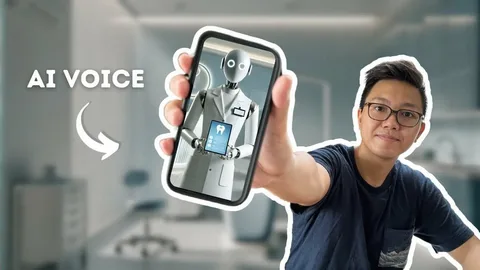
A virtual receptionist is a remote service that answers business calls, handles customer enquiries, takes messages, books appointments and routes calls without requiring a receptionist to sit at your physical front desk. It can be operated by a human, AI, or a combination of both.
The important part is not where the receptionist sits. It is what happens when your phone rings. If your team is busy, on another call, serving a customer or working after hours, a virtual receptionist can make sure the caller still gets a professional response instead of voicemail.
What Is a Virtual Receptionist?
A virtual receptionist is essentially your business's front desk delivered remotely.
Instead of hiring someone to sit in your office and answer the phone, you use an external service or software to handle incoming calls on your behalf.
A caller might hear:
“Thanks for calling ABC Plumbing. How can I help you today?”
The receptionist can then determine why the person is calling and follow the instructions you have provided.
For example, the receptionist might:
- Answer the call
- Ask what the customer needs
- Answer common questions
- Take the caller's details
- Book an appointment
- Reschedule an existing appointment
- Qualify a new lead
- Transfer an important call
- Take a detailed message
- Send the conversation details to your team
Modern virtual receptionist services can be human-powered, AI-powered or hybrid. That distinction matters because the experience, availability, pricing and capabilities can be very different between the three models.
What Does a Virtual Receptionist Do?
A virtual receptionist can perform many of the same front-desk tasks as an in-house receptionist.
1. Answer Incoming Calls
The most basic job is making sure someone answers when your business phone rings.
This can be particularly useful when employees are:
- Serving customers
- Driving between jobs
- Working on-site
- In meetings
- Handling several customers at once
- Away from the office
- Working outside normal business hours
For a small business, one missed call can mean more than one missed conversation. It could be a new customer who simply calls another company instead.
A 2025 CallRail survey of 1,000 U.S. consumers found that 78% said they had taken their business elsewhere after failing to reach a company by phone. The survey also found that 82% said they would call a competitor if a business did not answer.
The figures come from a consumer survey rather than a universal measurement of all businesses, but they illustrate why call answering remains an important customer-experience issue.
2. Take Messages
If a caller needs someone who is unavailable, the receptionist can collect:
- Name
- Phone number
- Reason for calling
- Preferred callback time
- Relevant service or product information
The message can then be sent to the appropriate team member.
3. Book Appointments
A more advanced virtual receptionist can do more than take a booking request.
If connected to your calendar, it may be able to check availability and schedule an appointment while the customer is still on the phone.
That difference is important.
Message-taking:
“John wants an appointment next Thursday. Please call him back.”
Appointment booking:
“Thursday at 2:00 PM is available. Would you like me to book that for you?”
The second approach removes an extra step for both the customer and your team.
4. Answer Frequently Asked Questions
A virtual receptionist can be trained or configured to answer routine questions about:
- Opening hours
- Services
- Locations
- Pricing
- Availability
- Booking procedures
- Policies
- General product information
The quality depends heavily on how accurately the system is configured and how clearly your business information is provided.
5. Transfer Calls
Not every call should be handled automatically.
A good receptionist should know when the caller needs a person.
For example:
“This sounds like something our accounts team should help with. I'll connect you now.”
This escalation step is especially important for complaints, unusual requests, sensitive situations and conversations that require human judgement.
How Does a Virtual Receptionist Work?
The process is simpler than it sounds.
Step 1: Your customer calls your business
The customer uses your normal business number.
Depending on the provider, your existing number may be forwarded to the receptionist service or connected directly through your phone system.
Step 2: The virtual receptionist answers
The receptionist answers using your business name and your preferred greeting.
Step 3: The caller explains what they need
The receptionist identifies the purpose of the call.
For a human service, this is handled by a remote employee.
For an AI receptionist, speech recognition and conversational AI interpret what the caller says.
Step 4: The receptionist takes action
Depending on the request, it may:
- Answer a question
- Take a message
- Book an appointment
- Capture a lead
- Transfer the call
- Collect additional information
Step 5: Your team receives the information
Depending on the provider, information can be delivered through email, SMS, a dashboard, CRM, calendar or another connected system.
The important question when comparing providers is therefore not simply:
“Does it answer calls?”
Ask:
“What can it actually complete during the call?”
Human vs AI vs Hybrid Virtual Receptionist
The phrase virtual receptionist can describe several different services.
| Type | Who answers? | Main strength | Main limitation |
|---|---|---|---|
| Human virtual receptionist | Remote employee | Nuance and human judgement | Staffing and capacity |
| AI virtual receptionist | AI voice software | 24/7 availability and scalability | Needs clear rules and escalation |
| Hybrid | AI + human | Combines automation with human support | More complex setup |
Human Virtual Receptionist
A human receptionist is a real person working remotely.
This model can be useful when conversations require empathy, judgement or flexibility.
For example, a caller with a complicated complaint may be easier for a trained person to handle directly.
The trade-off is that human services have staffing limitations. Availability, call volume and after-hours coverage can affect the price and service.
AI Virtual Receptionist
An AI virtual receptionist uses conversational voice technology to answer calls.
Modern AI receptionists can understand natural speech rather than forcing callers through a simple “press 1, press 2” menu.
They can also be available around the clock and handle multiple calls without adding another employee for every increase in call volume.
Hybrid Virtual Receptionist
A hybrid model uses AI for routine calls and humans for calls that need more judgement.
For many businesses, this can be a practical operating model:
AI handles the volume → Human handles the exceptions.
The goal is not to make every call automated. The goal is to make sure the right caller reaches the right level of support.
Virtual Receptionist vs Answering Service
These terms are often used interchangeably, but they can describe different levels of service.
A traditional answering service may primarily:
- Answer calls
- Take messages
- Forward information
A virtual receptionist may go further by:
- Booking appointments
- Qualifying leads
- Answering business-specific questions
- Routing calls
- Managing overflow
- Following specific call-handling instructions
The names used by providers are not always consistent, so look at the actual features rather than relying on the label.
A simple question can reveal the difference:
“If a customer calls to book an appointment, can your receptionist actually book it into my calendar?”
If the answer is no, you are probably dealing with a more basic message-taking service.
Virtual Receptionist vs Virtual Assistant
A virtual receptionist is primarily focused on front-desk communication.
A virtual assistant is usually broader.
A virtual assistant may handle:
- Calendar administration
- Data entry
- Research
- Documents
- Customer administration
- Other back-office tasks
A virtual receptionist is more focused on the customer-facing phone experience.
If your main problem is missed calls, look at receptionist services.
If you need someone to manage several administrative responsibilities throughout the day, a virtual assistant may be a better fit.
What Are the Benefits of a Virtual Receptionist?
1. Fewer Missed Calls
The obvious benefit is simple: someone answers when your employees cannot.
This can be particularly valuable for trades, healthcare, professional services, real estate and other businesses where employees are often away from their phones.
2. Professional Call Handling
A trained receptionist can answer using your business name and follow your preferred call process.
This creates a more consistent experience than sending every unanswered call directly to voicemail.
3. After-Hours Coverage
Depending on the service, calls can be handled outside your normal working hours.
For an AI receptionist, 24/7 availability can be built into the service without requiring overnight staff.
4. Appointment Booking
Direct booking can reduce the back-and-forth between customers and employees.
5. Lead Qualification
A receptionist can ask questions before passing a lead to your sales team.
For example, a property business might ask:
- Are you buying or selling?
- Which suburb are you interested in?
- What is your approximate budget?
- When are you looking to move?
Your sales team receives a more useful enquiry instead of a phone number and a vague message.
6. Better Focus for Employees
Your employees can focus on their primary responsibilities rather than repeatedly stopping work to answer routine calls.
For a plumber, that might mean finishing a job.
For a dentist, it might mean treating a patient.
For an accountant, it might mean completing client work.
How Much Does a Virtual Receptionist Cost?
There is no single virtual receptionist price because the category includes different service models.
Current 2026 market guides show substantial variation between AI, human and hybrid services. One current guide places AI receptionist services broadly around $100–$400 per month and live virtual receptionist services from roughly $200 to $1,000+ depending on coverage and usage. These are market-level estimates rather than universal prices.
Pricing may be based on:
- Monthly subscription
- Number of calls
- Call minutes
- Per-call charges
- Number of users
- After-hours coverage
- Appointment booking
- Call transfers
- Integrations
- Customisation
Watch the Overage Charges
A plan advertised at a low monthly price may include only a limited number of minutes or calls.
For example:
Plan: $100/month
Included: 100 minutes
Overage: Additional charges after 100 minutes
If your business suddenly receives twice as many calls, your actual bill can be much higher.
Before signing up, ask:
“What will I actually pay if my call volume doubles next month?”
That question is often more useful than asking only for the advertised starting price.
Who Uses a Virtual Receptionist?
Virtual receptionists can work across many industries.
Trades
Plumbers, electricians, builders, HVAC companies, cleaners and other service businesses can use them while employees are working on-site.
Healthcare
Medical practices, dental clinics and other healthcare businesses can use reception services for routine enquiries and appointment requests.
Sensitive information requires additional care, particularly when calls are recorded or transcripts are stored.
Real Estate
Real estate businesses can use virtual receptionists to capture buyer and seller enquiries and qualify leads.
Legal Services
Law firms can use receptionists for initial enquiries, intake questions and appointment scheduling, with appropriate escalation for matters requiring professional judgement.
Accounting
Accountants can use virtual receptionists to capture new-client enquiries, schedule consultations and answer routine questions about services.
Professional Services
Consultants, agencies and other professional businesses can use reception coverage when employees are busy with client work.
Are Virtual Receptionists Available 24/7?
Some are, and some are not.
This is one of the most important questions to ask before purchasing.
Human virtual receptionist services depend on staffing. Some provide 24/7 coverage, while others focus on business hours or charge differently for extended coverage.
AI receptionists can provide continuous coverage because they do not depend on employee shifts.
If after-hours calls are important to your business, specifically confirm:
- Nights
- Weekends
- Public holidays
- Overflow calls
- Multiple simultaneous calls
Do not assume “virtual” automatically means “24/7”.
What Are the Limitations of a Virtual Receptionist?
A good buying guide should discuss the problems as well as the benefits.
AI Can Make Mistakes
AI systems can misunderstand unusual wording, noisy environments, accents or requests outside their configured knowledge.
That is why businesses should test the system with real conversations.
Humans Have Capacity Limits
A human receptionist cannot answer an unlimited number of calls simultaneously.
If five customers call at exactly the same time, staffing capacity matters.
Not Every Call Should Be Automated
Complex complaints, sensitive situations, negotiations and high-stakes decisions may require a human.
The best setup is usually one where the system knows its limits.
Poor Setup Creates Poor Results
Giving a receptionist incomplete information and expecting it to understand your entire business is unrealistic.
Before launch, provide accurate:
- FAQs
- Services
- Opening hours
- Pricing rules
- Appointment rules
- Transfer instructions
- Escalation procedures
Privacy and Security: What Should Businesses Check?
A virtual receptionist may handle names, phone numbers, addresses, appointment details, recordings and other personal information.
In Australia, the OAIC notes that personal information can include identifiable voice recordings.
In the UK, the ICO advises that organisations recording calls should inform callers that recording is taking place and explain why, with appropriate privacy information.
Businesses should therefore ask providers:
- Are calls recorded?
- Are transcripts created?
- Where is information stored?
- How long is it retained?
- Who can access it?
- Can recordings be deleted?
- Is customer data used to train models?
- What security controls are in place?
- What happens if there is a security incident?
For AI systems generally, NIST's AI Risk Management Framework provides a useful framework for thinking about trustworthy AI, including governance, measurement and risk management.
These questions are especially important for healthcare, financial, legal and other businesses handling sensitive information.
What About Outbound Calls?
There is an important distinction between answering inbound calls and making automated outbound calls.
If your virtual receptionist simply answers customers who call your business, that is different from using an automated system to make marketing calls.
For example, Australian telemarketing rules apply to calls intended to sell, advertise or promote goods or services. ACMA also operates the Do Not Call Register and publishes rules governing telemarketing activity.
The same principle applies internationally: outbound automated marketing calls can have additional legal requirements.
If you plan to use voice AI for outbound marketing, check the rules that apply in the countries and jurisdictions you call.
How to Choose the Right Virtual Receptionist
Do not choose a service simply because its website says “AI-powered”, “human-like” or “24/7”.
Test what actually happens during a call.
Use This 10-Point Checklist
1. Who answers the phone?
Human, AI or hybrid?
2. How quickly does it answer?
Call the number yourself.
3. Can it understand natural conversation?
Do not follow the script. Ask questions the way your customers actually speak.
4. Can it book appointments?
Check whether it books directly into your real calendar.
5. Can it transfer calls?
Ask to be transferred to a real team member.
6. Can it qualify leads?
Test whether it asks the right questions and records the answers correctly.
7. What happens when it does not know?
A good system should clarify or escalate rather than confidently invent an answer.
8. How does pricing work?
Understand the included calls, minutes, overages and add-ons.
9. How is customer data handled?
Check recording, storage, access and retention policies.
10. Can you test it with real calls?
A real-world trial is more useful than a polished five-minute demo.
A Simple Real-World Example
Imagine a small electrical business.
During the day, the electrician is working inside a customer's home.
The phone rings.
Without a virtual receptionist
The call goes unanswered.
The customer leaves no voicemail.
They search Google again and call another electrician.
With a virtual receptionist
The call is answered.
The receptionist asks:
“What electrical work do you need help with?”
The caller explains that they need several power points installed.
The receptionist collects the location, preferred date and contact details.
If the system is connected to the business calendar, it can offer an available appointment.
The electrician receives the information and knows what the enquiry is about before speaking with the customer.
The technology is not replacing the electrician.
It is protecting the conversation that could lead to the next job.
Where Does Hello22 AI Fit?
Hello22 AI is an AI-powered virtual receptionist designed for businesses that want phone coverage without requiring a person to answer every call manually.
Hello22 can answer incoming calls, handle routine enquiries, book appointments, capture and qualify leads, answer business FAQs and transfer calls when human assistance is needed. Its current product information also describes 24/7 availability and integrations with business workflows.
The important distinction is that Hello22 is an AI virtual receptionist, not a human receptionist working remotely.
If you want to understand the technology behind this model, see how AI receptionists work.
For businesses comparing the broader category, the company's guide to what a virtual receptionist is provides a more detailed breakdown of human, AI and hybrid models.
Is a Virtual Receptionist Worth It?
The answer depends on the problem you are trying to solve.
A virtual receptionist can make sense if:
- You regularly miss calls
- Your staff are frequently away from the phone
- You receive enquiries after hours
- Your business depends on appointments
- Your team spends too much time answering repetitive questions
- You want better lead capture
- You need overflow call coverage
It may not make sense if you receive very few calls or if nearly every conversation requires a specific employee's personal judgement.
The best way to find out is to look at your actual call history.
Ask yourself:
How many calls did we miss last month?
Then ask:
How many of those callers were potential customers?
That gives you a much better starting point than choosing a receptionist service because it has the most features.
Frequently Asked Questions About Virtual Receptionists
What is a virtual receptionist?
A virtual receptionist is a remote service that handles business calls and front-desk tasks without requiring someone to sit physically in your office. It can be operated by a human, AI or a combination of both.
Is a virtual receptionist a real person?
It depends on the provider. Traditional services generally use remote human receptionists, while newer AI virtual receptionist services use conversational voice software. Hybrid services combine both.
What can a virtual receptionist do?
Depending on the service, it can answer calls, take messages, answer FAQs, book appointments, qualify leads, transfer calls and send call information to your team.
How much does a virtual receptionist cost?
Pricing varies significantly. Human services, AI services and hybrid solutions use different pricing models, including monthly plans, per-minute charges and per-call pricing. Current 2026 market guides show prices ranging from relatively low-cost AI services to significantly higher-cost human coverage.
Can a virtual receptionist book appointments?
Yes. Many services can book appointments, but you should confirm whether they actually access your calendar and create the appointment or simply take a booking request for someone else to confirm.
Can a virtual receptionist answer calls 24/7?
Some can. AI services commonly provide continuous availability, while human services depend on staffing and the provider's coverage plans.
Is an AI receptionist the same as a virtual receptionist?
Not exactly. A virtual receptionist is the broader category. An AI receptionist is one type of virtual receptionist that uses AI software rather than a human operator.

 English
 Arabic
 French
 Spanish
 Deutsch
 Turkish
 Dutch
Dutch
 Italiano
 Russian
 Romaian
 Portuguese (Brazil)
 Greek
Greek
