


 About Urh Social
 Terms of Service
 Πολιτική Ιδιωτικότητας
 Contact
Can Hair Transplant in Sharjah Restore a Scarred Scalp Well
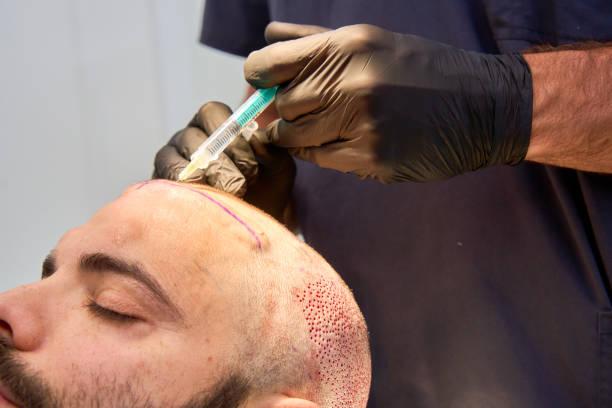
Scalp scarring can permanently interrupt normal hair growth and create a visible area where follicles no longer produce hair. In selected cases, Hair Transplant in Sharjah can restore hair coverage over suitable scar tissue, but success depends heavily on the type of scar, its maturity, blood supply, surrounding skin quality, and the availability of healthy donor follicles.
Scar restoration is technically different from treating ordinary pattern hair loss. The recipient tissue may have altered elasticity and vascularity, so the treatment plan needs to consider the biological condition of the scar before determining whether graft placement is appropriate.
Why Scalp Scars Require Different Planning
A scar forms when normal tissue is replaced by fibrous tissue after injury, surgery, inflammation or another damaging event. If the original follicular structures were destroyed, hair may not naturally return to the affected area.
Common Causes of Hair-Bearing Scalp Scars
Scarring alopecia can follow surgical procedures, accidents, burns, infections or inflammatory scalp conditions. A linear scar may appear after surgery, while trauma can create irregular areas of hair loss.
The shape and depth of the scar matter because they influence the size and accessibility of the recipient area.
Scar Tissue Is Not Normal Scalp Tissue
Healthy scalp skin contains structures that support follicular growth and provide a vascular environment for implanted grafts. Scar tissue can differ in thickness, elasticity and blood supply.
These differences mean that graft survival and growth cannot automatically be assumed to match those of non-scarred scalp.
The Scar Must Be Clinically Assessed
A visible scar does not provide enough information by itself. The clinician may need to examine its maturity, texture, thickness, pigmentation, vascular characteristics and relationship with surrounding tissue.
The cause of the scar is also relevant because an active underlying condition may need to be addressed before transplantation is considered.
When Hair Transplant in Sharjah May Be Considered
Scar transplantation is generally considered only after the recipient area has been assessed as suitable for implantation.
Mature and Stable Scarring
A stable scar is different from an actively changing wound or inflammatory process. The tissue should generally be sufficiently healed before elective transplantation is considered.
The appropriate timing depends on the cause, severity and clinical characteristics of the scar rather than a universal waiting period.
Adequate Donor Hair
The recipient area may be small, but the procedure still requires healthy follicular units from a suitable donor region.
Donor density, hair caliber, follicular-unit composition and future hair-loss risk should be evaluated before allocating grafts to scar coverage.
Realistic Coverage Expectations
Scar tissue may not behave like normal scalp after implantation. Patients should therefore understand that restoration can improve the appearance of a scar without necessarily recreating the same density found in unaffected scalp.
The expected result depends on the characteristics of both the scar and the donor follicles.
Different Types of Scars Create Different Challenges
Not all scalp scars should be treated with the same transplantation strategy.
Linear Surgical Scars
A narrow surgical scar may create a clearly defined strip of hair loss. When surrounding tissue is healthy and the scar is suitable, targeted graft placement may be considered.
The restoration needs to blend into hair growing on both sides so that the transition does not appear artificially concentrated.
Traumatic Scars
Accidental injuries can produce irregular scars with varying thickness and direction. Some areas may have relatively healthy tissue next to portions with more significant structural damage.
Recipient-site planning may therefore need to follow the irregular shape of the scar rather than treating it as a uniform surface.
Burn-Related Scarring
Burn scars can vary considerably in depth and tissue quality. More extensive scarring may involve changes that make transplantation more challenging.
A detailed clinical assessment is particularly important when the scar is broad, highly fibrotic or associated with substantial tissue alteration.
Scars From Previous Hair Procedures
Previous scalp procedures can sometimes leave localized areas where hair growth is reduced. If the surrounding donor supply remains adequate, targeted restoration may be possible depending on the tissue condition.
The previous procedure and any existing scalp changes should be considered during planning.
Recipient-Site Assessment Is Central to Scar Restoration
The recipient area determines whether transplanted follicles have an appropriate environment in which to establish growth.
Evaluating Tissue Quality
Scar thickness and elasticity can affect how recipient sites are created. Fibrotic tissue may respond differently to instrumentation than normal scalp.
The clinician must therefore assess whether the tissue can accommodate grafts appropriately without unnecessary trauma.
Considering Blood Supply
Follicular growth requires a suitable biological environment. Scar tissue may have altered vascular characteristics, which can influence graft establishment.
This is one reason scar transplantation should not be approached as a simple extension of routine hairline or crown restoration.
Mapping Healthy and Scarred Areas
A scar can contain regions with different tissue qualities. Some portions may be more suitable for implantation than others.
Detailed mapping allows the treatment area to be approached selectively rather than assuming that every square centimeter of scar can support the same number of grafts.
Graft Planning for Scarred Scalp
Graft allocation should reflect both the size of the scar and the limitations of the recipient tissue.
| Planning factor | Why it matters | Treatment consideration |
|---|---|---|
| Scar size | Determines potential recipient area | Establishes graft requirements |
| Scar thickness | Reflects tissue characteristics | Influences site creation |
| Scar maturity | Indicates healing status | Helps determine treatment timing |
| Vascularity | Supports graft establishment | Important for recipient assessment |
| Donor density | Limits available grafts | Guides extraction strategy |
| Hair caliber | Affects visual coverage | Helps set expectations |
| Surrounding hair | Provides natural camouflage | Guides blending and direction |
| Future hair loss | May alter surrounding coverage | Supports long-term planning |
The objective is to use donor follicles where they can provide meaningful coverage without compromising future restoration options.
How Grafts Are Integrated Around Scar Tissue
Scar restoration requires attention to the relationship between implanted follicles and the surrounding native hair.
Matching Existing Hair Direction
Hair surrounding a scar may grow in different directions depending on its location. Recipient sites should reflect those patterns so that transplanted follicles do not stand out from neighboring hair.
Creating a Gradual Density Transition
A concentrated block of grafts can make a scarred area look visibly different from its surroundings. Strategic spacing and distribution can help create a more gradual transition.
The appropriate density depends on the tissue and the characteristics of the available grafts.
Selecting Suitable Follicular Units
Single-hair units can help with soft transitional areas, while multi-hair units may contribute additional coverage where appropriate.
The exact graft composition depends on the donor region and the position of the scar.
FUE and Other Implantation Approaches
The transplantation method should be selected according to the patient's donor anatomy and recipient characteristics.
FUE-Based Extraction
Follicular unit extraction allows individual grafts to be harvested from the donor region. For scar restoration, the extraction strategy should preserve the appearance and future potential of the donor area.
The number of grafts required may be relatively limited for a small scar, but donor preservation remains important.
Controlled Recipient-Site Creation
Creating sites within scar tissue can require greater precision than working with normal scalp. Tissue resistance, thickness and elasticity can differ considerably.
Controlled placement helps establish the intended direction and position of each graft.
Direct Implantation Techniques
Direct implantation may be used in suitable cases to place prepared follicular units into planned recipient sites. The appropriateness of any technique depends on tissue characteristics and the clinician's treatment strategy.
Technique terminology should not substitute for evaluation of the scar itself.
Why Previous Scar Treatment Matters
The history of the scar can provide important information during consultation.
Previous Surgery
Surgical scars may have a predictable shape but can differ in depth and tissue quality. Details about the original operation can help explain the location and characteristics of the affected area.
Prior Inflammation or Infection
A scar resulting from an inflammatory or infectious process may require particular attention to whether the underlying problem is currently active.
Transplantation should not be used simply to cover tissue that has not been appropriately evaluated.
Previous Hair Restoration
If the scar followed an earlier hair procedure, the remaining donor supply and existing graft distribution should be mapped before additional extraction is planned.
This helps prevent unnecessary depletion of the available donor area.
Recovery After Scarred-Scalp Transplantation
The recovery process can include temporary redness, swelling, crusting and sensitivity around the recipient and donor areas.
Scar tissue may have different healing characteristics from unaffected scalp, so postoperative instructions should be followed specifically rather than assuming that recovery will be identical to a routine transplant.
Patients travelling between Sharjah and Dubai should also plan transportation, work and outdoor activities around postoperative guidance. Heat, strong sunlight and excessive sweating can make early scalp care more demanding.
Questions About Hair Transplantation on Scars
Can hair be transplanted into a scalp scar?
Yes, selected scars may be suitable for transplantation after assessment of tissue quality, maturity and blood supply.
Will transplanted hair grow normally in scar tissue?
Growth can occur, but scar tissue may provide a less predictable environment than healthy scalp, so results can vary.
Does every scalp scar qualify for transplantation?
No. Active, unstable or unsuitable scar tissue may require further evaluation or treatment before transplantation is considered.
Can one procedure completely hide a scar?
Not necessarily. The degree of camouflage depends on scar characteristics, donor hair, recipient tissue and surrounding hair density.
Is donor hair important for scar restoration?
Yes. Healthy donor follicles are required, and their quantity and quality help determine how much coverage can realistically be achieved.
Preparing for a Scar Restoration Consultation
A consultation should begin with the cause and history of the scar rather than immediately calculating graft numbers.
The clinician can examine scar maturity, tissue quality, surrounding hair, donor density and potential recipient zones. Previous procedures, injuries or scalp conditions should also be disclosed because they can influence the treatment strategy.
Photographs showing how the area has changed over time may provide useful context, particularly when the scar developed after an injury or procedure.
For patients exploring individualized hair restoration, Tajmeels Clinic can provide a setting for discussing donor assessment, recipient suitability and the specific characteristics of a scarred scalp.
The Strategic Investment
Scarred-scalp restoration is fundamentally a tissue-quality and graft-planning exercise. The presence of a visible scar does not by itself determine whether transplantation will work; the condition of the tissue, cause of scarring, donor supply and surrounding hair all influence the potential result.
A Hair Transplant in Sharjah may be considered for selected stable scars when the recipient tissue can accommodate grafts and sufficient healthy donor follicles are available. Careful assessment, conservative graft allocation and precise placement can help improve coverage while maintaining realistic expectations about growth in scar tissue.
Patients considering restoration of a scalp scar can discuss the area's history, donor characteristics and recipient suitability with Tajmeels Clinic in Dubai as part of an individualized hair-restoration consultation.

 English
 Arabic
 French
 Spanish
 Portuguese
 Deutsch
 Turkish
 Dutch
Dutch
 Italiano
 Russian
 Romaian
 Portuguese (Brazil)
