


 About Urh Social
 Terms of Service
 Política de Privacidade
 Contact
Wildlife conservation depends on understanding how animals move, interact with their environment, and respond to changing ecosystems. Researchers and conservationists need reliable information to study migration routes, habitat use, breeding behavior, population dynamics, and survival rates. Traditional wildlife monitoring methods, such as direct observation or radio telemetry, often require extensive fieldwork and can provide only limited snapshots of animal activity.
Today, animal gps tracking has transformed wildlife research by providing precise location data over long periods with minimal disturbance to animals. This technology has become an essential tool for ecological studies, endangered species conservation, and habitat management.
Understanding GPS Animal Trackers :
A gps animal tracker is a specialized tracking device designed to determine an animal’s geographic location using Global Positioning System (GPS) satellites. These compact devices are safely attached using collars, harnesses, or species-specific mounting systems that minimize interference with natural movement.
The tracker records location data at pre-set intervals and stores or transmits the information through satellite or cellular communication networks. Researchers can then analyze movement patterns without repeatedly locating the animal in the field.
Modern tracking devices are built to perform reliably in diverse environments, including forests, mountains, wetlands, deserts, grasslands, and marine ecosystems.
Why Accurate Wildlife Monitoring Is Essential ?
Successful conservation begins with reliable information. Accurate wildlife monitoring allows scientists to better understand how animals interact with their habitats and respond to environmental changes.
Wildlife monitoring supports:
- Conservation plannin
- Population management
- Habitat restoration
- Migration studies
- Climate change research
- Human-wildlife conflict mitigation
- Disease monitoring
- Protected area management
Without dependable tracking data, conservation efforts often rely on assumptions rather than measurable scientific evidence.
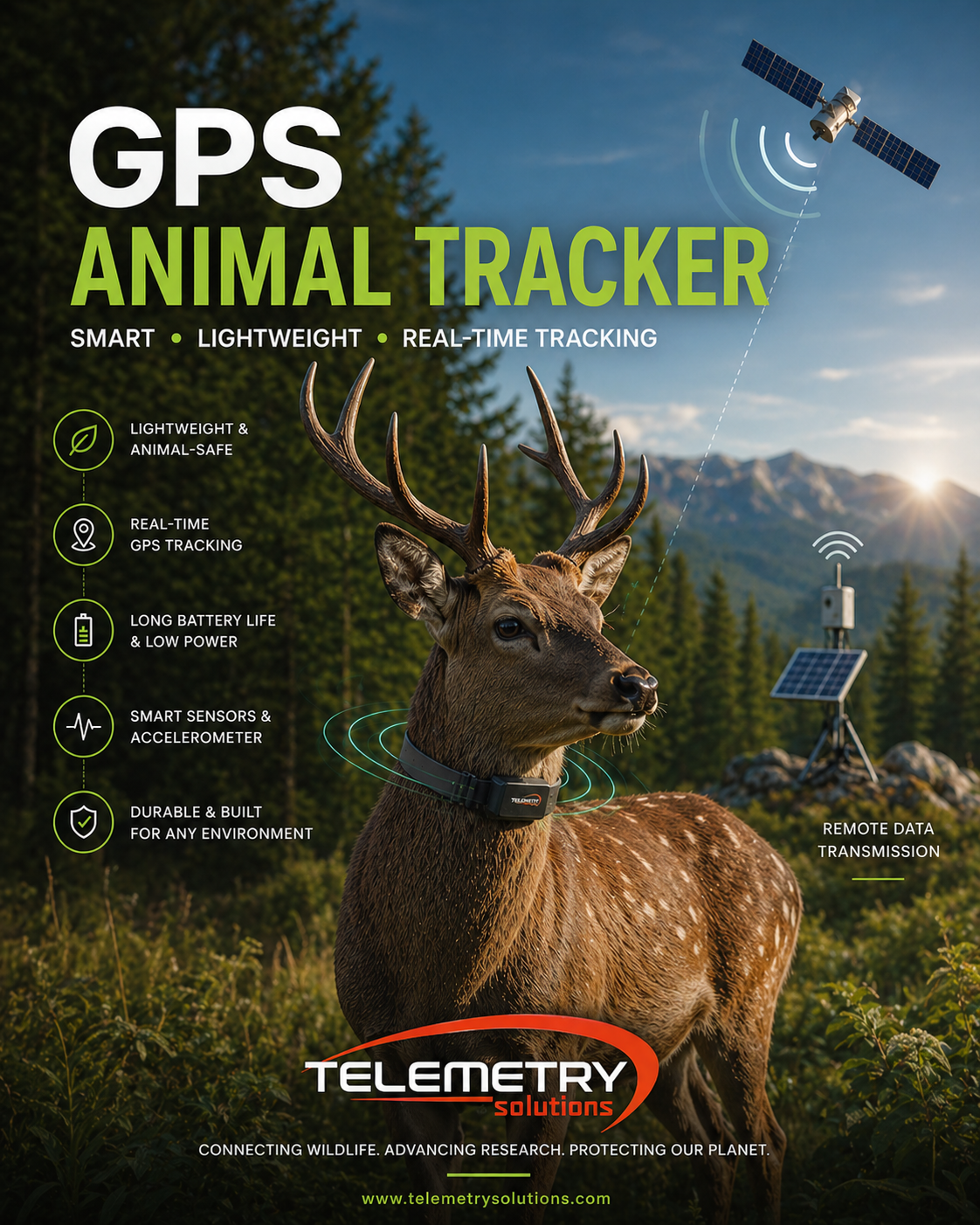

How Animal GPS Tracking Works ?
Modern animal gps tracking combines advanced satellite technology with efficient data collection systems.
GPS Location Acquisition
The tracker receives signals from multiple GPS satellites to determine the animal’s exact position.
Data Recording
Researchers configure how often the device records locations, ranging from every few minutes to several hours depending on study objectives.
Data Transmission
Depending on the model, information is:
- Stored inside the device
- Sent through satellite communication
- Transmitted using GSM cellular networks
Data Analysis
Scientists use specialized software to create movement maps, migration routes, habitat models, and behavioral analyses.
This automated process provides continuous monitoring while reducing manual fieldwork.
Major Benefits of GPS Animal Trackers :
Continuous Wildlife Monitoring
Unlike occasional field observations, GPS tracking provides regular location updates throughout the day and night.
Minimal Human Disturbance
Animals behave more naturally because researchers no longer need frequent close-range observations.
Time and Cost Savings
Remote monitoring significantly reduces travel expenses, labor requirements, and field visits.
Better Research Quality
Larger datasets collected over longer periods improve the reliability of scientific studies.
Wildlife Research Becomes More Efficient :
Traditional wildlife monitoring often required researchers to spend weeks or months locating individual animals.
GPS tracking has dramatically improved research efficiency by allowing scientists to:
- Monitor multiple animals simultaneously
- Receive automated location updates
- Analyze long-term movement patterns
- Reduce field observation time
- Focus on scientific analysis rather than animal searching
This efficiency enables larger research projects while improving data quality.
The Role of GPS Tracking in Conservation :
Reliable movement data supports better conservation decisions.
GPS tracking helps conservation organizations:
Protect Critical Habitats
Researchers identify breeding grounds, feeding areas, and seasonal habitats requiring protection.
Establish Wildlife Corridors
Movement data helps create safe migration pathways between fragmented habitats.
Reduce Human-Wildlife Conflict
Tracking reveals where animals frequently interact with agricultural lands or urban areas.
Support Environmental Policy
Governments use scientific tracking data to guide conservation regulations and land management.
Evaluate Conservation Programs
Researchers measure whether habitat restoration and protection efforts produce positive outcomes.
Features to Look for in a GPS Animal Tracker :
Choosing the right tracker depends on the study species and research objectives.
Important features include:
- High GPS accuracy
- Long battery life
- Lightweight design
- Rugged construction
- Weather resistance
- Remote data transmission
- Flexible recording schedules
- Secure attachment systems
- Reliable communication technology
Selecting appropriate equipment ensures both accurate research and animal welfare.
Ethical Considerations in Wildlife Tracking :
Responsible wildlife research prioritizes animal health and safety.
Researchers carefully consider:
- Appropriate device weight
- Comfortable attachment method
- Short handling periods
- Species-specific behavior
- Ethical approvals
- Regulatory compliance
Professional wildlife studies ensure tracking devices do not significantly affect normal animal behavior.
Technological Advances in GPS Animal Tracking :
GPS tracking technology continues to improve every year.
Recent innovations include:
- Smaller tracking devices
- Solar-powered systems
- Longer battery life
- Improved satellite connectivity
- Enhanced GPS accuracy
- Motion sensors
- Environmental monitoring sensors
- Remote software updates
These developments allow researchers to gather more detailed information while minimizing maintenance.
Why Data Accuracy Matters ?
Small errors in wildlife tracking can lead to incorrect scientific conclusions.
Reliable GPS tracking improves:
- Habitat mapping
- Migration analysis
- Population estimates
- Behavioral research
- Conservation planning
- Ecological modeling
Accurate information ultimately leads to better wildlife management decisions.
Telemetry Solutions: Supporting Wildlife Research
Telemetry Solutions has earned a strong reputation for providing innovative wildlife tracking technologies that support researchers, conservation organizations, universities, and environmental professionals around the world. Their advanced GPS tracking systems are designed to deliver dependable location data across a wide variety of wildlife research applications.
Whether monitoring endangered species, studying migration patterns, or conducting long-term ecological research, Telemetry Solutions offers reliable equipment that helps professionals collect meaningful scientific data with confidence. By focusing on quality, precision, and continuous innovation, we helps advance wildlife conservation through dependable tracking technology.
Best Practices for Successful GPS Tracking Projects
To maximize research success, wildlife professionals should:
- Select the correct tracker for the species
- Schedule appropriate GPS recording intervals.
- Test equipment before deployment.
- Monitor battery performance.
- Regularly review incoming data.
- Follow ethical wildlife handling guidelines.
- Protect collected research data.
- Maintain equipment properly.
These practices improve both research quality and project efficiency.
Frequently Asked Questions (FAQs) :
1. How does animal GPS tracking benefit researchers?
Animal gps provides accurate movement data, helping researchers study migration, habitat use, behavior, and population dynamics with minimal disturbance.
2. Can GPS animal trackers work in remote locations?
Yes. Many professional GPS tracking systems use satellite communication, allowing them to operate effectively in remote environments.
3. Are GPS trackers safe for wildlife?
Yes. Properly designed trackers are lightweight, securely attached, and used following ethical wildlife research standards to minimize impact.
4. Which animals can be monitored using GPS tracking?
GPS tracking is commonly used for mammals, birds, reptiles, marine animals, and many other wildlife species depending on the tracking device.
5. Why is accurate tracking important in conservation?
Accurate tracking helps researchers make informed decisions about habitat protection, migration corridors, endangered species management, and conservation planning.
Conclusion :
By providing precise location information with minimal disturbance to animals, a gps animal tracker helps researchers better understand movement patterns, habitat use, migration routes, and behavioral changes across diverse ecosystems. These insights support stronger scientific research and more effective conservation strategies.
As wildlife faces increasing environmental challenges, reliable tracking technology plays a critical role in protecting biodiversity and guiding informed management decisions.
Click here for more details : https://www.telemetrysolutions.com/gps-animal-tracker/

 English
 Arabic
 French
 Spanish
 Deutsch
 Turkish
 Dutch
Dutch
 Italiano
 Russian
 Romaian
 Portuguese (Brazil)
 Greek
Greek
