Robotic Hair Transplant in Dubai can support a precision-focused FUE strategy when donor follicles, extraction zones, recipient areas, and long-term hair goals need to be coordinated carefully. The value of robotic assistance is not simply automation; it is the controlled integration of follicle assessment, extraction planning, graft preservation, and surgeon-led restoration.
Why Precision Matters in FUE Planning
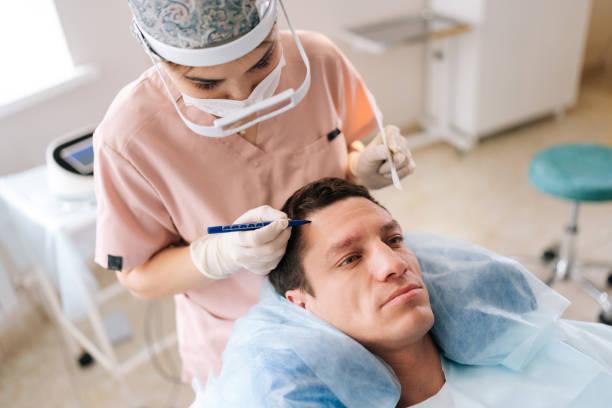
Follicular unit extraction removes individual follicular units from the donor scalp rather than taking a continuous strip of tissue. Because each extraction affects the donor area, planning should begin before any follicles are removed.
The objective is to obtain suitable grafts while maintaining donor density and selecting follicles that match the recipient area's requirements.
FUE Is a Planning Process
Precision begins with understanding the patient's existing hair pattern. A procedure may involve technically successful extraction but still produce an unsatisfactory outcome if the grafts are allocated poorly or the recipient design does not match natural growth.
A complete plan should connect donor characteristics with the intended restoration zones.
The Donor Area Is a Limited Resource
The donor region cannot be treated as an unlimited supply of follicles. Excessive extraction from a concentrated area can create visible depletion even when the recipient result initially appears satisfactory.
A controlled extraction pattern helps maintain a more uniform donor appearance.
Mapping the Donor Area Before Extraction
Donor assessment is one of the foundations of precision FUE planning.
Assessing Density
The donor area should be evaluated for follicular density, hair caliber, follicular-unit composition, and stability.
Two patients with apparently similar donor zones can have very different usable graft supplies because the underlying follicular characteristics differ.
Identifying Suitable Extraction Zones
The most appropriate extraction areas depend on the patient's pattern and expected future hair loss.
Extraction should remain within a clinically appropriate donor region rather than simply targeting the areas with the highest immediate follicle count.
Robotic Hair Transplant in Dubai for Precision FUE Planning
Robotic assistance can help identify and target individual follicular units in suitable candidates. The system's role is to support consistency during extraction while the overall treatment plan remains under clinical supervision.
Follicle Recognition
Hair angle, direction, and follicular-unit characteristics can influence how a graft should be approached.
Accurate recognition is particularly useful when the donor contains follicles growing at different angles or when individual units have varying compositions.
Controlled Extraction
The extraction approach should account for the geometry of each follicular unit. Excessive force or an unsuitable trajectory can increase the risk of follicular injury.
Robotic assistance may contribute to consistency, but patient anatomy still determines how extraction should be performed.
Precision Is More Than Robotic Extraction
The presence of robotic technology does not automatically make a transplant precise.
Recipient Design Still Requires Clinical Judgment
A robot may assist with donor follicle targeting, but decisions about hairline position, crown coverage, density transitions, follicle direction, and graft allocation require individualized assessment.
The recipient area must be designed around facial anatomy and existing hair.
Surgeon Oversight Remains Important
Hair restoration combines technology with surgical judgment. The treatment team must account for donor limitations, follicular anatomy, recipient-site characteristics, and the patient's long-term goals.
Technology should support the clinical plan rather than replace it.
Selecting Grafts for Different Recipient Zones
Not every follicular unit is equally appropriate for every part of the scalp.
Frontal Transition Zones
The frontal hairline generally benefits from finer follicular units that can create a soft transition between forehead and denser hair.
Larger grafts may be more useful behind the transition zone where greater visual coverage is required.
Midscalp Restoration
Midscalp areas often require a balance between density and efficient donor use. Graft allocation should consider how the region connects visually with both the frontal scalp and crown.
Crown Restoration
The crown requires attention to changing hair direction around the whorl. Graft placement should complement existing rotational growth rather than creating an artificial circular pattern.
Recipient-Site Precision
Extraction is only one part of FUE precision. Recipient-site creation determines how transplanted follicles will emerge.
Angle and Direction
The angle of emergence should correspond with the surrounding native hair.
An otherwise healthy graft can look unnatural if it emerges in a visibly different direction from neighboring follicles.
Depth and Spacing
Recipient sites need appropriate depth and spacing for the graft characteristics and scalp anatomy.
Overly dense placement is not automatically better. The aim is to establish a natural distribution that supports visual coverage while respecting tissue limitations.
Planning Around Existing Native Hair
Patients undergoing FUE may still have substantial native hair in the treatment area.
Protecting Viable Follicles
When miniaturized or partially thinning follicles remain, the recipient design should account for their location.
Unnecessary disruption of viable native hair can reduce the overall density benefit of the procedure.
Integrating Transplanted and Native Hair
New follicles should complement existing growth rather than creating an isolated transplanted zone.
This requires attention to hair caliber, direction, spacing, and follicular-unit composition.
Precision FUE for Different Hair Characteristics
Hair structure changes how grafts should be selected and placed.
| Hair characteristic |
Planning implication |
| Fine hair |
May require careful spacing for optical coverage |
| Thick hair |
Can provide stronger coverage with fewer hairs |
| Curly hair |
Requires attention to follicle curvature |
| Straight hair |
Direction and angle may be more visually apparent |
| Low-density donor |
Requires conservative extraction |
| High-density donor |
Provides greater planning flexibility |
| Mixed follicular units |
Allows zone-specific graft allocation |
Minimizing Donor Depletion
A precision approach should protect the donor region as much as possible.
Distributed Extraction
Removing follicles from an appropriately distributed pattern can help maintain a more consistent appearance.
Concentrated extraction may leave visible gaps even when the total number of removed grafts is considered acceptable.
Planning for Future Procedures
Some patients may eventually require additional restoration. Donor planning should therefore account for possible future needs rather than using the entire available reserve during the first procedure.
This is particularly relevant for younger patients or those with progressive hair loss.
Precision Planning for Different Hair Loss Patterns
The FUE plan should change according to the distribution of hair loss.
Frontal Recession
Frontal restoration requires careful hairline design and appropriate allocation of finer grafts.
Diffuse Thinning
Diffuse loss requires greater caution because native hair remains across a large area. The plan should determine where additional follicles will create the greatest visual improvement without unnecessary disruption.
Crown Loss
Crown restoration requires directional planning around the whorl and careful consideration of whether donor resources should be allocated there before the frontal scalp is addressed.
Previous Hair Transplantation
Patients who have undergone previous FUE may have a more complex donor and recipient environment.
Existing Extraction Marks
Previous extraction can change the density and distribution of the donor area. The remaining follicles should be mapped before planning another procedure.
Existing Transplanted Hair
Previously implanted follicles may have different angles or density from the surrounding native hair.
A precision plan should work with these existing characteristics rather than assuming the scalp is untreated.
How Precision Planning Affects Graft Preservation
The purpose of careful planning is not simply to increase the number of grafts collected.
Limiting Unnecessary Manipulation
Each graft should be handled appropriately from extraction through implantation. Minimizing avoidable manipulation can help preserve follicular integrity.
Coordinating Extraction and Implantation
Grafts need appropriate handling and storage while recipient preparation is completed.
The treatment workflow should be organized to protect graft quality throughout the procedure rather than focusing only on extraction speed.
Dubai Considerations for Precision FUE Recovery
Patients in Dubai should consider climate and lifestyle when scheduling recovery.
Heat and Sun
Strong sunlight and high temperatures can make postoperative scalp care more challenging. Patients should follow clinical instructions regarding sun exposure, exercise, washing, and protection of the recipient area.
Air Conditioning
Frequent exposure to indoor air conditioning can contribute to scalp dryness or discomfort for some patients. Gentle postoperative care and adherence to the clinic's instructions are important during healing.
Work and Travel
The timing of work, travel, social commitments, and outdoor activities should be considered before scheduling treatment.
A technically precise procedure still requires adequate recovery time.
Questions About Precision FUE Planning
Is robotic FUE completely automated?
No. Robotic technology can assist with selected parts of follicular-unit identification and extraction, but treatment planning and surgical decisions remain dependent on clinical assessment.
Does robotic assistance guarantee better graft survival?
No technique can guarantee a particular outcome. Graft survival depends on multiple factors, including follicular characteristics, extraction, handling, recipient-site preparation, implantation, and postoperative care.
Is precision FUE suitable for every patient?
Not necessarily. Donor density, hair characteristics, pattern of loss, scalp condition, previous procedures, and restoration goals all influence candidacy.
Can precision planning reduce donor damage?
Careful planning is intended to reduce unnecessary extraction and preserve the donor reserve. However, the achievable level of preservation depends on individual anatomy and the number of grafts required.
Can precision FUE be used for a small restoration?
Yes, selected patients with localized hair loss may be candidates for targeted restoration. The number and type of grafts required depend on the affected region and surrounding native hair.
Building a Precision-Based Restoration Plan
FUE precision begins long before the first follicle is extracted. Donor mapping, follicular-unit assessment, recipient-zone priorities, graft selection, direction, spacing, and future hair-loss considerations all need to work together.
For patients considering precision robotic hair restoration in Dubai, the goal should be controlled follicle use rather than simply maximizing extraction. A technically advanced approach is most valuable when it is integrated into a conservative, anatomy-based restoration strategy.
The right plan should protect the donor area while creating a natural relationship between transplanted and native hair. At Tajmeels Clinic, individualized assessment can help determine how robotic assistance and FUE principles may fit the patient's hair-loss pattern, donor characteristics, and long-term restoration goals.



 About Urh Social
 Terms of Service
 Privacy Policy
 Contact

 Arabic
 French
 Spanish
 Portuguese
 Deutsch
 Turkish
 Dutch
Dutch
 Italiano
 Russian
 Romaian
 Portuguese (Brazil)
 Greek
Greek
