


 About Urh Social
 Terms of Service
 سياسة الخصوصية
 Contact
Liquid Facelift in Dubai for Facial Support Before Surgery
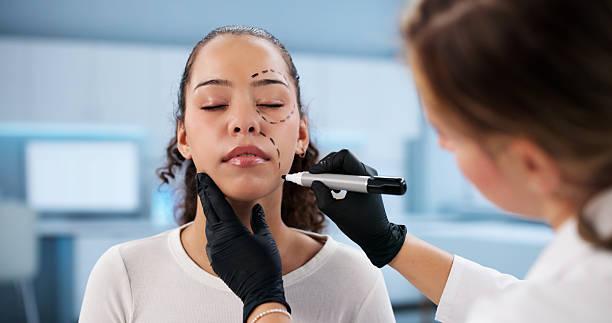
Not every patient considering facial rejuvenation is immediately ready for surgery. Liquid Facelift in Dubai may be considered as a nonsurgical option for selected patients who want to address specific facial changes before deciding whether a surgical procedure is necessary.
The important point is that injectable treatment should not be presented as a substitute for surgery. Instead, it can provide a different treatment pathway for patients whose concerns are limited enough to respond to carefully planned injectable correction.
Why Patients Consider Injectable Treatment Before Surgery
Facial aging exists on a spectrum.
Some patients have early or moderate changes that remain relatively localized, while others have substantial skin laxity and tissue descent that require a more comprehensive surgical approach.
A patient may therefore explore nonsurgical treatment before committing to an operation.
Common reasons include:
- Wanting to understand the potential of injectable rejuvenation
- Having relatively mild facial changes
- Preferring to avoid surgical recovery
- Wanting targeted rather than comprehensive correction
- Having professional or social scheduling constraints
- Not yet feeling ready for permanent surgical alteration
The appropriate choice depends on anatomy rather than age or treatment popularity.
How Liquid Facelift in Dubai Differs From a Surgical Facelift
The two approaches address aging through fundamentally different mechanisms.
A liquid facelift generally uses injectable treatments to modify selected facial contours, volume relationships, or dynamic activity. A surgical facelift physically repositions tissues and can remove excess skin.
| Consideration | Liquid facelift | Surgical facelift |
|---|---|---|
| Main approach | Injectable treatment | Surgical tissue repositioning |
| Incisions | None | Required |
| Excess skin removal | Not possible | Possible |
| Tissue repositioning | Limited nonsurgical effect | Direct repositioning |
| Recovery | Generally shorter | Longer postoperative recovery |
| Degree of correction | Selected mild to moderate concerns | More substantial laxity and descent |
| Permanence | Temporary/variable depending on treatment | Longer-lasting structural change |
| Planning | Anatomy and injectable strategy | Surgical anatomy and operative planning |
This distinction matters because choosing an injectable approach should be based on what the treatment can realistically accomplish.
What Facial Changes May Be Appropriate for Injectable Treatment
Before surgery, a clinician may evaluate whether particular facial concerns can reasonably be improved with injectables.
Potential areas include:
- Localized volume deficiencies
- Selected contour irregularities
- Mild loss of projection
- Certain facial transitions
- Dynamic expression lines
- Early age-related changes
The objective is targeted improvement rather than attempting to recreate a surgical lift.
Mild changes can respond differently from advanced aging
A patient with relatively good skin elasticity and limited tissue descent may have more nonsurgical options than someone with substantial loose skin.
This is one reason the same treatment should not be recommended to every patient who requests a facelift alternative.
Understanding the Difference Between Volume and Laxity
One of the most important pre-treatment questions is whether the visible concern is primarily caused by volume change or tissue laxity.
Volume-related changes may sometimes be influenced with injectable treatment.
Significant laxity is different.
If the skin and underlying tissues have descended substantially, adding volume may not reposition them sufficiently.
Why more filler cannot create unlimited lifting
Increasing filler volume does not automatically produce a stronger lift.
Excessive product may instead make selected areas appear fuller or heavier.
The clinician therefore needs to establish whether the expected benefit comes from projection, redistribution of visual emphasis, or another mechanism rather than promising surgical-level tissue elevation.
Anatomical Assessment Before Choosing an Injectable Approach
Pre-surgical decision-making should begin with examination of the entire face.
The clinician may assess:
- Skin elasticity
- Tissue laxity
- Existing volume
- Facial proportions
- Chin and jaw relationships
- Cheek structure
- Facial movement
- Previous injectable treatments
- Degree of tissue descent
- Patient expectations
Modern filler techniques increasingly emphasize functional facial anatomy and treatment according to specific tissue layers rather than treating every visible line as a superficial volume deficit.
This anatomical approach becomes particularly important when the patient has previously received fillers.
Existing Filler Can Influence Future Treatment Decisions
Patients who have had repeated injectable procedures should disclose their treatment history whenever possible.
Previous product may remain within the tissue or influence the appearance of surrounding structures.
Adding more filler without understanding the existing treatment can make it difficult to determine whether the visible concern is genuinely caused by insufficient volume.
A reassessment may therefore be preferable to automatically repeating previous injections.
Can a Liquid Facelift Delay Surgery
In some appropriately selected patients, nonsurgical treatment may provide sufficient improvement that surgery is not immediately pursued.
However, this should not be framed as a guaranteed way to postpone surgery indefinitely.
Facial aging continues.
If laxity or tissue descent progresses, the patient may eventually require a different intervention to achieve the desired level of correction.
The appropriate goal is to select the least invasive treatment capable of providing a meaningful and proportionate result.
When Injectable Treatment May Be Reasonable Before Surgery
A nonsurgical approach may be worth discussing when:
- Aging changes are relatively limited
- Skin elasticity remains reasonably preserved
- The patient wants subtle improvement
- Facial volume or projection is a significant contributor
- There is no major excess skin
- The patient understands the limitations of injectables
- The desired outcome does not require substantial tissue repositioning
These factors do not establish candidacy by themselves. An in-person clinical assessment remains necessary.
When Surgery May Be More Appropriate
A patient should not be encouraged to continue adding filler when the primary problem is beyond the practical capability of injectable treatment.
Surgical consultation may become more relevant with:
- Pronounced skin laxity
- Significant jowling
- Marked tissue descent
- Excess facial or neck skin
- Advanced lower-face aging
- Strong desire for substantial lifting
- Expectations of a surgical facelift result
Medical guidance similarly distinguishes liquid facelift procedures from surgery when sagging becomes substantial.
Recognizing this boundary protects patients from unnecessary treatment.
The Role of Expectations in Pre-Surgical Planning
A patient's desired result is as important as their anatomy.
Someone seeking a subtle refreshed appearance may be satisfied with a nonsurgical approach.
Another patient may want a clearly elevated jawline, significant reduction of loose skin, and major neck improvement. Injectable treatment is unlikely to reproduce that degree of surgical correction.
A good consultation should therefore translate aesthetic language into realistic anatomical objectives.
Product Selection Before a Surgical Decision
When injectables are appropriate, product selection should be based on the anatomical task.
Different fillers have different physical characteristics, and the choice may depend on:
- Desired projection
- Tissue depth
- Facial mobility
- Area being treated
- Existing product
- Degree of correction required
- Individual tissue characteristics
A structural filler and a superficial filler should not be treated as interchangeable materials.
Conservative Treatment Can Be Especially Important
Patients considering surgery may be tempted to maximize nonsurgical correction first.
That approach can be counterproductive.
A conservative injectable strategy can provide an opportunity to evaluate how much improvement is achievable without substantially changing the patient's facial identity.
The treatment may be staged rather than performed across every possible facial zone.
A measured pre-surgical strategy can involve
- Defining the patient's actual concern.
- Determining whether it is volume-related or laxity-related.
- Establishing whether injectable treatment can reasonably address it.
- Treating only appropriate areas.
- Assessing the result after the initial procedure.
- Discussing alternative treatment options if the improvement is insufficient.
This keeps the treatment decision evidence-based and patient-specific.
How Dubai Lifestyle Can Influence the Decision
Dubai's fast-paced professional and social environment can make recovery time an important consideration.
Patients may have work commitments, frequent events, travel, exercise routines, or other activities that make surgical downtime difficult to accommodate.
A nonsurgical approach may therefore be attractive when the patient's anatomical concerns are suitable for it.
However, reduced downtime should not be confused with zero downtime. Injectable procedures can still cause temporary swelling, bruising, redness, or tenderness.
Sun Exposure and Long-Term Facial Aging
The decision between injectable and surgical treatment should also consider long-term skin quality.
Dubai's intense sunlight can contribute to cumulative photoaging, which may affect texture, pigmentation, and elasticity.
Injectable correction cannot reverse all forms of photodamage.
Consistent photoprotection and appropriate skin care remain relevant regardless of whether the patient ultimately chooses injectables, surgery, or another rejuvenation approach.
Patients comparing different treatment pathways can explore aesthetic and facial treatment options in Dubai before deciding which approach best fits their concerns.
What to Ask Before Choosing a Liquid Facelift Instead of Surgery
A consultation should address more than whether the procedure is nonsurgical.
Patients can ask:
- Is my main concern volume or laxity?
- How much improvement can injectables realistically provide?
- Would additional filler make my face look heavier?
- Do I have enough skin elasticity for a nonsurgical approach?
- Which areas actually need treatment?
- How much existing filler is present?
- What happens if injectable treatment does not provide enough correction?
- Would a surgical consultation be more appropriate at this stage?
- Can treatment be staged rather than performed all at once?
These questions help establish whether the proposed treatment matches the actual anatomical problem.
A Liquid Facelift Should Not Be Used to Avoid an Appropriate Surgical Recommendation
The purpose of a nonsurgical consultation is not to prove that surgery is unnecessary.
It is to determine which treatment can reasonably meet the patient's goals.
If surgery is anatomically more appropriate, recommending it can be more responsible than repeatedly increasing injectable volume.
Likewise, if the patient's concerns are modest and well suited to conservative injectables, surgery may be more intervention than necessary.
The correct decision lies between these two extremes.
The Strategic Investment in Pre-Surgical Facial Planning
A liquid facelift can have a valuable role in the treatment spectrum between doing nothing and undergoing surgery. Its usefulness depends on selecting patients whose concerns are genuinely addressable through injectable correction and maintaining realistic expectations about what nonsurgical treatment can accomplish.
For patients considering Liquid Facelift in Dubai, the decision should be based on facial anatomy, skin laxity, tissue descent, existing volume, treatment history, and the degree of correction actually desired.
The most appropriate strategy may be injectable treatment, surgery, staged treatment, or a combination of approaches over time. A professional assessment should determine which pathway offers the best balance between invasiveness, expected improvement, safety, and long-term facial harmony.
Patients considering their options can consult Tajmeels Clinic to discuss whether a nonsurgical approach is appropriate before pursuing a surgical facial-rejuvenation plan.

 English
 French
 Spanish
 Portuguese
 Deutsch
 Turkish
 Dutch
Dutch
 Italiano
 Russian
 Romaian
 Portuguese (Brazil)
 Greek
Greek
