


 About Urh Social
 Terms of Service
 Privacy Policy
 Contact
Exosome Hair in Dubai for Men: Hairline, Crown and Thinning
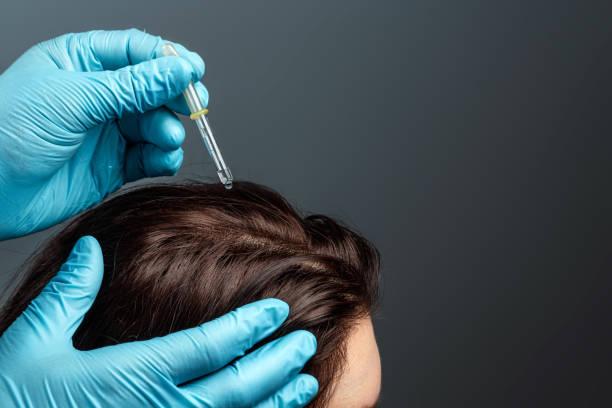
Men experiencing hair thinning often notice changes in the hairline, temples, crown, or overall scalp density at different stages. Exosome hair in Dubai is being explored as a regenerative approach for men with certain forms of hair loss, but its suitability depends on the condition of the scalp, the presence of viable follicles, the pattern of thinning, and the underlying diagnosis.
Rather than treating every type of male hair loss in the same way, a useful clinical assessment looks at where density is being lost and whether follicles remain capable of producing stronger hair. This distinction helps determine whether regenerative treatment, medical management, hair transplantation, or a combination approach makes more sense.
How Male Hair Loss Patterns Affect Treatment Planning
Male pattern hair loss, medically known as androgenetic alopecia, commonly follows recognizable distribution patterns. The frontal hairline and temples may gradually recede, while the crown can become progressively thinner.
The important clinical question is not simply how much hair has been lost. It is whether the affected follicles are miniaturized but still functioning or have reached a stage where regenerative treatment alone is unlikely to recreate substantial density.
Hairline and Temple Thinning
The frontal region is one of the most noticeable areas of male hair loss. Early recession may leave finer, shorter hairs along the original hairline before density becomes visibly reduced.
When follicles are still present, a regenerative strategy may be considered as part of a broader hair-preservation plan. However, a completely absent hairline generally requires a different approach because stimulating existing follicles is not equivalent to creating new follicles.
Crown and Vertex Thinning
Crown thinning can develop gradually and may initially be difficult to notice without consistent photographs. The whorl pattern can also make density assessment challenging.
For this reason, clinical evaluation should consider standardized photography, scalp examination, and the progression of thinning rather than relying only on how the crown appears under bathroom or salon lighting.
Diffuse Reduction in Density
Some men develop a more generalized reduction in scalp density rather than obvious recession. Diffuse thinning can have multiple causes, so identifying the underlying pattern is particularly important before selecting a treatment.
A regenerative treatment should not be used as a substitute for investigating potentially reversible causes of excessive shedding.
What Exosome Hair in Dubai May and May Not Address
Exosome-based hair treatments are being investigated because exosomes contain signaling molecules that may influence cellular communication and tissue responses. Research into hair regeneration has reported improvements in selected hair parameters, but the clinical evidence remains developing and treatment protocols vary substantially between studies.
A 2025 systematic review identified clinical studies reporting improvements in measures such as hair density and thickness, while also highlighting limitations including small study populations, different exosome sources, inconsistent protocols, and limited follow-up.
This means the treatment should be viewed as a regenerative option under clinical evaluation rather than as a guaranteed replacement for established hair-restoration procedures.
Existing Follicles Matter
The distinction between miniaturized follicles and permanently lost follicles is central to treatment planning.
Where follicles remain biologically active, the objective may involve supporting the scalp environment and improving the quality of existing hair. Where follicular units are no longer present, a treatment designed to stimulate existing tissue cannot simply manufacture a new follicular unit.
Hair Loss Progression Still Matters
Male pattern hair loss can continue over time. Improving the appearance of existing hair does not necessarily mean the underlying tendency toward progressive thinning has disappeared.
A long-term plan therefore needs to consider preservation as well as cosmetic improvement.
A Practical Comparison by Hair-Loss Area
| Hair-loss pattern | Typical clinical concern | Regenerative treatment consideration | Other approaches that may be considered |
|---|---|---|---|
| Early temple thinning | Miniaturization around the frontal region | May be considered when viable follicles remain | Medical management or monitoring |
| Receding hairline | Reduced frontal density | Depends heavily on remaining follicles | Hair transplantation may be considered |
| Crown thinning | Progressive reduction in vertex density | May be considered for selected patients | Medical treatment or transplantation |
| Diffuse thinning | Broad reduction in density | Requires diagnosis before treatment | Medical evaluation and targeted management |
| Advanced baldness | Significant follicular loss | Limited role where follicles are absent | Hair transplantation or other restoration strategies |
The table illustrates why treatment should be selected according to anatomy and disease pattern rather than simply by age or the amount paid for a procedure.
Why Hairline Restoration Is Different From Hair Density Support
The hairline is a highly architectural area. Its position, angle, follicular direction, density gradient, and transition into the forehead all influence whether a result looks natural.
Regenerative approaches primarily work with existing biological structures. Hair transplantation, by contrast, can relocate follicular units from a donor region to areas where follicles have been lost.
This difference is particularly important for men who expect a regenerative procedure to rebuild a significantly receded hairline. A consultation should establish whether the objective is preservation of existing hair, improvement in density, or actual restoration of missing follicular units.
The Role of Scalp Anatomy in Treatment Delivery
Treatment quality is influenced not only by the substance being used but also by how and where it is delivered.
The scalp contains multiple tissue layers, vascular structures, nerves, follicles, sebaceous glands, and connective tissue. Injection planning therefore requires an understanding of scalp anatomy rather than a simple one-size-fits-all pattern.
Mapping the Areas of Concern
A clinician may divide the scalp into regions such as the frontal zone, temporal areas, mid-scalp, and crown. This makes it easier to document where thinning is occurring and to compare the same areas during follow-up.
Considering Hair Direction and Density
Existing hair direction and density can influence how the scalp is assessed and how treatment areas are approached. A carefully planned procedure should account for the patient's individual distribution rather than applying an identical injection pattern to every scalp.
Avoiding Overpromising
No injection technique can guarantee a specific number of new hairs. Outcomes depend on the underlying condition, follicular viability, treatment protocol, product characteristics, and individual biological response.
This is one reason credible consultation should focus on realistic objectives rather than guaranteed before-and-after claims.
Dubai-Specific Considerations for Men With Thinning Hair
Dubai's environment can add practical considerations to scalp-care planning. Strong sun exposure, outdoor heat, sweating, and prolonged exposure to air conditioning can affect how comfortable the scalp feels and how patients manage their hair and skin routines.
Men who spend significant time outdoors may also need to consider sun protection and practical scalp-care measures as part of their broader hair-maintenance strategy.
The city's demanding professional and social environment can also make discreet, low-downtime approaches appealing. Even so, convenience should not replace appropriate diagnosis or realistic expectations.
When Regenerative Treatment May Not Be the Main Answer
A regenerative treatment may not be the most appropriate first-line option when the primary issue is extensive follicular loss.
Other situations can also require a different clinical pathway. Rapid or unexplained shedding, scalp inflammation, significant scaling, scarring, or other unusual changes should be evaluated rather than automatically attributed to ordinary male pattern hair loss.
A medical assessment can help distinguish androgenetic alopecia from other causes of hair loss before a cosmetic treatment plan is selected.
How Men Can Judge Whether a Treatment Plan Makes Sense
A useful consultation should answer several practical questions:
- What pattern of hair loss is present?
- Which scalp regions are affected?
- Are viable follicles still present in those regions?
- Is the goal preservation, density improvement, or restoration of lost hair?
- What evidence supports the proposed exosome product and protocol?
- What alternatives are appropriate if regenerative treatment is insufficient?
- How will progress be documented objectively?
These questions shift the conversation from simply asking whether exosomes “work” toward determining whether a particular treatment strategy fits the individual pattern of hair loss.
Evidence Should Guide Expectations
The scientific interest surrounding exosomes and hair regeneration is significant, but the field is still developing. A 2026 systematic review found a growing body of research examining exosome-driven approaches for androgenetic alopecia, while noting limitations such as small samples, retrospective study designs, inconsistent outcome measures, and the need for stronger controlled clinical research.
Regulatory status should also be considered carefully. The U.S. FDA states that there are currently no FDA-approved exosome products and warns consumers about unapproved exosome products marketed for medical conditions.
For patients, this makes product transparency, clinical oversight, appropriate sourcing, and realistic communication especially important.
Building a Long-Term Hair Strategy
Hair restoration is rarely just about one procedure. Men with progressive thinning may benefit from a strategy that combines diagnosis, preservation of existing follicles, appropriate medical options, regenerative approaches where suitable, and surgical restoration when follicular loss becomes substantial.
The strongest plan is therefore not necessarily the most technologically impressive one. It is the plan that matches the biological problem to the appropriate intervention.
For men exploring exosome hair in Dubai, discussing the full range of hair and aesthetic treatment options in Dubai can provide a broader framework for comparing regenerative approaches with other restoration strategies. hair and aesthetic treatment options in Dubai
The Strategic Investment
A sensible investment in hair restoration begins with understanding what can realistically be changed. Regenerative treatments may have a role when viable follicles remain, while significant follicular loss may call for a different restoration strategy.
The objective should be a medically informed plan that considers hair-loss pattern, follicular status, treatment evidence, long-term progression, and the patient's desired appearance rather than relying on marketing claims alone.
For men considering their options, Tajmeels Clinic provides a starting point for exploring aesthetic and hair-restoration services in Dubai.

 English
 Arabic
 French
 Portuguese
 Deutsch
 Turkish
 Dutch
Dutch
 Italiano
 Russian
 Romaian
 Portuguese (Brazil)
 Greek
Greek
