


 About Urh Social
 Terms of Service
 Datenschutzbestimmungen
 Contact
Why Manufacturers Should Identify the Correct GST Refund Category Before Filing
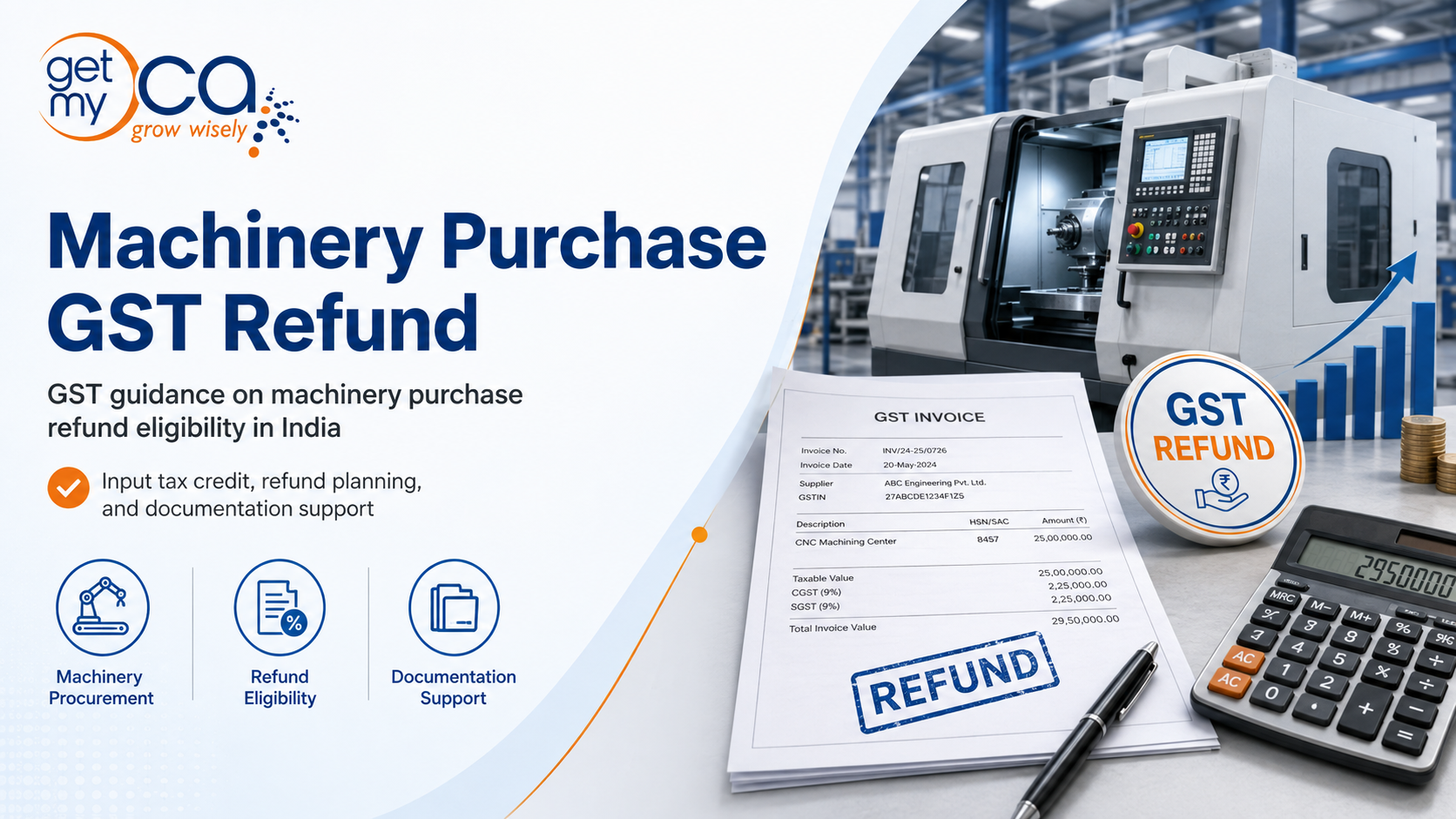
A GST credit balance may arise for several reasons. Export activity, inverted tax structures, deemed-export transactions and other eligible situations can all create different compliance requirements.
For manufacturers, the important step is to identify why the credit has accumulated before preparing a refund application. Treating every unused balance as the same type of refund can lead to documentation and reconciliation issues.
Why Does the Refund Category Matter?
GST refund provisions are linked to specific types of transactions. The supporting documents and calculations required for one category may not be identical to another.
A business should therefore carry out a GST refund category assessment for businesses before beginning the filing process.
This review can help determine whether the accumulated amount relates to:
- exports,
- inverted duty structure,
- deemed exports,
- excess tax payment, or
- another eligible circumstance.
The presence of credit in the electronic credit ledger alone does not establish that the entire balance is refundable.
What Should Manufacturers Review First?
Before considering a refund claim, businesses can review three main areas.
Nature of Outward Supplies
The company should identify whether its supplies are domestic, export-oriented or covered by another specific GST treatment.
Reason for ITC Accumulation
The finance team should determine which purchases or transactions are creating the unused credit.
Supporting Records
Invoices, GST returns and transaction-specific documents should be checked for consistency.
This basic review can make the subsequent refund process more organised.
Why Do Manufacturing Businesses Need Detailed Reconciliation?
Manufacturers usually deal with a large number of invoices covering raw materials, packaging, services, consumables and capital equipment.
Differences may arise because of:
- incorrect invoice values,
- missing supplier invoices,
- wrong GSTIN details,
- duplicate entries,
- return-period differences, or
- accounting classification issues.
Regular reconciliation helps businesses understand the actual eligible credit position before any amount is included in a refund calculation.
How Is EOU Procurement Different?
A 100% Export Oriented Unit may also procure eligible goods from domestic suppliers.
Certain qualifying transactions may fall under the deemed-export framework, subject to applicable GST conditions and documentation.
Because of this, an EOU domestic procurement compliance review can be useful before significant purchases are completed.
The unit should understand how the transaction is structured, which party may be eligible to pursue the applicable refund route and what supporting records are required.
Why Is Advance Documentation Important?
Refund-related records should ideally be maintained at the time of the transaction rather than collected only when a claim is being prepared.
Depending on the circumstances, businesses may need to preserve:
- tax invoices,
- purchase orders,
- GST returns,
- payment records,
- declarations,
- export documents,
- procurement records, and
- reconciliation statements.
Accurate documentation can also make it easier to explain differences between accounting records and GST returns.
Should Capital Purchases Be Mixed With Routine Inputs?
Routine manufacturing inputs and capital equipment should be identified separately in accounting and GST records.
A business may have credit from both categories, but their treatment under a particular refund mechanism may differ.
Separating these transactions helps the finance team determine which amounts are relevant to the refund category being examined.
Conclusion
GST refund planning should begin with identifying the reason behind the accumulated credit.
Manufacturers can reduce compliance uncertainty by determining the correct refund category, reconciling records and maintaining transaction-specific documentation from the beginning.
For export-oriented units, domestic procurement should also be reviewed separately where deemed-export provisions may become relevant.

 English
 Arabic
 French
 Spanish
 Portuguese
 Turkish
 Dutch
Dutch
 Italiano
 Russian
 Romaian
 Portuguese (Brazil)
 Greek
Greek
