


 About Urh Social
 Terms of Service
 سياسة الخصوصية
 Contact
GST Refund for Businesses: Eligibility, Documentation and Practical Compliance
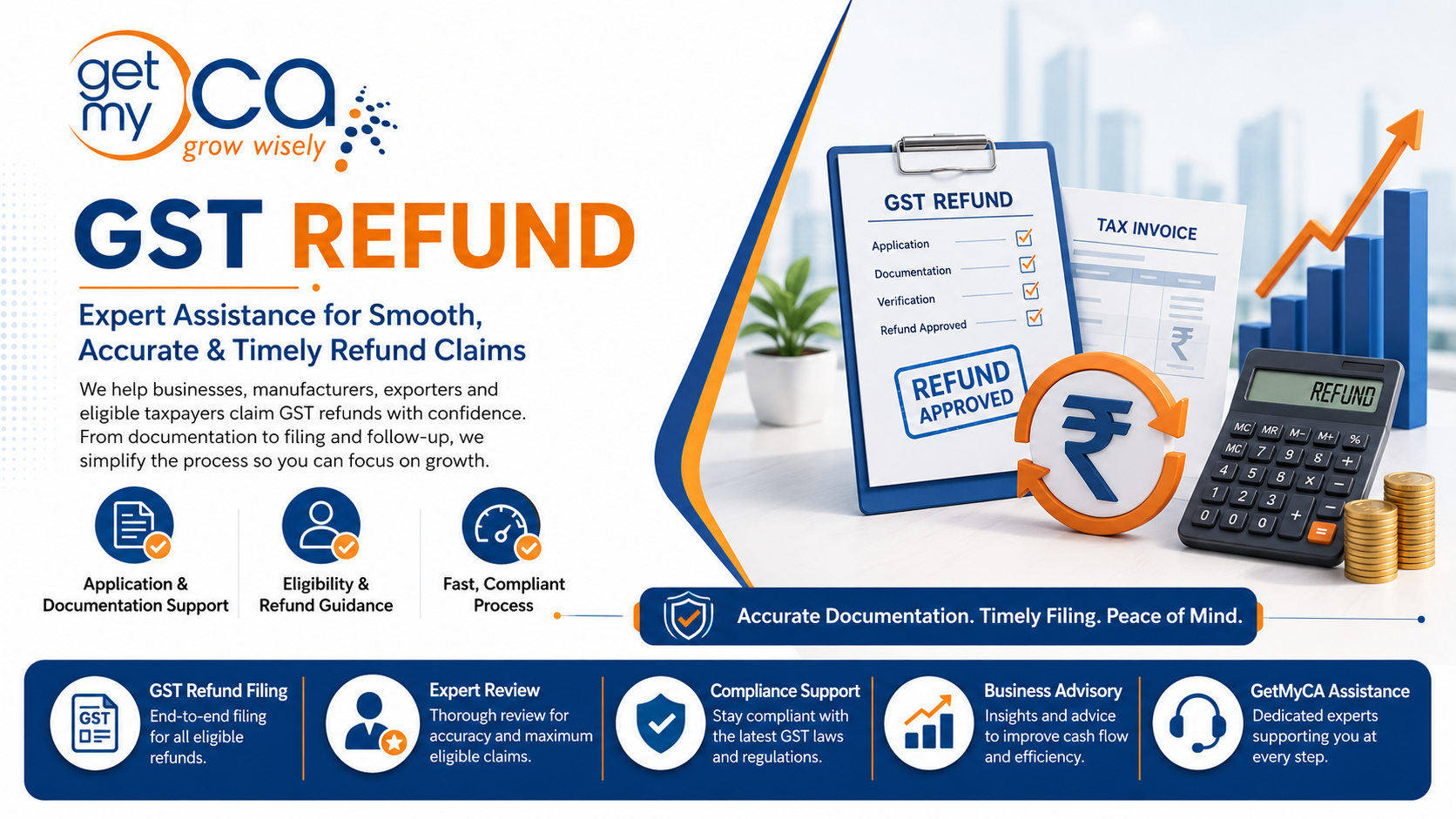
GST can have a direct impact on the working capital of manufacturers, exporters, and other registered businesses. In certain eligible situations, businesses may have tax amounts or accumulated input tax credit that can be considered for refund under the applicable GST provisions.
A GST Refund should not be treated as an automatic benefit available whenever excess credit appears in the GST records. The eligibility depends on the nature of supplies, applicable refund category, tax payment structure, input tax credit position, and compliance with prescribed conditions.
Why Is GST Refund Planning Important?
For businesses handling high transaction volumes, a significant amount of working capital can remain tied up in taxes and eligible input tax credit.
Where a refund is legally available, timely identification and proper filing can help businesses manage cash flow more efficiently. At the same time, incorrect claims or incomplete documentation may lead to queries, delays, or rejection.
Therefore, refund planning should begin with an eligibility review rather than directly filing an application.
Situations Where a Refund May Arise
GST refund eligibility depends on the specific facts of a transaction. Depending on applicable provisions, refund-related situations may arise in cases involving:
- Eligible export transactions
- Certain accumulated input tax credit situations
- Excess payment of tax
- Tax paid under an incorrect category, where applicable
- Other refund situations specifically permitted under GST law
Each category can have its own documentation and calculation requirements.
Importance of Input Tax Credit Reconciliation
Before filing a refund application, businesses should reconcile their GST records carefully.
This review may include:
- Purchase invoices
- Input tax credit records
- GST return data
- Supplier reporting
- Output tax liability
- Export records, where applicable
- Credit and debit notes
- Accounting books
Any mismatch in invoice value, GSTIN, tax amount, or reporting period can affect the accuracy of the claim.
GST Refund Considerations for Manufacturers
Manufacturing businesses usually incur GST on raw materials, packaging, machinery, services, logistics, and other operational expenses.
Depending on the nature of their supplies and applicable provisions, eligible credit may accumulate over time. However, accumulated credit does not automatically mean that the entire amount is refundable.
Manufacturers should first review whether the specific refund category permits a cash refund and whether all statutory conditions are satisfied.
Sector-Specific GST Review for Pharma Businesses
Pharmaceutical manufacturers can have a comparatively complex GST structure because their operations may involve multiple inputs, packaging materials, machinery, domestic sales, exports, and different product classifications.
Businesses evaluating a GST Refund for Pharma Manufacturers in India should review their complete supply structure rather than focusing only on the amount appearing in the electronic credit ledger.
Important areas may include:
- Nature of inward supplies
- Output supply structure
- Applicable tax rates
- Export transactions
- Input tax credit eligibility
- Refund category
- Invoice reconciliation
- Supporting documentation
A sector-specific review can help identify whether the proposed claim is consistent with the applicable GST framework.
Documents That Businesses Should Maintain
Proper documentation can make the refund process more organized.
Depending on the refund category, relevant records may include:
- Tax invoices
- GST returns
- Input tax credit reconciliation
- Purchase records
- Sales invoices
- Export invoices
- Shipping-related documents
- Payment records
- Bank realization-related records, where applicable
- Statements and declarations prescribed for the refund category
The exact requirements may differ depending on the type of refund being claimed.
Common Reasons for Refund Delays
Refund applications may face delays when the information in GST returns and supporting documents is inconsistent.
Common issues can include:
- Incorrect invoice details
- Mismatch in GST return data
- Ineligible input tax credit included in the claim
- Wrong refund category
- Incomplete supporting documents
- Calculation errors
- Missing reconciliation
- Delayed responses to clarification notices
Businesses can reduce these risks by conducting an internal review before filing.
Why Refund Calculations Need Careful Review
The refund amount should be calculated according to the formula and conditions applicable to the relevant refund category.
A business should not simply use the closing input tax credit balance as the refund amount.
The calculation may depend on factors such as turnover, eligible supplies, net input tax credit, relevant period, and other prescribed variables.
This is why proper categorization and reconciliation are important before preparing the claim.
Role of Regular GST Compliance
Good refund management is closely connected with regular GST compliance.
Businesses should maintain:
- Timely GST return filing
- Accurate invoice reporting
- Regular ITC reconciliation
- Proper classification of transactions
- Consistent accounting records
- Organized supporting documents
A business that keeps its GST records updated throughout the year is generally in a better position to prepare an accurate refund application when an eligible situation arises.
GST Refund and Working Capital
For exporters and manufacturers, delayed realization of eligible refunds can affect working capital availability.
A structured refund process can help businesses maintain better visibility over:
- Tax credits
- Pending refund amounts
- Expected cash inflows
- Tax compliance exposure
- Documentation gaps
This makes GST refund management not only a compliance activity but also an important part of financial control.
Conclusion
GST refunds can provide working capital relief in eligible situations, but a refund claim should always be based on the correct legal category, accurate records, and proper documentation.
Businesses should first determine their eligibility, reconcile GST data, review input tax credit, calculate the claim correctly, and maintain complete supporting records. A systematic approach can help make the GST refund process more accurate and manageable.

 English
 French
 Spanish
 Portuguese
 Deutsch
 Turkish
 Dutch
Dutch
 Italiano
 Russian
 Romaian
 Portuguese (Brazil)
 Greek
Greek
